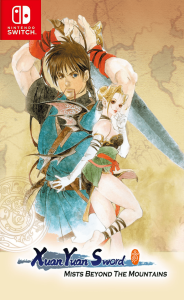
Xuan Yuan Sword: Mists Beyond the Mountains Switch NSP
Report Link Error
Select the broken download file, then submit the report.
Screenshots

About Game
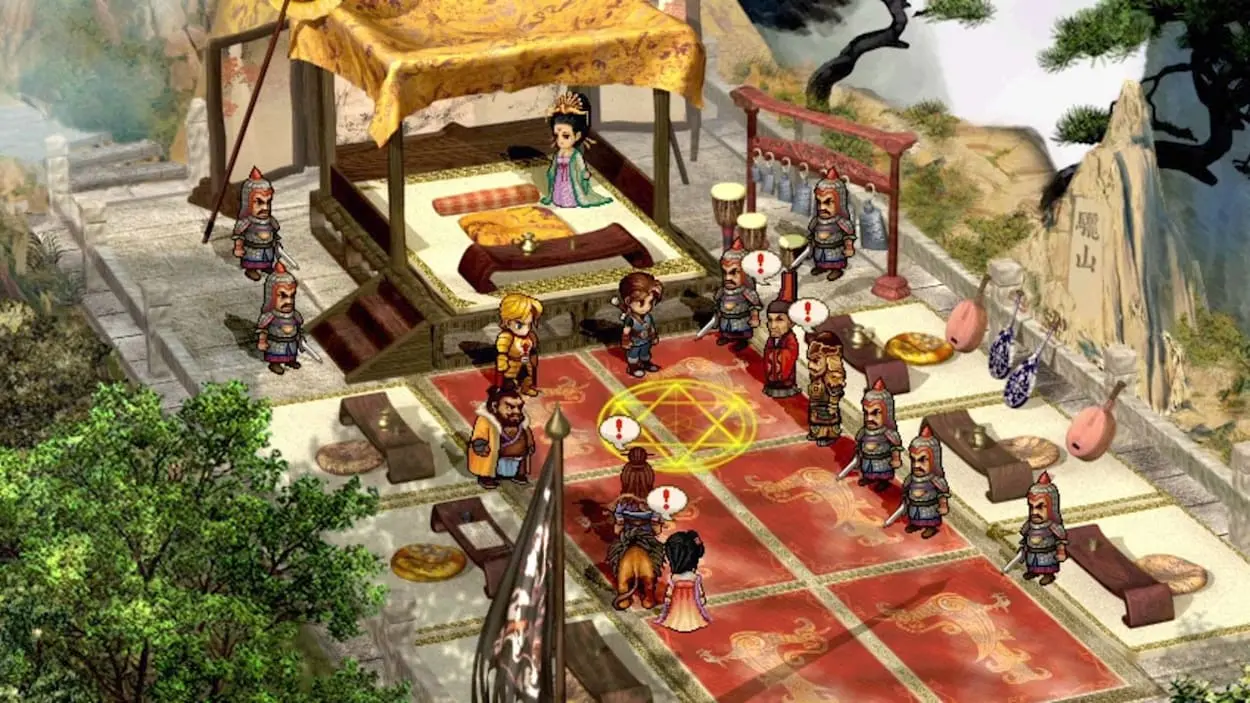
Xuan Yuan Sword: Mists Beyond the Mountains Switch NSP places a classic role-playing adventure in a version of 7th-century China shaped by political tension, personal destiny, and mythic forces. Released on December 8, 2023, this Adventure and Role-Playing title from eastasiasoft is available in Europe and the USA, with English, Japanese, Simplified Chinese, and Traditional Chinese language support.
A 7th-Century Journey Through Sui Dynasty China
The adventure unfolds during China’s turbulent Sui Dynasty, giving its story a historical RPG framework rather than a purely fantastical setting. Players follow Che Yun, an orphan whose life changes dramatically as he enters the military and eventually becomes a trusted general. His rise provides a personal route into a much broader conflict, one involving warfare, power, and the pressures placed on people caught between major political forces.
The Sui Dynasty backdrop gives the journey a sense of consequence. Che Yun is not simply traveling through a world of distant legends; he is moving through an era marked by imperial conflict and cultural friction. The narrative connects his development to questions of sacrifice, humanity, and authority, while his search for answers becomes increasingly tied to forgotten truths. That blend of an individual story and a historical setting gives the adventure room to move between intimate character moments and large-scale events.
For players drawn to period-inspired stories, 7th-century China is more than scenery here. Cities, conflicts, and the clash between eastern and western powers help define the stakes around Che Yun’s journey. The result is a setting where history informs the direction of the tale, even as supernatural elements reshape its path.
Where History Meets Chinese Mythology
The game’s central appeal comes from its meeting of historical drama and Chinese mythology. Real historical figures and events are woven into a story populated by mystical beasts, ancient artifacts, and revelations that reach beyond ordinary political disputes. This approach allows military struggle and courtly intrigue to sit alongside dangers that are more mysterious and less easily explained.
Ancient artifacts are part of the wider conflict, carrying importance beyond simple treasure or equipment. They contribute to the sense that the past remains active in the present, with old powers and buried knowledge influencing the people fighting over the future. Mystical beasts further widen the scope of the journey, turning confrontations into encounters with creatures rooted in the game’s mythological imagination.
This balance also shapes the atmosphere. The world can move from historically inspired places and military concerns toward mythic revelations without abandoning its larger themes. Che Yun’s path becomes one of self-discovery as much as duty, placing personal identity alongside the struggle between empires and cultures. Xuan Yuan Sword: Mists Beyond the Mountains Switch NSP is therefore structured around a story in which political conflict and legend continually affect one another.
Turn-Based Battles and Party Strategy
Combat uses a turn-based system that asks players to make measured decisions rather than rely on speed alone. Battles revolve around commanding a group of heroes, with party strategy shaped by the different abilities and spells available to each character. Selecting a useful lineup and understanding what each member contributes are important parts of facing stronger enemies.
Character abilities can create different tactical possibilities from one encounter to the next. Some situations may call for a particular spell, while others reward a change in equipment or a new approach to the party’s roles. Mythological creatures and other formidable opponents make it worthwhile to consider how a group’s strengths fit together instead of repeating the same actions every time.
The turn-based format supports a deliberate pace. Players have space to assess an enemy, test their options, and adjust if an earlier plan fails. This makes party strategy a continuing part of the RPG experience, not just a choice made before entering battle. The system is especially suited to players who enjoy building a team and finding practical answers to difficult encounters.
Alchemy, Item Fusion, and Character Progression
Progression extends beyond gaining stronger heroes. The game includes character development, item crafting, and an alchemy system built around fusing items to create more powerful equipment. These systems give players another way to prepare for the challenges ahead, particularly when an enemy exposes a weakness in the current party setup.
Item crafting and fusion encourage attention to the resources collected during the adventure. Rather than treating equipment as fixed, players can use alchemy to pursue upgrades and combinations that better support their party. Stronger equipment can complement a character’s existing abilities, making development feel connected to battle planning.
This structure also gives exploration additional value. Discovering items and secrets can feed back into character progression, while experimenting with equipment combinations offers reasons to revisit a party’s setup. The game does not need to depend on combat alone for advancement; alchemy provides a parallel system for players who enjoy refining their tools before confronting the next major obstacle.
Exploration, Secrets, and Puzzles Across the Adventure
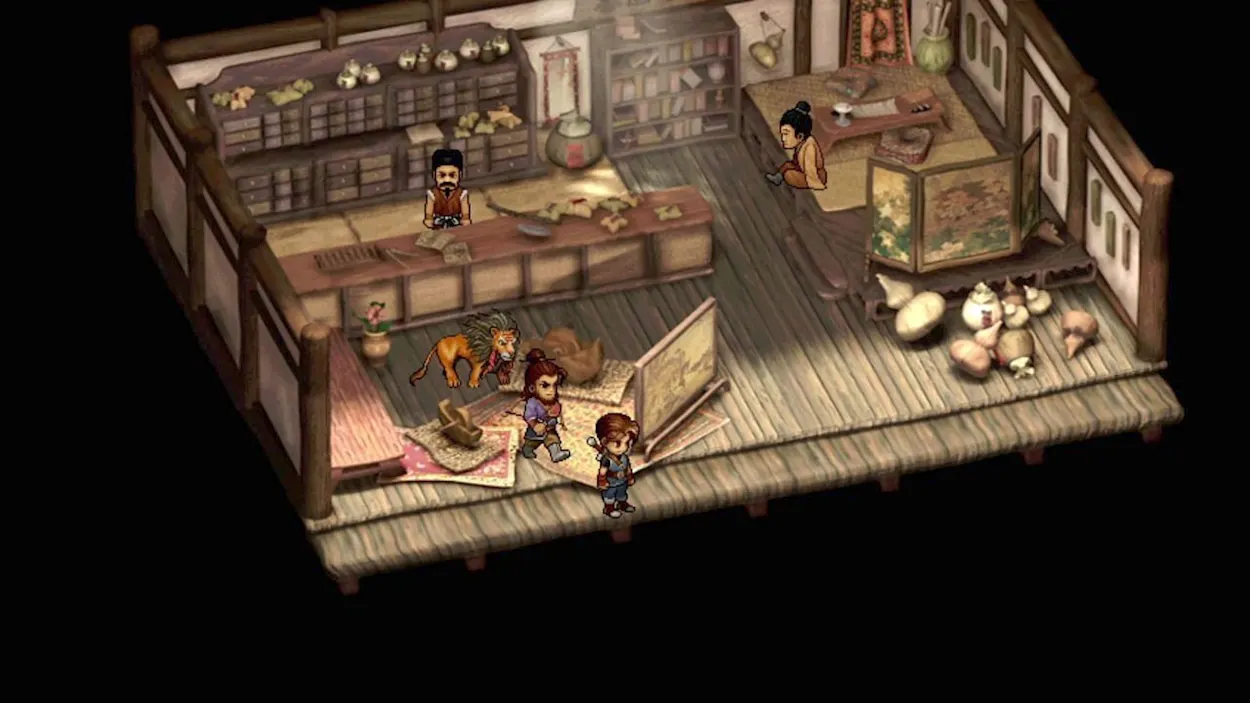
Outside battle, the journey moves through a range of environments, including bustling cities and mystical ruins. These locations support the historical and mythological sides of the game at once: populated spaces can ground the adventure in its world, while more mysterious areas suggest the ancient lore beneath its conflicts.
Exploration includes hidden secrets and puzzles scattered across the adventure. This creates pauses between battles and story developments, asking players to pay attention to their surroundings rather than only following the most direct route. Mystical ruins are particularly fitting places for this approach, combining the search for solutions with the game’s interest in lost truths and old artifacts.
The variety of places and activities gives the adventure a broader rhythm. Conversations with its cast, environmental discovery, puzzle-solving, and tactical combat each serve a different purpose. For players who value replaying areas with fresh attention to secrets, equipment options, or party experimentation, these connected systems can add lasting interest beyond the main narrative.
5 Practical Battle Preparations for Difficult Encounters
- Save often. Make frequent saves before entering unfamiliar areas or approaching a powerful boss, reducing the need to repeat long stretches after a defeat.
- Test party abilities. Experiment with the abilities and spells of different characters to learn which combinations best support the group.
- Change equipment. Review gear when a battle becomes difficult, and use item crafting or alchemy options to pursue stronger equipment.
- Use elemental options. Some enemies may be vulnerable to specific elements or status effects, so varying attacks can be more effective than relying on one approach.
- Rethink boss strategy. If a formidable foe stops progress, try a different party arrangement, equipment setup, or tactical plan instead of repeating the same sequence.
With its historical setting, Chinese mythology, turn-based combat, and progression systems, the game is suited to players looking for a methodical RPG adventure. Its 2.1GB release uses the Nintendo Switch base firmware version 17.0.0 and is published and developed by eastasiasoft.