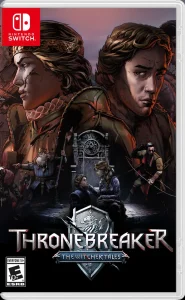
Thronebreaker: The Witcher Tales Switch NSP
Report Link Error
Select the broken download file, then submit the report.


Screenshots
About Game
Thronebreaker: The Witcher Tales Switch NSP places Queen Meve at the center of a hard-fought campaign shaped by war, loyalty, and calculated risk. Set within the wider Witcher universe, the game combines a personal royal drama with map exploration, resource management, narrative choices, and card-based battles that reward careful planning rather than quick reactions.
Queen Meve’s War-Torn Journey Across Lyria and Rivia
Queen Meve’s campaign begins with the struggle to reclaim Lyria and Rivia, kingdoms battered by conflict and threatened from within as well as beyond their borders. Her position is never simple. She must lead an army while facing betrayal, political intrigue, personal sacrifice, and decisions whose consequences extend beyond a single battle.
The story uses Meve’s role as a ruler to give its choices weight. Alliances can be shaped by dialogue and decisions, while the people around her may be affected by the direction of her campaign. These moments fit the harsh mood of a Witcher universe story, where moral choices are rarely clean and the demands of war can conflict with personal loyalty.
Rather than treating the journey as a string of isolated encounters, the narrative ties Meve’s military effort to the state of her kingdoms. Companions, soldiers, resources, and political relationships all become part of the same larger struggle. The result is a campaign with a mature atmosphere, grounded in the pressures of command and the cost of survival.
Five Regions, One Expanding Campaign
Meve travels through five regions, each adding new places to investigate, characters to meet, quests to resolve, and secrets to uncover. The changing regions give the campaign a sense of movement across the Northern Realms rather than keeping its story confined to one battlefield or court.
Story exploration is important because the maps are not merely routes between fights. Conversations can reveal useful context, side paths can lead to rewards, and regional conflicts help broaden the picture of a land under strain. Familiar figures and new characters contribute to the setting’s history, while individual quests add smaller human concerns to the larger war.
This structure also supports progression. As Meve’s forces move forward, her war camp can develop through recruitment and upgrades, and gathered resources can strengthen the army. Each region therefore serves both the narrative and the strategic layer: it advances the campaign while offering reasons to examine the map closely.
Gwent-Inspired Card Battles With Story-Driven Challenges
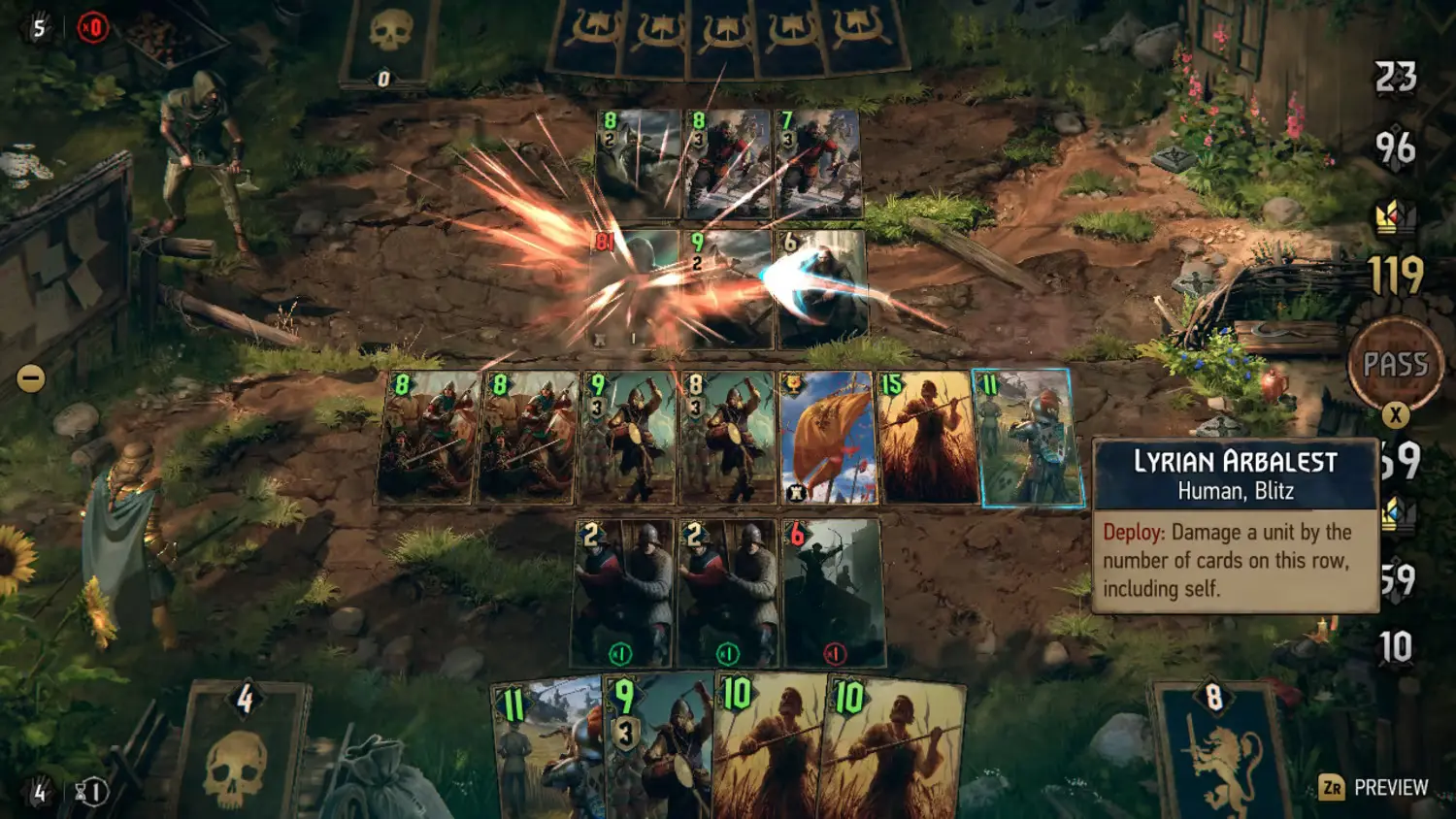
Combat is built around Gwent-inspired combat, but the battles are shaped for this campaign’s specific encounters. Players deploy units from their deck, look for effective combinations, and respond to the conditions presented by each opponent. Winning is not only about placing the strongest card available; it is about recognizing the purpose of each unit and the timing of every play.
The strategic card battles encourage deck tactics that fit the situation. A well-built deck can create value through unit combinations, while a poorly timed commitment may leave too few options for later turns. Distinct battle conditions keep encounters from feeling identical, asking players to adjust their approach instead of relying on one routine.
Meve’s army grows through recruitment and camp management, connecting progression outside battle to performance within it. Gold and wood have practical importance because they can support expansion and upgrades. That link between exploration, resources, and card strength gives the campaign a steady sense of development.
For players who enjoy planning several moves ahead, the battles provide room to experiment with different synergies and responses. The story-driven format also gives combat a clear dramatic role: many confrontations feel connected to a quest, a regional threat, or a decision made along the way.
Exploration, Environmental Puzzles, and Hidden Rewards
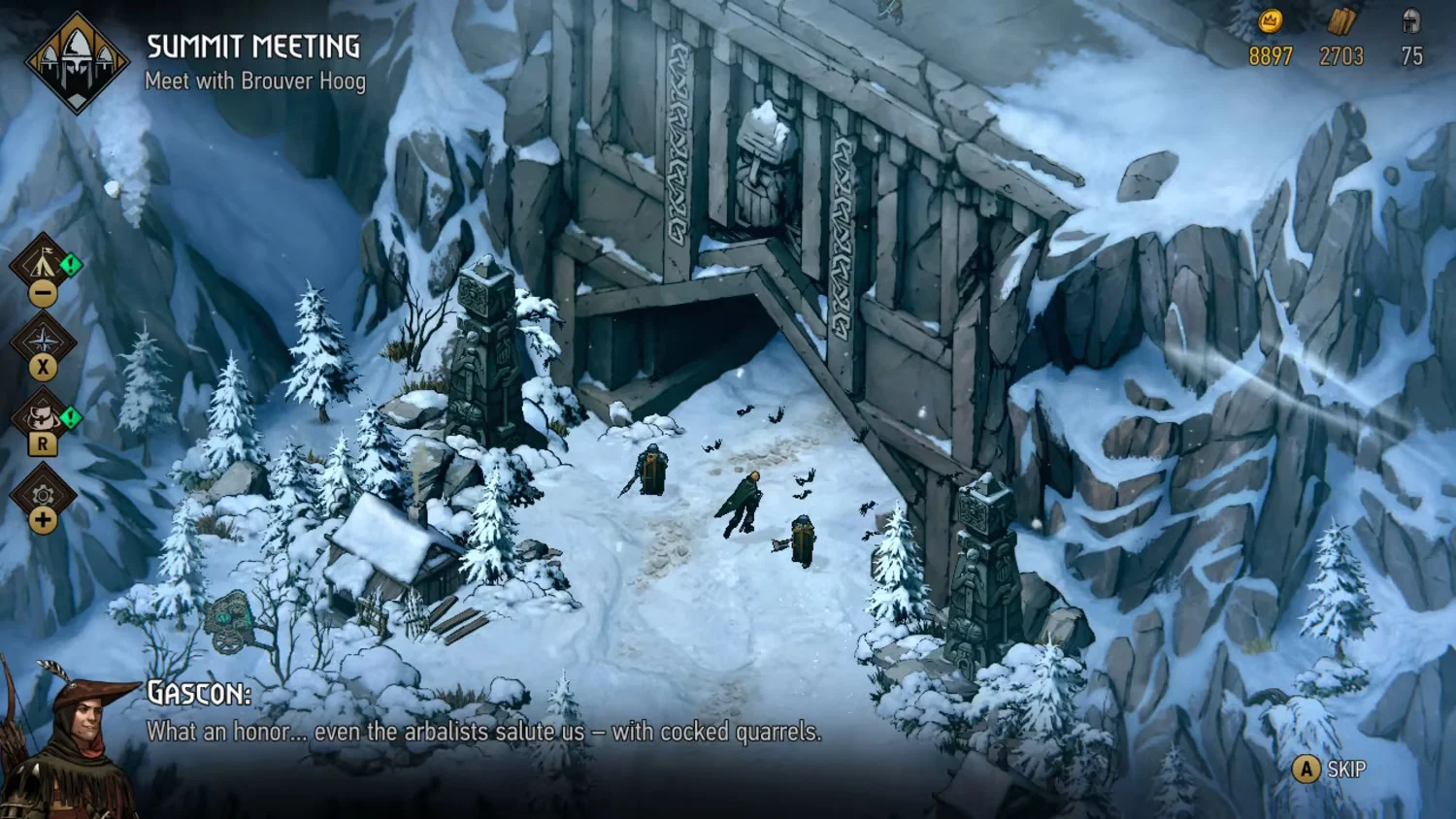
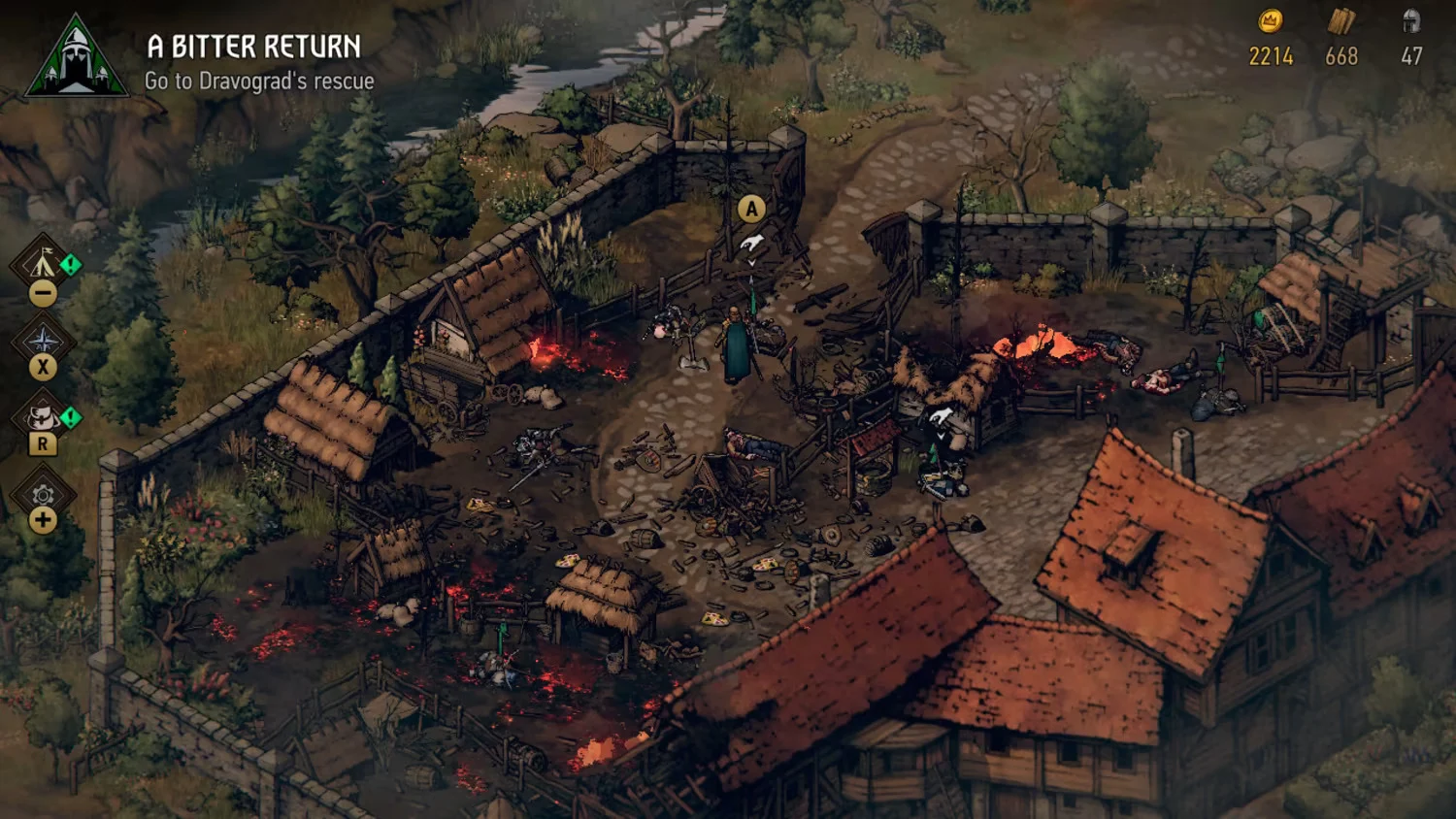
The campaign unfolds across hand-drawn maps that invite deliberate exploration. Meve can travel through routes that contain quests, conversations, resources, and challenges, giving the world a crafted presentation that suits the game’s storybook-like strategic perspective.
Environmental puzzles provide another reason to look beyond the direct route. Solving them can open paths and reveal hidden treasures, making exploration useful rather than decorative. A detour may supply resources needed for the war effort, offer a new opportunity, or expose details that add to the surrounding story.
Careful map reading also complements the game’s decision-making. Dialogue and discoveries can change how a player understands a problem before choosing a response. This helps preserve tension between immediate military needs and longer-term consequences, especially when resources and relationships both matter.
The combination of hand-drawn maps, puzzles, and rewards gives the campaign a slower, more considered rhythm between battles. Players are encouraged to assess the land, not simply rush toward the next objective.
7 Strategic Priorities for Thronebreaker Card Battles
- Build around synergy. Choose cards that support each other, since a coordinated deck can be more reliable than a collection of individually powerful units.
- Test unit combinations. Learn how different soldiers and effects interact, then adjust the deck to suit the challenges encountered during the campaign.
- Spend resources with purpose. Gold and wood support army growth and camp development, so balance immediate upgrades against future needs.
- Explore before committing. Search routes for resources, puzzles, and hidden treasures that can strengthen Meve’s position before difficult encounters.
- Read the dialogue closely. Conversations can provide context for moral choices and may reveal information worth considering before a decision is made.
- Use aggression selectively. Press an advantage when the board supports it, but do not treat every battle as a race to empty the hand.
- Hold cards when timing matters. Saving a useful card for the right moment can be more valuable than playing it immediately into an unfavourable situation.
These Thronebreaker tips are less about a fixed winning formula than about building good habits. Deck synergy, measured resource spending, and attention to the map all support card battle strategy. Because encounters have their own conditions, experimentation can add replay value for players interested in revisiting battles with different tactical ideas.
Nintendo Switch Release Details for Thronebreaker: The Witcher Tales
Thronebreaker: The Witcher Tales Switch NSP was released for Nintendo Switch on January 28, 2020. It is listed as a Strategy Game, with CD Projekt Red Studio serving as both publisher and developer.
The release is Region Free and supports English, German, Spanish, French, Italian, and Russian. Its combination of narrative choices, exploration, war-camp progression, puzzles, and card battles makes it suited to players looking for a single-player Witcher setting story with a strong strategic focus. Those drawn to Gwent-style planning and deliberate decision-making will find the campaign’s systems closely tied to Meve’s difficult journey across the Northern Realms.