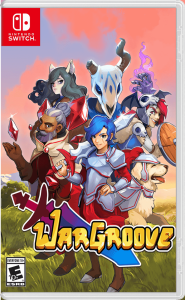
Wargroove Switch NSP
Report Link Error
Select the broken download file, then submit the report.
Screenshots
About Game
Wargroove Switch NSP refers to Chucklefish’s 2019 Strategy game for Nintendo Switch, a colorful tactical adventure built around careful turns, compact battlefields, and commanding a varied army. Its pixel-art world has an approachable charm, but its missions ask for disciplined movement, smart economy management, and a willingness to rethink a plan when the battlefield changes.
Wargroove on Nintendo Switch: A Modern Take on Turn-Based Strategy
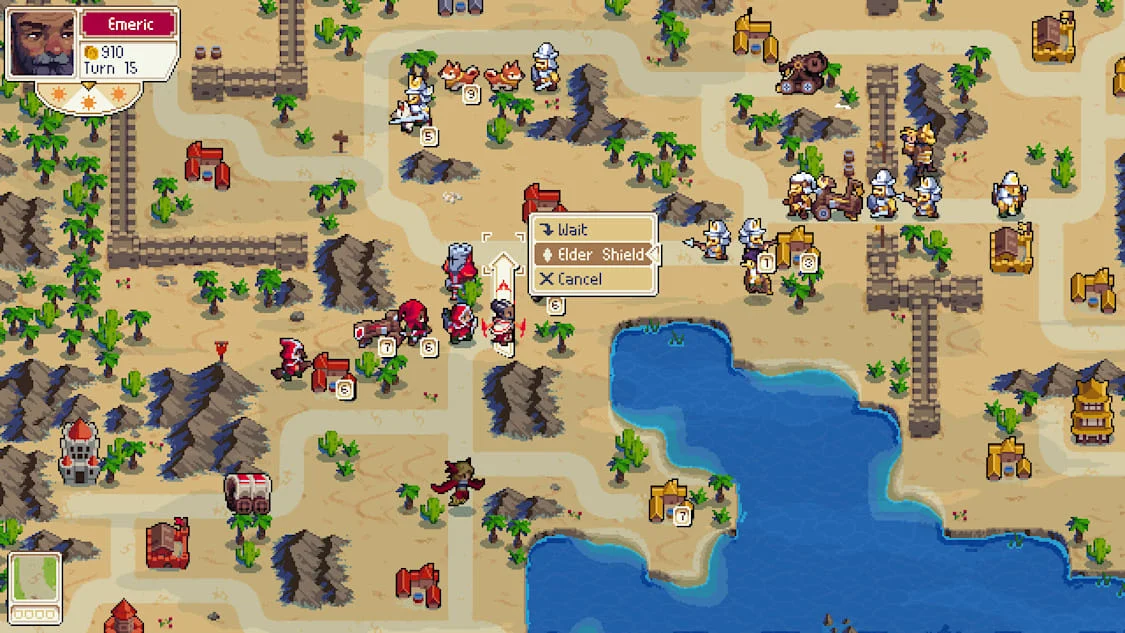
Released on February 01, 2019, Wargroove Switch brings grid-based tactical combat to a portable format without simplifying the decisions that define the genre. Players move armies across square maps, weighing attack ranges, defensive positions, available resources, and the order in which each unit acts. A strong turn can create a decisive opening; a careless advance can leave valuable troops exposed.
Chucklefish frames those battles with expressive pixel art and fluid animation. Infantry, archers, cavalry, and air units are easy to distinguish on the map, while the vibrant visual style keeps the campaign’s warfare from becoming visually severe. The presentation supports the tactical clarity of each encounter: roads, forests, buildings, and open ground are all readable parts of the board rather than mere decoration.
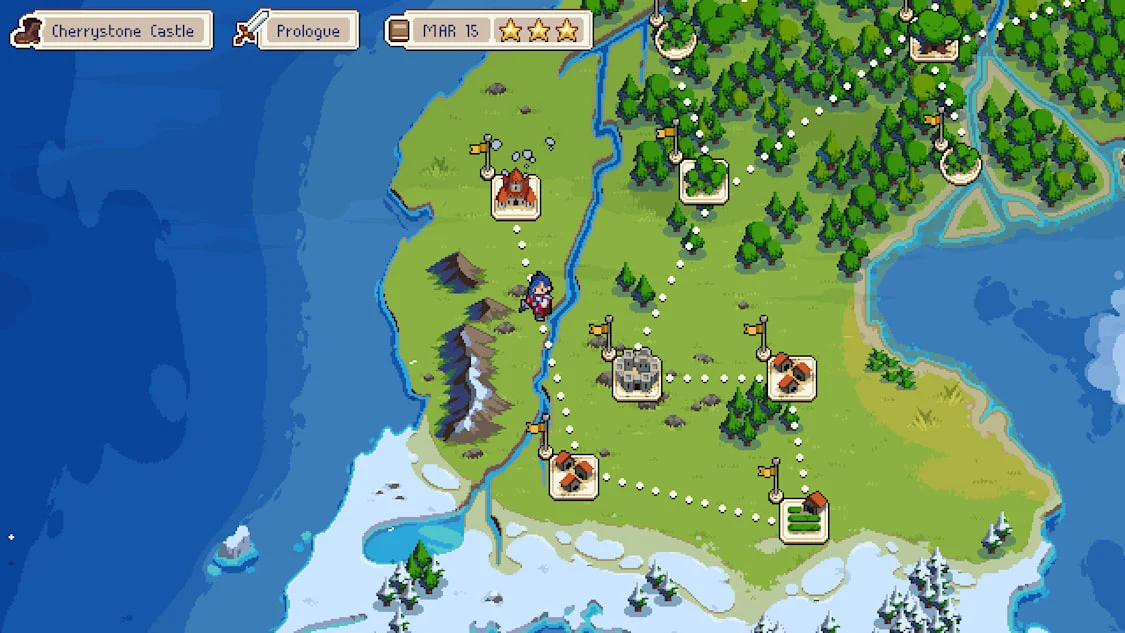
The campaign follows Queen Mercia after an attempt on her father’s life forces her from home. As the undead Felheim Legion advances under Valder, Mercia searches for allies across Aurania and works to reclaim her kingdom. That journey introduces different factions, commanders, shifting loyalties, and story missions with tactical objectives. The result is a strategy game with a clear sense of progression: each new confrontation is another chance to understand the army, the map, and the people leading the fight.
Commanders and Their Battle-Changing Groove Abilities
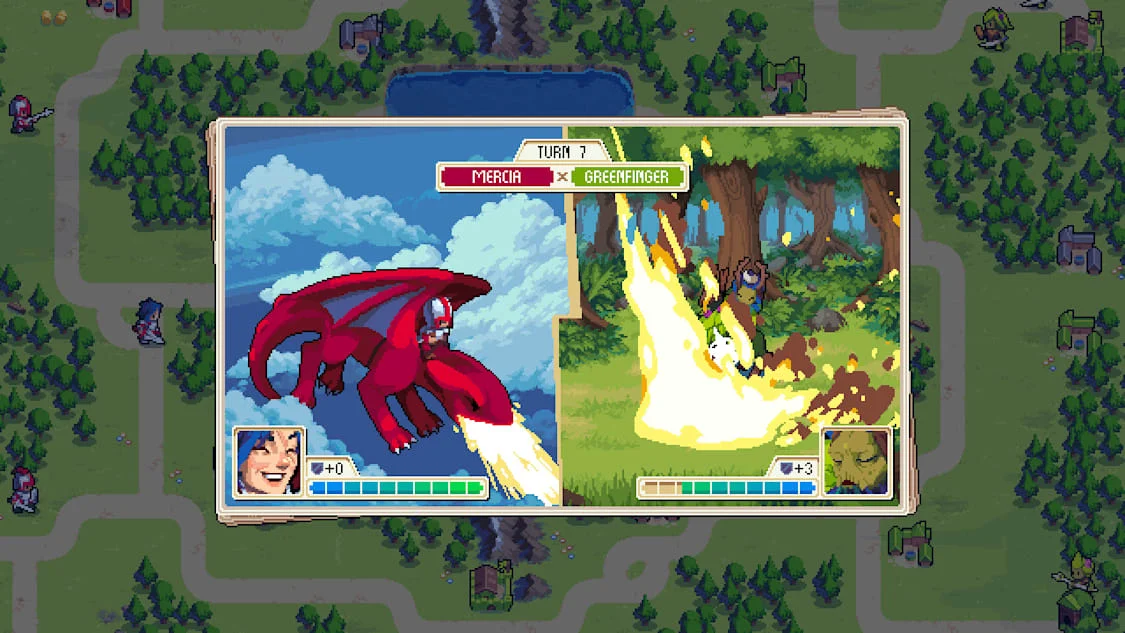
Every army is led by a commander, and commanders are more than powerful units placed near the front line. They build charge over time for a personal Groove, a special ability that can alter the rhythm of a battle. Because each commander’s Groove is distinct, the ability is not simply a button to use as soon as it becomes available. Its value depends on where the commander is standing, which units are nearby, and what the opponent can do next.
This creates an important layer of timing within Wargroove’s tactical battles. A player may hold a charged Groove while setting up an attack, waiting for a position in which its effect can swing a crucial exchange. Using it too early may waste a potential advantage; delaying it too long may mean losing control of a village, barracks, or vulnerable approach.
Commanders also encourage players to think about risk. Their placement influences the shape of a frontline, yet advancing them without support can create danger. The best turns often combine ordinary unit actions with a well-chosen Groove, turning a collection of individual moves into a coordinated plan.
How Grid Positioning and Terrain Shape Every Battle
Wargroove terrain matters because movement is never just about reaching the nearest enemy. Forests provide defensive value, making them useful positions for troops that need to hold ground or survive an incoming attack. Roads allow faster travel, which can help a force reinforce a threatened area, pressure a distant village, or arrive in time to protect a production building.
That relationship between movement and defense gives the grid-based maps their texture. A unit in open terrain may be easy to target, while a unit placed in a forest can become a more difficult problem. Roads can accelerate a push, but they may also funnel troops into predictable routes. Good unit positioning means looking beyond the immediate attack and considering where each piece will be when the opposing turn begins.
Buildings add another strategic concern. Capturing villages supplies gold, supporting continued recruitment. Barracks allow unit production, making them valuable points to defend or contest. A player who controls more income and maintains access to production can keep applying pressure, while a player who loses those advantages may find that even successful attacks are difficult to replace.
5 Tactical Priorities for New Wargroove Commanders
A useful Wargroove strategy guide begins with restraint. Battles reward aggressive opportunities, but they also reward preserving an army and building toward a stronger position. These priorities provide a practical starting point for new commanders.
- Learn the matchups. Units have strengths and weaknesses, so sending the appropriate counter into a fight can produce far better damage than relying on the nearest available troop.
- Use terrain deliberately. Forests offer defensive help, while roads improve movement. Plan attacks around the ground a unit will occupy after it acts, not only the target it can hit now.
- Capture income early. Villages generate gold, and barracks enable recruitment. Securing both helps establish the economy needed to sustain a larger army through long missions.
- Preserve damaged units. Retreating or repositioning a weakened troop can be wiser than sacrificing it. Strongholds can heal units, and saved forces may remain useful in later exchanges.
- Respect Groove timing. A charged Groove is most effective when it supports a prepared attack, protects a key position, or changes an important tactical situation rather than being spent without a clear purpose.
These habits also make losses easier to understand. When a plan fails, the reason is often visible on the map: a unit lacked its counter, a village was left unattended, a damaged troop stayed too close to danger, or a Groove was used before the decisive moment arrived.
Local and Online Multiplayer Battles for Up to Four Players
The single-player campaign provides structured missions and story context, while Wargroove multiplayer shifts the focus toward direct tactical competition. Local multiplayer and online battles allow players to test their planning against other people, where familiar map knowledge and unit matchups matter but cannot guarantee the next move.
Matches support up to four players, expanding the usual duel into a more crowded contest for territory, resources, and positioning. With several armies on the map, decisions about when to advance, when to defend, and which opponent to pressure become more complicated. The same systems that support campaign missions—village capture, unit production, terrain use, and commander abilities—become tools for reading other players’ intentions.
For players who enjoy deliberate competition rather than quick reactions, these modes offer replay value through changing opponents and battle plans. A defensive forest position that succeeds in one match may be bypassed in another; a powerful Groove can reshape a turn, but only if its use is anticipated poorly by rivals.
Custom Maps and Campaigns Through the In-Game Editor
The in-game editor extends Wargroove Switch NSP beyond its central campaign by allowing players to create and share custom maps and campaigns. That feature suits a game whose tactical appeal depends so heavily on layout. A different arrangement of roads, forests, villages, barracks, and objectives can dramatically change how an army should move.
Custom maps can emphasize narrow defensive routes, fast road-based attacks, contested income, or larger multiplayer struggles. Custom campaigns offer another avenue for players interested in creating their own sequence of tactical challenges. Rather than limiting replay value to repeating story missions or multiplayer matches, the editor makes room for fresh scenarios shaped around the same core mechanics.
Wargroove is well suited to players who enjoy methodical turn-based strategy, readable pixel-art presentation, and battles where positioning has lasting consequences. Its approachable visual style invites players in, while its commanders, economy, terrain, and Groove abilities provide enough tactical detail to reward careful planning over many turns.
Recommended Similar Games
 Mercenaries Rebirth: Call of the Wild Lynx Switch NSPView Game
 Fire Emblem Warriors: Three Hopes Switch NSP XCIView Game
 Wall World Switch NSPView Game
 ROMANCE OF THE THREE KINGDOMS XIV: Diplomacy and Strategy Expansion Pack Bundle Switch NSP XCIView Game
 The Fable: Manga Build Roguelike Switch NSPView Game
 Taboo Trial Switch NSPView Game
