Moonstone Island Switch NSP
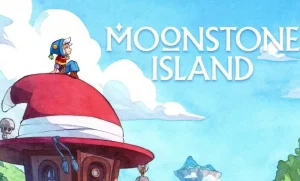
Report Link Error
Select the broken download file, then submit the report.
Screenshots

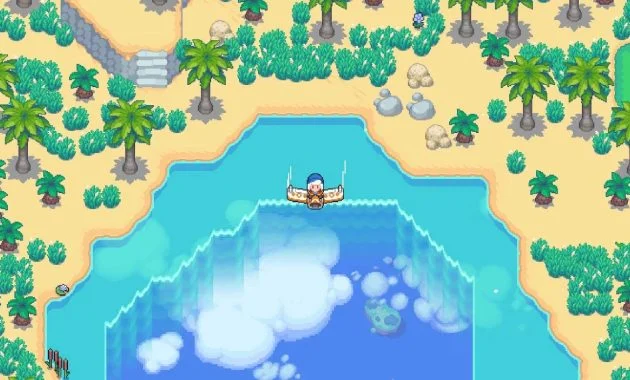

About Game
Moonstone Island Switch NSP refers to the Nintendo Switch release of Moonstone Island, dated June 19, 2024. The available metadata places it in the Role-Playing and Simulation genres, credits Raw Fury as both publisher and developer, and lists availability across Europe, the USA, and Japan. It is a compact profile, but one that gives a useful sense of the game’s broad category and intended pace.
Moonstone Island on Nintendo Switch: Release Profile
Moonstone Island arrived on Nintendo Switch on June 19, 2024. Its recorded Title ID is 010069B01B18E000, while the listed file size is 474MB. The supplied information identifies Raw Fury in a dual role, handling both publishing and development credits for this release.
For players looking at the Switch version specifically, the confirmed facts are direct: this is a 2024 release with role-playing and simulation classifications, support for several major regions, and a broad language selection. The metadata also distinguishes between firmware requirements for the base release and its update, listing version 18.0.1 for the base game and version 20.5.0 for the update.
Those details do not describe the game’s story, visual style, or individual systems. They do, however, establish a clear frame: Moonstone Island is presented as a genre blend rather than a title defined by a single action-focused category.
A Role-Playing and Simulation Genre Blend
The Role-Playing and Simulation labels suggest a player experience built around steady involvement rather than immediate, self-contained action. Role-playing games commonly place emphasis on advancement, objectives, choices, and developing a stronger position over time. Simulation games often reward attention to planning, priorities, and the consequences of smaller decisions across a longer play session.
That combination gives Moonstone Island gameplay a potentially deliberate profile, even though the available metadata does not confirm its exact mechanics. It is reasonable to see the genre pairing as an indication that progression and management may matter alongside exploration or broader adventure goals. It is not enough information, however, to confirm how any particular system works.
There are no verified details here about combat structure, resource types, character relationships, mission design, map layout, or a specific narrative premise. The genre classifications can guide expectations, but they should not be treated as a substitute for confirmed feature descriptions. What can be said is that the listed Moonstone Island genres point toward a game likely to reward attention over time.
Why a Measured Play Style May Suit Moonstone Island
A slower, more observant approach may be a good fit for a role-playing simulation experience. These genres often ask players to understand available options before committing to a direction, particularly when early choices can shape later progress. The supplied reference similarly frames patience, preparation, and gradual learning as useful habits for this kind of game.
- Take stock first: Review menus, objectives, and available information before making major decisions.
- Plan beyond one session: Simulation game planning often benefits from balancing immediate tasks against longer-term goals.
- Learn systems gradually: A role-playing simulation may be more rewarding when its systems are allowed to unfold over time.
- Spend carefully: Avoiding unnecessary early commitments can leave more flexibility as priorities become clearer.
- Keep progress in mind: Where supported, maintaining more than one save can provide room to test choices without losing earlier progress.
None of these points confirms a particular feature in Moonstone Island. They are practical genre-based guidance. A player drawn to RPG progression may appreciate the prospect of building toward broader goals, while someone who enjoys simulation-oriented play may value the chance to approach tasks methodically rather than rush through them.
Replay value is not specified in the supplied information, so it would be premature to claim that the game offers branching routes, repeatable content, or multiple endings. Still, games associated with planning and progression can invite experimentation simply through different priorities and pacing. That is a possibility suggested by the genre labels, not a documented feature.
Moonstone Island Language and Regional Availability
The Nintendo Switch release is listed for Europe, the USA, and Japan. Its supported languages are English, French, German, Japanese, Portuguese, Simplified Chinese, and Spanish. This is a notably broad set of language options for the regions named in the metadata.
Language support can matter in a game carrying role-playing and simulation classifications, since menus, objectives, and system explanations may be important to a player’s understanding of progression. The available details do not indicate which languages apply to every individual text or presentation element, so the confirmed list should be read as the stated language support rather than a detailed breakdown of localization features.
The regional information also requires a small degree of care. Europe, USA, and Japan are all named in the principal metadata, while no further distinction is supplied here about regional variations in content or presentation. There is therefore no verified basis to suggest differences between those listed territories.
The Significance of Raw Fury as Publisher and Developer
Raw Fury is credited as both the Moonstone Island publisher and the Moonstone Island developer. That dual credit is one of the clearest pieces of production information available for the Switch release.
It is useful because it avoids uncertainty about the named parties attached to the title. The metadata does not provide further production history, team details, design commentary, or information about how responsibilities were divided. For that reason, the credit should remain exactly what it is: a verified listing of Raw Fury in both roles.
For readers keeping track of the release profile, Raw Fury’s involvement joins the June 19, 2024 date, the Role-Playing and Simulation categories, and the multi-region listing as the central confirmed facts surrounding the game.
What the Available Metadata Does Not Confirm
The existing Moonstone Island details are useful but limited. They do not name missions, characters, locations, enemies, story events, combat methods, or exact progression systems. They also do not describe the game’s atmosphere, art direction, music, interface, or performance. Presentation and narrative tone remain unconfirmed by the supplied material.
That boundary matters when discussing Moonstone Island Switch NSP. The verified picture is of a Nintendo Switch title released on June 19, 2024, classified as Role-Playing and Simulation, credited to Raw Fury as publisher and developer, and listed for Europe, the USA, and Japan in seven languages. Its base requirement is listed as firmware version 18.0.1, while its update requirement is listed as version 20.5.0.
For a suitable audience, the strongest factual reading is straightforward: it may appeal to players interested in a blend of role-playing progression and simulation-oriented planning. Beyond that, caution is appropriate. The available information supports a genre-focused expectation, not a detailed account of the game’s mechanics or story.