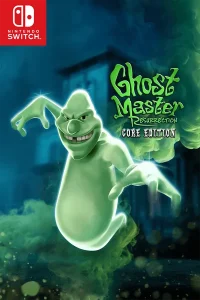
Ghost Master: Resurrection Switch NSP
Screenshots



About Game
Ghost Master: Resurrection Switch NSP is listed as a Nintendo Switch release dated 12 June 2025. Published by Strategy First, it carries the genre labels Indie, Puzzle, Simulator, and Strategy, placing it in a broad but distinct category of games defined by planning, interpretation, and systems-minded appeal. Its metadata also identifies a notably wide language selection, giving the release an international profile on Nintendo Switch.
Ghost Master: Resurrection on Nintendo Switch: A Metadata Overview
For Nintendo Switch players scanning release information rather than promotional promises, Ghost Master: Resurrection presents a clear set of verified details. Strategy First is the listed publisher, the release date is 2025-06-12, and the game is categorized under four tags: Indie, Puzzle, Simulator, and Strategy.
Those classifications matter because they frame the title before any assumptions are made about individual mechanics or modes. “Indie” places it within an independent-minded publishing category, while Puzzle, Simulator, and Strategy suggest an experience intended to be considered from more than one angle. The available metadata does not describe particular objectives, characters, locations, or progression structures, but its genre grouping gives readers a useful starting point for understanding its editorial position.
The Nintendo Switch listing is also associated with version 1.7 and a file size of 12.1 GB. These are practical metadata points rather than descriptions of the game itself, yet they help define this particular Switch release as listed.
Release Date and Publisher Details
The listed Ghost Master: Resurrection release date is 12 June 2025. That places the title among 2025 Switch games, with Strategy First identified as its publisher.
Publisher information can be valuable context, particularly when a game’s genre labels span several categories. Here, the verified record is straightforward: Strategy First publisher details are attached to the Nintendo Switch release, without further supplied information about development, prior releases, or broader franchise history. Keeping that distinction clear is important. The available facts establish the publisher and date, but they do not establish additional background beyond those points.
For readers building a release calendar, the date provides the strongest point of reference. For those comparing genre-tagged titles on Switch, the publisher attribution adds another concise identifying detail. Together, they keep Ghost Master: Resurrection grounded in its specific listing rather than in assumptions about what its title may imply.
How Its Genre Tags Frame the Experience
The Ghost Master Resurrection genres are broad enough to invite interest from several audiences while remaining specific enough to communicate a general direction. Puzzle, Simulator, and Strategy are all gameplay-oriented labels. Each suggests that the game’s identity is being framed around thought, organization, and engagement with a structured experience, rather than around a single narrowly defined genre tag.
Puzzle signals an editorial emphasis on consideration and problem-focused play. Simulator suggests a category concerned with representing or managing a system in some form. Strategy points toward planning and decision-making as part of the game’s broad positioning. None of these labels, on their own, confirms exact mechanics, but taken together they establish useful expectations about the kind of attention the title may ask from its audience.
The Indie label rounds out that picture. An indie strategy Switch game can be presented through a more specialized genre mix than a release assigned only one category, and Ghost Master: Resurrection is explicitly filed across four. That combination may be especially relevant to players who prefer to investigate a game’s classification before drawing conclusions about its atmosphere, presentation, or replay value. Those details are not specified in the supplied metadata, so the genre tags remain the most reliable guide.
A Puzzle, Simulator, and Strategy Blend
The three gameplay-focused labels are best read as complementary descriptors rather than as a promise of a particular feature set. Ghost Master Resurrection puzzle classification identifies one part of the listing; Ghost Master Resurrection simulator and Ghost Master Resurrection strategy classifications add two more perspectives. Together, they indicate a title that is not being presented solely through action, adventure, or narrative categories.
For a prospective audience, this can set broad expectations in a measured way. Readers drawn to puzzle games may note the title’s place in that category. Readers who look for simulator or strategy tags can also find those labels attached to the same release. The overlap creates a useful shorthand: this is a Nintendo Switch game catalogued around several forms of considered play.
It would be premature to infer specific systems, challenge structures, progression paths, or repeat-play features from that shorthand alone. The verified material does not describe them. Still, the categorization gives Ghost Master: Resurrection a clear editorial identity as a multi-tagged indie release, one likely to interest players who use genre filters as a first step in choosing what to explore.
Supported Languages for Ghost Master: Resurrection
Language support is one of the most concrete strengths of the listing. Ghost Master: Resurrection includes 12 verified language options: Japanese, French, German, Italian, Spanish, Korean, Russian, Simplified Chinese, Brazilian Portuguese, Traditional Chinese, American English, and Polish.
That range covers languages used across North America, Europe, East Asia, and Latin America. American English is specifically listed rather than a more general English label. Chinese support is represented through both Simplified Chinese and Traditional Chinese, while Portuguese support is listed as Brazilian Portuguese. These distinctions are worth preserving because they reflect the wording of the available metadata.
For players interested in multilingual Nintendo Switch games, the language list is more informative than a simple claim of broad localization. It names the supported options directly. Japanese, French, German, Spanish, Korean, Russian, Polish, and Italian are all included, alongside the Chinese and Portuguese variants. No further information is provided about language-specific presentation or text, so the listed support should be understood precisely as language metadata.
Ordered Guide: 12 Supported Language Options
The following ordered guide keeps the verified Ghost Master Resurrection language list in its supplied sequence. To present all 12 options while keeping the list concise, each entry groups two consecutive languages.
- Japanese and French: the first two listed language options.
- German and Italian: the next pair in the verified sequence.
- Spanish and Korean: two further supported selections.
- Russian and Simplified Chinese: followed by the first listed Chinese variant.
- Brazilian Portuguese and Traditional Chinese: the Portuguese option and the second Chinese variant.
- American English and Polish: the final two listed language choices.
This ordered presentation is useful for readers looking for a particular option without flattening important regional distinctions. Ghost Master Resurrection English support is identified specifically as American English, while Ghost Master Resurrection Japanese and Ghost Master Resurrection Polish support are also explicitly included. With its 12-language listing, Strategy First’s Nintendo Switch release offers a clearly documented multilingual set of options alongside its Indie, Puzzle, Simulator, and Strategy classifications.