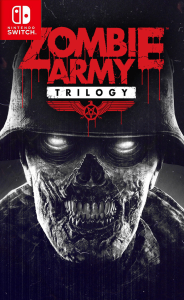
Zombie Army Trilogy Switch NSP XCI
Report Link Error
Select the broken download file, then submit the report.
Screenshots
About Game
Zombie Army Trilogy Switch NSP XCI brings a grim alternate-history World War II conflict to Nintendo Switch, placing a zombie outbreak at the center of Europe’s collapse. Developed and published by RebellionInteract, this action-adventure game turns a familiar wartime setting into a pulpy horror battle of ruined streets, buried chambers, and overwhelming undead assaults. Released on March 31, 2020, it supports English, German, Spanish, French, Italian, and Russian, with a Region Free release.
A Portable Undead War Across Alternate-History Europe
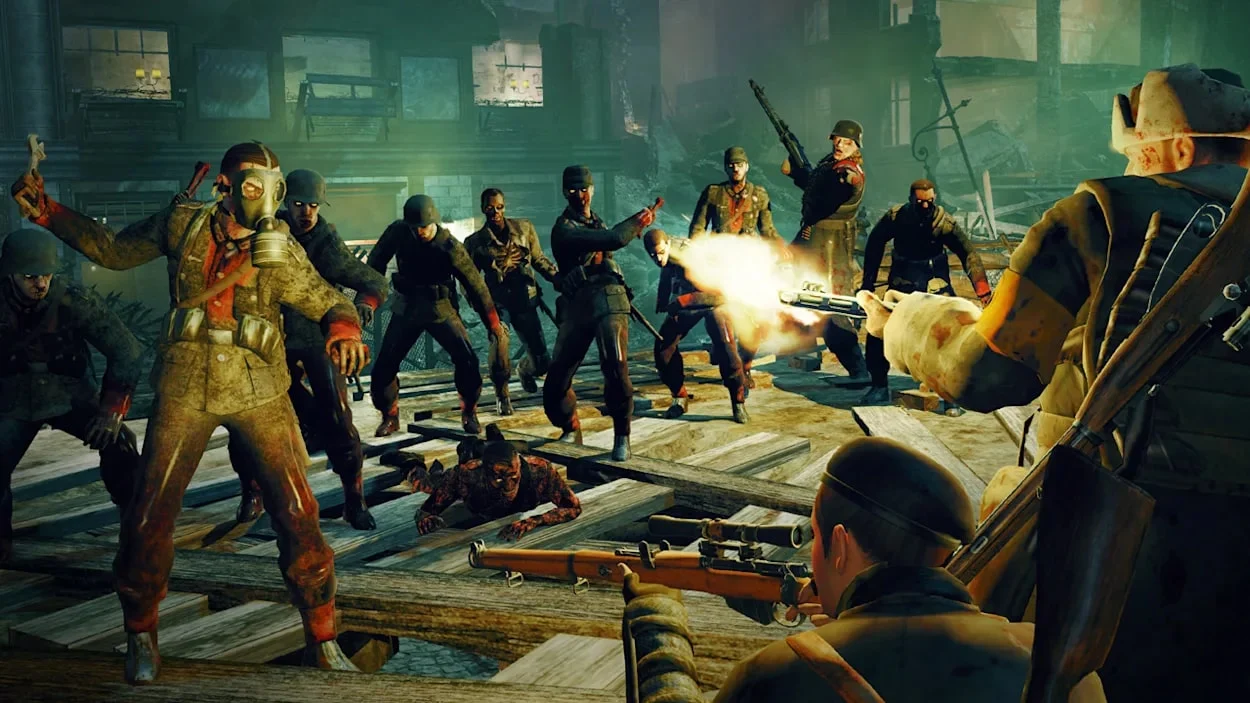
The premise is deliberately lurid: Hitler’s forces are not merely fighting a losing war, but returning as an undead army. Europe has become a nightmare landscape where cities are overrun, survivors are isolated, and every route forward is crowded with hostile corpses. The alternate-history World War II setting gives the action a bleak visual and narrative frame, while the zombie invasion pushes it into creature-feature horror.
On Switch, the trilogy’s campaign structure gives players a substantial journey through this devastated version of Europe. The atmosphere leans into dark corridors, shattered urban spaces, and the pressure of advancing enemy groups rather than a quiet historical reconstruction. It is a game built around escalation: the threat is already widespread, and the surviving characters are attempting to fight back against an enemy that seems to have no natural limit.
The result is a combination of wartime weaponry, horror imagery, and third-person combat. Its tone is closer to a B-movie nightmare than a conventional military drama, using the undead invasion to make every encounter feel unstable and dangerous.
Plan Z and the Trilogy’s Pulp-Horror Storyline
The outbreak begins with Plan Z, Hitler’s final measure as defeat approaches. Rather than accepting the end of the war, he unleashes undead soldiers upon Europe, transforming the continent into a graveyard and creating a threat far beyond the remaining battlefield. The plan creates the central conflict of the Zombie Army Trilogy story: survivors must resist an expanding horror capable of wiping out humanity.
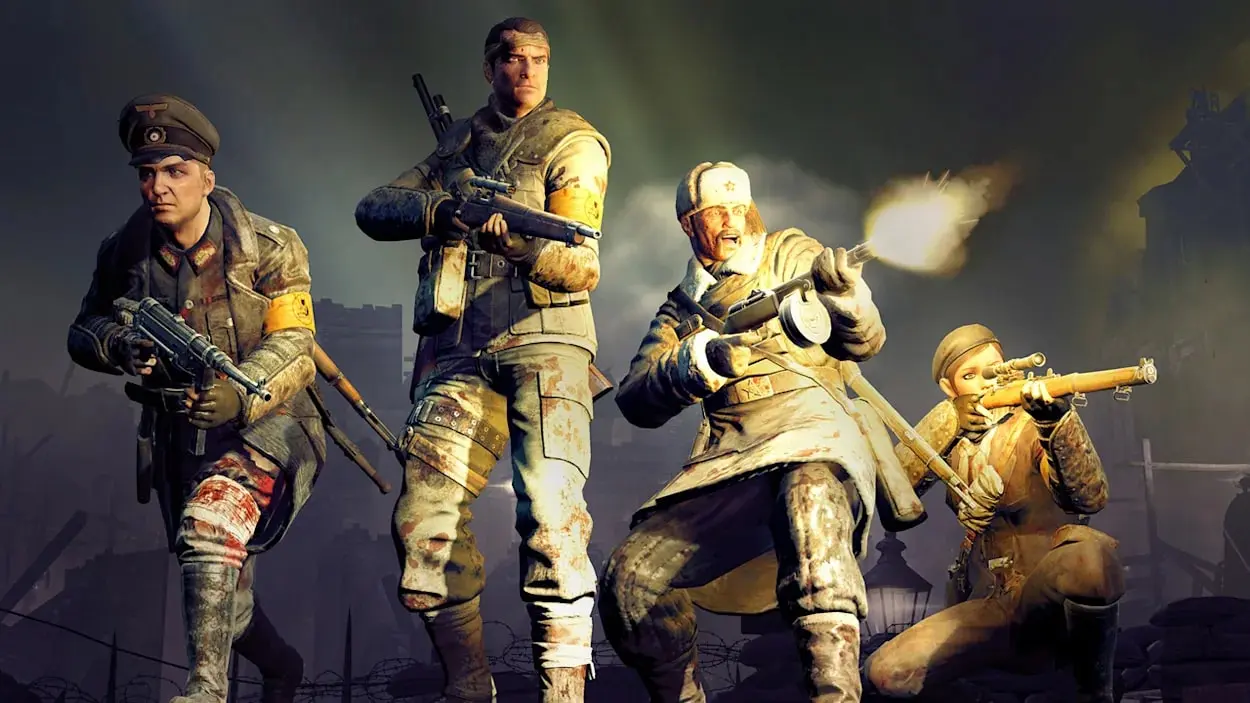
Players follow a group of heroes with their own motivations for joining the fight. Their path leads through the consequences of Plan Z, from the initial scale of the outbreak to the increasingly desperate effort to halt it. The ultimate objective is direct and macabre: stop the zombie hordes and confront Hitler after his resurrection as the leader of the undead army.
This is not a subtle historical reimagining, and it does not need to be. The story embraces its heightened premise, using grotesque enemies, graveyard-like locations, and repeated confrontations with impossible odds to maintain momentum. The narrative gives the campaigns a reason to move from one nightmare zone to the next, while the larger mystery behind Plan Z keeps the undead war connected across the trilogy.
Three Campaigns Through Cities and Catacombs
The three Zombie Army Trilogy campaigns trace a route through ravaged cities and dark catacombs, offering a progression from open, damaged European spaces to more enclosed and oppressive environments. Each setting reflects the collapse caused by the outbreak. Streets that might once have been places of transit become killing grounds, while underground areas create a tighter, more claustrophobic kind of danger.
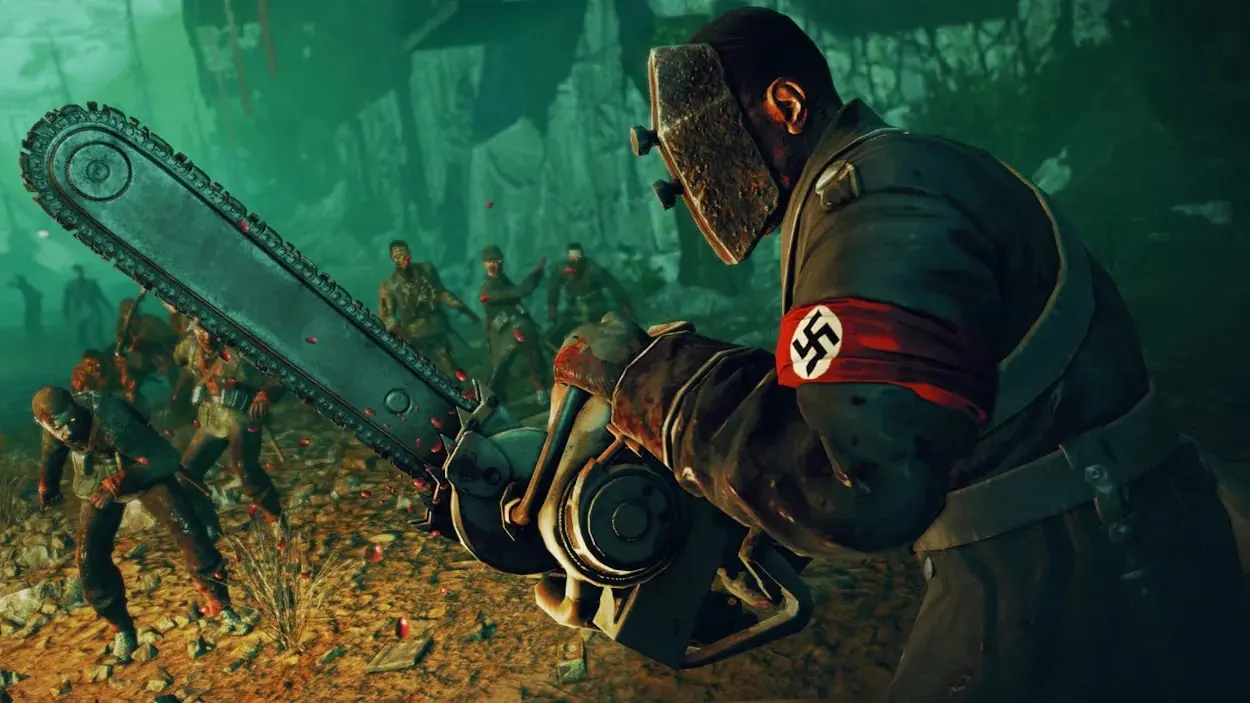
The campaigns are populated by horror set pieces and a range of undead adversaries. Standard shamblers are only part of the problem; players also encounter heavily armored zombies, grotesque super-mutants, and boss encounters. That variety matters because it prevents the undead threat from feeling entirely uniform. A crowd can be dangerous through numbers, but specialized enemies demand more focused responses.
Progression is driven by survival through these hostile locations and by the growing scale of the conflict. The trilogy moves toward a final stand against the force behind the outbreak, making each campaign part of a larger arc rather than an isolated series of zombie fights. The setting remains consistently bleak, but the changing locations and enemy pressure give the journey a sense of mounting stakes.
Third-Person Shooting Built Around Precision Headshots
Combat combines third-person shooter action with sniper-focused aiming derived from Sniper Elite mechanics. Accuracy is not simply a flourish. Precision headshots are a practical answer to relentless groups of undead, particularly when ammunition and other resources are limited. Players are encouraged to choose shots carefully instead of treating every encounter as an unlimited barrage.
World War II-era weapons, including rifles, shotguns, and explosive devices, support different approaches to the hordes. Rifles reward controlled aim at range, while shotguns and explosives provide useful answers when enemies close in or gather in dangerous numbers. The game also asks players to manage space. Constant movement can prevent the undead from surrounding the group, especially as waves become more chaotic.
Environmental traps and hazards add another tactical layer. Used well, they can thin the ranks without consuming as much ammunition, which is valuable when resources are under pressure. The strongest encounters come from balancing these elements: land accurate shots, reposition before the crowd closes, and use the level itself to reduce the number of enemies that reach the team.
Zombie Army Trilogy Switch NSP XCI also supports online and local cooperative campaigns for up to four players. Co-op changes the practical rhythm of survival. One player can cover an approach while another manages a growing group, and teammates can protect one another during high-pressure waves. Horde Mode extends that defensive focus across atmospheric maps, providing another way to face repeated undead attacks.
The X-Ray Kill Cam and Visceral Combat Feedback
The signature X-Ray Kill Cam gives accurate shots a distinct visual payoff. When a shot connects, the game can highlight the damage in a visceral presentation, reinforcing the importance of placing rounds carefully. It is particularly suited to the rifle-driven side of the combat, where a well-timed headshot can feel more significant than simply firing into a crowd.
Dismemberment further emphasizes the physical impact of combat against the undead. This is not presented as restrained wartime action; it is horror combat designed to make each effective hit feel forceful and immediate. The X-Ray Kill Cam helps link mechanical skill to presentation, rewarding players for the kind of precise shooting the encounters demand.
That feedback is central to the game’s identity. Zombie headshots are useful because they help control threats, but they are also satisfying because the kill cam makes the result visible. The system supports the trilogy’s exaggerated horror tone without changing its core priority: survive long enough to keep moving through the campaign.
5 Survival Priorities for New Zombie Army Trilogy Players
- Target the head. Precision headshots are vital against the undead and make the most of the game’s sniper-focused aiming.
- Keep moving. Relentless groups can overwhelm stationary players, so repositioning is important when enemy waves begin to close in.
- Protect ammunition. Resources are limited, making ammunition management essential during longer and increasingly difficult encounters.
- Use the environment. Traps and hazards can reduce undead numbers strategically and help preserve valuable weapons and explosives.
- Work as a unit. In co-op, teammates can cover different approaches, support one another, and coordinate tactics when the pressure rises.
Zombie Army Trilogy is best suited to players looking for a dark, action-heavy co-op horror experience with sniper-led shooting and deliberately outrageous undead warfare. Its campaigns, Horde Mode, varied zombie threats, and four-player cooperation provide multiple ways to return to its ruined European battlefields.