Tokyo Xanadu eX+ Switch NSP

Report Link Error
Select the broken download file, then submit the report.


Screenshots
About Game
Tokyo Xanadu eX+ Switch NSP places a supernatural threat beside the routines of school life in Morimiya City. Released for Nintendo Switch on July 25, 2024, this English-language action RPG from Aksys Games follows a group of students pulled into a hidden conflict with the Eclipse, an alternate dimension populated by dangerous creatures. Its appeal comes from that contrast: familiar streets, classmates, and conversations on one side; fast-moving battles, labyrinths, and looming conspiracies on the other.
Tokyo Xanadu eX+: An Urban Fantasy Adventure in Morimiya City
Morimiya City is more than a backdrop for combat. The story begins with Kou Tokisaka, an apparently ordinary high school student whose daily life changes after he encounters Asuka Hiiragi, a mysterious transfer student connected to unusual events. Their meeting exposes Kou to the Eclipse, a shadowy parallel realm that threatens the city through the creatures known as Horrors.
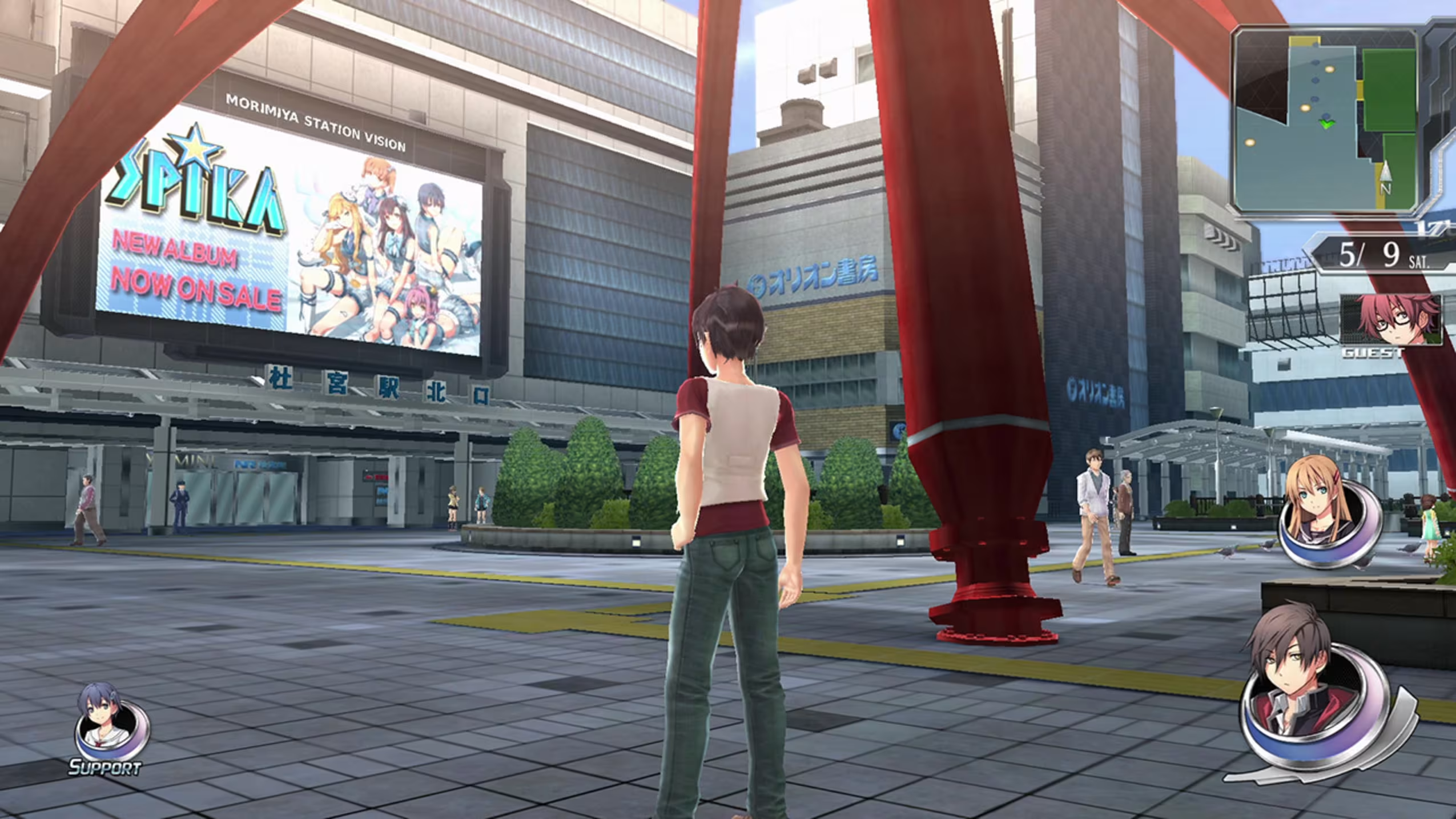
The resulting urban fantasy action RPG structure moves between two distinct moods. Morimiya City supports the school-life side of the adventure, where Kou can interact with classmates, allies, and local residents. The Eclipse changes the pace completely, sending the group into hostile spaces where they must confront monsters and uncover the truth behind the danger closing in on their home.
That balance also shapes the story’s emotional direction. Kou and his companions are not simply a party of fighters; they are students dealing with personal concerns while accepting responsibility for protecting Morimiya City. Ancient mysteries and individual struggles sit alongside the larger threat, giving the narrative room to develop its cast as well as its supernatural conflict.
Real-Time Action RPG Combat and Elemental Strategy
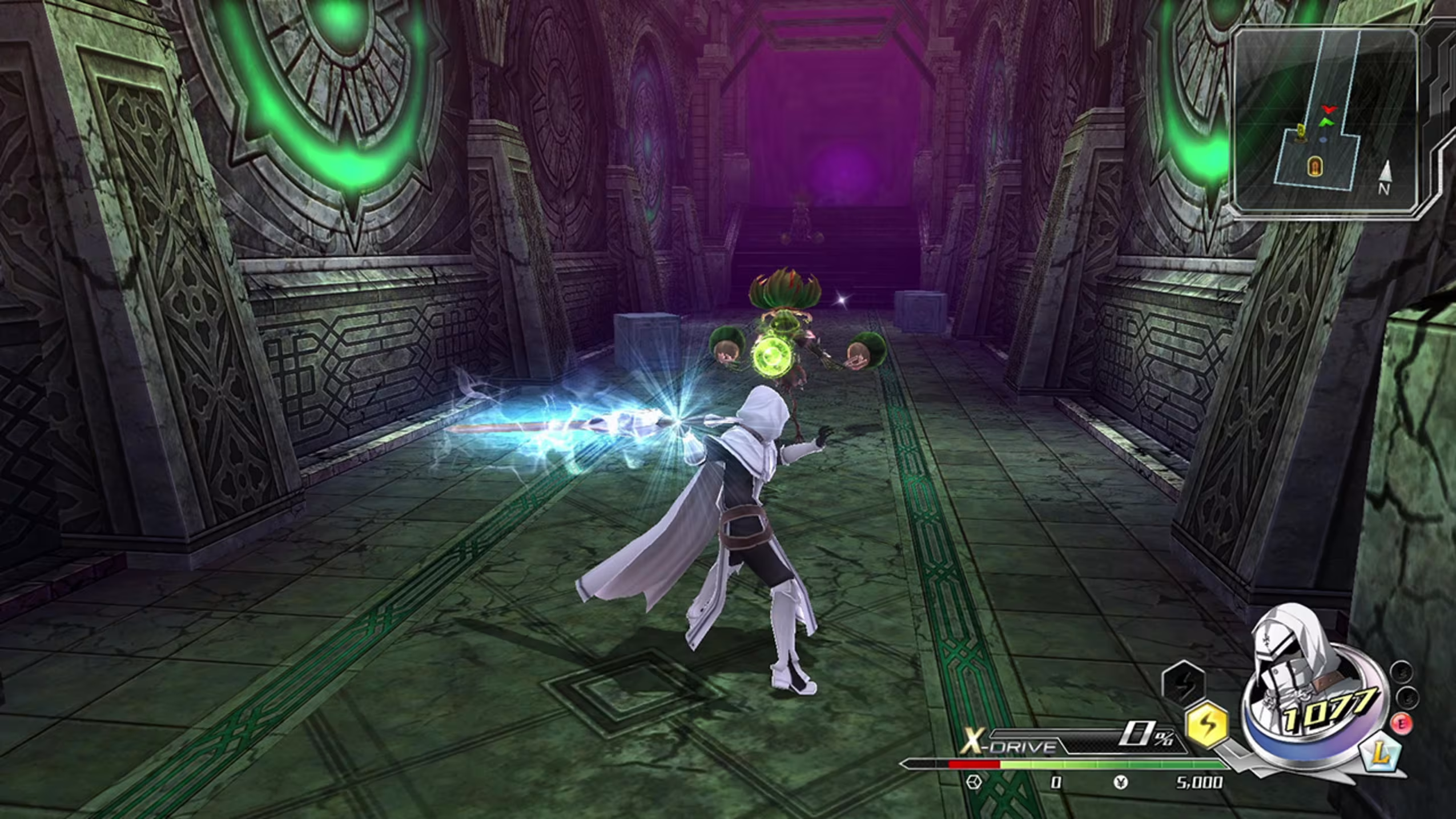
Combat unfolds in real time, asking players to actively control a chosen character rather than issue commands from a distance. The playable roster grows over the course of the story, and each character has distinct weapons, skills, and elemental properties. This gives action RPG battles a practical tactical layer: a preferred character may suit one encounter well, while a different set of attacks may be more useful against another enemy type.
Soul Devices are central to the group’s ability to fight the Horrors. Characters can unleash powerful attacks and use their own skill sets in the middle of combat, encouraging quick reactions as enemies crowd the arena. The pace supports direct, responsive play, but it is not only about pressing forward. Party composition and ability choices matter when tougher opponents begin to test the group’s options.
Elemental weaknesses are especially important. Matching elemental attacks to an enemy’s vulnerability can increase damage, making battles more efficient and helping the party control dangerous encounters. Players who pay attention to enemy traits and switch characters when necessary can make better use of the game’s varied cast instead of relying on a single approach throughout the campaign.
Exploring Eclipse Dungeons and Facing Horrors
The Eclipse dungeons provide the adventure’s most concentrated challenges. These labyrinthine areas combine battles with dungeon exploration, environmental obstacles, and puzzle challenges. Progress is not limited to defeating every Horror in sight; players must also navigate the spaces carefully, find the way forward, and deal with the hazards built into each area.
Horrors give the Eclipse its hostile atmosphere. These grotesque monsters are the immediate face of the supernatural threat, and they turn the group’s investigations into a direct fight for Morimiya’s safety. Regular encounters build familiarity with real-time combat, while larger threats demand more careful use of character skills, elemental attacks, and equipment.
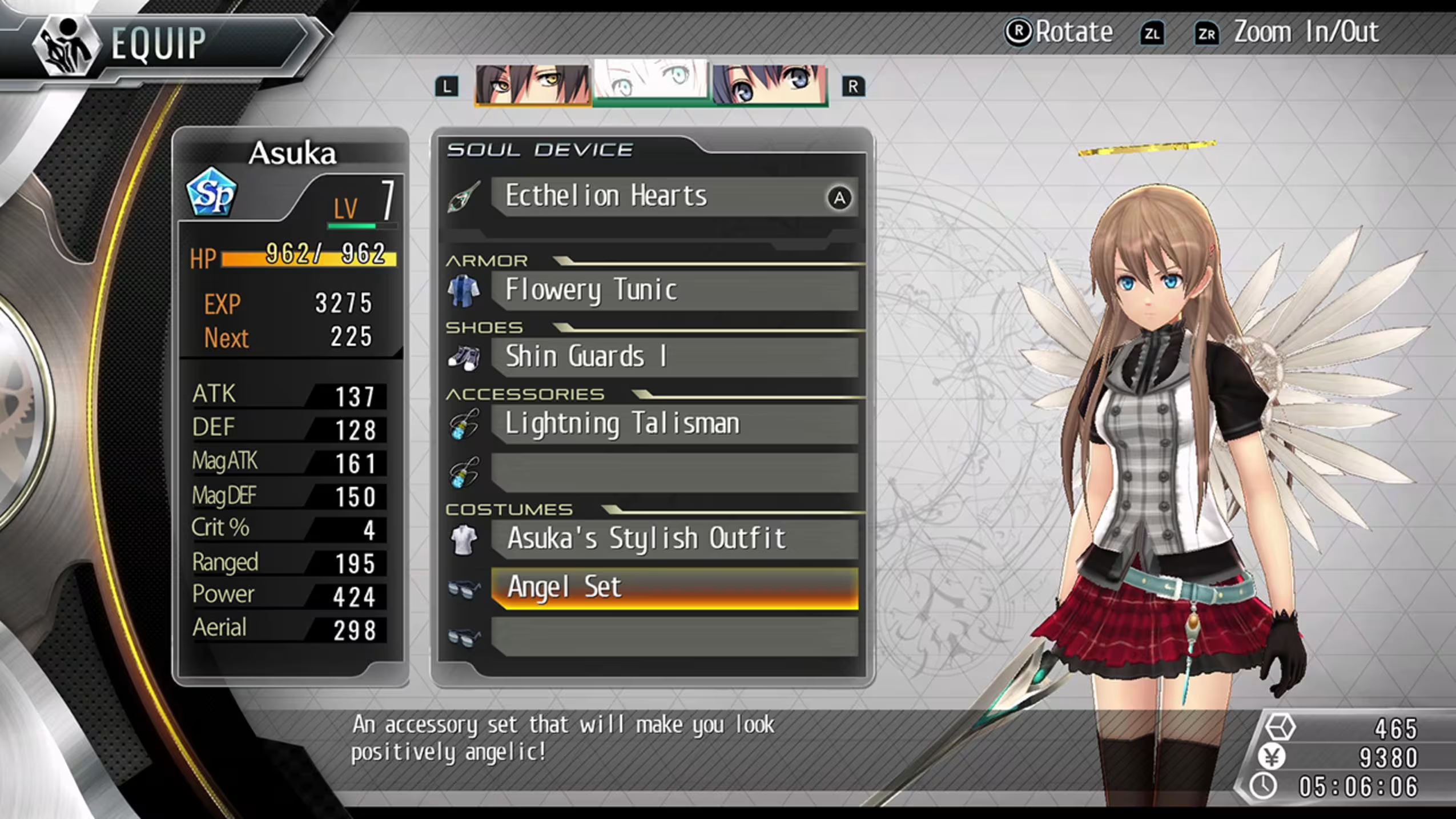
The dungeon structure also gives the game a clear rhythm. Time spent in Morimiya provides story context and relationship-building opportunities, then the Eclipse puts those developments to use in more demanding action sequences. Gear customization supports that loop, allowing players to equip and upgrade weapons, armor, and accessories to improve their combat capabilities before entering the next challenge.
Building Bonds Through School Life and Bonding Events
Tokyo Xanadu eX+ does not treat conversations outside the dungeon as optional flavor alone. Its social system includes Bonding Events, which let Kou deepen his connections with classmates and allies. These moments advance character relationships and reveal more about the people standing beside him as the Eclipse crisis grows.
The progression benefit is tangible. Strengthening bonds can unlock new abilities, story events, and combat bonuses, tying the social side of the game directly to its action systems. The design gives players a reason to spend time with the supporting cast beyond the main plot, while also making those relationships useful when the party returns to battle.
This approach suits a story centered on a growing circle of friends. As allies become more involved in Kou’s hidden world, their personal motivations and concerns gain greater relevance. Bonding Events help connect everyday school life with the escalating supernatural conflict, reinforcing the idea that Morimiya is worth protecting because it is where these characters live, study, and form their relationships.
What the eX+ Edition Adds: After Story and Side Stories
The eX+ edition expands the narrative beyond the main plot. Its After Story content explores events that take place after the central storyline, offering an additional chapter for players who want to continue after the principal conflict. This material gives the game’s conclusion more room without changing the core journey through Morimiya and the Eclipse.
Side Stories add another perspective by focusing on supporting characters. These narratives offer deeper insight into their lives and motivations, helping fill out the wider cast and the lore surrounding the adventure. For players interested in character relationships rather than only the main mystery, this expanded narrative material is a meaningful part of the edition’s identity.
Replay value also comes from post-game Boss Rush and Time Attack modes. These challenges provide opportunities to revisit combat with a focus on performance and skill. Alongside the expanded story content, they make the game suitable for players who enjoy refining their action RPG approach after seeing the main narrative through.
5 Gameplay Priorities for New Tokyo Xanadu eX+ Players
For newcomers, the strongest early approach is to treat combat preparation and character connections as parts of the same progression path. These priorities can help make the journey through the Eclipse more manageable:
- Learn each fighter. Spend time with different playable characters to understand their weapons, distinctive skills, and elemental properties.
- Target weaknesses. Use elemental attacks that match enemy vulnerabilities to deal maximum damage in real-time combat.
- Invest in Bonding Events. Building relationships can open story moments, new abilities, and combat bonuses.
- Maintain gear upgrades. Equip and upgrade weapons, armor, and accessories so the party is prepared for stronger Horrors.
- Respect dungeon strategy. Eclipse dungeons include environmental challenges and puzzles alongside battles, so exploration matters as much as attacking.
Tokyo Xanadu eX+ Switch NSP is best suited to players looking for an action RPG that combines active combat with character-driven school-life scenes. Its 6.71 GB Nintendo Switch release carries the Title ID 0100E8901E74C000 and requires firmware 18.1.0. The game’s strongest throughline is its blend of personal bonds and supernatural danger: every return to the Eclipse has greater weight because the struggle is tied to the people and city the party knows.