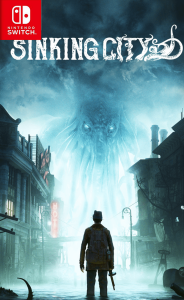
The Sinking City Switch NSP
Report Link Error
Select the broken download file, then submit the report.
Screenshots
About Game
The Sinking City Switch NSP places a private investigator in a city where floodwater, fear, and fractured reality have become part of daily life. Its appeal comes from the way detective work and cosmic horror share the same space: a clue can lead to an answer, but that answer may expose Charles W. Reed to something far more disturbing than the case he set out to solve.
Oakmont’s Flooded Streets and Cosmic-Horror Atmosphere
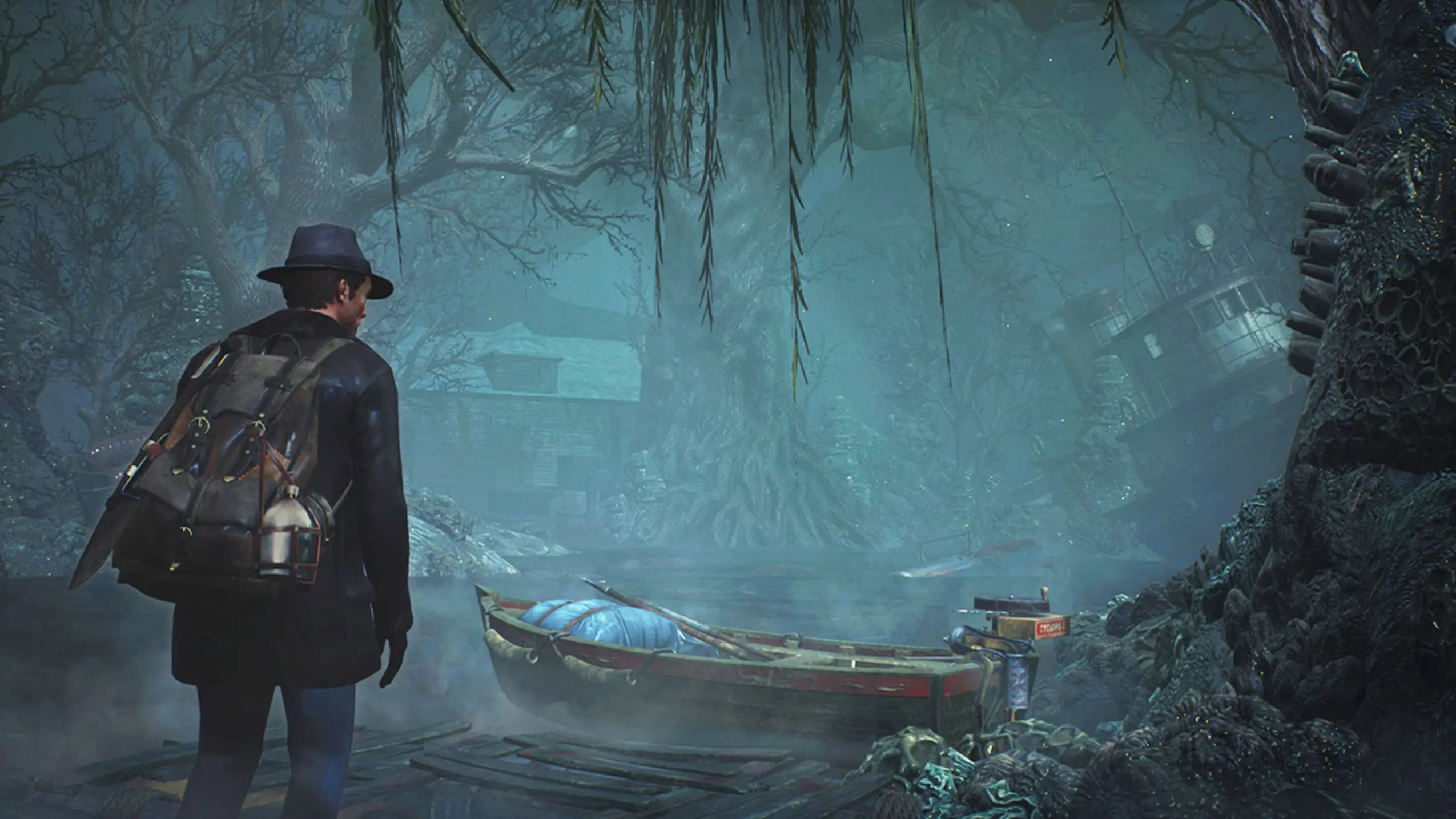
Oakmont is a Massachusetts city partially swallowed by water, and that condition shapes nearly every part of the experience. Streets are waterlogged, districts are divided by submerged routes, and the city’s unexplained flooding gives even ordinary travel an uneasy quality. The setting is not simply a backdrop for investigations; it is a constant reminder that something has gone badly wrong.
The city’s oppressive mood is rooted in uncertainty. Oakmont is filled with citizens living under the pressure of a supernatural crisis, while its streets conceal cults, monstrous creatures, and signs that reality is losing its stability. The game’s cosmic horror does not depend only on visible threats. It also emerges through Reed’s visions, the strange behavior of those he questions, and the feeling that the city is hiding truths too large to understand comfortably.
This atmosphere gives exploration a particular weight. Moving through Oakmont is rarely just about reaching a marker. A quiet block, a flooded avenue, or an apparently routine location can become another piece of a larger, unsettling picture. The game uses its partially submerged world to make the city feel isolated and troubled, with water acting as both a practical obstacle and a visual sign of Oakmont’s affliction.
Charles W. Reed’s Investigation Into Disturbing Visions
Charles W. Reed arrives in Oakmont as a private investigator haunted by disturbing visions. Drawn by a mysterious call and seeking answers about his own condition, he enters a city already burdened by fear and inexplicable floods. His personal search quickly becomes inseparable from Oakmont’s wider supernatural crisis.
The Sinking City story develops through cases that push Reed deeper into the city’s secrets. What begins as detective work gradually reveals connections to ancient cosmic entities and events that challenge ordinary explanations. Reed is not observing these horrors from a safe distance, either. His sanity can be affected by exposure to terrifying sights, leading to hallucinations and debuffs that reinforce the psychological pressure around him.
The detective narrative therefore has two directions. Reed investigates Oakmont’s residents and incidents, but he is also trying to understand what his visions mean and why he has been pulled toward this place. That balance gives the story a personal tension: every discovery may clarify one mystery while making Reed’s own situation more alarming.
- A drowned setting: Oakmont’s flooded streets make exploration feel tied to the city’s supernatural emergency.
- Cases with consequences: Interconnected investigations build toward a broader cosmic-horror narrative.
- Clues over guesswork: Evidence, witness interviews, and scene examination guide Reed’s progress.
- A fractured perspective: Sanity pressure, visions, and hallucinations keep Reed’s perceptions in question.
- Careful survival: Limited ammunition and healing supplies make combat decisions matter.
Detective Work, Evidence, and Witness Interviews
Investigation is the game’s central activity. Reed examines scenes, searches for evidence, speaks with witnesses, and follows leads through Oakmont’s districts. Rather than treating mysteries as short interruptions between action sequences, the structure asks players to assemble information and use it to move from one case to the next.
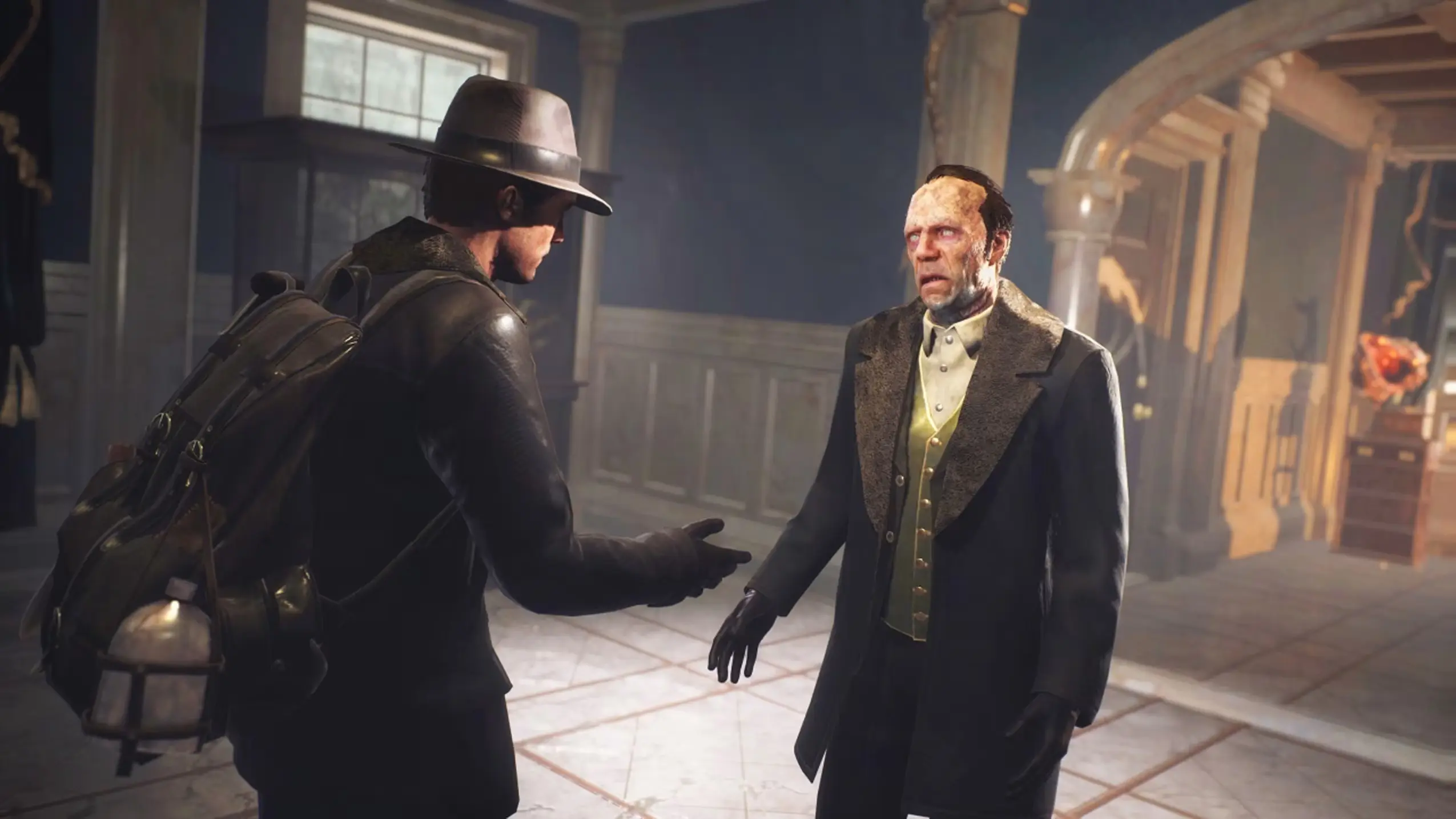
Witness interviews are especially important because Oakmont’s citizens are part of the city’s tangled web of secrets. Their testimony can provide direction, context, or new questions. Evidence gathering also encourages close attention to locations, since useful details may be present in places that initially seem unremarkable. The pace is more deliberate than a purely combat-focused adventure, fitting a game built around a private investigator’s methods.
Multiple cases intertwine as Reed learns more about the city. This progression supports the larger narrative without reducing Oakmont to a single linear route. Choices can influence the storyline and endings, giving decisions a meaningful place in the investigation. That element also adds replay value for players interested in seeing how different choices affect Reed’s path and the city’s fate.
Using Mind’s Eye to Reconstruct the Past
Reed’s most distinctive investigative tool is Mind’s Eye, an ability used to revisit events at crime scenes and uncover details that would otherwise remain hidden. It allows him to reconstruct parts of the past, helping turn a location from a static environment into a scene that can be interpreted.
Mind’s Eye supports crime scene reconstruction rather than replacing the player’s judgment. Reed still needs to examine the space, collect relevant evidence, and connect what he has learned. The ability gives investigations a more supernatural edge, appropriate for a protagonist already suffering from visions, while remaining closely tied to practical detective work.
In The Sinking City Switch NSP, this mechanic helps make each investigation feel like more than a simple search for an item. A scene can contain traces of what happened, and Mind’s Eye gives Reed a way to engage with those traces directly. It is an effective meeting point between the game’s detective premise and its uneasy supernatural tone.
Exploring Oakmont by Foot, Boat, and Fast Travel
Oakmont is an open-world city, and its flooding changes how players move through it. Reed can explore on foot, use a boat to cross submerged areas, or rely on fast-travel points. These options make sense within the setting: water is not a decorative feature but a condition that reshapes the city’s routes.
Walking is suited to searching streets and investigating locations in detail. Boat travel becomes important when flooded districts interrupt ordinary travel, emphasizing the unusual geography of Oakmont. Fast travel offers a practical alternative when moving between established points, particularly as cases send Reed across different parts of the city.
This structure supports the game’s sense of place. Oakmont exploration is not only about covering distance; it also exposes Reed to its eerie beauty, hidden dangers, and the consequences of its ongoing crisis. The city feels like an active challenge, defined by waterways as much as streets.
Resource-Scarce Combat Against Otherworldly Threats
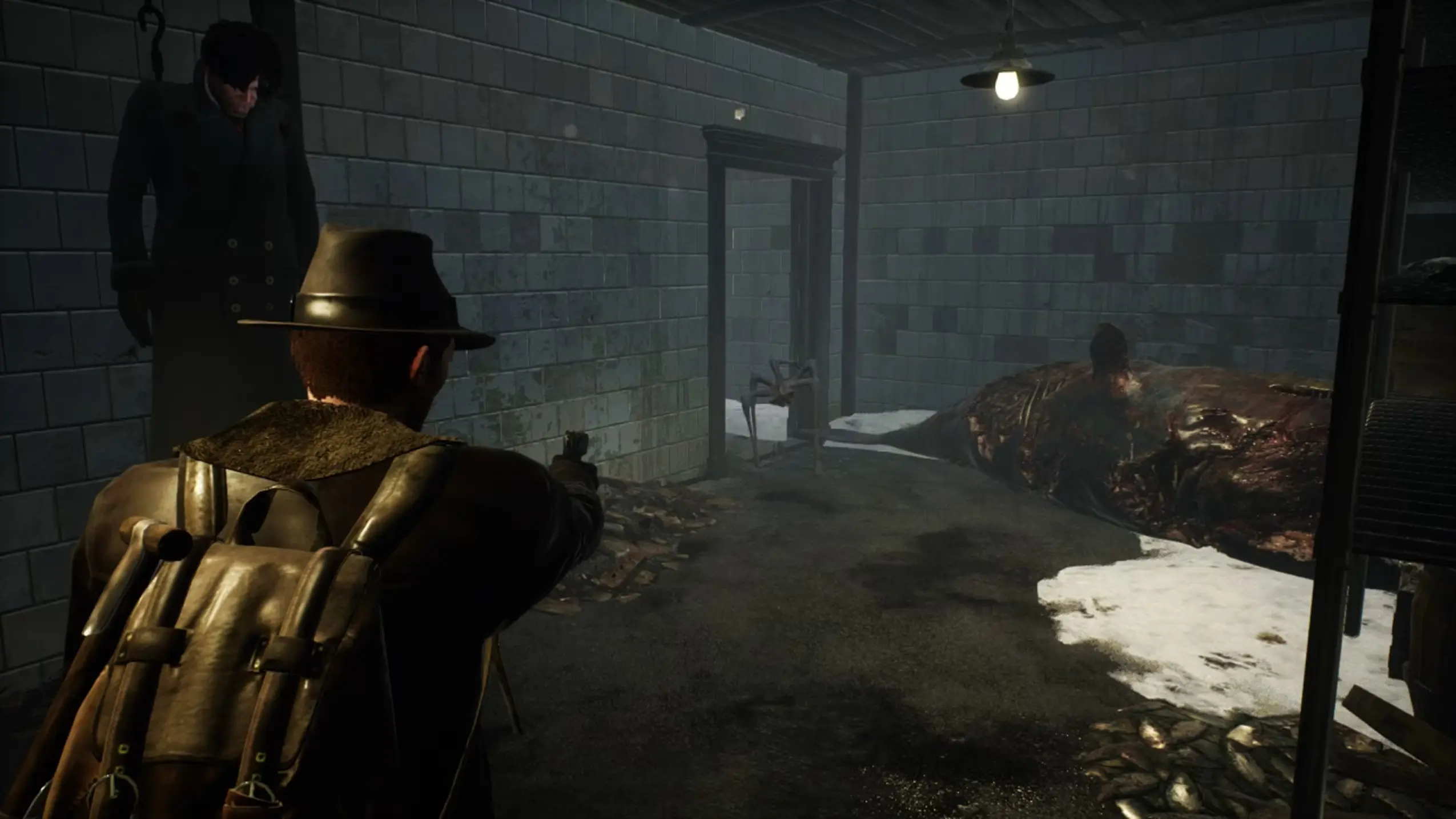
Combat is present, but it is not the sole answer to Oakmont’s dangers. Reed encounters grotesque, otherworldly monsters, and these confrontations are made more tense by limited ammunition and healing items. Resources must be managed carefully, especially when danger appears during exploration or while pursuing a case.
The survival horror combat design encourages restraint. Fighting can be necessary, yet ammunition and recovery supplies are valuable enough that every encounter carries a decision: use resources now, or preserve them for a more urgent threat. That pressure complements the investigative structure, since the game’s strongest rhythm comes from alternating between searching for answers and surviving what those answers reveal.
Released on September 12, 2019, this Action and Adventure title from Frogwares is suited to players who enjoy detective-led progression, open-world exploration, unsettling supernatural fiction, and a measured approach to combat. Its language options include English, French, German, Italian, Spanish, and Russian, while its story’s choices and endings offer reason to revisit Oakmont’s troubled streets.