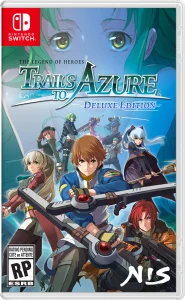
The Legend of Heroes: Trails to Azure Switch NSP
Report Link Error
Select the broken download file, then submit the report.
Screenshots
About Game
The Legend of Heroes: Trails to Azure Switch NSP continues the Crossbell arc with a story built around public duty, political pressure, and a city-state whose future is far from secure. Released on March 14, 2023, this English-language role-playing game from NIS America keeps its focus close to the people charged with protecting Crossbell when the stakes grow beyond any ordinary police case.
Crossbell’s Crisis and the Special Support Section
The Trails to Azure story follows the events of Trails from Zero, returning to the Special Support Section of the Crossbell Police Department. Led by detective Lloyd Bannings, the SSS is again drawn into problems that reach far beyond its usual work. Crossbell’s independence is under growing strain, and the team must confront political maneuvering, concealed agendas, and conflicts that threaten their home.
This is a story where civic concerns and personal responsibility meet. Lloyd, Elie, Tio, and Randy are not detached observers of Crossbell’s troubles; they are among the people expected to respond when those troubles become dangerous. Conspiracies, mysterious organizations, and ancient artifacts all play a part in the widening crisis. As secrets emerge, the consequences extend to the city’s identity and future.
The premise gives the game a strong sense of escalating pressure. The SSS may begin from the familiar position of investigators and protectors, but the scale of what they uncover keeps expanding. Political threats are paired with personal sacrifices and unexpected betrayals, making Crossbell’s fate feel tied to the people working to defend it.
Why Crossbell Is Central to Trails to Azure
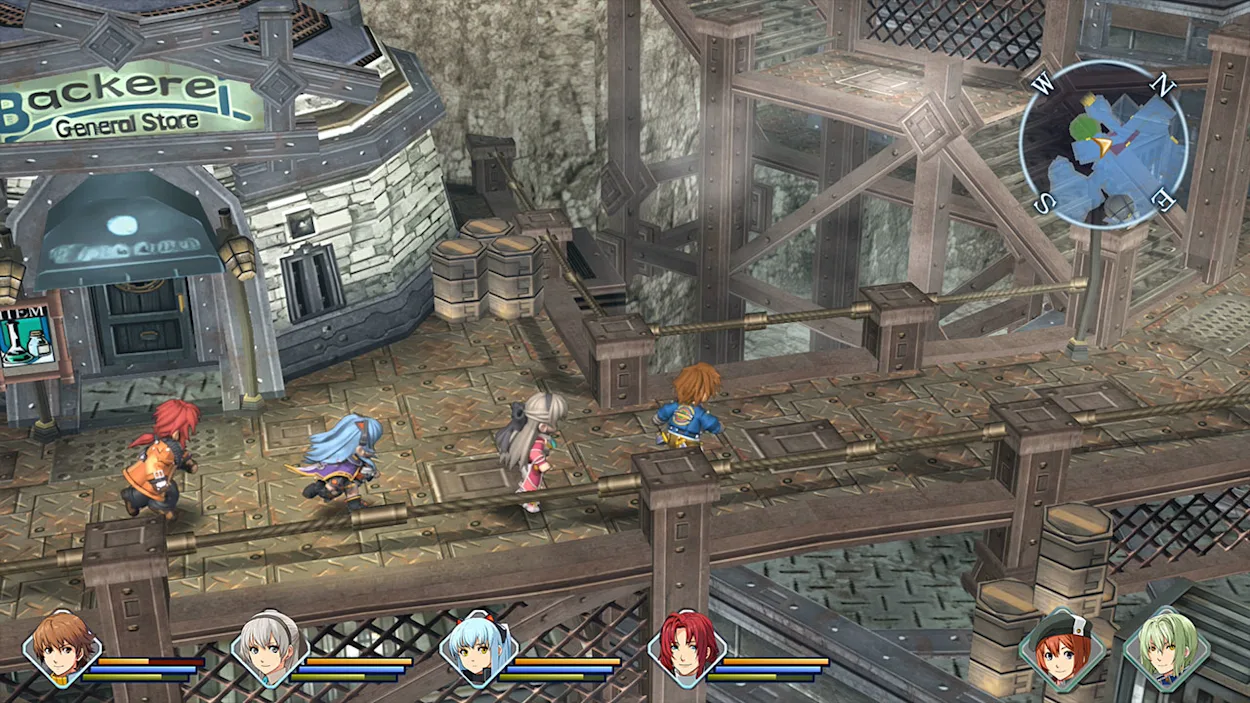
Crossbell City is more than a backdrop for the adventure. It is a bustling place filled with residents, side activities, quests, and secrets, but it is also a city-state caught between major powers. The pressure exerted by Erebonia and Calvard gives the setting its political urgency. Crossbell is important because its independence is contested, and that tension drives much of the narrative.
The contrast between everyday city life and high-level political conflict helps give the setting weight. Conversations with NPCs and tasks found around Crossbell can reveal more about the community the SSS serves. Completing those activities also provides rewards, linking exploration to party progression while reinforcing the idea that the city is worth protecting.
That local perspective is central to the game’s atmosphere. Crossbell is not merely a destination on a larger map; it is the place where the consequences of Erebonia and Calvard’s pressure are felt. Its streets, people, and institutions provide the human scale for a story involving national interests and hidden forces.
The Core SSS Team: Lloyd, Elie, Tio, and Randy
Lloyd Bannings leads the group, but the SSS is defined by its team dynamic. Elie, Tio, and Randy join him as Crossbell’s protectors, each contributing to a party built for both investigation and combat. Their shared role places them close to the city’s most urgent problems, while the story’s rising personal stakes give their relationships added significance.
The game’s character development is closely connected to this group. Bond events deepen character relationships, while the broader plot places the team in situations where loyalty, sacrifice, and trust matter. Lloyd’s determination gives the SSS a clear direction, but the strength of the group lies in how its members face threats together.
For players following the Crossbell arc, the focus on Lloyd, Elie, Tio, and Randy makes the conflict more immediate. They are tasked with responding to dangers that no single detective or officer could resolve alone. Their role is practical, emotional, and political: protect the people of Crossbell while uncovering the forces putting it at risk.
Turn-Based Battles Built Around Positioning and Timing
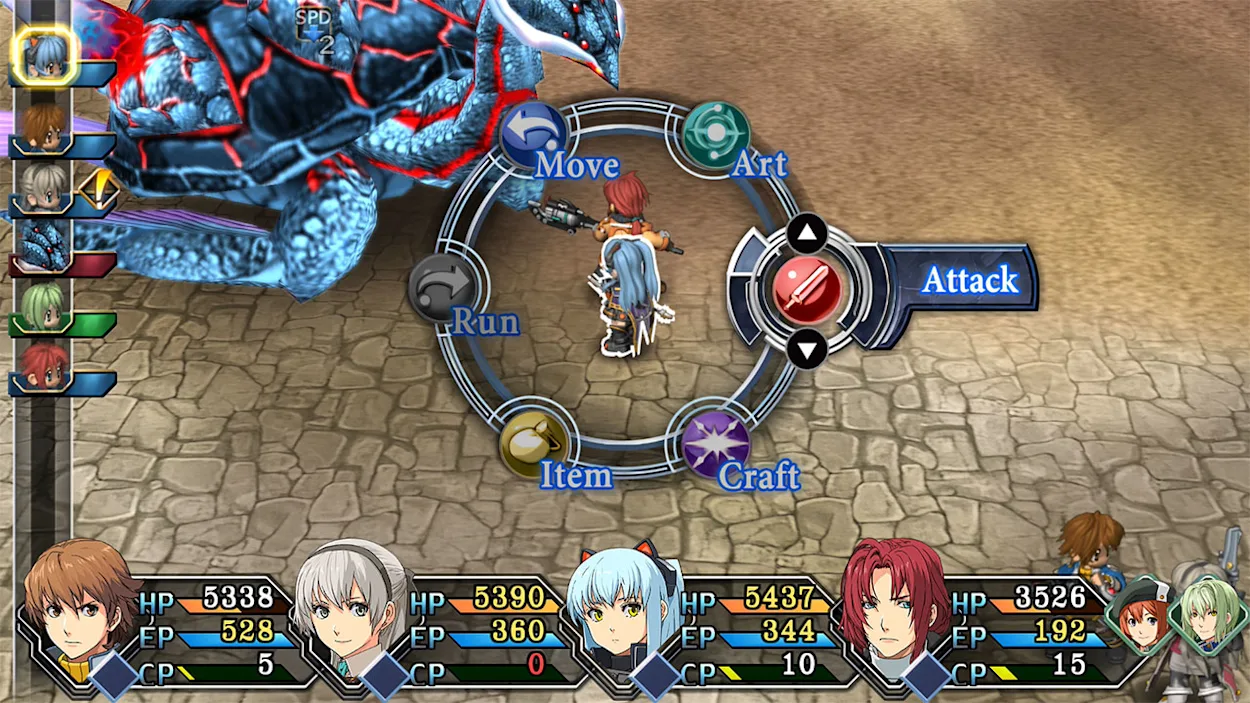
Combat uses a tactical turn-based combat system that asks players to manage a party of distinct characters against varied enemies. Success is not only about choosing the strongest available attack. Tactical positioning, character abilities, and attention to enemy patterns all matter, particularly when encounters become more demanding.
Party management gives the battles much of their strategic texture. Different characters bring different strengths, and effective decisions depend on using those strengths at the right time. Boss battles raise the importance of planning further, requiring players to understand how an enemy behaves and to respond with a considered approach rather than relying on a single routine.
The game’s Orbment system is a major part of that preparation. Elemental quartz can be arranged to grant Arts, the game’s magic, as well as stat boosts. An effective Orbment setup can change how a character functions in battle, allowing players to shape their party for the challenges ahead. This makes progression feel connected to decision-making: improvements are not simply gained, but configured.
Using S-Crafts and Burst at Critical Moments
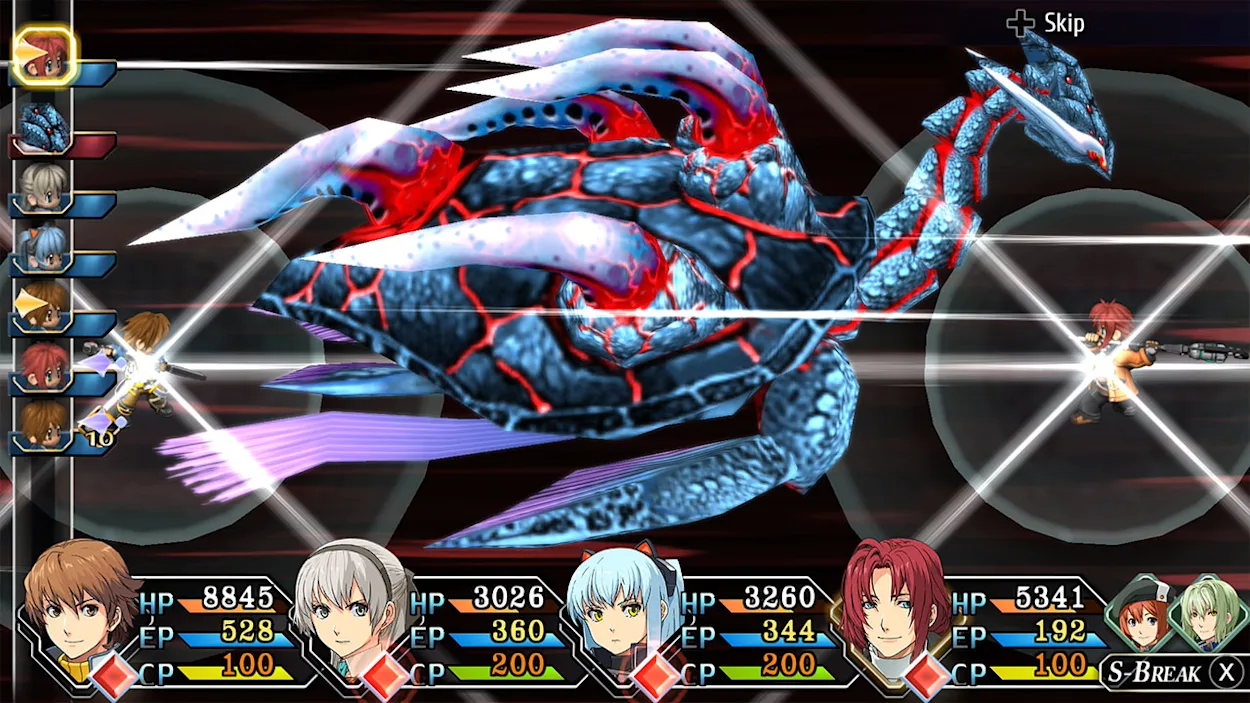
S-Crafts are powerful ultimate attacks, and their value is closely tied to timing. Using one in an ordinary encounter may bring a quick advantage, but saving it for a pivotal turn in a difficult battle can be far more meaningful. Their impact makes them an important part of battle strategy when a boss or dangerous foe threatens to overwhelm the party.
The Burst system adds another tactical option during critical moments. It can provide temporary stat boosts and increased turn advantage, creating an opening when a battle demands momentum. Used alongside careful positioning, character abilities, and an appropriate Orbment setup, Burst can help turn a difficult situation into a manageable one.
These systems encourage restraint as much as aggression. The strongest tools are most useful when players recognize an enemy pattern, identify a vulnerable moment, and commit their resources with purpose. That approach suits the game’s broader combat design, where planning has more value than rushing ahead.
5 Early Strategic Priorities for a Crossbell Investigation
For newcomers to The Legend of Heroes: Trails to Azure Switch NSP, a measured approach to the early hours can make its systems easier to read. The following priorities are grounded in the game’s combat and exploration structure.
- Learn the field. Pay attention to tactical positioning in battle, since character placement and timing affect how effectively the party handles varied foes.
- Review Orbments often. Check each character’s Orbment setup as the party develops, rather than treating equipment choices as a one-time decision.
- Use quartz with intent. Elemental quartz provides Arts and stat boosts, so choose combinations that support the role a character needs to fill.
- Hold S-Crafts for key turns. These powerful attacks can be game-changing, especially when a boss battle reaches a decisive point.
- Explore Crossbell thoroughly. Crossbell side quests, NPC interactions, and hidden discoveries add context to the city while providing useful rewards.
Fishing, cooking, and bond events offer further activities beyond the main combat and investigation work. Together with side quests and exploration, they give the journey room to breathe between major story developments. The result is a role-playing experience best suited to players who enjoy detailed world-building, party customization, tactical battles, and a narrative centered on the fate of a single city-state.
Published and developed by NIS America, the game is listed for Europe and the USA with English language support. Its narrative commitment to Crossbell, combined with its strategic combat systems, gives the SSS’s struggle a clear identity: protecting a home whose future is being decided on every level, from city streets to political conflict.
Recommended Similar Games
 Child of Light Ultimate Edition + Valiant Hearts: The Great War SWITCH NSPView Game
 Fuga: Melodies of Steel Switch NSPView Game
 Verho – Curse of Faces Switch NSPView Game
 Nobody Saves the World Switch NSPView Game
 Rune Factory 3 Special Switch NSP XCIView Game
 Death’s Gambit: Afterlife Switch NSPView Game
