The Last Hope – Dead Zone Survival Switch NSP

Report Link Error
Select the broken download file, then submit the report.
Screenshots
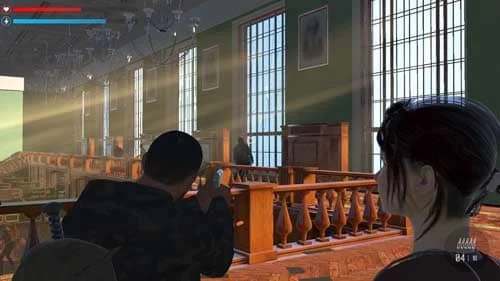
About Game
The Last Hope – Dead Zone Survival Switch NSP places survival under constant pressure: a ruined city, an infection-ravaged population, and a protagonist who wakes with no memory of how they arrived. Released on June 30, 2023, this action, fighting, and shooter title from West Connection brings third-person combat, scavenging, crafting, and exploration to Nintendo Switch.
The Last Hope – Dead Zone Survival: Game Overview
The Last Hope – Dead Zone Survival is built around the uneasy rhythm of surviving in a post-apocalyptic action game. The player is not simply moving from one firefight to the next. Progress depends on searching dangerous spaces, deciding what supplies are worth carrying, creating useful equipment from recovered scraps, and reacting to infected threats when plans fall apart.
That mix gives the game a practical survival focus. Combat may demand fast responses, but exploration and preparation shape the moments before a confrontation. An abandoned building can offer supplies, a vehicle may contain ammunition or medicine, and a quiet route can be more valuable than a direct clash. The dead zone is presented as a place where resources are limited and every decision can affect the next stage of a journey.
Its Nintendo Switch survival game framework also leaves room for several connected activities. Players can explore the open world, craft weapons and tools, upgrade abilities, take on side quests, and work toward securing a safer place through base-building and defense elements. The result is a survival-action structure in which combat is important, but not the only concern.
A Ravaged City, an Infection, and a Search for Answers
The Last Hope story begins after society has been devastated by a deadly infection. The player character awakens in a ravaged city without any memory of the events that led there. Survival is the immediate concern, yet the larger mystery soon becomes just as important: what caused the outbreak, and could a cure exist?
This setup gives the dead zone outbreak more weight than a simple backdrop for action. Fragments of information point toward a broader conspiracy, encouraging the player to keep moving through hostile territory in search of answers. The setting is populated by survivors with their own histories and motives. Some may be friendly, while others are hostile, making trust a meaningful part of the journey.
Choices are framed by uncertainty. When supplies are scarce and infected creatures occupy the world outside, encounters with other people can carry their own risks. The narrative premise supports an atmosphere of isolation and suspicion, with the protagonist’s missing memories adding another unanswered question to the search for a cure.
Third-Person Combat Against Infected Threats
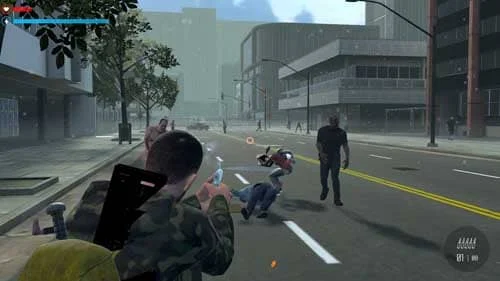
Third-person shooting is a central part of the survival action. Infected enemies appear as a persistent threat, and combat calls for sharp reactions when a dangerous situation cannot be avoided. The game’s focus on different infected types suggests that players need to stay alert rather than treat each encounter as identical.
Still, shooting is only one answer to danger. Ammunition is part of the wider resource-management system, so careless fighting can create problems later. The supplied gameplay guidance emphasizes stealth where possible, along with recognizing when retreat is the smarter option. That gives infected combat a tactical edge: conserving supplies can matter as much as winning the immediate encounter.
Weapons, armor, and survival tools can be crafted from materials found in the environment. This connects action directly to exploration. A player who searches thoroughly may be better prepared for the next hostile area, while a player who wastes ammunition or enters every fight without a plan may face more difficult choices afterward.
Scavenging and Resource Management in the Dead Zone
Scavenging supplies is the daily foundation of survival. Buildings and derelict vehicles can contain the essentials needed to continue through the dead zone, including food, water, medicine, ammunition, and crafting materials. The appeal is not merely in finding items, but in deciding how to use them and what to keep in a limited survival inventory.
- Search carefully: Abandoned structures and vehicles may hold vital items that are easy to miss.
- Protect ammunition: Avoiding unnecessary confrontations can preserve supplies for more serious infected combat.
- Watch essentials: Food, water, and medicine are all part of the resource-management pressure.
- Craft with purpose: Recovered scraps can become weapons, armor, and survival tools.
- Expand capacity: Upgrading inventory space supports longer scavenging runs and more flexible planning.
Crafting helps turn scavenged materials into practical advantages. Essential tools such as pickaxes and axes can support further resource gathering, while weapons and armor improve readiness for hostile encounters. This cycle gives the game a measured progression: explore, collect, craft, survive, then push farther into dangerous territory.
Exploration, Weather, and the Day-Night Cycle
Open-world exploration gives the dead zone room to feel unpredictable. Rather than limiting the experience to a single route, the game encourages players to investigate different areas, search for supplies, face emerging threats, and uncover more of the setting. That structure supports both practical scavenging and the story’s search for clues about the infection.
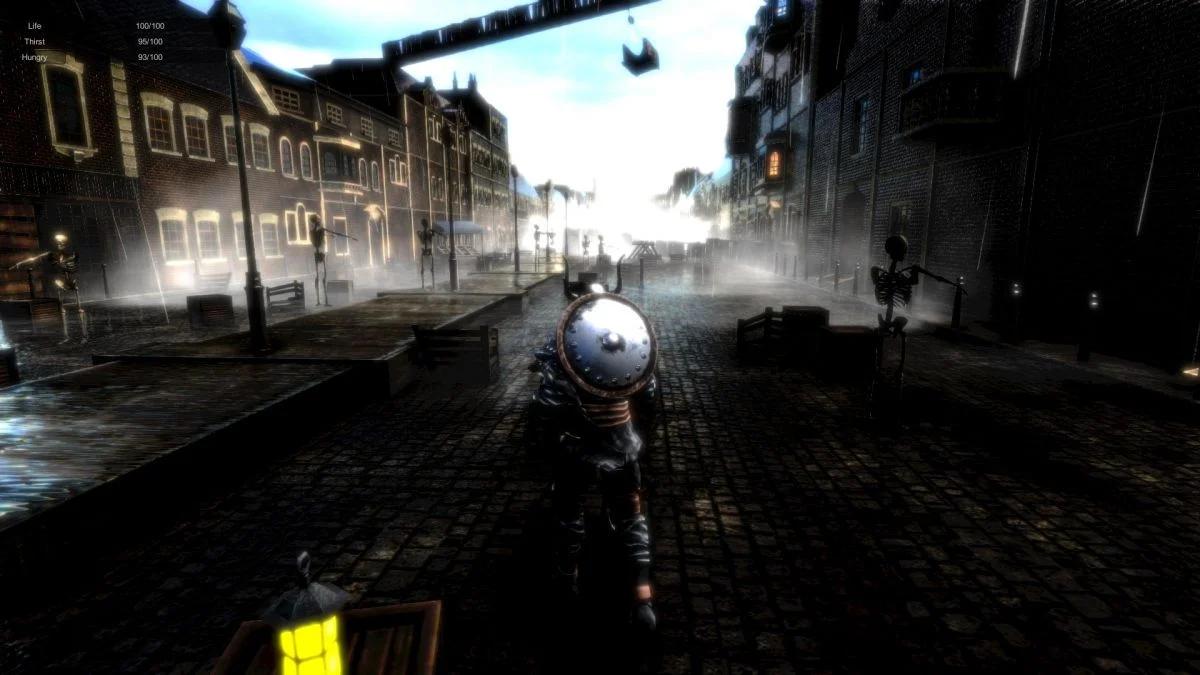
Dynamic weather and a changing day-night cycle deepen the atmosphere around that exploration. Conditions shift as players move through the world, reinforcing the sense that the environment itself is not static. In a survival game already concerned with resources, infected enemies, and uncertain encounters, changing weather and time of day add to the tension of venturing beyond a safe location.
Base-building and defense elements offer a counterpoint to this danger. Establishing a safe haven gives the survival loop a sense of shelter and purpose, even as the wider dead zone remains threatening. The contrast between exposed exploration and a defended base supports the game’s post-apocalyptic mood without removing its pressure.
Skills, Side Quests, and Lore Discovery
Upgradeable character skills provide a clear progression path through combat and survival challenges. Players can improve abilities tied to fighting or staying alive, allowing preparation to develop alongside equipment and inventory management. These upgrades fit naturally with a game where a stronger survivor is not defined solely by firepower.
Side quests and challenges broaden the experience beyond the main search for answers. They reveal more about the game lore and encourage further exploration of the dead zone. For players drawn to searching environments, managing supplies, and piecing together details of a fallen world, these optional activities can add reasons to revisit dangerous areas and engage with the setting beyond its immediate threats.
The Last Hope – Dead Zone Survival Switch NSP is suited to players looking for a survival-focused action experience that connects third-person shooting with cautious planning. Its premise centers on an infected world and a missing-memory mystery, while its gameplay emphasizes scavenging, crafting, character upgrades, and difficult choices under pressure. The game supports English language play and is listed for Europe and Asia.