TCG Card Market Simulator Switch NSP
Report Link Error
Select the broken download file, then submit the report.
Screenshots
About Game
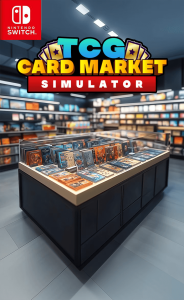
TCG Card Market Simulator Switch NSP frames trading card collecting as a climb from modest beginnings to marketplace ambition. The premise starts with a small starter deck and a desire to grow beyond it, using purchases, sales, discoveries, and careful decisions to build a respected collection and a stronger virtual business.
From Starter Deck to Card Market Tycoon
The trading card journey begins on a small scale. Players enter the game as novice collectors, working with limited resources while pursuing the larger goal of becoming a card market tycoon. That progression gives everyday actions a clear purpose: a single useful trade can improve the collection, a rare discovery can change priorities, and a well-timed sale can create room for the next opportunity.
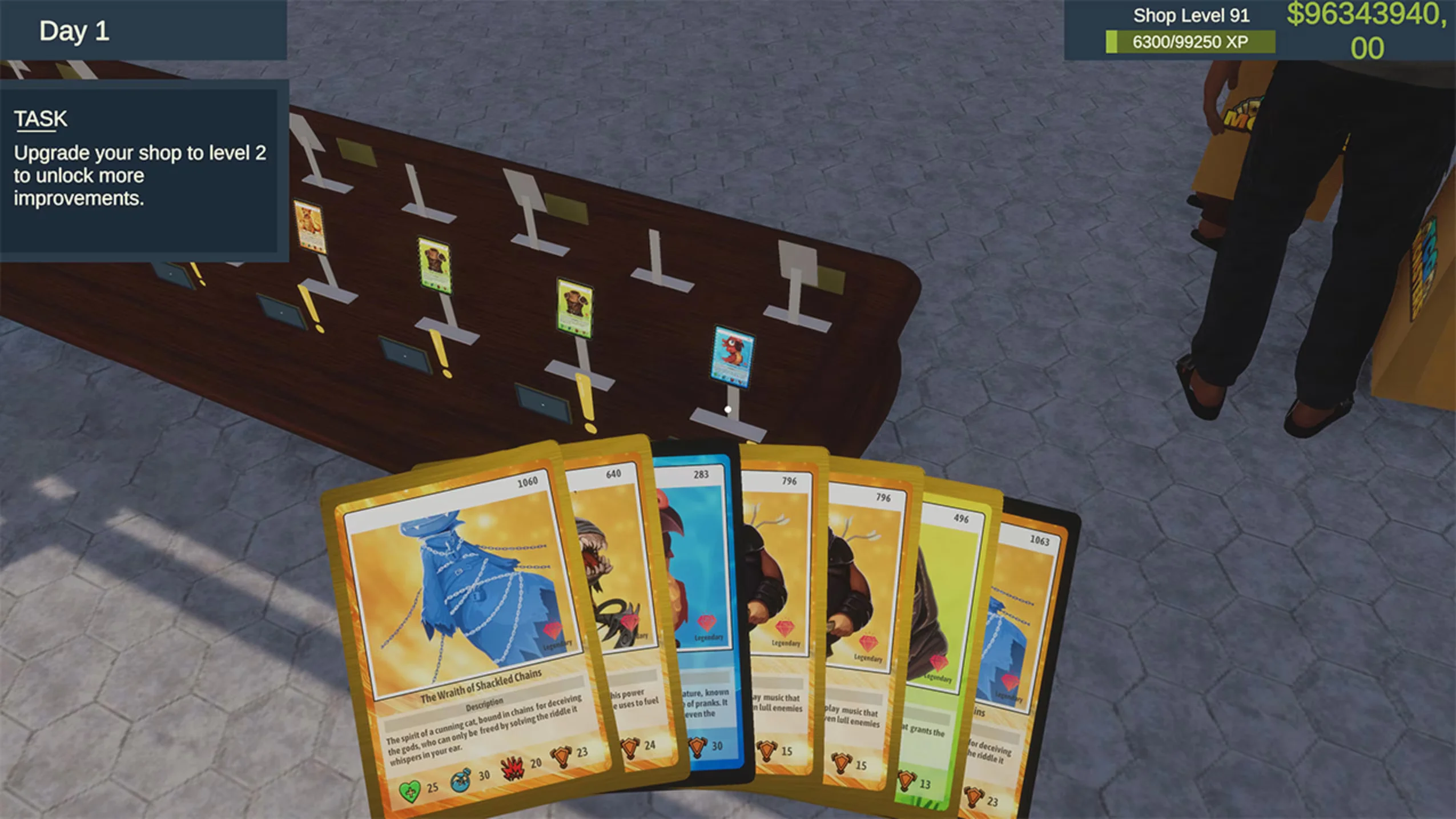
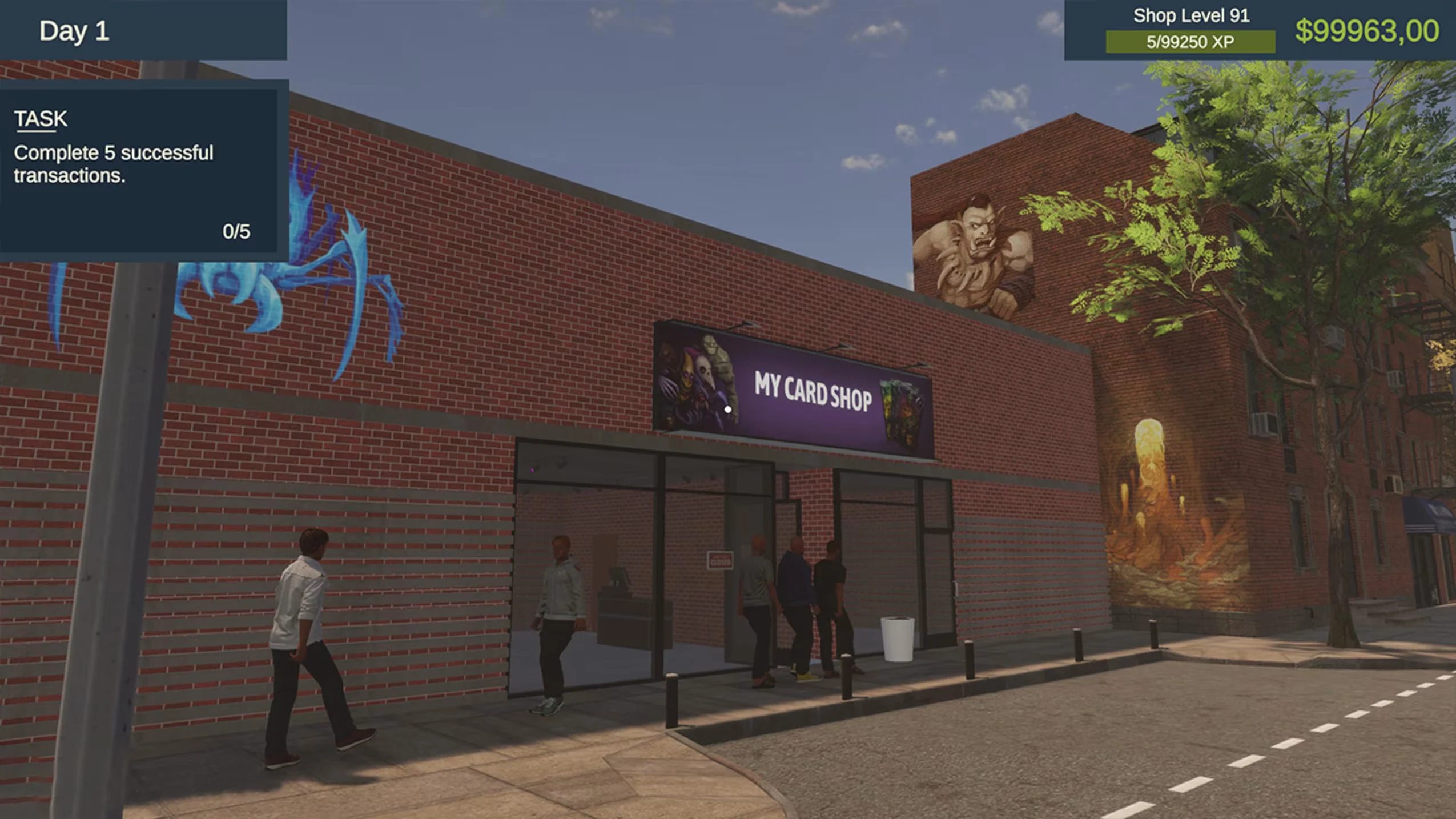
The simulation centers on managing a virtual card shop. Players decide what to stock, set prices, interact with buyers and sellers, and expand the shop over time. Upgrades can help attract more customers, while a growing inventory calls for more deliberate organization. The game’s market focus means progress is not only about accumulating cards; it is also about making choices that support a sustainable trading operation.
Its atmosphere comes from the push and pull of collecting and commerce. There is the excitement of adding an unusual card to the collection, but also the pressure of deciding whether that card belongs in the shop, should be held for later, or could help secure a better deal. The ambition to become a recognized trader runs through those decisions, giving the experience a steady sense of advancement.
Booster Packs, Rarity, and Valuable Discoveries
Opening booster packs supplies the discovery side of the simulation. Packs can introduce new cards to the collection, including rare cards that may carry greater interest in the market. That uncertainty is important: each opening can offer a useful addition, a potential sale, or a card worth keeping while its place in a wider trading strategy becomes clearer.
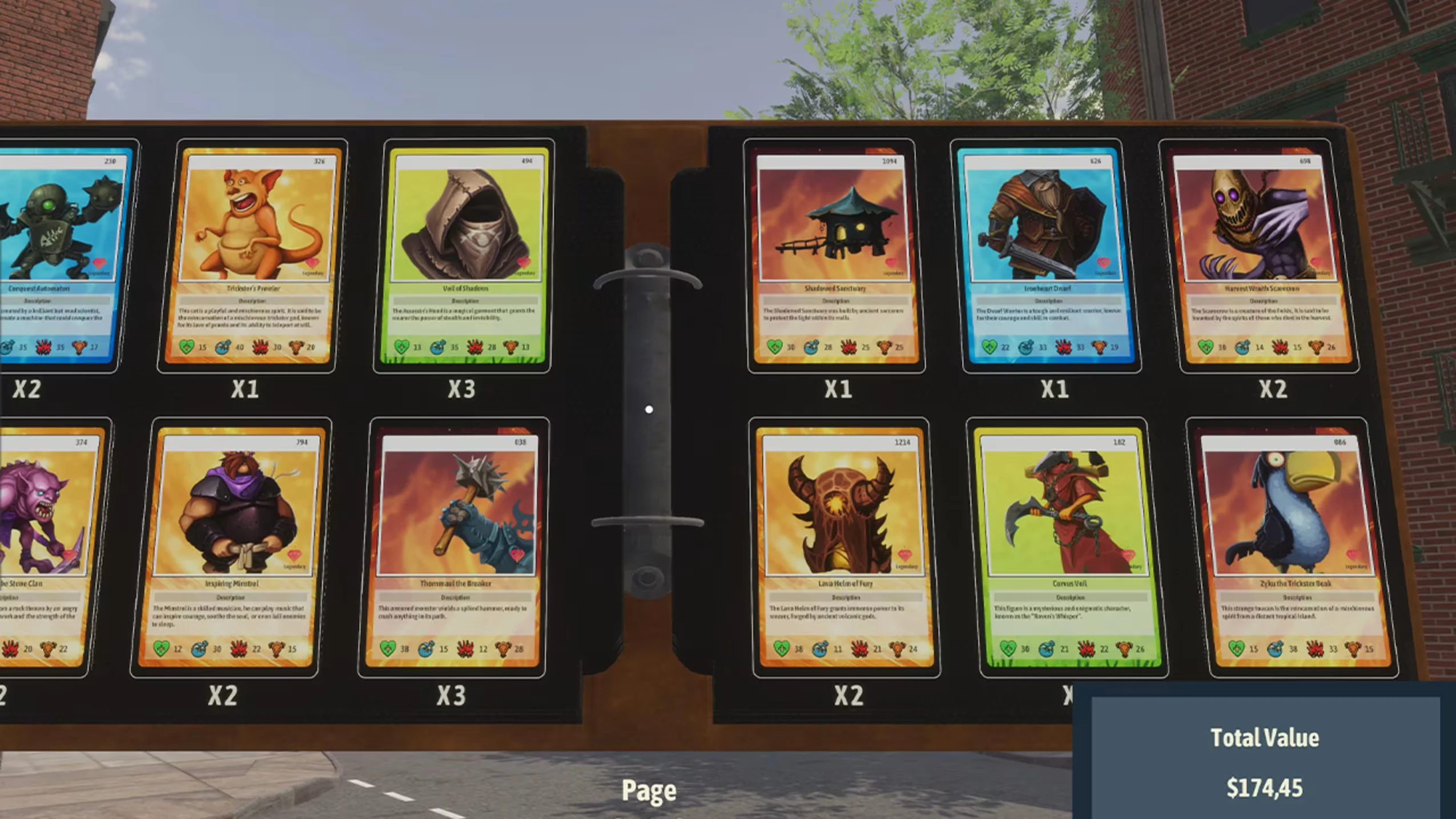
Card rarity is not treated as a simple label. Players can learn about the rarity and history of cards within the game, adding context to the collection process. A valuable find may matter because of its scarcity, its history, or its possible demand among customers and traders. The result is a collecting loop that asks players to look beyond immediate excitement and consider what each card might mean for the shop.
Buying and selling individual cards broadens those choices. Instead of relying only on booster packs, players can pursue specific cards from a diverse collection and negotiate with different NPCs. Those interactions introduce personalities into the trading process, while price negotiation makes the value of a card feel less fixed than a number on a list.
Reading Market Trends and Timing Sales
The economic strategy in the game revolves around changing values. Players analyze market trends in an effort to predict card value fluctuations, then decide how to respond. A card that appears useful today may become more attractive to sell later, while another may be better moved quickly if its current value supports the shop’s immediate needs.
This makes holding cards part of the trading strategy rather than a passive habit. Keeping a card can be a calculated decision when a player expects its value to rise. Selling, meanwhile, can turn a strong opportunity into funds for inventory, upgrades, or another promising acquisition. The game encourages patience, observation, and an awareness that profitable trades are often shaped by timing.
Pricing stock is another expression of that strategy. Running a shop requires players to decide what items deserve shelf space and how they should be valued for customers. As the collection expands, inventory management becomes tied to market awareness: cards are not merely owned, but assessed as assets with changing possibilities.
Auctions, Quests, and Challenges
Virtual auctions offer another route toward high-value cards. These events create opportunities to pursue sought-after additions beyond ordinary shop transactions, bringing a different kind of decision-making to the collection. The appeal is not simply winning an auction, but weighing the likely value of a card against the resources required to obtain it.
Quests and challenges add structured goals around the wider market simulation. Completing them provides rewards and unlocks, giving players reasons to engage with different activities as they develop their shop and collection. Character challenges also contribute to the journey, placing personal encounters alongside market decisions and card lore.
Together, auctions, quests, and challenges support replay value through a broad set of actions: open packs, make deals, watch values, manage stock, seek rewards, and pursue valuable cards. The experience is suited to players interested in collecting systems, trading decisions, and the satisfaction of gradually building a larger operation.
5 Trading Habits for Building a Stronger Collection
- Assess the opportunity. Consider what a card could contribute before buying, selling, or placing it in shop inventory. A discovery may have collecting appeal, market potential, or both.
- Watch market movement. Follow market trends and card value fluctuations rather than treating every price as permanent. This is central to making more informed profitable trades.
- Manage inventory carefully. Organize an expanding collection and decide what the virtual shop should stock. Clear card collection management helps keep trading choices purposeful.
- Hold or sell with intent. Keeping a card may make sense when its value appears likely to rise, while selling can free resources for another trade or shop decision.
- Use NPC interactions. Negotiating with buyers and sellers is part of the market routine. Different NPC personalities can make these exchanges a useful source of trading insight.
These TCG Card Market Simulator tips reflect the game’s emphasis on observation over impulse. The strongest collection is not necessarily built from random accumulation, but from attention to rarity, market movement, inventory, and the changing value of each opportunity.
TCG Card Market Simulator Switch Release Details
TCG Card Market Simulator Switch NSP is listed for a USA release date of February 1, 2025. It supports English and is published by Xenobits. Its listed genres are Arcade and Simulation, fitting a game that combines accessible card-shop activity with market-focused decision-making.
The verified release information lists Title ID 01001560214B8000, firmware version 19.0.0, and a file size of 1.11 GB. For players drawn to card rarity, collecting, shop management, virtual auctions, and market timing, the Arcade Simulation format places those ideas within a focused trading-card setting.
Recommended Similar Games
 Mudness Offroad Car Simulator Runner Switch NSPView Game
 Valthirian Arc: Hero School Story 2 Switch NSPView Game
 TT Isle Of Man: Ride on the Edge Switch NSPView Game
 Baseball Club Switch NSPView Game
 UNDER NIGHT IN-BIRTH II Sys:Celes Switch NSPView Game
 Sky Force Reloaded + Anniversary Switch NSPView Game
