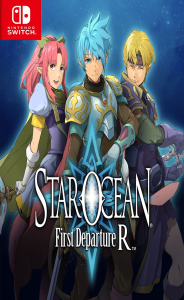
Star Ocean: First Departure R SWITCH NSP
Report Link Error
Select the broken download file, then submit the report.


Screenshots
About Game
Star Ocean: First Departure R SWITCH NSP refers to Square Enix’s role-playing release for Nintendo Switch, dated December 5, 2019. It revisits a classic sci-fi fantasy adventure with an enhanced presentation, pairing sprite-based characters with 3D environments and carrying a story from a quiet, underdeveloped world into a far broader conflict. Available in Europe and the USA with English language support, it presents a focused RPG journey built around exploration, character development, and active party battles.
A 2019 Switch Revival of a Classic Sci-Fi Fantasy RPG
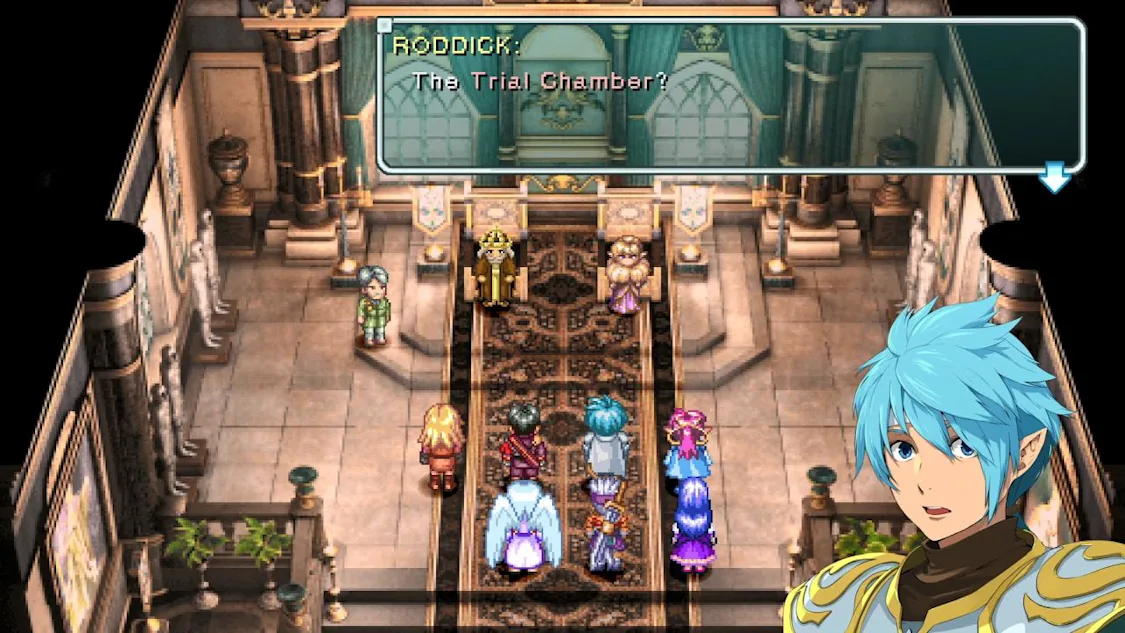
Star Ocean: First Departure R brings together two contrasting sides of its setting. Its opening is rooted in a world of villages, local defense forces, and a crisis that feels immediate and personal. Yet its larger identity is science fiction: advanced civilizations, space-faring figures, and events that stretch across time are central to the adventure’s direction.
That contrast gives the Nintendo Switch RPG much of its atmosphere. Roak begins as a comparatively less-developed place, while the wider journey introduces technology and societies beyond anything its early characters expect. The remastered presentation supports this movement between old-fashioned fantasy imagery and science-fiction ideas, using charming sprite-based characters within 3D environments.
Square Enix serves as both publisher and developer, and the game remains a role-playing experience rather than a purely action-driven one. Battles are real-time, but exploration, skill development, party choices, character interactions, and item creation all contribute to the shape of a playthrough. The result is an adventure with room for players who enjoy story progression as much as combat management.
From Roak’s Crisis to a Galaxy-Spanning Quest
The Star Ocean story begins on the planet Roak, where Roddick Farrence serves in the local Defense Force. His ordinary life changes when a mysterious disease affects his village, turning people to stone. Faced with a threat his community cannot easily solve, Roddick and his companions set out to search for a cure.
That search is the point where the game’s larger scale starts to emerge. The party reaches a more technologically advanced planet and encounters people capable of traveling through space. What initially appears to be a local disaster becomes connected to a much greater threat, one with consequences beyond Roak itself.
The journey also crosses time, adding another layer to the conflict. Past and future, primitive places and advanced worlds, and personal relationships and galactic danger all meet in the same narrative. Roddick’s quest therefore has a clear emotional starting point—helping a village in crisis—while gradually opening into a story concerned with the fate of an entire galaxy.
How Real-Time Battles Shape the Adventure
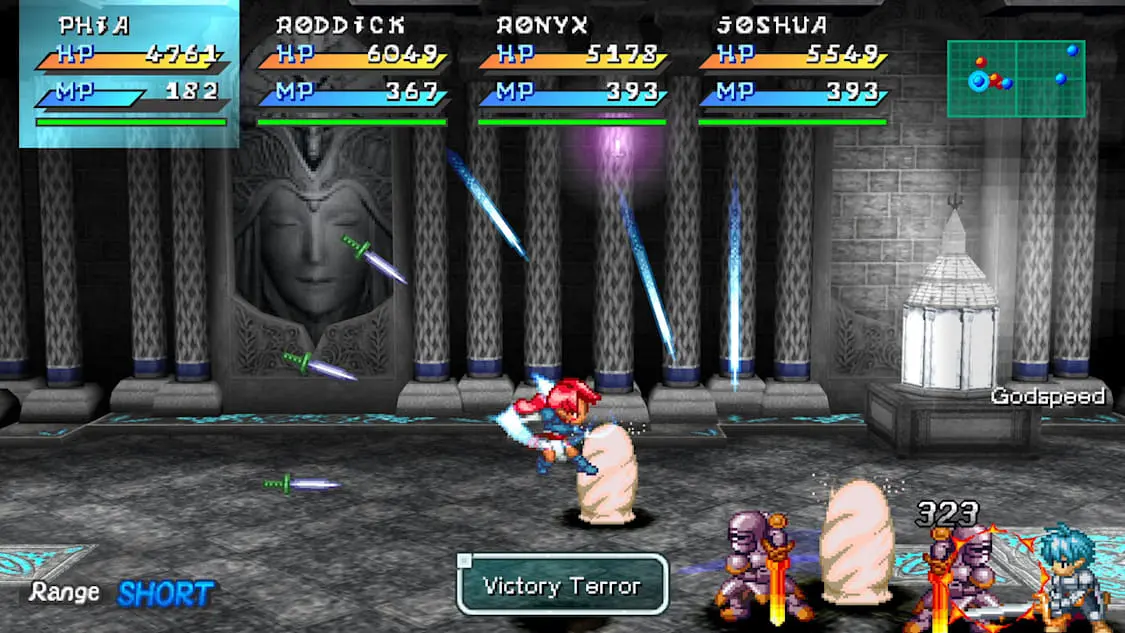
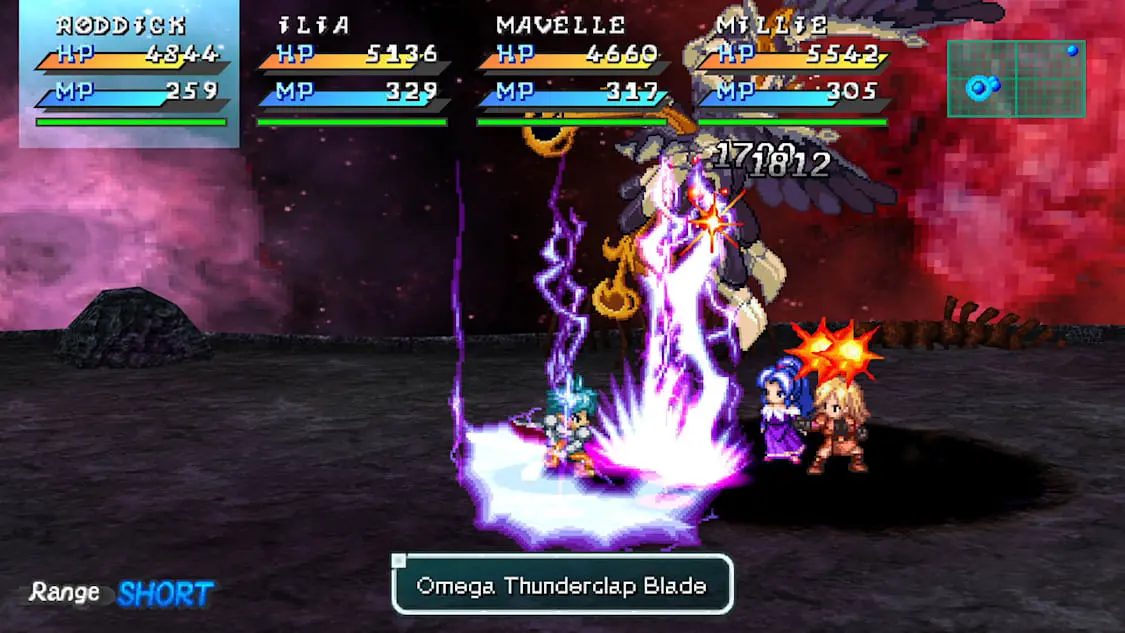
Combat takes place directly on the field rather than through a separate turn-based battle structure. This makes movement important. Players need to consider where party members are positioned, how abilities are used, and how a group responds when enemies create pressure from different directions.
The system is approachable in its basic form, but harder encounters call for more deliberate party management. Character abilities matter, as do formations and AI settings. A party can be adjusted to suit the demands of a fight, making battle strategy less about repeating one command and more about organizing a team effectively.
Each playable character has unique abilities, which gives party selection practical value. A useful approach is to pay attention to how skills, positions, and automated behavior work together. Moving through a battle without considering the rest of the party may be enough for easier encounters, but difficult opponents ask players to make stronger use of the game’s wider combat options.
Exploration Across Diverse Worlds and Environments
Exploration provides the pace between major story moments and real-time fights. Environments contain enemies, useful items, and routes that advance the party toward its next objective. Taking time to search an area can be worthwhile, especially when supplies and discoveries may help prepare the group for later challenges.
The movement from Roak toward advanced societies gives the world a changing sense of scale. Early areas are tied to a less-developed planet and its immediate troubles, while later parts of the journey involve places shaped by higher technology and space-faring cultures. This is not simply a change of scenery; it reinforces the story’s central tension between familiar local life and the enormity of the threat beyond it.
For players drawn to RPG exploration, the appeal lies in balancing forward progress with curiosity. Searching environments can reveal valuable items, but enemies remain part of the journey. The game encourages a steady rhythm: explore carefully, gather what may be useful, engage with encounters, and return to the main path with a better-prepared party.
Item Creation, Crafting, and Character Growth
Character progression extends beyond gaining access to battle skills. The game includes systems for developing characters and experimenting with item creation, allowing players to make equipment and consumables that can support the party. This gives preparation a meaningful place alongside direct combat skill.
Crafting mechanics reward experimentation. Different character and skill combinations can be used to pursue useful results, and successful item creation may provide an advantage when later battles become more demanding. Rather than treating equipment as a fixed reward alone, the system lets players take a more active role in building their resources.
Private Actions add another dimension to progression. These events influence character relationships and can affect events, including access to secret character endings or unique items. They give interpersonal choices a role in the adventure and create reasons to be attentive beyond the main quest route. Along with multiple playable characters, customized battle settings, and crafting experimentation, these systems support replay value without losing sight of the central story.
5 Practical Tips for a Stronger First Playthrough
- Search before moving on. Explore areas carefully rather than rushing toward the next objective. Hidden treasures and important items can strengthen the party’s supplies for the road ahead.
- Use item creation early. Experiment with characters and skills to craft equipment or consumables. Time spent learning the system can pay off when tougher battles begin to demand more preparation.
- Adjust the team. Review party abilities, battle formations, and AI settings when a fight becomes difficult. Positioning and party management are important parts of real-time combat.
- Watch for Private Actions. These character events can influence relationships and outcomes. Careful responses may lead to unique items or secret character endings.
- Save often. Regular saving helps protect progress during a journey that moves through dangerous environments, demanding encounters, and major story developments.
Star Ocean: First Departure R SWITCH NSP is best suited to players interested in a story-led RPG that mixes fantasy adventure with science-fiction scope. Its appeal comes from the combination of Roddick’s personal mission, a widening time-spanning conflict, field-based combat, and systems that reward careful exploration and experimentation.
Recommended Similar Games
 Wargroove 2 Switch NSPView Game
 Xenoblade Chronicles: Definitive Edition Switch NSP XCIView Game
 Death’s Gambit: Afterlife Switch NSPView Game
 Borderlands: Game of the Year Edition Switch NSP XCIView Game
 Star Wars Knights of the Old Republic II: The Sith Lords Switch NSPView Game
 Rainbow Skies Switch NSPView Game