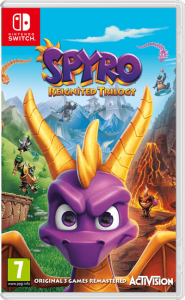
Spyro Reignited Trilogy Switch NSP XCI
Report Link Error
Select the broken download file, then submit the report.


Screenshots

About Game
Spyro Reignited Trilogy Switch NSP XCI refers to a Nintendo Switch collection of three adventure-platformers: Spyro the Dragon, Spyro 2: Ripto’s Rage!, and Spyro: Year of the Dragon. Released on September 3, 2019, the collection was developed by Toys For Bob and published by Activision. Its bright worlds, familiar dragon hero, and emphasis on movement and discovery make it a natural fit for players who enjoy searching every part of a level rather than simply racing to the finish.
Spyro Reignited Trilogy on Nintendo Switch: Collection Overview
The Spyro Reignited Trilogy Switch release gathers three connected adventures in one package, presenting Spyro’s early journeys with a modern visual polish while retaining their exploration-driven platforming structure. The trilogy moves from the Dragon Realms to Avalar and then into forgotten realms, giving each game its own setting, threats, and goals.
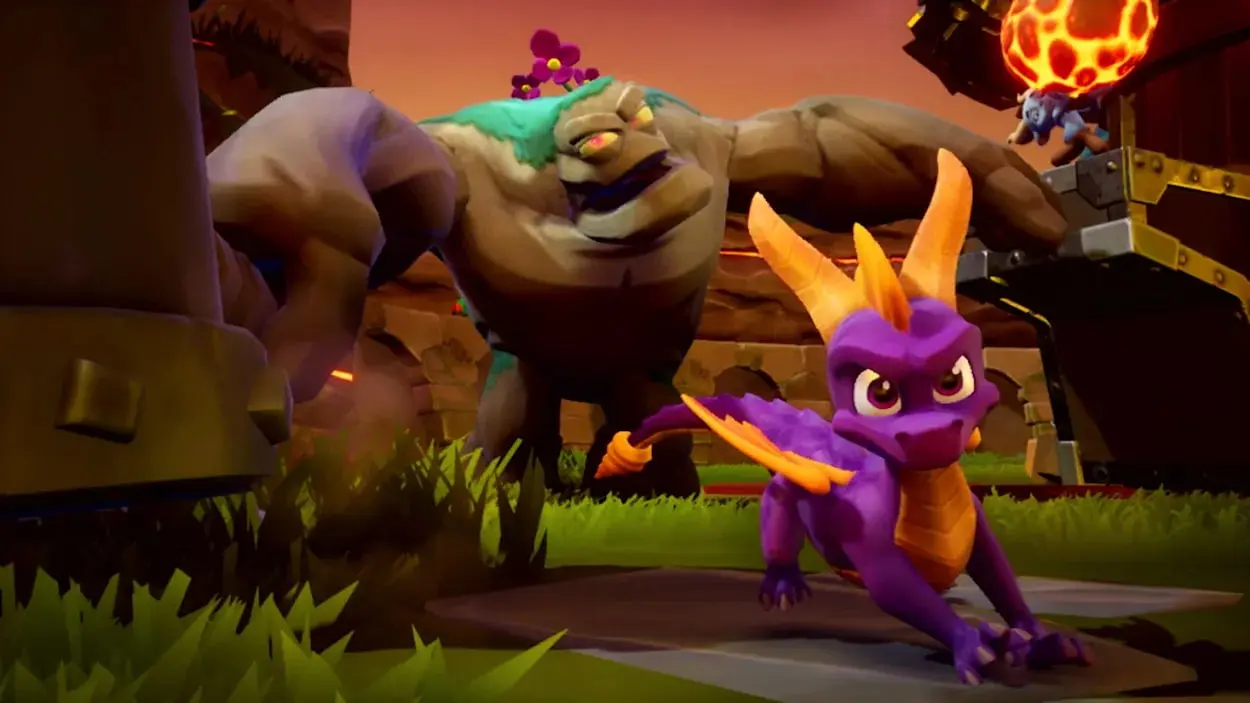
Spyro is joined throughout the collection by Sparx, his dragonfly companion. Sparx is more than a visual companion: his color communicates Spyro’s current health, making him an important part of moment-to-moment play. The games balance broad, colorful environments with direct objectives, collectible hunting, side activities, enemy encounters, and boss battles.
The Nintendo Switch version supports English, German, Spanish, French, Italian, Dutch, and Portuguese, with Europe and USA regions listed. The collection’s adventure-platformer format is especially suited to players who like clear movement abilities, imaginative worlds, and the satisfaction of returning to an area after noticing an unreachable route or missed reward.
Three Adventures: Spyro, Ripto’s Rage!, and Year of the Dragon
Spyro the Dragon begins in the Dragon Realms, where Gnasty Gnorc has turned the dragons into crystal and released his gnorc army. Spyro and Sparx set out to free the captured dragons, challenge Gnasty Gnorc, and restore peace. The game establishes the trilogy’s basic rhythm: explore a world, collect gems, find dragons, defeat enemies, and locate routes that may be hidden behind scenery or across wide gaps.
Spyro 2: Ripto’s Rage! sends Spyro to Avalar after Elora and Hunter bring him there. In Europe, the game is known as Gateway to Glimmer. Avalar is under the control of Ripto, and Spyro’s task is to help its inhabitants and stop the tyrant. The second game adds new abilities and allies, broadening the types of paths and challenges players can tackle.
Spyro: Year of the Dragon shifts the focus to a festival interrupted by the theft of every dragon egg. A mysterious sorceress is responsible, and Spyro’s journey takes him through forgotten realms to recover the eggs. The third entry expands the adventure with new allies and additional playable characters, giving its levels a wider range of challenges than Spyro handles alone.
Platforming Fundamentals: Flame, Charge, and Glide
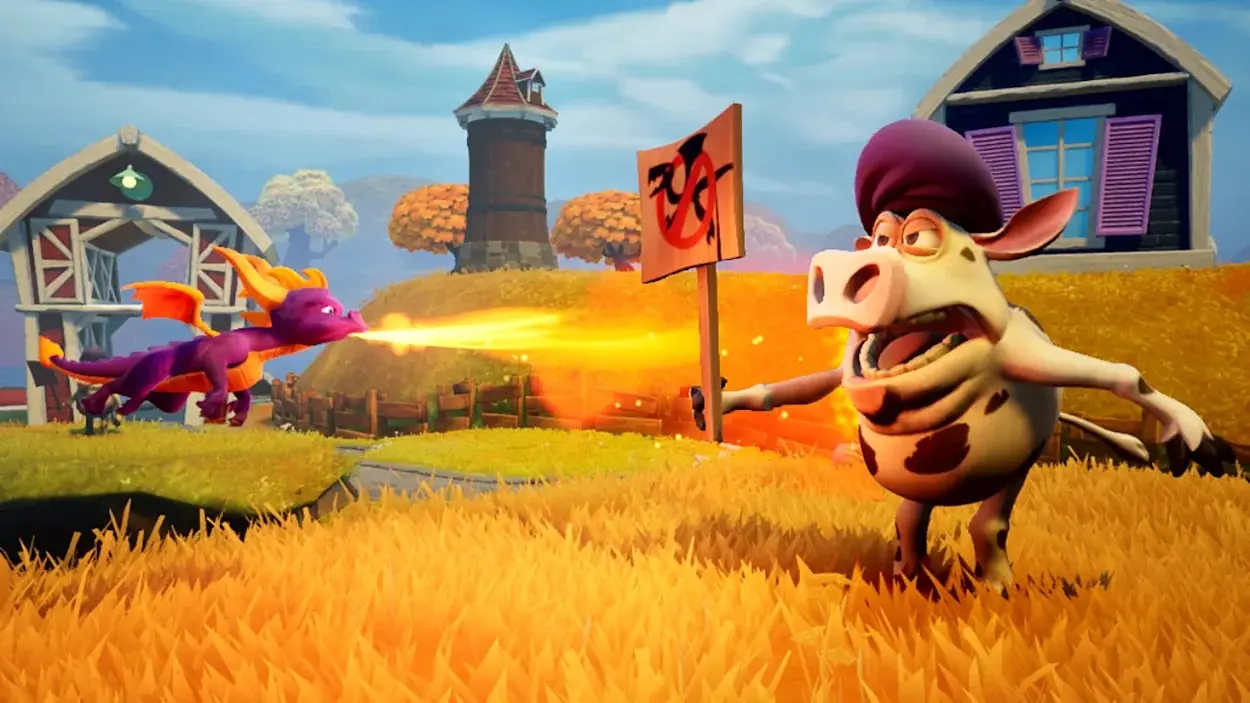
Spyro’s movement is built around three defining actions: flame breath, charging, and gliding. His flame breath is used against enemies and can also open paths. Charging lets him build speed across the ground, break through certain obstacles, and move efficiently through larger spaces. These are simple actions individually, but the levels gain much of their character from asking players to combine them with timing and observation.
Gliding is particularly important. A distant ledge may appear out of reach until players identify the correct launch point, gain enough height, or approach from another part of the level. A careful glide can lead to a cluster of gems, a hidden route, or an objective positioned away from the main path. The result is platforming that rewards awareness as much as speed.
The collection’s expansive environments encourage players to look upward, behind structures, and across gaps. Spyro’s controls support quick changes between combat and traversal: one moment may involve flaming an enemy, while the next calls for a charge toward a ramp or a glide into a secluded corner of the world.
Exploration and Collectibles Across Every World
Gems are central to the experience. They are scattered across each area, placed in obvious trails as well as less visible spots that reward a thorough search. Some are found around the main route, while others wait behind objects, down side passages, or beyond platforming challenges. For players who enjoy complete exploration, each level invites a second look.
The collectibles change with the games. In the first adventure, Spyro rescues crystallized dragons. In the third, the focus includes recovering stolen dragon eggs. Across the trilogy, side challenges and mini-games add more ways to engage with the worlds and earn rewards. Helping characters can also lead to new pathways and challenges, giving exploration a practical purpose beyond collecting every visible gem.
This structure gives the trilogy strong replay value without needing to change its central premise. A player may finish an objective and still remember a suspicious ledge, an unopened route, or a gem trail seen from another angle. Returning with a better understanding of the level layout—or with a newly available ability in later games—can reveal what was missed before.
How the Trilogy Expands Its Gameplay Across Three Games
The three games share Spyro’s core identity, but the collection does not remain mechanically static. The first game concentrates on the basic platforming language of flame, charge, glide, dragons, gems, and world exploration. It provides the foundation for the series’ approach to movement and secrets.
Ripto’s Rage! expands that foundation with swimming and climbing. These abilities make more of the environment available and give later routes a different shape. Water and vertical spaces become more than scenery when Spyro can use them to reach new parts of a world. The second game also introduces new friends, reinforcing the sense that the adventure has grown beyond its first conflict.
Year of the Dragon continues this progression by adding playable characters. Their presence broadens the collection’s gameplay variety and supports the game’s larger recovery mission. The trilogy therefore develops in a clear sequence: the essentials arrive first, new traversal options follow, and the third game adds further character-based variety. Spyro Reignited Trilogy Switch NSP XCI captures that progression across all three adventures rather than treating them as separate, unrelated games.
7 Exploration Tips for Finding Gems and Secrets
- Search every corner. Gems can be placed away from the main route, so check behind structures, around edges, and in side areas before leaving a world.
- Plan each glide. A well-timed glide can reach distant platforms, hidden ledges, and routes that are not obvious from ground level.
- Watch Sparx’s color. Sparx changes from yellow to blue to green and then to no color, indicating Spyro’s health.
- Feed Sparx when possible. Defeated enemies can provide butterflies, helping keep Sparx healthy during exploration and combat.
- Revisit unexplored paths. If a route looked inaccessible or was passed quickly, return and inspect it from a different angle.
- Complete side challenges. Mini-games and other challenges can provide additional rewards while revealing more of a world’s activities.
- Use new abilities wisely. Swimming, climbing, and later gameplay additions can open routes that were not part of Spyro’s original toolset.
The trilogy’s appeal comes from how consistently its movement, collectibles, and settings work together. There is room for direct progress, but the more memorable moments often come from spotting a distant glimmer of gems, finding a route beyond the expected path, and using Spyro’s abilities to make the jump.