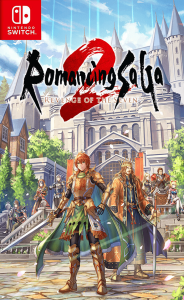
Romancing SaGa 2: Revenge of the Seven Switch NSP
Report Link Error
Select the broken download file, then submit the report.
Screenshots
About Game
Romancing SaGa 2: Revenge of the Seven Switch NSP places the future of the Baksian Empire in the hands of a ruling line rather than a single fixed hero. Released in the USA on October 24, 2024, this Square Enix RPG brings a generational conflict to Nintendo Switch: an empire must endure while the legendary Seven Heroes return as a force of vengeance. Its premise gives every campaign a longer view, asking players to think not only about the current ruler’s battles, but also about what their reign leaves behind.
An Empire Built Across Generations
The Baksian Empire begins with Emperor Leon and the memory of a golden age, but that stability does not last. The appearance of the Seven Heroes turns the empire’s history into a struggle for survival, with the dynasty confronting threats that cannot be resolved by one ruler alone. This is an RPG built around continuity: victories, setbacks, expansion, and discovery all belong to an empire that outlives any individual emperor or empress.
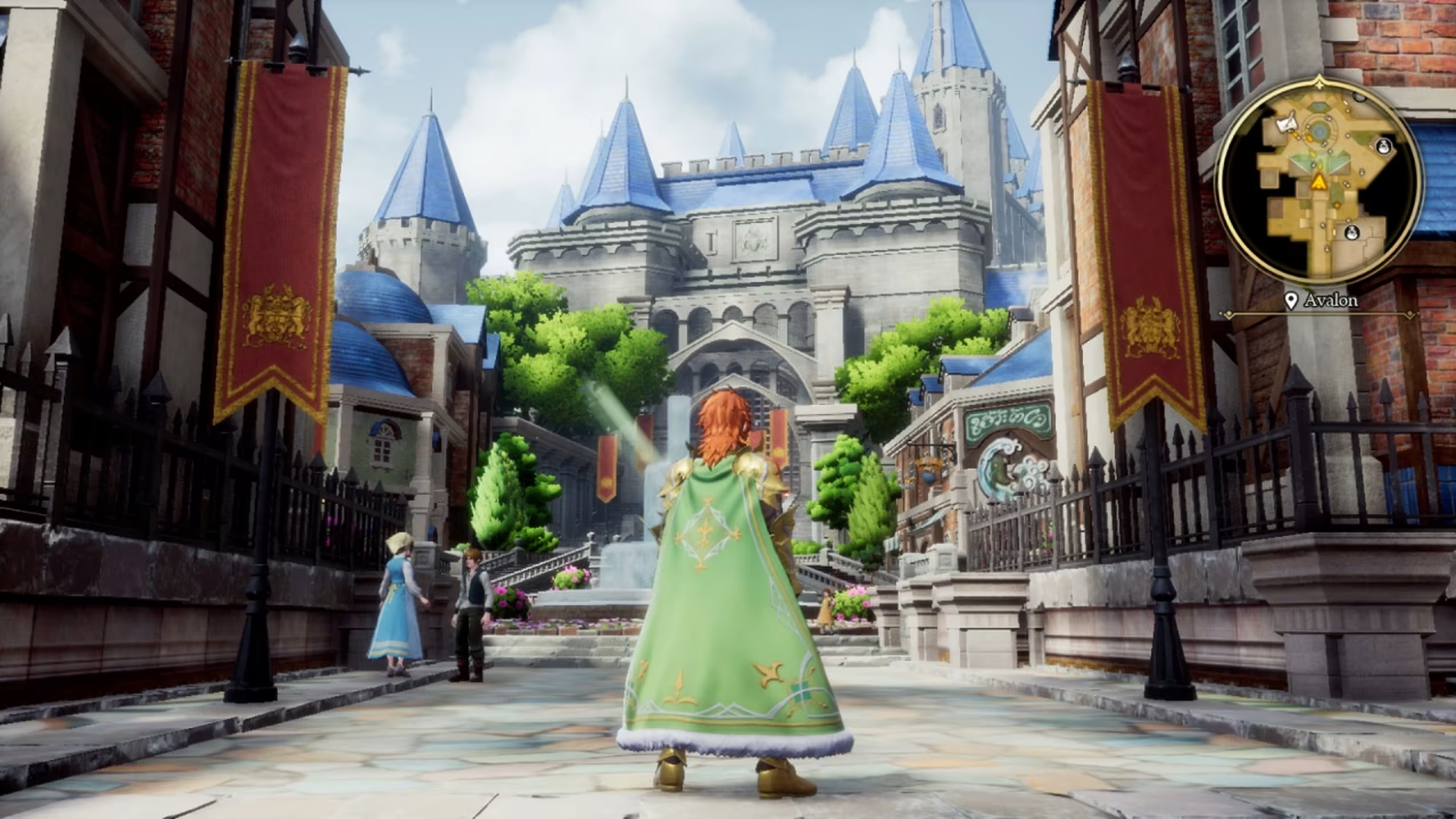
That broad timeline gives the adventure a distinctive atmosphere. Ancient mysteries, political intrigue, varied regions, and a cast of potential allies sit alongside the central war against the Seven Heroes. The world is not presented as a simple route from one major battle to the next. Exploration opens opportunities to uncover new places, meet characters, and choose which events or quests to pursue. The result is a grander sense of responsibility than a conventional party-focused quest: the player is guiding a state through an uncertain era.
The Switch release is described as a revitalization of the classic RPG, preserving the scale of its story while framing it around an empire’s changing fortunes. Its appeal lies in that sense of historical momentum. A reign matters, but so does what follows after it.
Why Imperial Succession Shapes Every Campaign
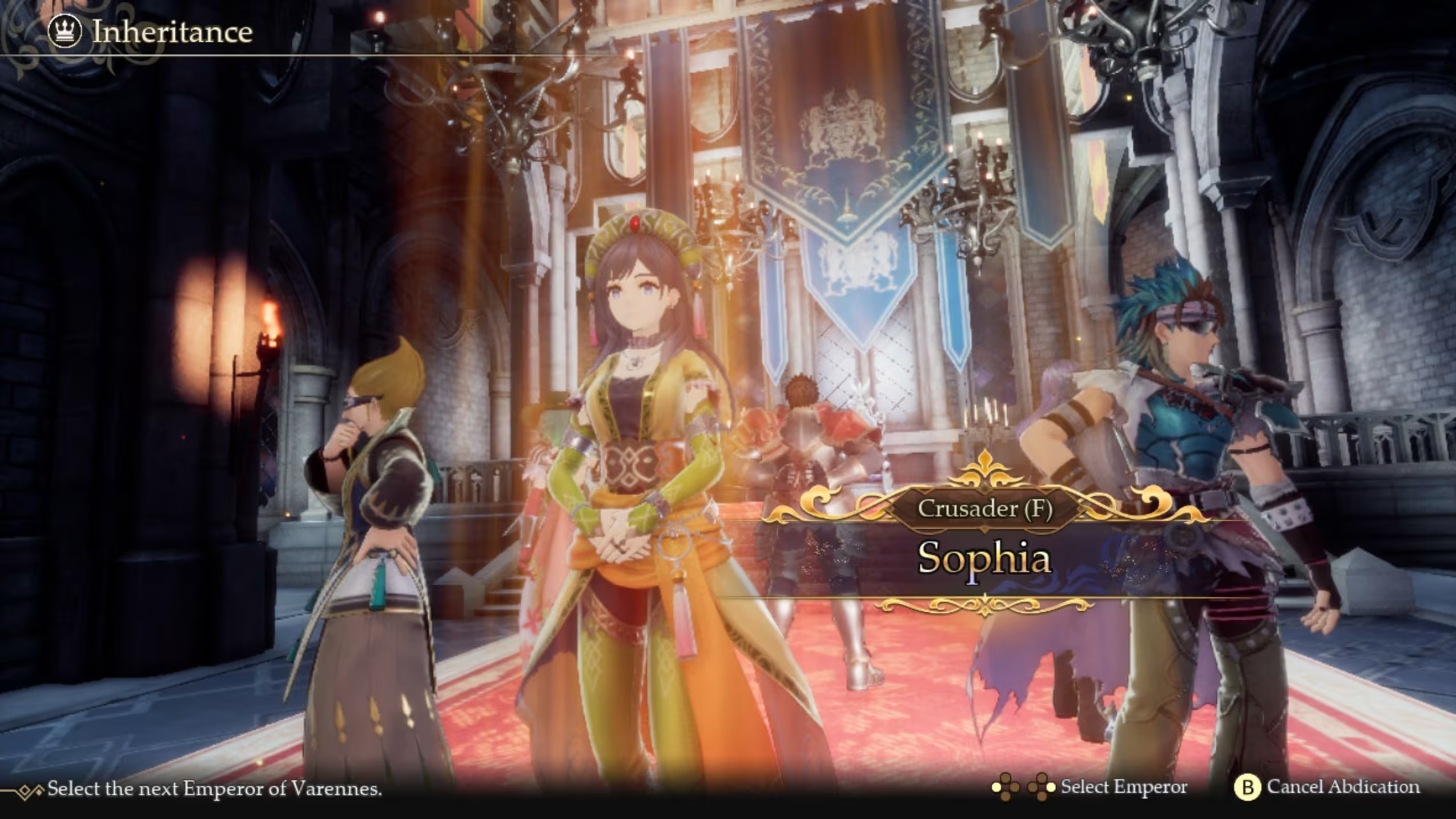
The Imperial Succession System is the key to how progression works. Control passes through successive emperors and empresses, each with different strengths and weaknesses. Rather than treating a change of ruler as a break in the adventure, the game makes it part of the strategy. A new sovereign inherits the burden of the previous reign along with skills and experience that can help carry the dynasty forward.
This structure encourages long-term planning. The immediate question in a difficult encounter may be how to win with the current party, but the larger question is what knowledge and preparation should be preserved for the next generation. Inherited skills give succession practical weight, while the changing ruler gives the campaign a different perspective over time. It also means that growth is not confined to one protagonist’s personal journey; it contributes to the continued development of the imperial line.
For players used to RPGs with one permanent lead character, this can require a change in mindset. The goal is not simply to build one ruler into an answer for every problem. It is to make choices that strengthen the empire across multiple reigns.
The Seven Heroes and the Stakes for the Dynasty
The Seven Heroes are more than distant antagonists. They were once regarded as saviors, yet they now return seeking vengeance. That reversal gives the conflict an important tension: the empire is facing figures with a heroic past as well as destructive intent in the present. Uncovering the mystery around them is tied directly to protecting the Baksian Empire and the wider world from the damage they threaten to cause.
Because the story advances through generations, the dynasty’s resistance has a cumulative quality. Each emperor or empress inherits an unresolved crisis and adds to the effort against the Seven Heroes. The stakes therefore extend beyond a single throne. The survival of the lineage, the condition of the empire, and the fate of its inhabitants are shaped by how effectively each reign responds.
This framing makes the central vengeance plot feel suitably persistent. The Seven Heroes remain a pressure on the dynasty while the player navigates exploration, recruitment, battles, and development. Their presence gives cohesion to a campaign that can otherwise be approached with considerable freedom.
Turn-Based Battles, Formations, and Glimmer
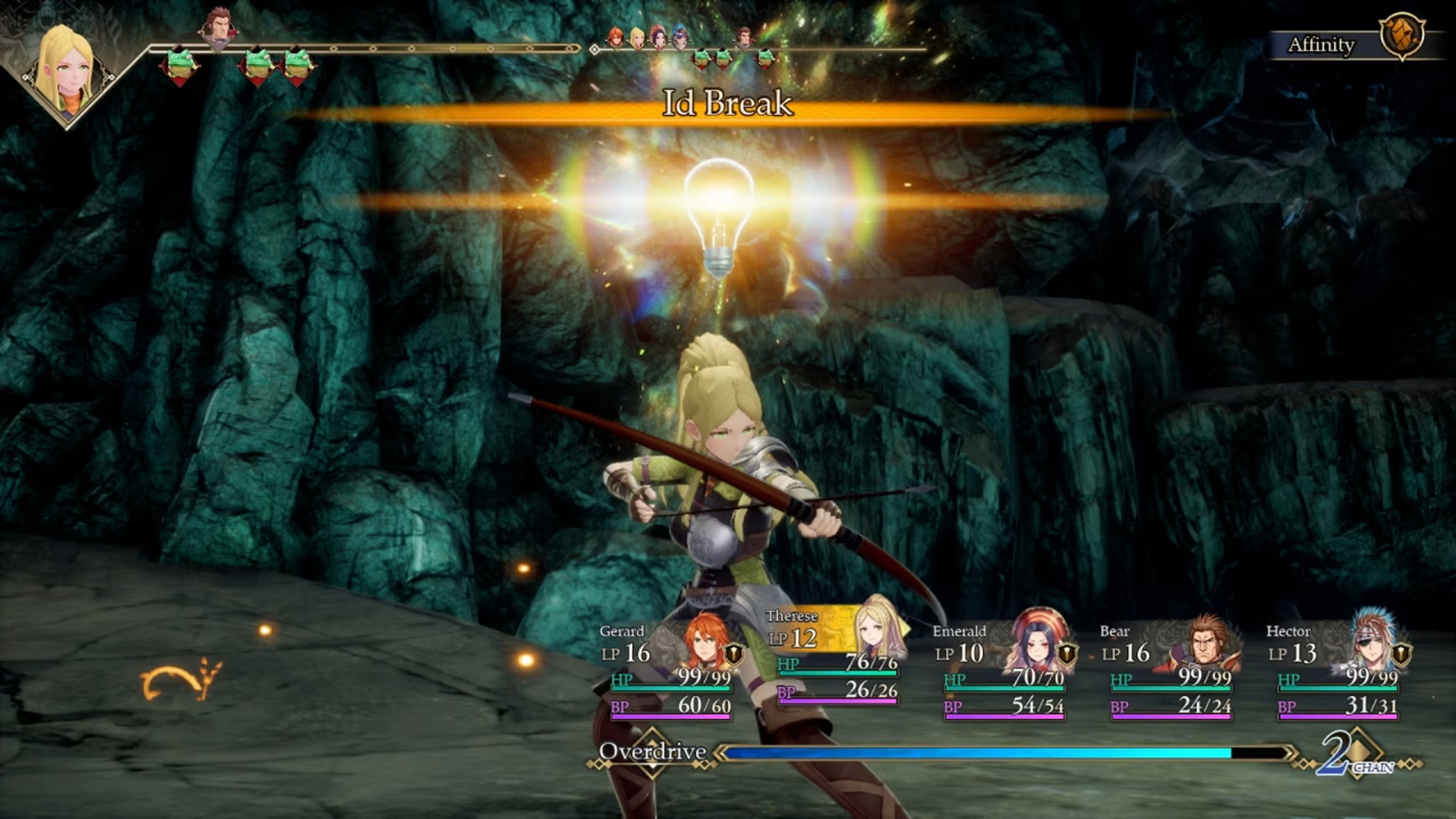
Combat uses a strategic turn-based foundation. Battles reward attention to party setup and the options available in the moment, rather than relying only on straightforward progression. Formations are an important part of that planning, allowing players to experiment with how their forces are arranged for different situations.
The Glimmer system adds another layer to fights by allowing abilities to be learned during battle. That means an encounter can become a source of new tactical possibilities, not merely a test of the tools already available. Learning through Glimmer gives combat a sense of discovery and encourages players to remain engaged with individual battles, especially when trying different approaches.
Character recruitment further supports this flexibility. Various classes and individuals can join the empire, with their own skills and growth paths. Together with formations, inherited skills, and Glimmer, this gives the player room to shape an army around evolving needs. The challenge is not presented as a single prescribed build; experimentation is part of learning how the empire can respond.
How Decisions Change the World Over Time
The game’s world-evolving narrative connects rulership decisions to the passage of generations. Choices made under one ruler can affect what the next ruler encounters, making the empire feel like an ongoing project rather than a static backdrop. Regions can be explored, allies can be recruited, and the domain can be expanded and developed through resource management and technology.
The Free Scenario System reinforces that flexibility by allowing quests and events to be tackled in an order chosen by the player. This creates meaningful variation in how a campaign unfolds. Different priorities can lead to different experiences of the world, while the consequences of rule remain part of the larger story.
That structure supports replay value without reducing the narrative to a fixed sequence. Players can approach opportunities in another order, test different formations and recruits, and make different decisions for the empire. Romancing SaGa 2: Revenge of the Seven Switch NSP is particularly suited to players who enjoy RPG systems that ask them to consider both immediate choices and their later effects.
7 Strategic Priorities for a New Emperor
- Learn succession first. Understand that emperors and empresses change over time, and consider how inherited skills and experience can support the next generation.
- Explore with purpose. Seek out new regions, characters, and opportunities rather than treating the empire’s world as a fixed path.
- Recruit broadly. Different classes and individuals bring unique skills and growth paths, giving the imperial forces more options.
- Test formations. Turn-based combat rewards deliberate party arrangement, so adjust formations when a battle calls for a new approach.
- Use Glimmer actively. Abilities can be learned mid-fight, making battle experimentation a valuable part of progression.
- Develop the empire. Expansion, resource management, and technology benefit the kingdom beyond any one ruler’s reign.
- Think beyond the current throne. Player decisions and generational storytelling are closely connected, so weigh present gains against their long-term consequences.
With English, Japanese, Spanish, French, and German language support, the game is positioned for players interested in a strategic RPG where dynasty management and combat are inseparable. Its generational structure, open quest order, evolving world, and demanding battles make it a fitting choice for those willing to plan for an empire’s future rather than only the next victory.