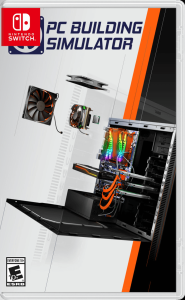
PC Building Simulator Switch NSP XCI
Report Link Error
Select the broken download file, then submit the report.
Screenshots
About Game
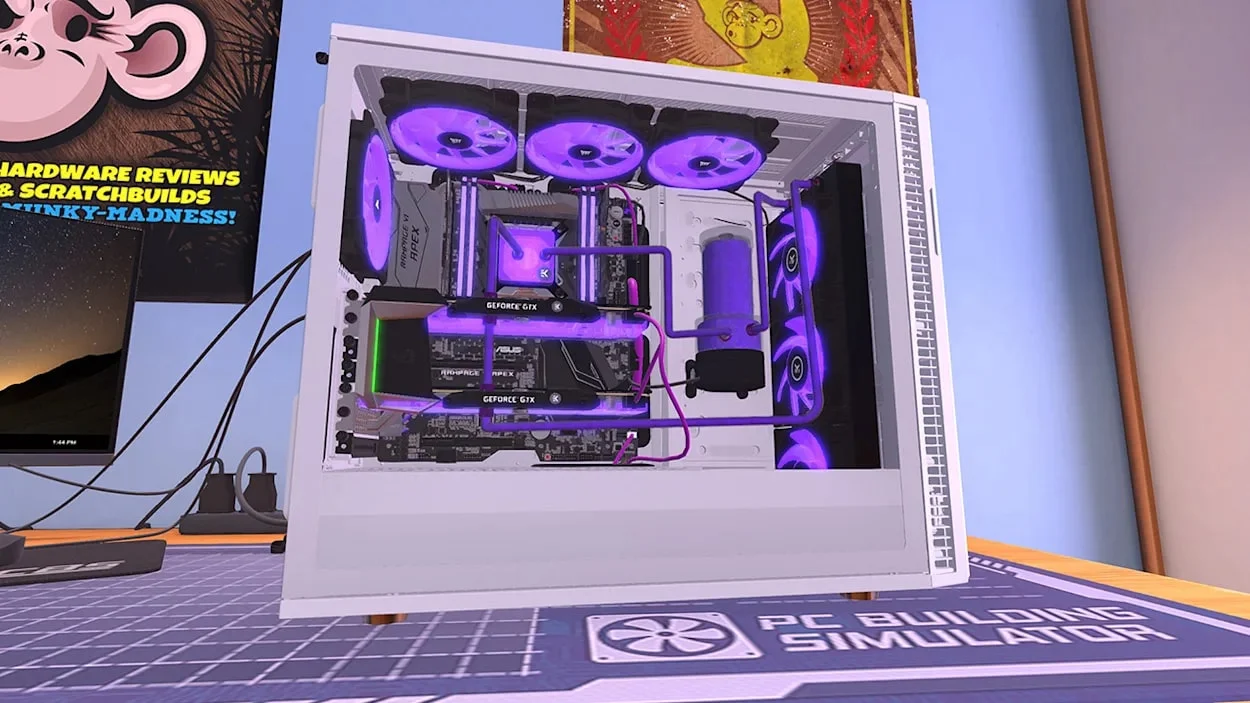
PC Building Simulator Switch NSP XCI places a detailed computer workshop in a portable Nintendo Switch setting. The premise is practical rather than dramatic: take customer requests, open up their machines, diagnose faults, order components, assemble systems, and keep the repair business moving. Its appeal comes from the steady satisfaction of turning a vague complaint into a working PC, one cable, component, and careful test at a time.
What PC Building Simulator Brings to Nintendo Switch
This Nintendo Switch simulation is built around the day-to-day work of a PC repair shop. Jobs can involve replacing a failed part, adding requested upgrades, constructing a new machine within a customer’s budget, or addressing performance concerns. The process focuses on the visible steps of PC work: fitting components, connecting cables, managing parts, and checking that the completed system performs as expected.
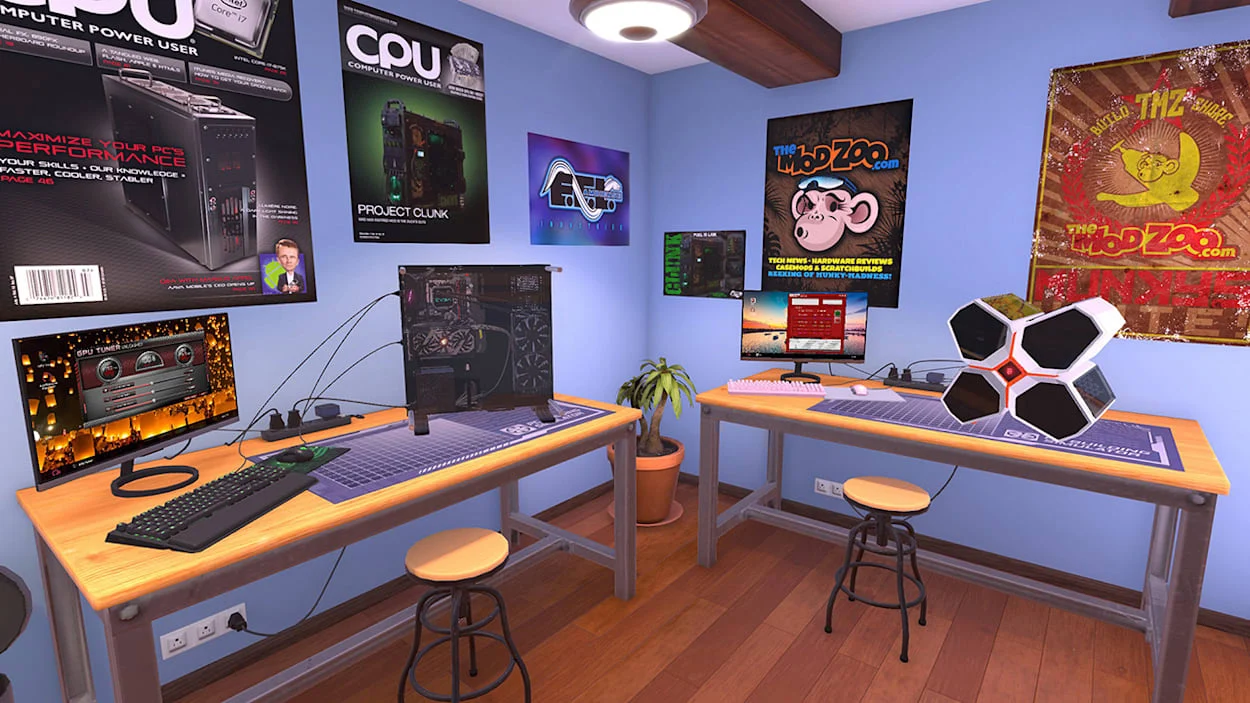
The portable format suits the game’s measured rhythm. A session can be spent completing a single repair, reviewing incoming messages, ordering needed hardware, or making progress on a larger custom build. Rather than relying on a conventional cutscene-driven storyline, the presentation creates its sense of place through the workshop itself and the continual flow of customer problems. The shop becomes a working space that grows alongside the player’s capabilities.
For players curious about PC hardware, the game offers an accessible way to engage with the logic of building and repair without requiring real components. It is also a strategy-minded management experience, since money, customer demands, available parts, and time all influence the next decision.
From Small Repair Jobs to a Growing Workshop
The PC Building Simulator career begins with an inherited repair shop that needs attention. Early work is comparatively modest, such as replacing a faulty power supply or installing additional RAM. These smaller tasks establish the loop: read the request, identify the right solution, carry out the work, and return a functioning machine to its owner.
Successful customer work earns money, experience, and reputation. That progress supports workshop progression, allowing the business to develop through upgraded tools and a more capable work environment. As the shop’s reputation improves, more demanding and better-paying PC repair contracts become available. Requests can grow from straightforward replacements into higher-end gaming systems, budget-sensitive builds, upgrades, and other technical assignments.
There is replay value in this gradual career structure because each job asks the player to weigh different requirements. A customer may care about cost, performance, or a specific upgrade, while another may arrive with a problem that first needs to be identified. The workshop’s growth gives these repeated tasks a larger purpose: each completed job helps turn a small repair business into a more established operation.
Diagnosing Customer PC Problems
Troubleshooting is a major part of the game’s repair-shop fantasy. Customer emails provide the starting point, outlining reported faults, requested changes, and sometimes financial limits. Reading them closely matters, because a job is not only about fitting hardware; it is about meeting the stated need accurately.
Diagnosis can lead to replacing defective components, installing an upgrade, or investigating why a system is not performing correctly. The game also includes performance testing through 3DMark and other benchmarks, giving players a way to check completed builds. Testing turns the repair process into more than visual assembly: a PC must also show that it is ready for the work requested of it.
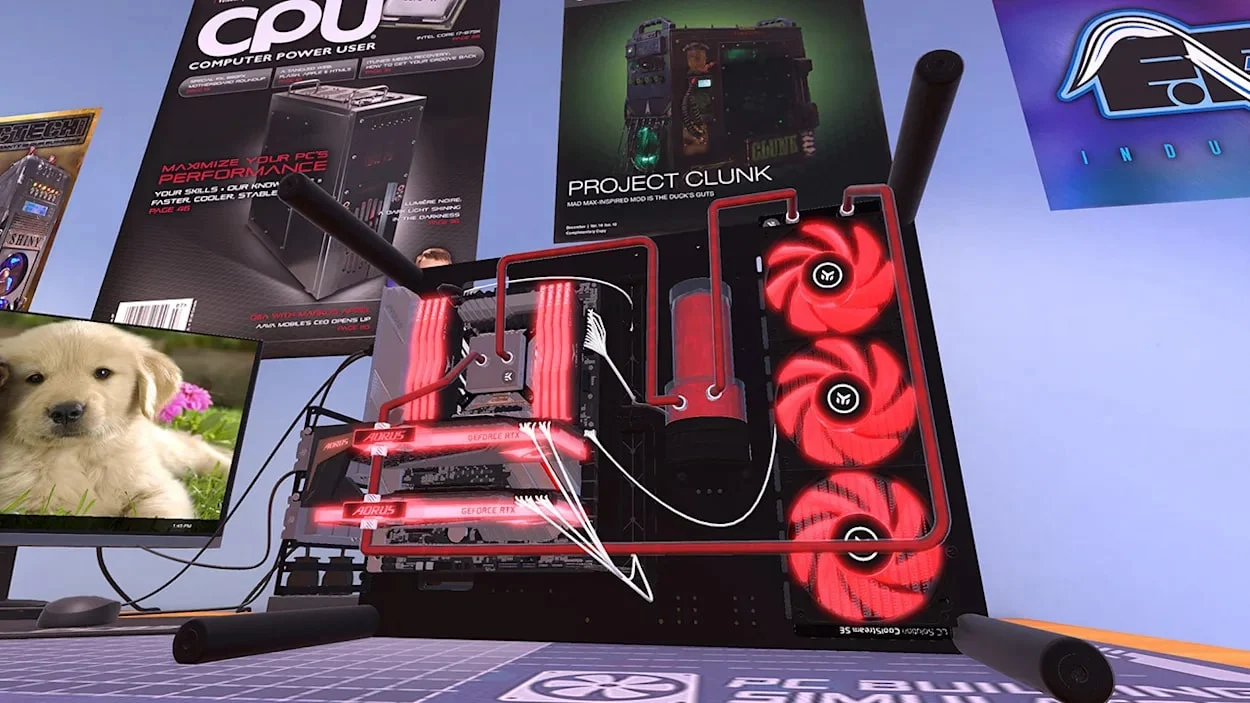
Customer repair jobs encourage methodical habits. A replacement part must be appropriate for the machine, upgrades need to reflect the request, and a finished build benefits from thorough checking. Cable management, cooling options, paint, and lighting customization add further tasks for those who enjoy the workshop side of PC ownership as much as the technical diagnosis.
Licensed Hardware and Recognizable PC Brands
Licensed PC hardware is central to the simulation’s hardware-focused appeal. Components from recognizable manufacturers including AMD, NVIDIA, and Intel give the workshop a familiar vocabulary for players who follow computer parts. The game’s range of hardware supports jobs that feel grounded in the choices associated with modern PC building, from basic repairs to more ambitious gaming-focused systems.
These components are not merely decorative names. They feed into the decisions behind a build: selecting parts, observing a budget, meeting a performance target, and testing the result. This makes the game particularly suited to players who enjoy comparing hardware roles and considering how a system comes together piece by piece.
PC Building Simulator Switch NSP XCI uses that recognizable hardware language to make its management and assembly tasks more tangible. The result is a simulation with a calm, workshop-oriented atmosphere, where the reward is often the simple moment when a carefully assembled computer powers through its test.
7 Practical Priorities for New Repair-Shop Owners
- Read first. Check every customer email carefully before buying parts or beginning work, especially when the request includes a budget or a particular goal.
- Plan the budget. Match the selected components to the customer’s needs rather than treating every job as an excuse for the most expensive hardware.
- Order efficiently. Use the in-game store with a clear plan so needed parts are available without unnecessary spending.
- Diagnose precisely. Identify the reported fault before replacing components, since a working repair depends on solving the actual problem.
- Test thoroughly. Run benchmarks and performance checks after assembly to confirm that the completed PC meets expectations.
- Upgrade tools. Workshop tools support the move toward more involved contracts, making them a useful part of long-term repair shop strategy.
- Stay organized. A tidy approach to inventory, parts, and customer objectives helps keep the growing workshop manageable.
Release, Regions, Languages, and Technical Metadata
PC Building Simulator released on August 13, 2019. It is classified across the Simulation, Strategy, and Education genres, reflecting its blend of hands-on component work, business decisions, and hardware-oriented learning. The publisher is The Irregular Corporation Ltd, and the developer is Claudiu Kiss.
The listed regions are Europe and USA. Supported languages are English, Russian, German, Spanish, French, Japanese, Korean, Portuguese, and Chinese. Its Title ID is 010072800CBE8000. The base firmware information is v10.0.2, while the update firmware information is v15.0.1. The listed file size is 4.9GB.
The game is a fitting choice for players who enjoy deliberate simulation systems, PC component knowledge, and the steady progression of a service business. Its focus remains on practical jobs and workshop improvement: receive the request, choose the solution, build carefully, test the result, and prepare for the next machine through the door.