Overcooked: Special Edition Switch NSP XCI
Report Link Error
Select the broken download file, then submit the report.
Screenshots
About Game
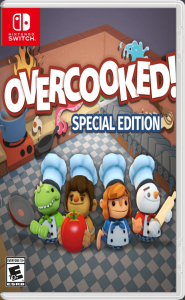
Overcooked: Special Edition Switch NSP XCI describes a fast-moving cooperative cooking game built around shared pressure, quick decisions, and the occasional kitchen disaster. Released for Nintendo Switch in 2017, Team 17’s party game places players in busy, unconventional workspaces where preparing a meal is only half the job; the other half is keeping the whole team organised long enough to serve it.
Overcooked: Special Edition on Nintendo Switch: Game Overview
Overcooked: Special Edition is a Nintendo Switch party game from Team 17, which also served as both publisher and developer. Its central idea is easy to understand: a group of chefs must prepare, cook, plate, and serve food before time runs out. Putting that idea into practice is considerably more demanding.
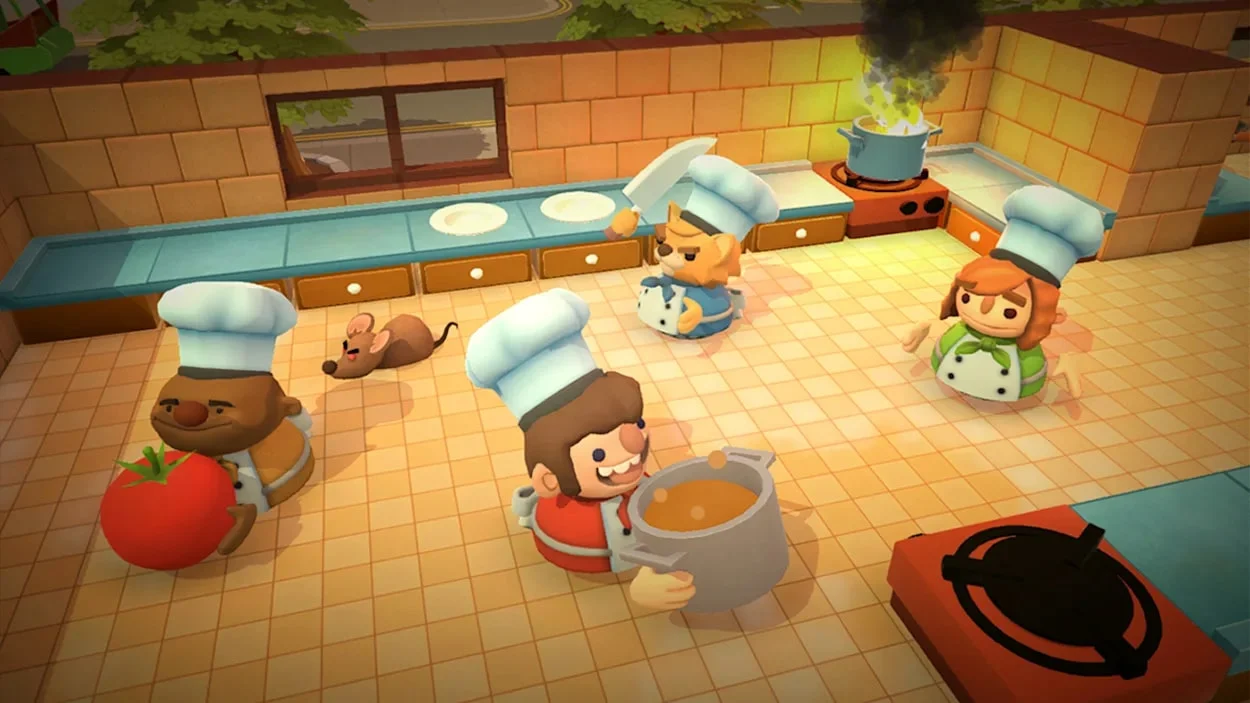
The game supports cooperative play for up to four players. A kitchen can require one chef to chop ingredients, another to cook, a third to wash plates, and someone else to deliver finished dishes. When the team is in sync, orders can move briskly from ingredient to serving window. When communication breaks down, a missing plate or forgotten saucepan can disrupt the entire operation.
That contrast gives the game its lively party-game character. The action is rooted in simple cooking jobs, but the pace can turn those jobs into a scramble. Recipes range from straightforward salads to dishes such as sushi and pizza, while the changing kitchens ensure that familiar tasks do not always unfold in familiar ways.
The Nintendo Switch release is listed as Region Free, making the game’s release context broad rather than tied to one specified region. It is a fitting home for a game designed around immediate local cooperation, short bursts of problem-solving, and the kind of shared tension that can produce both focused planning and frantic shouting.
Saving the Onion Kingdom from the Everpeckish
The lighthearted Overcooked story gives all of this culinary pressure a clear purpose. Players take the role of chef pals attempting to save the Onion Kingdom from the Everpeckish, a huge creature whose appetite threatens the world around it. The solution is not combat, but culinary improvement: the chefs must build the skills needed to prepare meals capable of satisfying the insatiable beast.
The journey moves through unusual kitchens as the team develops its abilities. This premise allows the game to introduce new places, new complications, and tougher cooking demands without losing its playful tone. The Everpeckish provides a whimsical source of urgency, while the real drama happens on the kitchen floor, where an incomplete order can be just as alarming as a looming monster.
There is an appealing contrast in the setup. The stakes involve the safety of the Onion Kingdom, but the moment-to-moment work remains grounded in chopping, cooking, assembling dishes, washing up, and serving. That makes the adventure accessible: players do not need complicated systems to understand their role, yet they do need to work together carefully to succeed.
Why Kitchen Layouts Create the Chaos
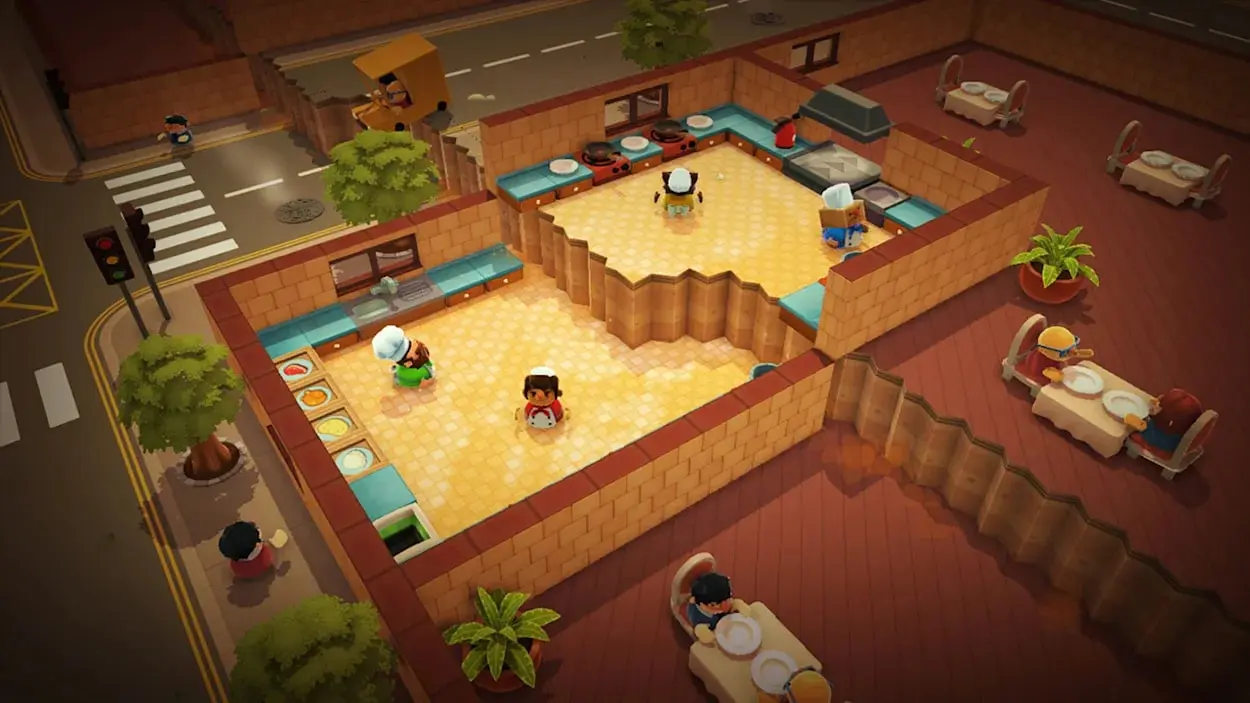
Overcooked gameplay turns ordinary food preparation into a test of coordination by changing the space in which the work happens. Each kitchen has its own layout, moving elements, obstacles, or hazards. A task that would be simple in a stable room can become difficult when chefs are separated from ingredients, appliances, plates, or the serving area.
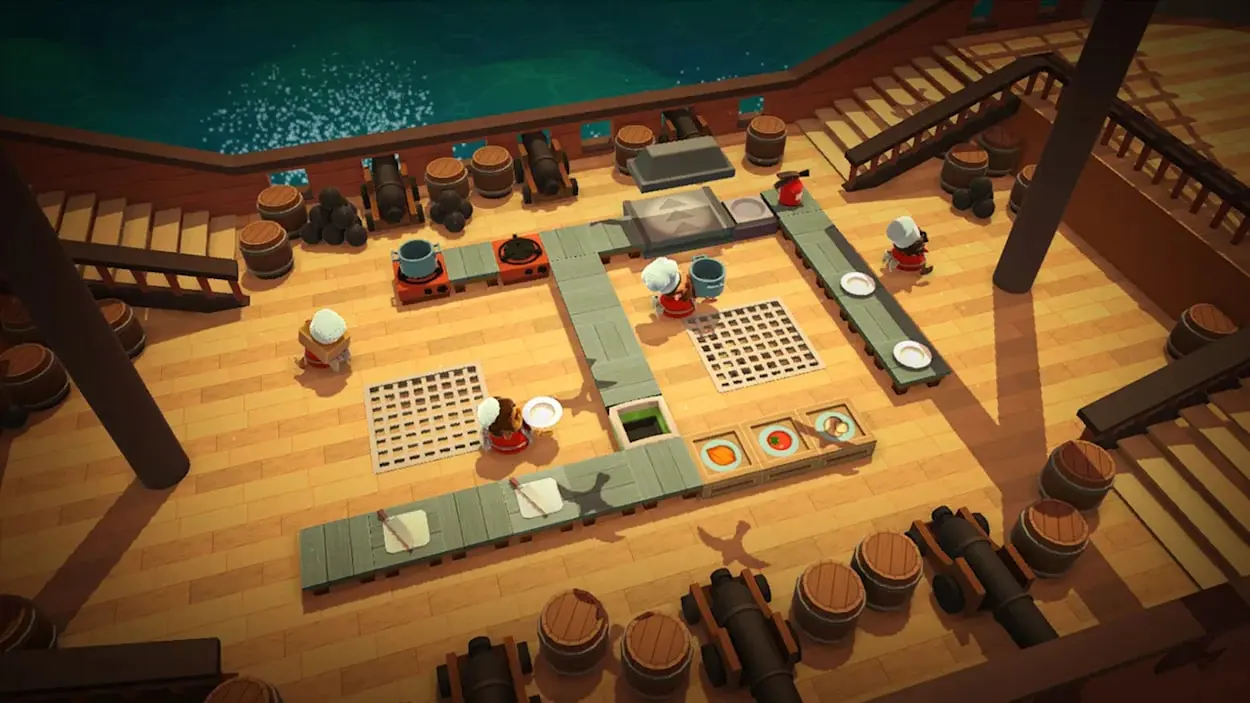
These dynamic kitchens demand more than speed. Teams have to read the room, decide who can reach which station, and avoid wasting time crossing paths. A pirate ship, city street, or ice floe can create different problems, but the basic challenge remains consistent: keep the flow of food moving despite an environment that refuses to cooperate.
Kitchen hazards also make small mistakes more costly. If a player is busy rescuing a cooking task, another job may be neglected. If dishes are not washed, finished meals cannot be served. If ingredients are prepared without a clear plan, the team can create a backlog rather than progress. The game’s chaos is therefore purposeful. It asks players to turn disorder into a workable routine.
This is where the social side of the game becomes especially important. Players can divide jobs, call out needs, or quickly change roles when a layout shifts. The kitchens do not reward silence or rigid habits for long. They reward teams that notice problems early and respond together.
7 Teamwork Tips for Handling Busy Kitchens
- Read the room. Before starting a rush of orders, inspect the kitchen layout and note where ingredients, cooking stations, plates, and the serving point are located.
- Spot bottlenecks. Identify narrow routes, separated work areas, or stations that several chefs will need to use. Planning around these bottlenecks can prevent needless collisions.
- Call out tasks. Clear communication helps the group track what is being chopped, cooked, plated, washed, or delivered.
- Assign roles. Dividing responsibilities can keep the work flowing. One player may focus on chopping while another manages cooking or washing dishes.
- Respect the clock. Watch timers closely. Cooking and serving are both time-sensitive, so a nearly finished dish should not be forgotten while the team starts another task.
- Protect the plates. Keep clean plates available. A completed meal cannot reach the serving area if there is nothing ready to plate it on.
- Adapt quickly. Changing environments require changing plans. When movement, obstacles, or layout shifts disrupt the routine, redistribute jobs instead of forcing an old strategy.
How Difficulty Builds Across the Adventure
The cooking challenges become more demanding as the adventure progresses. New environmental complications and more demanding orders increase the pressure on every part of the team’s routine. Early lessons about chopping ingredients or watching a cooking station remain useful, but later situations require players to combine those habits with sharper planning.
This increasing difficulty gives the game a strong sense of progression. The team is not simply repeating the same recipe in a different room; it is learning how to maintain precision when the kitchen becomes less predictable. More complex dishes, busier order flows, and unusual spaces make quick thinking essential.
That structure also supports repeat play with different groups or different approaches to role assignment. A team that struggles because everyone tries to do everything may improve by giving each chef a clearer responsibility. Another group may discover that its best approach changes from one layout to the next. The challenge is not only to move faster, but to become more coordinated.
The result is suitable for players looking for a cooperative party game with a strong emphasis on communication. It can be especially engaging for friends or family members willing to share tasks, react to mistakes, and work through an escalating series of kitchen problems together.
Release Details, Languages, and Switch Metadata
Overcooked: Special Edition Switch NSP XCI is associated with the following verified Nintendo Switch release information:
- Release date: July 26, 2017
- Genre: Party Game
- Publisher: Team 17
- Developer: Team 17
- Region: Region Free
- Languages: English, German, Spanish, French, Japanese, Russian, and Chinese
- Title ID: 01009B900401E000
- File size: 748MB
For a game about kitchens under pressure, those details frame a focused release: a 2017 Region Free Switch party game from Team 17, built around cooperative cooking, increasingly difficult environments, and the shared effort to save the Onion Kingdom from the Everpeckish.