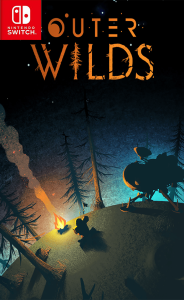
Outer Wilds Switch NSP
Report Link Error
Select the broken download file, then submit the report.
Screenshots
About Game
Outer Wilds Switch NSP refers to the Nintendo Switch release of Annapurna Interactive’s adventure game, arriving on December 7, 2023. Set within a compact but densely connected solar system, it turns space exploration into a patient search for meaning, asking players to follow clues, test possibilities, and learn from every short-lived journey.
Outer Wilds on Nintendo Switch: Release and Platform Details
The Outer Wilds Nintendo Switch version was released on December 7, 2023, with Annapurna Interactive serving as both publisher and developer. It is listed for Europe, the USA, and Japan, giving the game a broad regional release across Nintendo Switch territories.
Language support includes English, French, German, Italian, Japanese, Korean, Portuguese, Russian, Simplified Chinese, and Spanish. The listed firmware requirement is version 17.0.0 for both the base release and its update. With a file size of 3.9GB, the Switch edition brings this exploration-focused adventure to a portable platform without changing the game’s central structure: leave home, investigate a mystery, and return to what you have learned.
The exact phrase Outer Wilds Switch NSP is often used to identify this particular Switch release, but the game itself is defined less by technical details than by its unusual approach to discovery. Its universe is small enough to survey in pieces, yet layered enough that a single answer can redirect an entire expedition.
The 22-Minute Time Loop and Its Central Mystery
The adventure begins on Timber Hearth, where the player is preparing for a first space flight as part of Outer Wilds Ventures, a young space program investigating the surrounding solar system. A clue connected to the ancient Nomai sets the wider mystery in motion.
Every journey is framed by the Outer Wilds 22 minute time loop. The cycle ends when the sun goes supernova, returning the player to the beginning. This recurring event gives the game its persistent sense of urgency: there is never quite enough time to inspect every ruin, reach every destination, or follow every lead in one attempt.
The Outer Wilds supernova is not simply a failure state. It is the rhythm that organizes the entire adventure. The player’s task is not presented as stopping the event, but as understanding why the cycle occurs and what the Nomai have to do with it. Each expedition can reveal another part of that answer through locations, ruins, texts, and environmental evidence.
This makes the story feel investigative rather than combat-driven. The essential question is always nearby, but the route to it must be assembled from fragments. The Outer Wilds Nomai mystery becomes clearer through observation and interpretation, not through a conventional sequence of battles or character upgrades.
Why Knowledge Is the Real Form of Progress
Outer Wilds progression is built around understanding. A journey may end in a black hole, in the sun, or through another hazard before a player reaches a planned destination. Yet the information gained during that attempt remains useful. A discovered route, a clue in an ancient ruin, or a better understanding of a planet’s timing can shape the next loop.
This structure gives failed expeditions a purpose. Missing a landing or arriving too late can still teach something about gravity, conditions on a world, or the relationship between two locations. The player does not need to preserve equipment or collect traditional power increases for that knowledge to matter. What carries forward is the ability to make a more informed choice next time.
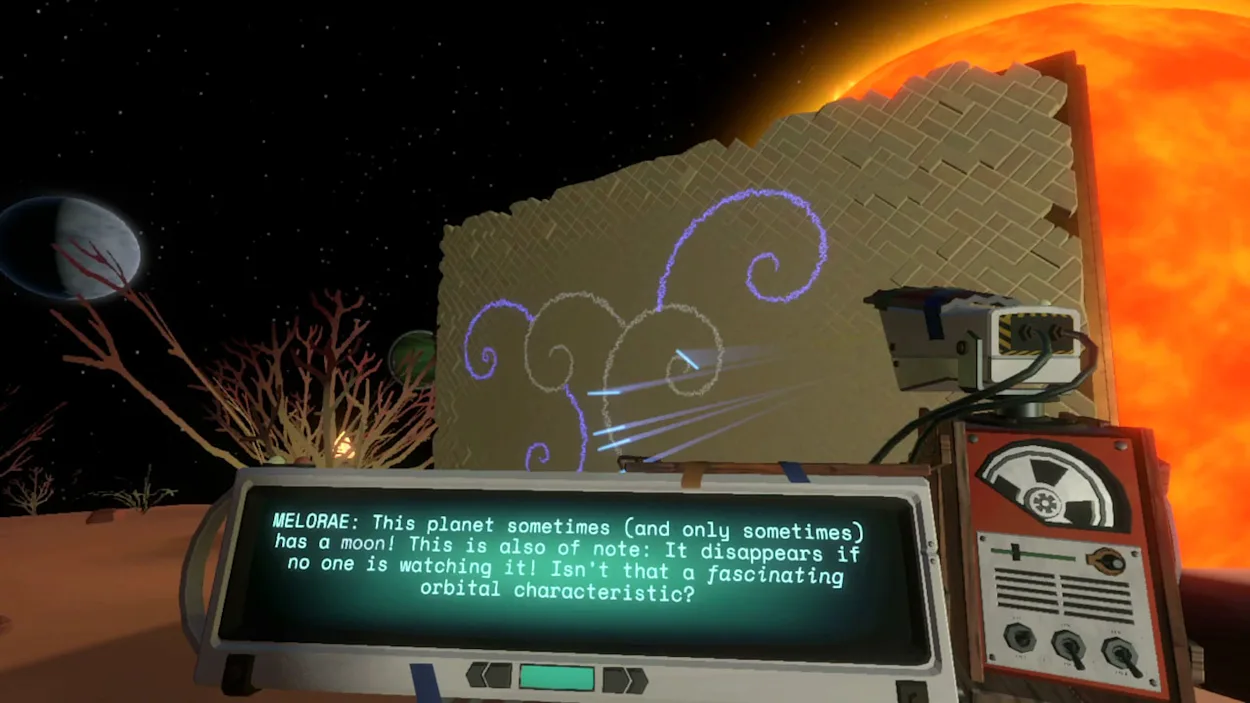
Outer Wilds exploration therefore rewards note-taking in the broadest sense: noticing details, remembering connections, and revisiting an idea after finding new context elsewhere. Ancient Nomai texts are especially important because they provide pieces of lore that can clarify the purpose of a location or point toward another unanswered question.
The game’s Outer Wilds ancient texts are not isolated collectibles. They support the larger pattern of discovery, linking forgotten ruins with the present-day search for an explanation. Progress can be quiet—a newly understood symbol, a remembered signal, a route that finally makes sense—but it is still progress.
Exploring a Miniature Solar System
The Outer Wilds solar system is open for exploration, with a small spacecraft allowing travel between planets and moons. Rather than funneling the player along a fixed series of missions, the game encourages curiosity. A distant structure, an unfamiliar signal, or a question raised on one world may be enough reason to set a new course.
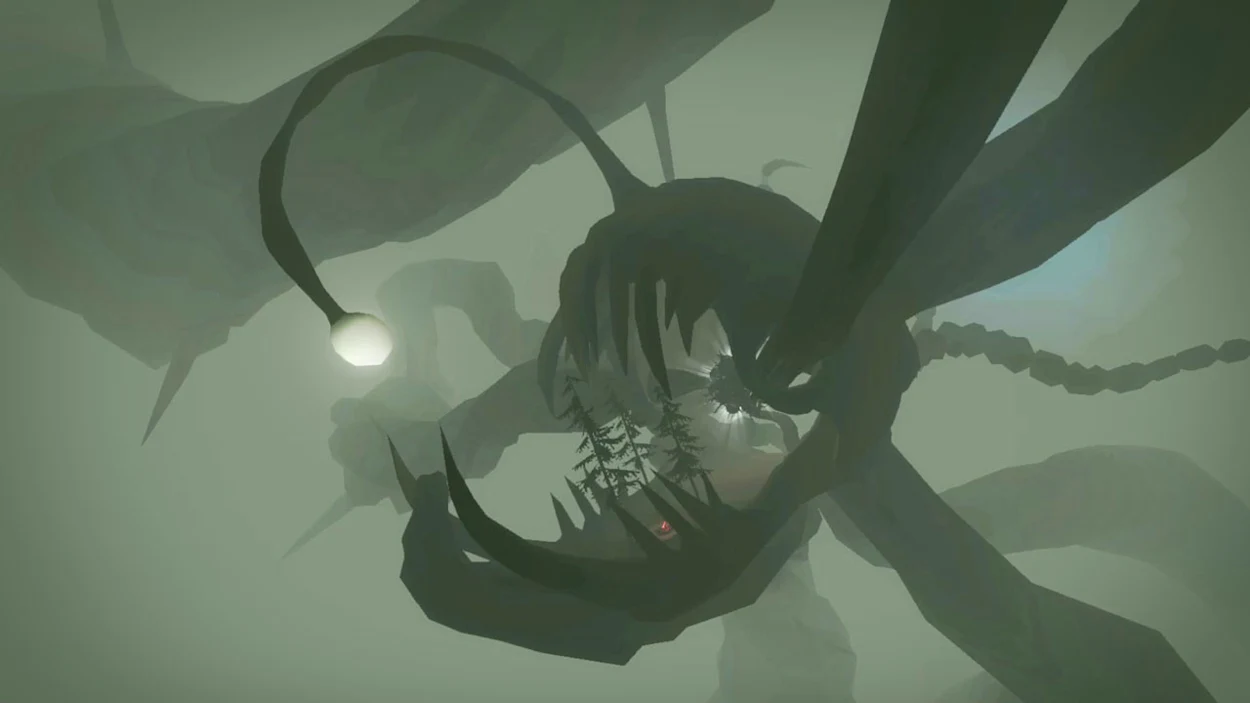
Its celestial bodies have distinct biomes, gravitational pulls, and atmospheric conditions. Reaching a place safely can require careful maneuvering, while landing is part of the challenge rather than a simple transition between areas. Orbital movement and gravity shape the feel of travel, giving each destination its own practical demands.
Outer Wilds planets are designed as places to investigate rather than scenery to pass through. Some hold ruins and hidden paths; others pose environmental obstacles that change what can be reached. The miniature scale keeps the system approachable, while the number of connections between locations makes it rewarding to revisit familiar places with a new idea in mind.
That is the appeal of Outer Wilds open world exploration: the player can pursue leads in a self-directed order, and answers found in one corner of the system can transform the meaning of another.
Essential Exploration Tools: Signalscope and Scout Launcher
Two tools are particularly useful when an expedition needs more than a careful landing. They support the game’s investigative tone by helping players identify points of interest and examine risk before stepping into it.
- Follow the sound: The signalscope tracks audio signals from other travelers or unusual objects, offering a way to orient an investigation across long distances.
- Test the unknown: The scout launcher can be sent into dangerous spaces before the player enters, helping examine areas that may be difficult to approach directly.
- Search for anomalies: Both tools can assist in locating unusual features and hidden paths within ruins, landscapes, and other hazardous environments.
- Plan the route: A signal or scout result can turn a vague suspicion into a practical destination for the current loop.
- Learn safely when possible: Using tools first can reduce wasted time, an important consideration when every cycle ends after 22 minutes.
The Outer Wilds signalscope makes sound a navigational clue, while the Outer Wilds scout launcher extends the player’s reach into uncertain terrain. These are not tools for overpowering threats. They are instruments for observing, measuring, and deciding where to look next.
Dynamic Worlds That Change During Each Loop
The solar system is not static. Outer Wilds dynamic environments change during each cycle, altering routes and creating new opportunities for exploration. A sand-filled planet may shift over time, structures can crumble, and hazardous celestial conditions can reshape what is reachable.
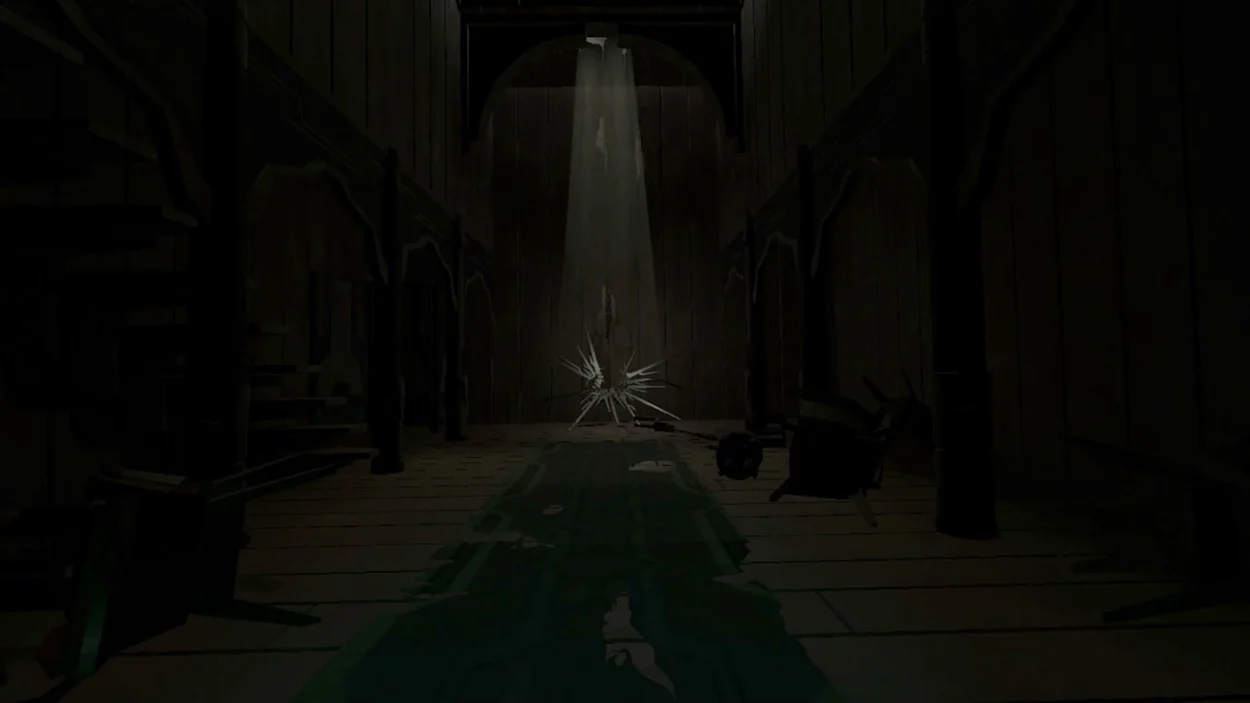
A crumbling space station or a planet associated with a black hole can demand different choices depending on when the player arrives. These changes make timing part of the investigation. A route that is blocked early in a loop may become accessible later, while another opportunity may disappear if it is left too long.
This gives Outer Wilds time loop exploration its lasting replay value. Revisiting a location is rarely just repetition, because the player may arrive with new knowledge or at a different moment in the cycle. The environment itself can provide the missing piece.
For players drawn to curiosity-driven adventures, physics-based puzzles, and environmental storytelling, the game offers a focused kind of cosmic mystery. Its Outer Wilds environmental puzzles ask for attention to changing conditions as much as cleverness, making every new understanding feel earned.