Outbound Switch NSP

Report Link Error
Select the broken download file, then submit the report.
Screenshots


About Game
Outbound Switch NSP is listed as a Nintendo Switch release in the Adventure and Simulation genres, a pairing that establishes a useful but deliberately broad picture of its likely appeal. The available information points toward exploration, progression, and considered decisions, without confirming the specific systems, objectives, settings, characters, or story events involved.
Outbound Switch NSP: What the Adventure and Simulation Tags Establish
The confirmed Adventure and Simulation classification gives Outbound a clear genre framework without turning that framework into a promise of particular mechanics. Adventure games commonly place value on moving toward goals, encountering new situations, and maintaining a sense of forward progress. Simulation-oriented design can bring a more deliberate emphasis to choices, planning, resources, or ongoing systems.
For Outbound, those ideas should be treated as expectations shaped by genre rather than a detailed feature list. The supplied metadata confirms neither a particular perspective nor a defined activity loop. It does not identify mission structures, vehicle handling, building tools, survival systems, combat, dialogue choices, or multiplayer modes. What it does establish is a release positioned between discovery-driven advancement and system-minded decision-making.
That combination can suit players who enjoy games that allow time to think through their next step. The Adventure label suggests direction and discovery, while Simulation suggests that progression may carry more weight than simply rushing from one event to the next. There is room within those classifications for many different approaches, so it is sensible to keep expectations focused on the confirmed genre identity.
A Measured Play Style Built Around Progression
The genres attached to Outbound may appeal to players who prefer gradual advancement over action-first pacing. Simulation games are often associated with learning systems, reading feedback, and making choices that matter over time. Adventure games, meanwhile, can give that process a sense of purpose by encouraging movement toward new goals or situations.
That does not confirm exactly how Outbound gameplay handles progression. There is no verified information about difficulty options, session length, individual modes, checkpoints, or the balance between freeform activity and structured objectives. Still, the Adventure and Simulation tags make a measured rhythm a reasonable consideration for players deciding whether the game’s broad direction matches their tastes.
- Deliberate momentum: The listed genres may suit players who value steady advancement rather than constant high-speed action.
- System learning: Simulation fans may be interested in an experience where understanding choices and feedback is part of the appeal.
- New situations: The Adventure classification supports an expectation of progress toward fresh goals or discoveries, without defining their form.
- Manageable pacing: Players who enjoy taking time to assess their next move may find the genre combination worth watching.
- Careful expectations: Specific mechanics, modes, and challenge structure remain unconfirmed in the available details.
Progression is therefore the most useful lens through which to view the listing. It suggests an experience where forward movement may be meaningful, but it does not establish how often new objectives appear or how much player planning is required. Players seeking immediate momentum may want more detail before drawing conclusions, while those drawn to a slower, more considered tempo may see potential in the classification.
Exploration Expectations Without Unsupported Assumptions
The adventure side of Outbound Switch NSP supports a modest expectation of exploration in the broad sense: moving toward objectives, reaching new situations, and following a developing path of progress. Exploration does not need to mean an open world, a particular environment, or a named set of destinations. None of those details are confirmed here.
The supplied information does not identify locations, missions, characters, narrative events, controls, or a visual viewpoint. It also does not establish the scale of the game world or explain how players travel through it. For that reason, it would be inaccurate to describe Outbound as a specific kind of adventure game beyond its verified genre placement.
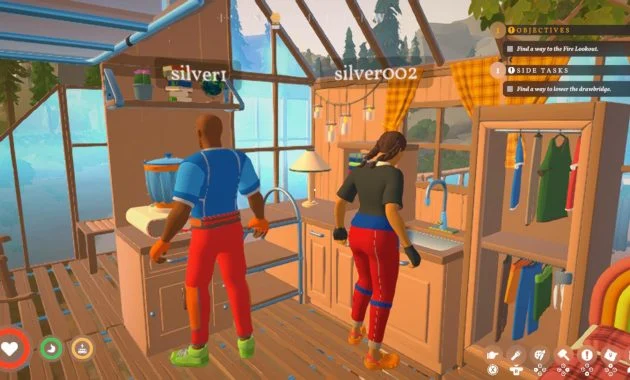
Three listed preview images may offer additional context around visual presentation, interface density, and general atmosphere. They can help readers form an impression of how the game is presented, but they should not be used to infer unconfirmed features. Screenshots can show appearance; they do not verify the deeper structure of progression, the range of activities, or the importance of any system shown on screen.
Who May Appreciate Outbound’s Genre Combination
Outbound may be of interest to players who enjoy Adventure and Simulation games for different but complementary reasons. Simulation fans often look for understandable feedback, a chance to learn systems gradually, and a pace that rewards attention. Adventure fans may be more interested in having a sense of direction, encountering new situations, and seeing progress accumulate.
The overlap between those preferences is where the listing has its strongest appeal. A player who enjoys discovery but does not need every moment to be action-led may appreciate the possibility of planning alongside advancement. Likewise, someone who likes systems but wants them framed by goals rather than isolated management may find the genre pairing appealing.
There is no confirmed information about replay value, competitive features, co-operative play, or alternative modes, so those factors cannot be assessed from the available record. The most suitable audience is therefore best described in broad terms: players comfortable with a potentially thoughtful pace, gradual learning, and progression-oriented adventure framing.
Confirmed Outbound Details: Release, Studio, and Title ID
Outbound is scheduled for release on May 14, 2026. Silver Lining is credited as both publisher and developer, placing the studio in both roles for the release. The listed title identifier is 0100ED9024EB8000, a useful reference point when distinguishing Outbound from similarly named products or records.
The game is categorized as Adventure and Simulation. Its recorded file size is 1.6GB. Firmware information differs between the base game and its update: the base game is listed with firmware v21.1.0, while the update is associated with v22.1.0. These are separate compatibility details, and the newer update requirement should not be confused with the base-game requirement.
No DLC information is included in the supplied details. That absence does not establish that no additional content exists; it only means that no such content is confirmed by this record.
Language and Regional Coverage for Outbound
Outbound is listed across Europe, USA, Asia, and Japan. Its supported languages are English, Japanese, Spanish, French, German, Italian, Dutch, Portuguese, Russian, Korean, Chinese, and Polish. This is a broad language selection that gives the release considerable stated coverage across several markets.
Regional coverage and the region assigned to a particular offered entry are separate pieces of information. The general record identifies Europe, USA, Asia, and Japan, while the available entry is labeled USA. That distinction matters: broad regional support does not automatically mean that every individual regional entry is identical or represents every listed territory.
For readers considering Outbound on the strength of its genre mix, the confirmed facts remain straightforward: it is an Adventure and Simulation title from Silver Lining, dated May 14, 2026, with extensive listed language support and coverage across four named regions. Beyond that, its exact mechanics and structure remain details to verify separately.