Nintendo World Championships: NES Edition Switch NSP XCI
Report Link Error
Select the broken download file, then submit the report.
Screenshots
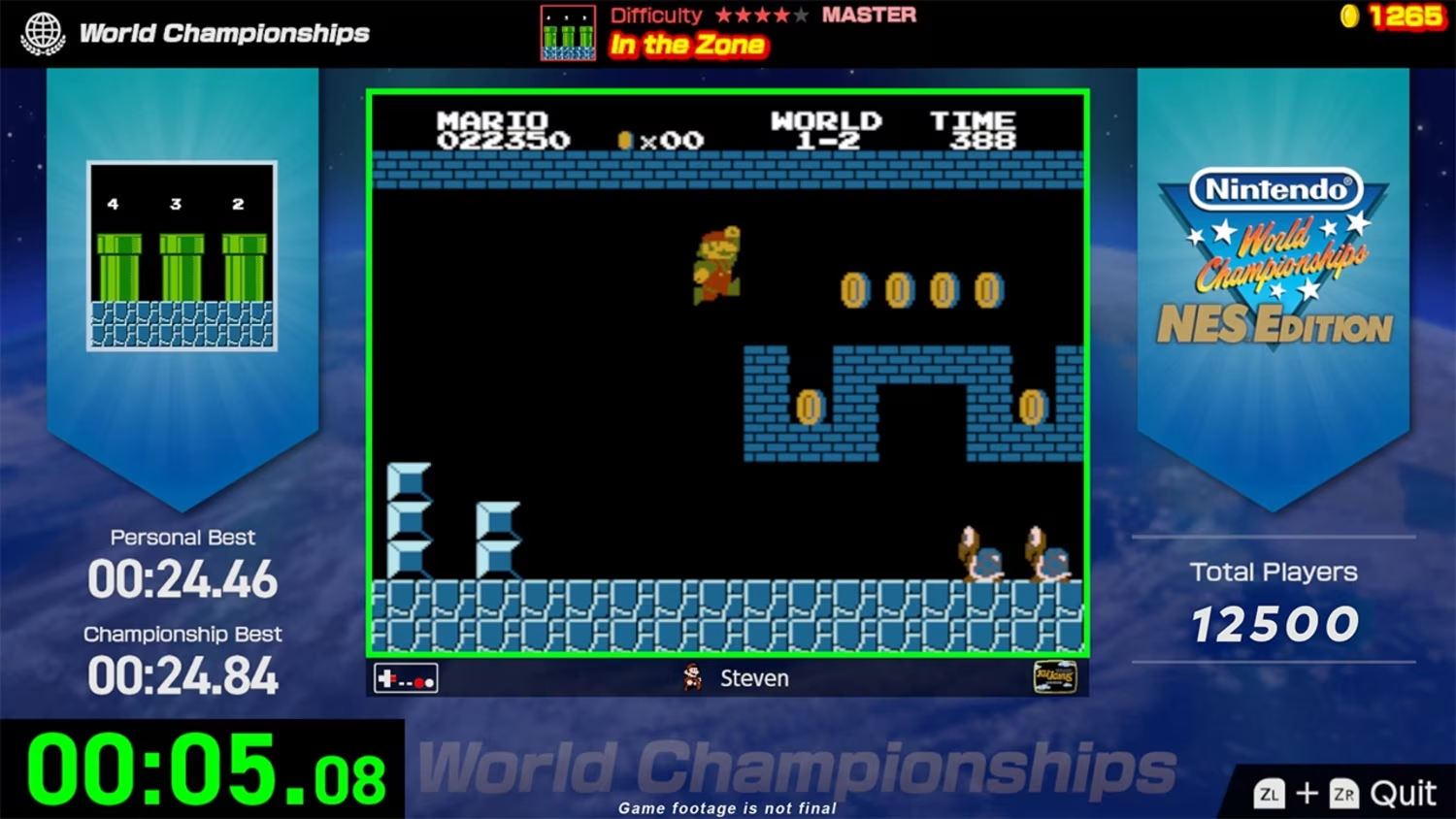
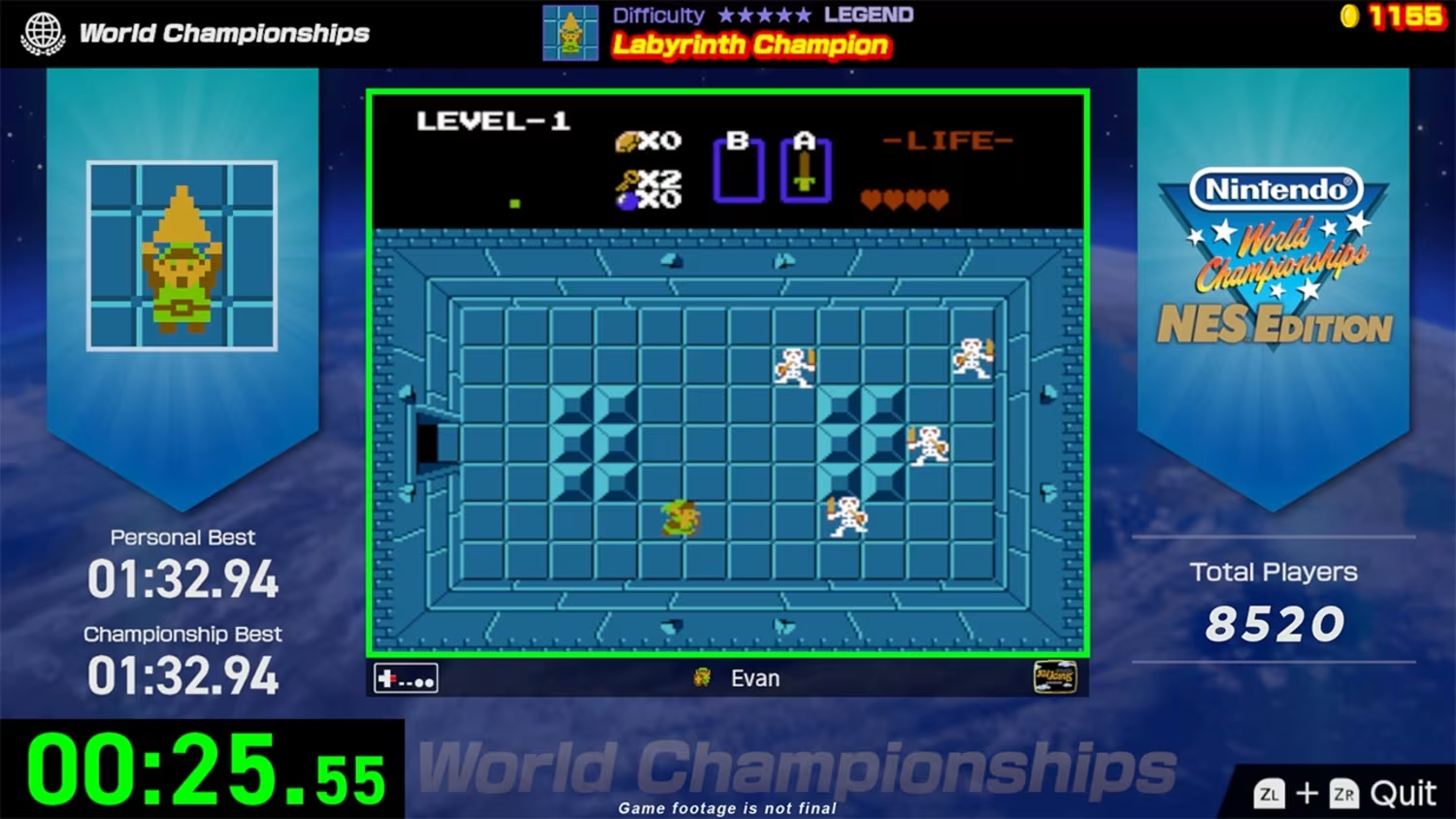
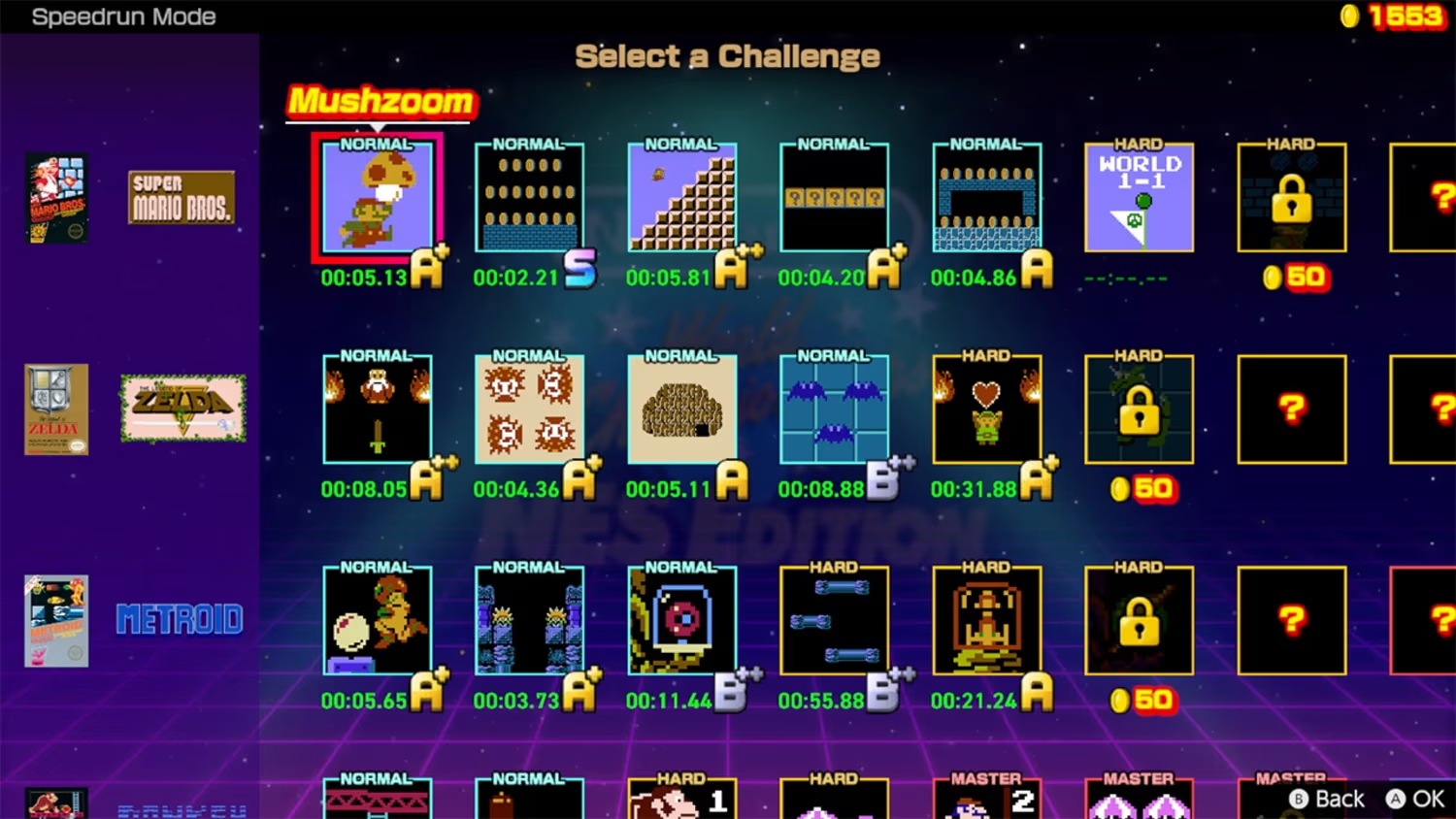
About Game
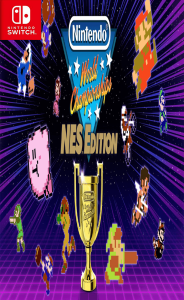
Nintendo World Championships: NES Edition Switch NSP XCI brings classic NES material into a Nintendo Switch competition built around short, demanding objectives. Released on July 18, 2024, this Nintendo-developed action, party, platformer, and racing title uses recognizable moments from 13 NES games as the basis for more than 150 compact challenges. The emphasis is not on revisiting entire games from start to finish, but on handling a single task quickly, cleanly, and repeatedly.
A Modern Competition Built From NES Challenges
Nintendo World Championships: NES Edition treats the NES library as a source of focused competitive events. A challenge may ask for a fast run through a familiar section, a precise collection task, or a score-driven objective. Rather than requiring a long session before the meaningful test begins, it puts the test up front.
That structure gives the game a direct, lively rhythm. A Super Mario Bros. segment involving Goombas asks for quick movement and reliable timing, while a Zelda II challenge can turn coin collection into a short efficiency test. Metroid is also among the classic games represented in speedy segments. The original games supply the mechanics and visual identity; the challenge format changes the purpose of each piece.
The result is a Nintendo Switch competition that is easy to understand from the first attempt: meet the objective, post the strongest time or score possible, then see where improvement remains. These are NES speedrun challenges in a deliberately condensed form. Small errors matter, but the short format means another attempt is always close at hand.
Why the Game Has No Traditional Storyline
There is no conventional Nintendo World Championships: NES Edition story involving a central character, a campaign plot, or a sequence of narrative missions. Its motivation comes from performance. The player’s progress is measured through completed challenges, stronger records, and the pursuit of more efficient runs.
That choice fits the game’s subject. It draws on the spirit of the 1990 Nintendo competition while making the contest personal and repeatable for a new setting. The sense of advancement comes from learning a task that first felt awkward, then gradually making it look routine. A record can be a small achievement, but it still marks a clear change in skill.
The NES gaming legacy is therefore present as more than decoration. Classic stages and mechanics become the shared language of the competition. Players familiar with these games may recognize the foundations immediately, while newer players can approach each objective as a self-contained test. The competitive spirit does the work that a storyline would normally do: it provides direction, stakes, and a reason to return.
Speed, Precision, and Repeatable Practice
The central loop is built around speedrunning practice. Select a challenge, understand exactly what it requires, make an attempt, and replay it with a better plan. Since the objectives are brief, the game encourages close attention to details that might be lost in a longer play session: a jump’s timing, an enemy’s position, the order of pickups, or the safest route through a section.
Precision gameplay is especially important because the margins are narrow. Finishing a challenge is only the starting point; completing it with fewer mistakes and less wasted movement is the larger goal. Players can practice individual challenges repeatedly, allowing a single troublesome segment to become a familiar routine rather than a barrier.
The Rewind feature supports that process by letting players correct mistakes during practice and refine an attempt. It does not replace repetition, but it can make experimentation less disruptive. A missed movement or poor route can be reviewed immediately, then approached differently. This is useful in high score challenges as well as time-based events, where the best strategy may depend on understanding how a particular objective rewards efficient play.
Replay value follows naturally from this design. More than 150 challenges provide many separate targets, and each target can support several levels of mastery: completing it, improving a personal record, testing another route, or competing for a stronger ranking. Special in-game rewards and cosmetic items add another layer of progression without changing the skill-based focus.
Competing Together in Local 8-Player Party Play
The local 8-player party mode shifts the experience from solitary refinement to a shared contest. Up to eight players can take part in competitive sessions built around the same quick NES-inspired challenges. The short event structure is well suited to this setting because players do not need to wait through a lengthy stage before seeing a result.
As a Nintendo Switch party game, it can create a different kind of pressure from online ranking play. A small error is immediately visible to the people in the room, while a clean run can quickly become the score to beat. The simple goals also help keep multiplayer challenges readable: players can understand why a time was fast or why a score was strong, even if they are not already experts in the game being sampled.
This mode is likely to suit groups looking for direct competition rather than a long cooperative adventure. It also leaves room for serious players to use local sessions as informal tests of consistency. The same objective can feel very different when a personal-best attempt becomes a head-to-head challenge.
Weekly Pressure in World Championship Mode
World Championship Mode provides a recurring reason to revisit the challenge roster. Its weekly trials introduce fresh competitive events, turning improvement into an ongoing schedule rather than a one-time push through available objectives. The format gives players a new target while keeping the game’s familiar priorities intact: fast decisions, accurate execution, and efficient routes.
Global online rankings extend that contest beyond local play. A strong run is not simply a private record; it can be compared with results from other players. That comparison creates a useful tension between practice and commitment. There is time to learn a challenge, but there is also value in producing a run that holds up under competitive pressure.
For players drawn to the Nintendo World Championships competition concept, the weekly structure may be the clearest expression of its appeal. The game does not need a large narrative campaign to maintain momentum when a new trial can make old skills relevant again.
5 Ways to Build Better Challenge Times
- Read the objective first. Know whether the challenge rewards a finish time, a collection goal, or a score before committing to a route.
- Repeat one event. Practice individual challenges enough to learn their layouts, hazards, and required movements without hesitation.
- Test alternate routes. A direct-looking path is not always the quickest one, so experiment with movement choices and task order.
- Use Rewind for review. During practice, correct a mistake and try a different input or approach without losing sight of the section being studied.
- Protect precision. Saving time depends on clean execution; reliable movement and accurate timing are often more valuable than an untested shortcut.
Nintendo World Championships: NES Edition Switch NSP XCI is suited to players who enjoy chasing records, studying short game segments, and comparing results with friends or global rankings. Its appeal lies in turning familiar NES-era mechanics into concise challenges where improvement is visible, repeatable, and always measurable.