Monster Menu: The Scavenger’s Cookbook Switch NSP
Report Link Error
Select the broken download file, then submit the report.
Screenshots
About Game
Monster Menu: The Scavenger’s Cookbook Switch NSP frames dungeon crawling as a struggle where hunger is as threatening as the monsters ahead. Released on May 23, 2023, this role-playing and strategy game from NIS America places a group of trapped adventurers in a hostile underground world, asking them to search, fight, cook, and uncover the reason they cannot leave.
A Dungeon Escape Built Around Hunger and Mystery
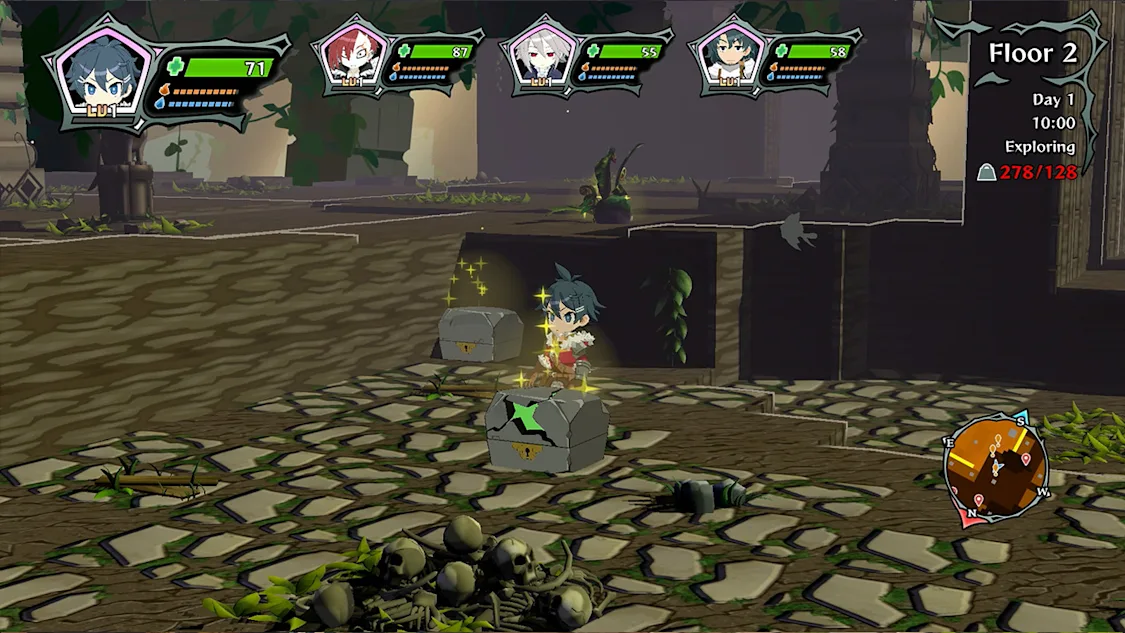
The adventure begins with an unsettling limitation: the protagonist wakes inside a dangerous dungeon with no memory of how they arrived. They are not alone, though. Other hungry adventurers are also stranded in the same place, and the group must work together while navigating increasingly perilous floors.
This is not simply a quest to reach the next exit. The dungeon is tied to an amnesia mystery that develops alongside the immediate need to survive. New areas bring fresh dangers, but also clues about the party’s captivity, the dungeon’s hidden history, and the nature of the creatures within it. The premise gives every expedition two purposes: secure enough supplies to continue and push deeper toward answers.
That tension supports the game’s dungeon survival focus. Progress is shaped by uncertainty, limited provisions, and the knowledge that a reckless decision can leave the party struggling before the next battle even begins. Secret paths, hidden treasures, and boss encounters add further reasons to look beyond the most obvious route through each floor.
The result is a dungeon setting with a persistent sense of pressure. Hunger is not background flavor; it is part of the party’s condition and a reason to consider each ingredient, each encounter, and each stretch of unexplored ground. The game’s colorful, charming visual presentation provides a contrast to those severe circumstances without removing the underlying danger.
How Cooking Shapes Every Expedition
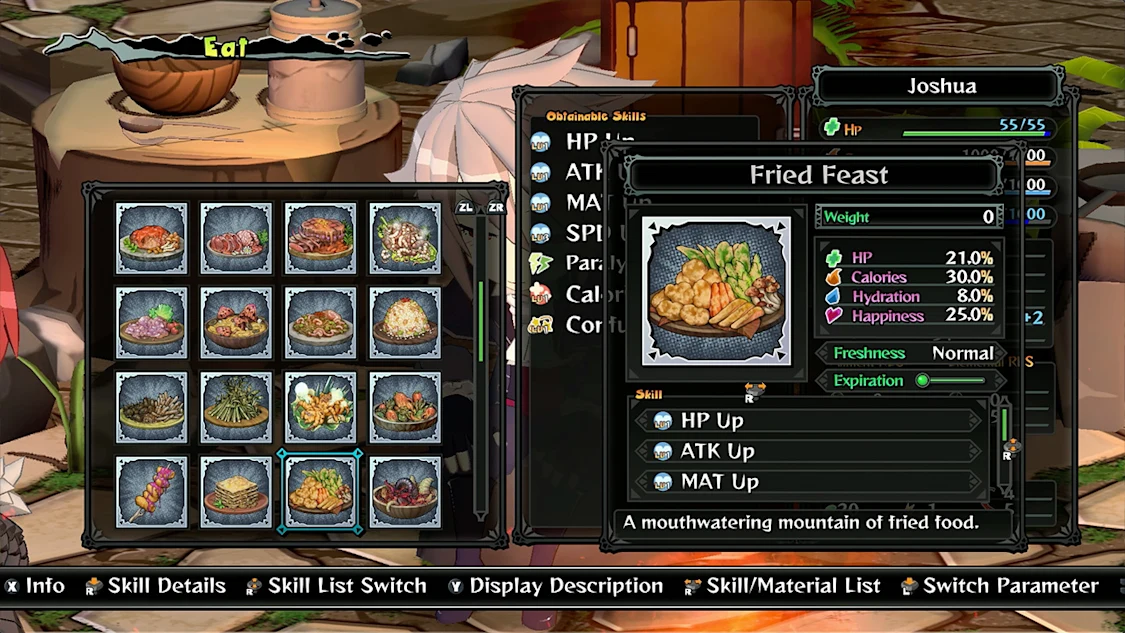
The Monster Menu cooking system is central to the party’s chances of survival. Ingredients gathered during exploration can be turned into dishes, making food a practical resource rather than a simple collectible. The party needs nourishment to keep moving effectively, and meals can help counter the harmful effects associated with hunger.
Cooking also gives ingredient gathering a strategic purpose. A found resource may be useful immediately, but it may also be more valuable as part of a prepared dish. This creates a steady cycle: explore the dungeon, collect ingredients, decide how to use them, and prepare the party for the challenges still ahead. Food can provide stat boosts as well as protection from debilitating hunger-related debuffs, so meal preparation has consequences in and out of combat.
Party hunger management is especially important because dungeon runs require attention to more than enemy strength. A group that is equipped for battle but poorly fed may still be in trouble. The cooking system turns survival into a continuing series of choices about timing, supplies, and priorities.
Different recruits bring their own strengths, weaknesses, and culinary preferences. That detail makes team building relevant to the kitchen as well as the battlefield. A balanced party is not only one that can cover combat roles; it is also one prepared to work through the demands of the dungeon’s food-focused survival loop.
Tactical Turn-Based Battles and Party Positioning
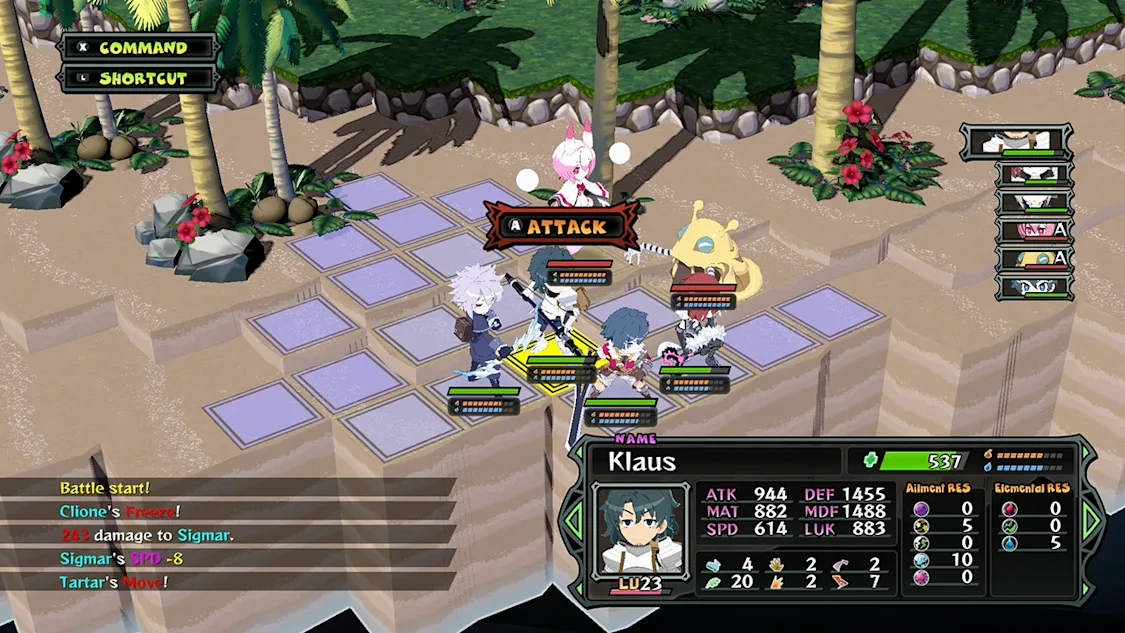
Combat follows a tactical turn-based structure in which careful decisions matter. Characters have distinct abilities, while enemies present patterns and weaknesses that reward observation. Success is not presented as a matter of simply attacking with the strongest option available. It depends on using the party’s tools with care and understanding the dangers of a particular encounter.
Party positioning is one of the key considerations. Placing heroes wisely can improve damage opportunities and reduce unnecessary risk, particularly when facing tougher opponents in cramped or hazardous dungeon spaces. Environmental elements also play a role, adding another factor to assess before committing to an action.
Studying enemy weaknesses, including elemental weaknesses, gives the party an advantage. That encourages players to adapt rather than rely on a single routine from floor to floor. A battle can become a test of placement, ability selection, enemy knowledge, and resource preservation all at once.
The tactical RPG strategy is therefore closely linked to survival. Taking damage may affect how far the party can safely explore, while spending too many resources in one fight can make a later encounter harder. The best decisions are often those that protect the group’s wider expedition rather than merely ending the current battle quickly.
Resource Management Beyond the Battlefield
Resource management gives each dungeon journey its own rhythm. Exploration means looking for useful ingredients, materials, equipment opportunities, and hidden routes, but it also means watching health, stamina, and food supplies. Moving farther into the dungeon can yield valuable discoveries, yet it increases the chance of running short on something essential.
Stamina management and hunger management operate alongside combat readiness. The party must maintain its condition while deciding how much of the dungeon to investigate. That makes found items valuable in different ways: food may support the group’s immediate needs, crafting materials can contribute to future power, and rarer discoveries may justify the risk of extending a run.
Procedurally generated dungeons help keep this process from becoming entirely predictable. Each expedition can present a different arrangement of challenges and discoveries, meaning players cannot depend on identical routes or placements from prior runs. That variability supports replay value by keeping the search for supplies, secrets, and safer paths active across repeated expeditions.
Monster Menu: The Scavenger’s Cookbook Switch NSP works best for players who enjoy strategy games where planning carries over from one room to the next. Its dungeon exploration is not built around combat alone; it asks players to think about the state of the entire party and the limited resources that sustain it.
Crafting Gear From Monster Parts and Found Materials
Equipment progression is tied directly to the dungeon’s creatures and resources. Monster parts and other materials found during exploration can be used for weapon crafting and armor crafting. This gives encounters a longer-term value beyond experience or immediate survival: defeated enemies can contribute to the tools needed for deeper challenges.
Crafting stronger gear becomes increasingly important as tougher foes appear. Weapons and armor support the party’s ability to deal damage, withstand danger, and continue exploring with greater confidence. The system also reinforces the game’s scavenging theme. Progress is made from what the dungeon yields, including materials taken from its monsters and resources discovered along the way.
Because the party must balance food, stamina, health, and materials, crafting choices fit naturally into the larger survival structure. A useful material is another decision point. Saving it for an upgrade may help later, while the demands of the present run may require attention elsewhere. That relationship between combat rewards and equipment growth keeps advancement connected to exploration.
7 Survival Priorities for a Monster Menu Dungeon Run
- Search thoroughly. Explore for ingredients, materials, hidden treasures, and secret paths that may open access to useful rewards.
- Watch hunger and stamina. Keep track of the party’s condition before it leads to harmful debuffs or limits further exploration.
- Cook with purpose. Use collected ingredients to prepare dishes that sustain the group and provide valuable stat boosts.
- Place the party carefully. Thoughtful positioning can improve damage opportunities while reducing exposure to danger.
- Learn enemy weaknesses. Pay attention to patterns and elemental weaknesses to make better use of character abilities.
- Improve equipment. Turn monster parts and found materials into stronger weapons and armor for later dungeon floors.
- Investigate the unknown. Look for hidden routes, bosses, and clues that may reveal more about the dungeon and the party’s lost past.