LEGO Voyagers Switch NSP
Report Link Error
Select the broken download file, then submit the report.
Screenshots
About Game
LEGO Voyagers Switch NSP is a Nintendo Switch action-adventure title from Annapurna Interactive, released in the USA on September 15, 2025. Its premise pairs space exploration with the familiar tactile appeal of LEGO construction: a crew of aspiring explorers travels between brick-built worlds, confronts a growing cosmic threat, and relies on creativity as much as combat. The result is framed as a colourful interstellar journey where rebuilding, experimenting, and working together are central to the adventure.
LEGO Voyagers on Nintendo Switch: Game Overview
Set in the peaceful galaxy of Aethelgard, LEGO Voyagers Nintendo Switch follows Captain Astra and her crew after they uncover an ancient prophecy tied to a dangerous cosmic imbalance. An enigmatic force threatens the universe itself, sending the group across a range of planets in search of Stellar Shards. These artifacts are needed to activate the legendary Star Forge, presented as the galaxy’s remaining hope against the encroaching darkness.
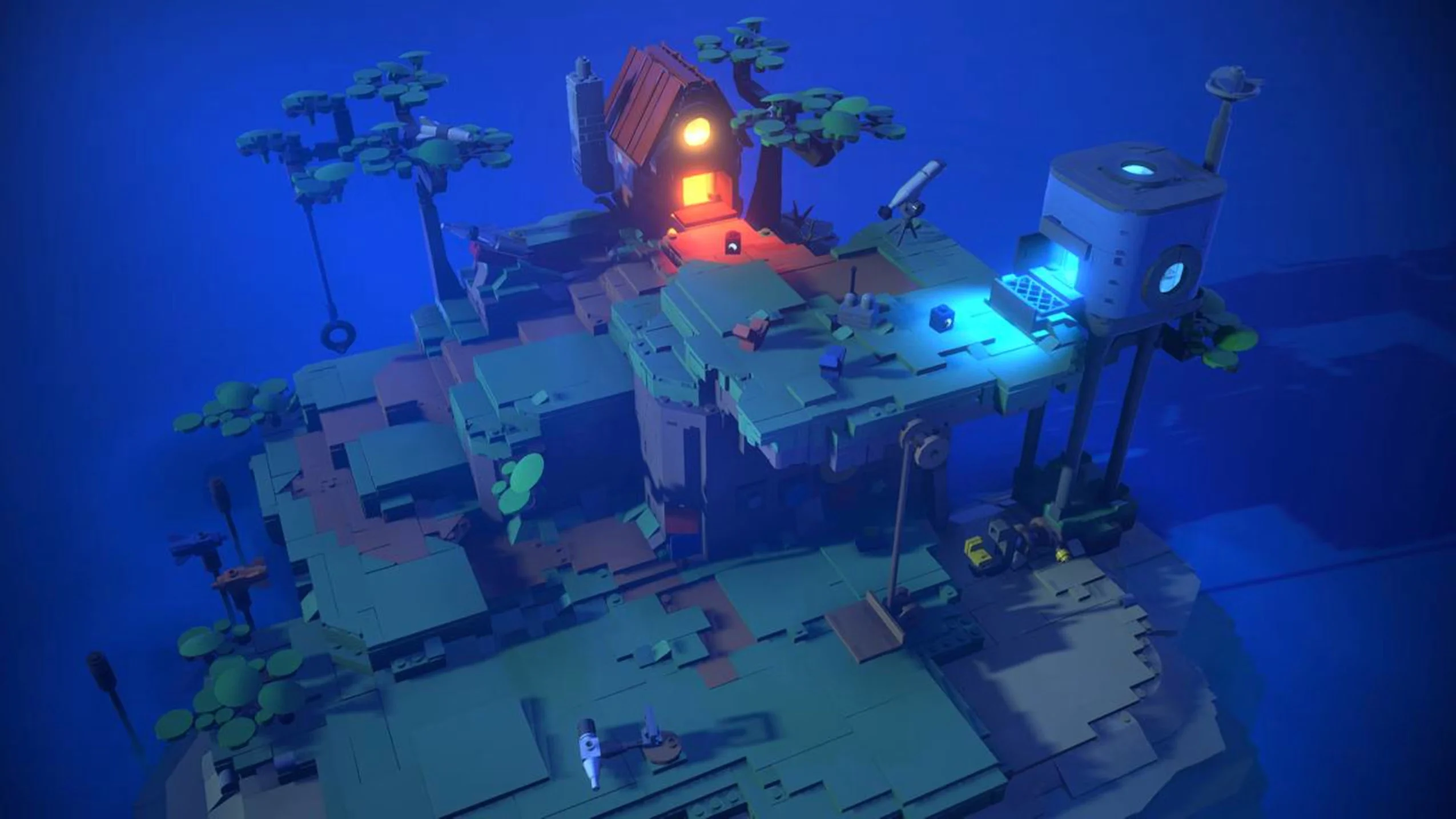
The story’s spacefaring scope gives the game room for eccentric alien races, villains, ancient mysteries, and the lighthearted character of a LEGO-inspired adventure. Its worlds are described as vibrant and detailed in brick form, while the narrative keeps cooperation and ingenuity in focus. The crew is not simply overcoming obstacles through force; discoveries, relationships, and the mystery behind the dark force all shape their wider mission.
Published by Annapurna Interactive, the game is listed in the Action and Adventure genres. It supports English, Japanese, Portuguese, Spanish, French, German, Italian, Russian, Korean, Chinese, and Traditional Chinese language options.
Exploration, Action, and LEGO-Style Puzzle Solving
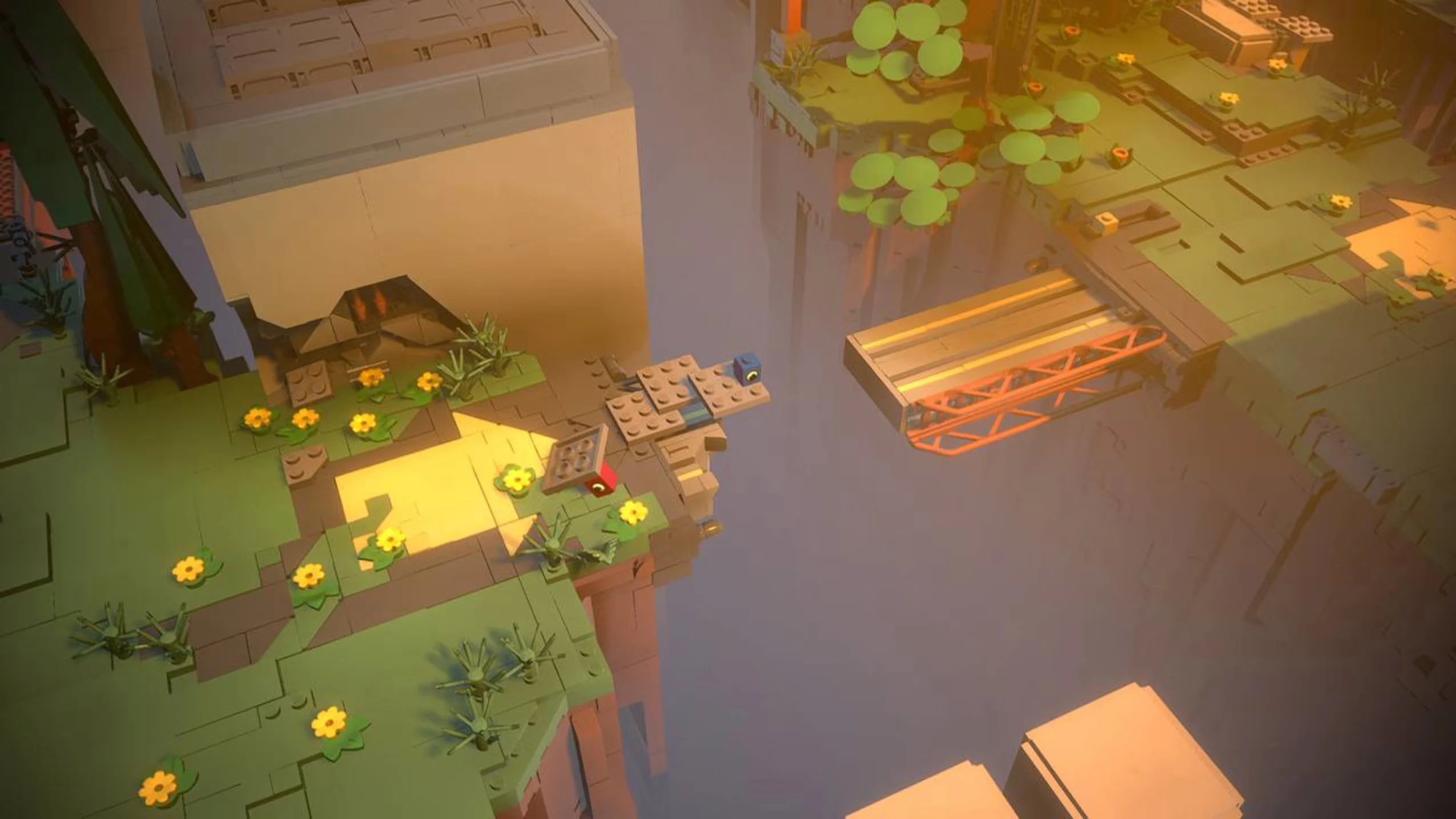
LEGO Voyagers gameplay combines several familiar LEGO-style activities into a space-exploration structure. Players move through story missions, visit planetary environments, smash bricks, gather studs, and use loose pieces to repair or create useful objects. Destruction is not merely decorative: broken structures can become opportunities for progression when their pieces are rebuilt into bridges, devices, or other puzzle-solving tools.
Environmental challenges call for observation and experimentation. A blocked route may require a reconstructed object, a specific gadget, or a character skill that reveals a different solution. This gives LEGO puzzle solving a practical role in the pace of each area, balancing action encounters with moments of construction and discovery.
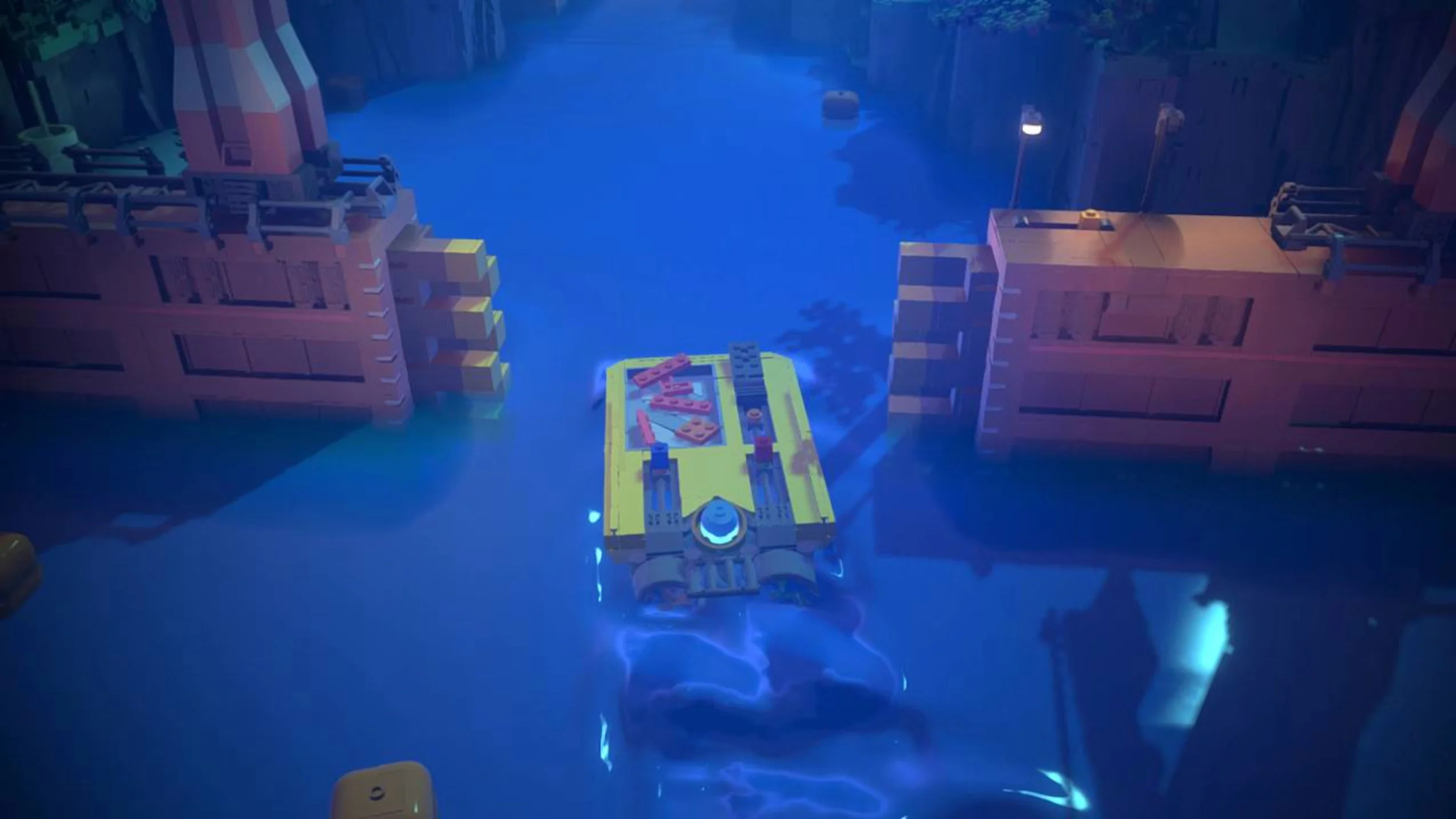
The game also includes vehicle activity. Customizable spacecraft can be used in aerial dogfights, while land vehicles support exploration across planetary surfaces. These sections broaden the sense of travel between missions and make the adventure feel larger than a sequence of enclosed stages. Combat is part of the journey, but the stated mechanics suggest that brick building, problem-solving, and exploration remain equally important.
How Character Switching Supports Progression
Character swapping is a key part of progression. Players can switch among members of the crew, with different characters bringing skills associated with engineering, combat, or communication. Rather than treating the cast as cosmetic alternatives, the game ties their distinct roles directly to obstacles found throughout levels and hubs.
Engineering abilities can support repairs and construction, while combat-oriented characters are suited to hostile encounters. Communication skills can help when an obstacle involves interaction rather than destruction or building. This approach gives players a reason to reconsider locations that initially seem inaccessible. A puzzle may ask for the right ability, the right collection of bricks, or a combination of both.
The structure also suits the game’s theme. Captain Astra is described as a brilliant engineer, but the wider crew’s resourcefulness matters as well. LEGO Voyagers character switching turns that ensemble setup into a gameplay system, encouraging players to think about which teammate best fits the next challenge rather than relying on one all-purpose hero.
Co-op Play and Teamwork Challenges
Local cooperative play supports two players through a drop-in/drop-out format. This means a second player can join the adventure without the session being built around a rigid, separate co-op mode. The design is particularly relevant for puzzles, where two sets of abilities can make coordinated solutions more immediate and more expressive.
LEGO Voyagers co-op also changes the rhythm of encounters with enemies. One player can focus on combat while another handles a nearby construction task or prepares an environmental solution. In tougher situations, teamwork becomes part of the challenge rather than a simple convenience. The game’s multi-stage boss battles are described as demanding strategic thought and coordinated efforts, making communication useful even when both players know their characters well.
For families, friends, or players who prefer shared local multiplayer, this setup fits the accessible LEGO framework. The emphasis is not on competitive play; it is on working through planetary problems, collecting rewards, and facing cosmic threats together.
Secrets, Side Quests, and Collectibles Across Hub Areas
Between story missions, open hub areas provide space for less directed exploration. These zones are said to contain hidden challenges, side quests, and secrets, giving players a break from the linear flow of the main campaign. The presence of hubs also supports a stronger sense of place: planets are not only backdrops for missions, but areas worth revisiting for discoveries and unfinished tasks.
Collectibles include studs, minikits, and character tokens scattered across levels and hub worlds. Studs are used to unlock new characters and upgrades, while the broader collectible hunt adds reasons to check side paths and test abilities against previously unreachable objects. LEGO Voyagers collectibles therefore connect exploration with progression, especially for players inclined to search beyond the critical route.
Starship customization offers another reward loop outside the main story. Combined with side quests and hidden challenges, it gives the game replay value through revisits, completion goals, and experimentation with its systems rather than through a single straightforward run alone. Later in the adventure, LEGO Voyagers Switch NSP is positioned as much around curious exploration as it is around its central mission.
7 Gameplay Priorities for Exploring LEGO Voyagers
- Test every ability. Switch characters when a route, device, or interaction seems unavailable; engineering, combat, and communication skills each serve a purpose.
- Rebuild the environment. Watch for piles of LEGO bricks and destroyed objects that can become gadgets or useful structures.
- Coordinate in co-op. Two players can divide tasks during environmental puzzles and enemy encounters instead of approaching every obstacle the same way.
- Search hub areas carefully. Side quests, hidden challenges, and secrets provide worthwhile detours between story missions.
- Gather studs consistently. Stud collection contributes to unlocking characters and upgrades, making routine brick smashing meaningful.
- Personalize the starship. Starship customization gives exploration a continuing reward beyond the immediate objective.
- Plan for boss phases. Multi-stage bosses call for strategy, character skills, and, in co-op, clear teamwork.