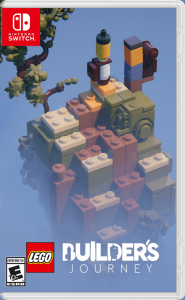
LEGO Builder’s Journey Switch NSP XCI
Report Link Error
Select the broken download file, then submit the report.
Screenshots

About Game
LEGO Builder’s Journey Switch NSP XCI presents LEGO play as a quiet, hands-on puzzle adventure. Rather than treating bricks as decoration, it makes each piece part of the route forward: a small platform can become a bridge, a support, or the first step in an unexpected solution. The result is a compact experience built around observation, construction, and the pleasure of making an idea work.
How Brick-Building Becomes Puzzle-Solving
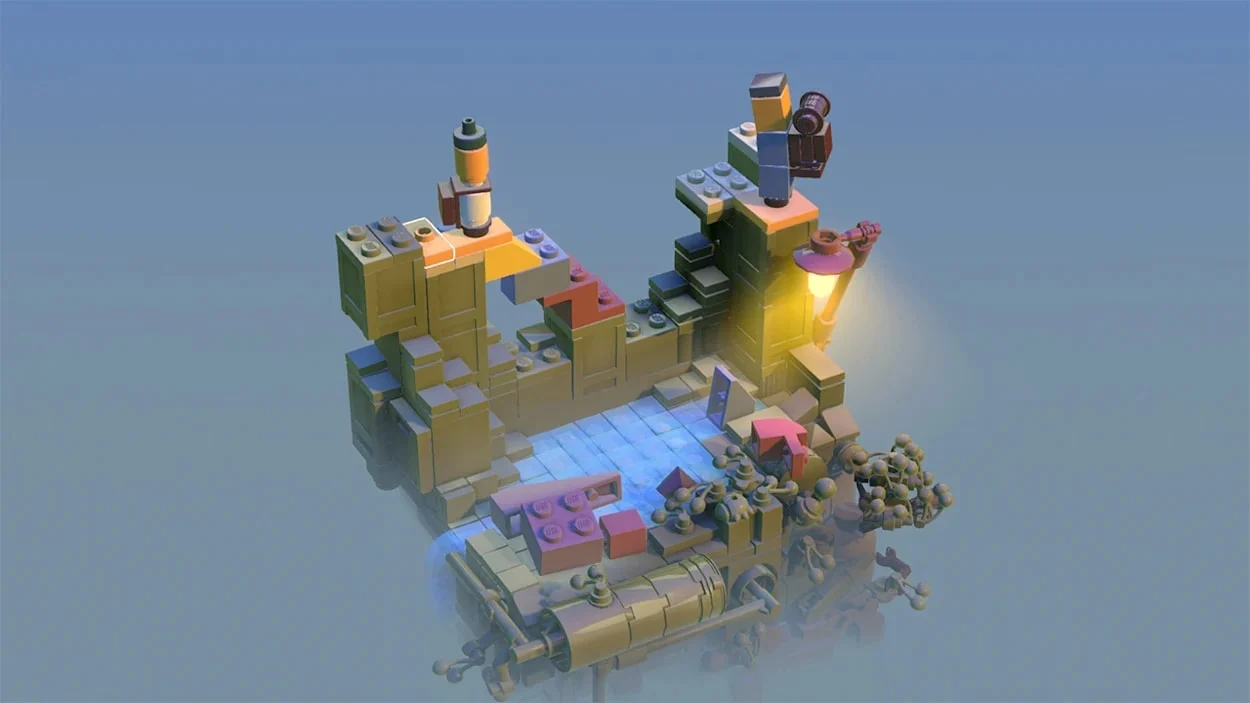
The central appeal of LEGO Builder’s Journey puzzles is their directness. Players manipulate individual bricks within each scene, using the available pieces to help the LEGO figures move through obstacles. A gap in the path may call for a bridge. A raised area may need a staircase or a carefully placed support. The challenge is not simply to identify an object; it is to understand how its shape, position, and connection to the surrounding space can create a usable route.
This approach gives digital LEGO building a practical purpose. Bricks are selected and placed as part of the puzzle, so construction and exploration are closely linked. The figures move through landscapes while the player reshapes parts of those landscapes, turning a static-looking diorama into a space for experimentation.
Some challenges also draw on environmental interaction, including gravity and balance. A solution may depend on how a structure sits, how a piece supports another, or how a newly built path changes the way a figure can travel. The mechanics remain approachable, yet the later situations can ask for more careful thought as new brick types and interactions appear.
Diorama Worlds and Their Atmospheric Design
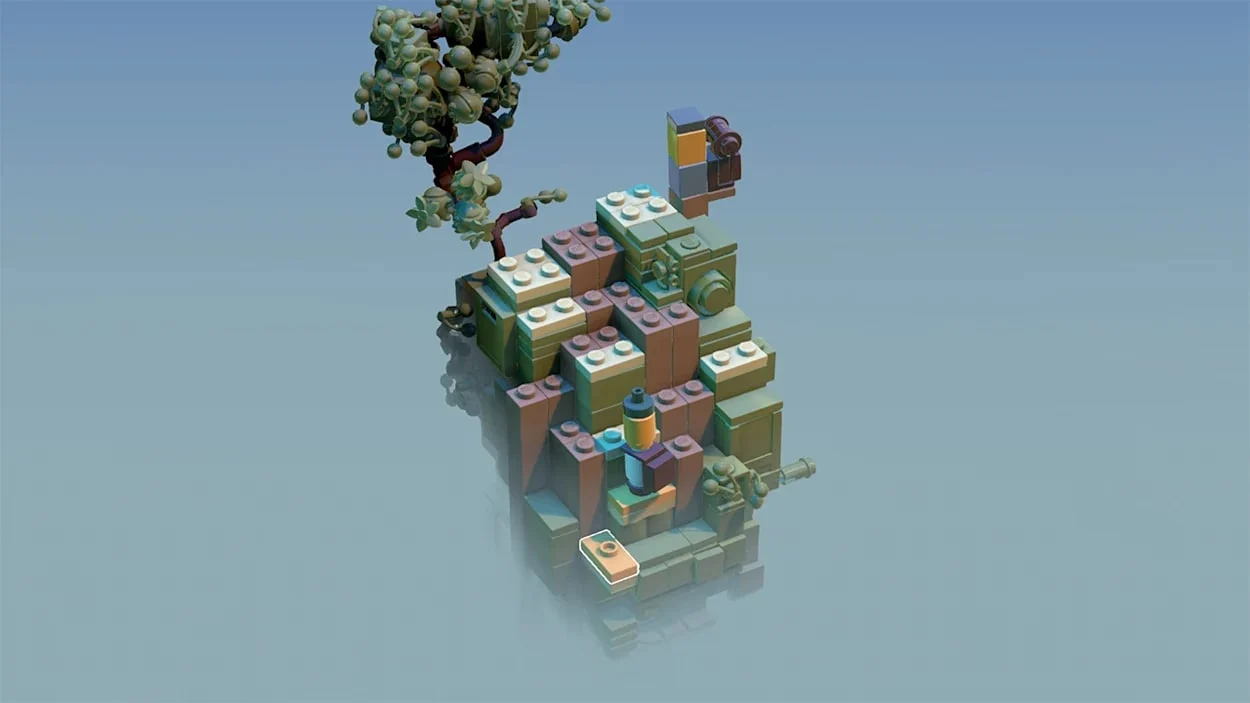
The game’s miniature presentation gives its puzzles much of their character. LEGO Builder’s Journey dioramas are crafted as small, self-contained worlds rather than large open spaces. Their scale makes every ledge, pathway, and loose brick easier to read, while also making each setting feel deliberately arranged.
Natural environments and industrial locations provide contrasting moods. Lush forests offer a softer setting for exploration, while factory-like spaces bring a busier, more mechanical feeling. These changes are not merely visual variety. They help frame the puzzle spaces as distinct places with their own rhythms, materials, and obstacles.
That careful staging supports the game’s identity as an atmospheric puzzle game. The environments encourage players to pause and look closely before committing to a build. A nearby surface, a structural detail, or the arrangement of the terrain can suggest how a mechanism works or where a brick might belong. The presentation makes observation feel like part of the play rather than a pause between challenges.
The journey is also told without words through a parent-and-child relationship represented by two LEGO figures. Their movement through the changing environments gives the construction tasks an emotional context, with themes of companionship, discovery, and creation emerging through the figures’ shared progress.
Creative Solutions Beyond a Single Answer
Many puzzles encourage more than a single rigid method. The available bricks and surroundings set the boundaries, but players can test different arrangements inside those boundaries. A straightforward bridge may work in one attempt, while a different construction can reach the same destination in another.
This is where creative puzzle solving becomes especially important. The game invites players to reconsider an unfinished design, move pieces, and try a new angle when the first plan does not lead anywhere. Rebuilding is not treated as failure; it is part of the process of understanding the scene.
LEGO Builder’s Journey gameplay gains variety from that freedom to experiment. The tactile idea of placing bricks is paired with increasingly complex scenarios, so familiar actions can produce new results as the journey introduces different pieces and environmental demands. The sense of progression comes from learning to read each space more confidently, not from abandoning the basic pleasure of assembling a solution.
For players drawn to thoughtful construction rather than speed or competition, this creates a fitting pace. The game is suited to people who enjoy examining a problem from several sides, making a small change, and seeing how the world responds.
5 Thoughtful Ways to Approach Each Puzzle
- Inspect the goal. Before placing anything, look at where the figure needs to go and what obstacle prevents that movement. A clear destination makes it easier to judge what kind of route is required.
- Study the environment. Examine nearby terrain, ledges, structures, and interactive details. Environmental clues can indicate where a path could connect or how a mechanism may function.
- Test the available bricks. Consider the length, height, and placement of each piece. A brick that seems too small on its own may become useful as a support or part of a larger build.
- Try alternatives. If one arrangement does not work, explore another. Different routes and constructions can reveal possibilities that were not obvious in the first attempt.
- Rebuild when needed. Dismantling a previous idea is a useful part of the LEGO Builder’s Journey tips approach. Reworking a structure can make the puzzle’s requirements clearer and open a more effective path forward.
These puzzle-solving strategies match the game’s emphasis on patience and experimentation. The best response is often not to force the first idea, but to notice what the scene is quietly offering.
Nintendo Switch Release Details and Supported Languages
The Nintendo Switch version of LEGO Builder’s Journey was released on June 22, 2021. Its listed regions are Europe, USA, Asia, and Japan. The release is identified by Title ID 01005EE0140AE000, with firmware listed as v12.0.1 and a file size of 1GB.
Its language support is extensive, covering English, German, Spanish, French, Italian, Japanese, Korean, Dutch, Portuguese, Russian, and Chinese. This broad LEGO Builder’s Journey languages list helps make the game’s wordless visual storytelling and construction-focused play accessible across a wide range of players and regions.
For those looking specifically at LEGO Builder’s Journey Switch NSP XCI, the important creative point remains the same: the Switch release centers on miniature scenes, brick manipulation, and a calm sequence of environmental challenges.
Light Brick Studio’s Adventure-Puzzle Approach
Developed by Light Brick Studio and published by Lego System, the game is classified in the Adventure and Puzzle genres. That combination describes its structure well. Exploration carries the figures from one scene to the next, while construction challenges determine how they can continue.
The adventure element is expressed through movement across varied landscapes and the understated parent-and-child journey. The puzzle element appears in every decision about placement, balance, routes, and rebuilding. Neither side overwhelms the other. Instead, the game uses the familiar language of LEGO bricks to connect emotional storytelling with practical problem-solving.
LEGO Builder’s Journey adventure puzzle design is best suited to players who appreciate focused, atmospheric challenges and the satisfaction of turning a handful of simple pieces into a working answer. Its worlds may be miniature, but they leave room for curiosity, careful construction, and personal invention.
Recommended Similar Games
 Star Wars: The Force Unleashed Switch NSPView Game
 DINOSAURS: Mission Dino Camp Switch NSPView Game
 The Legend of Zelda: Twilight Princess Switch NSPView Game
 Harvest Moon: Echoes of Teradea Switch NSPView Game
 Code: Realize ~Guardian of Rebirth~ Switch NSPView Game
 The Legend of Nayuta: Boundless Trails Switch NSP XCIView Game
