LEGO Bricktales Switch NSP
Report Link Error
Select the broken download file, then submit the report.
Screenshots
About Game
LEGO Bricktales Switch NSP brings a brick-by-brick puzzle adventure to Nintendo Switch, pairing hands-on construction challenges with a lighthearted journey through detailed LEGO dioramas. Released on October 12, 2022, the game asks players to solve practical problems through designs that must do more than look convincing: they have to work.
LEGO Bricktales on Nintendo Switch: Release and Game Profile
Published and developed by Thunderful, LEGO Bricktales is classified across Adventure, Puzzle, and Simulation genres. That combination suits its structure. Exploration provides the route through its brick-built locations, environmental obstacles supply the puzzles, and construction systems make each solution feel like a small simulation exercise.
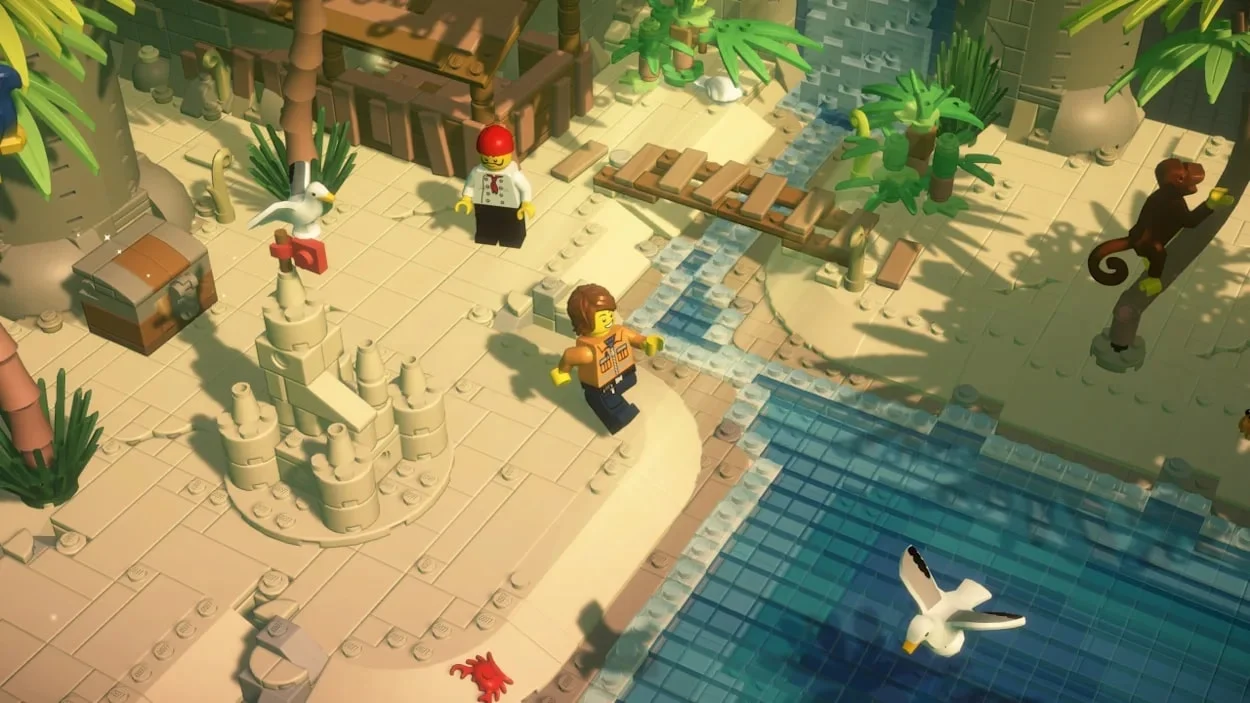
The adventure follows a young builder and their robot companion, Buddy, as they visit an inventor grandfather whose amusement park faces closure. The effort to help save the park sends the pair through five distinct LEGO-built worlds. Along the way, players meet minifigures with problems that require practical help, collecting joy crystals needed to support the park’s reopening.
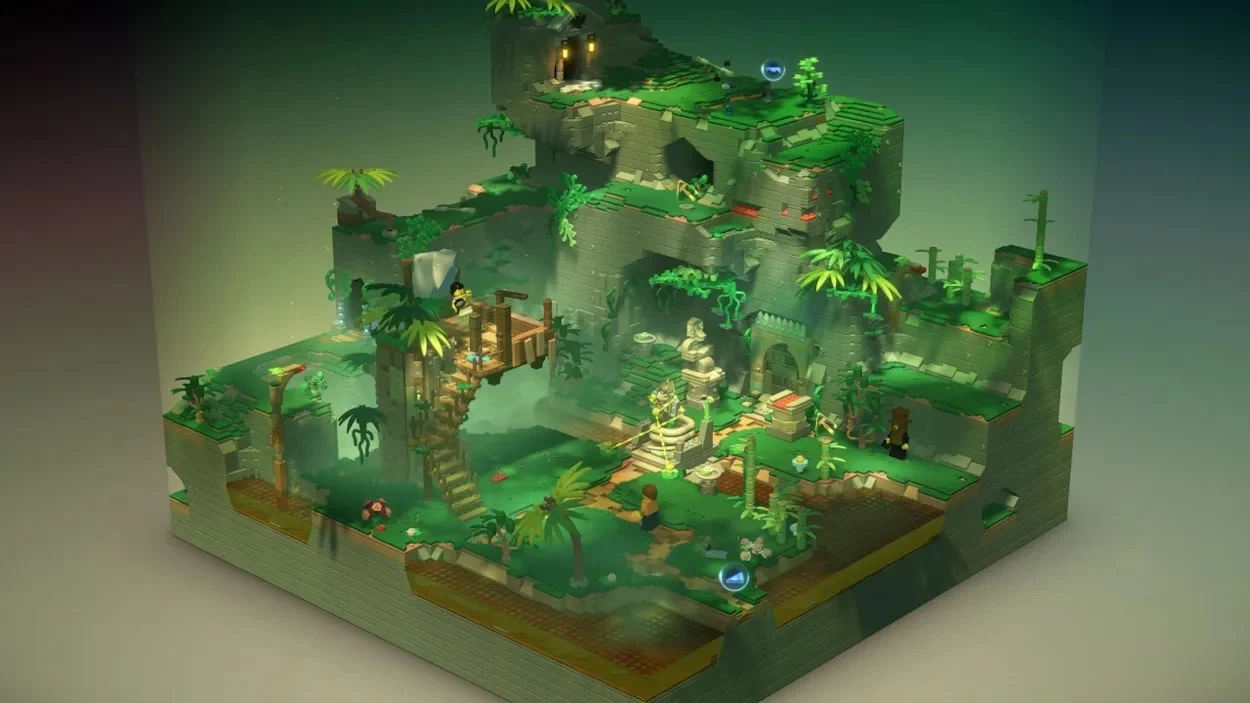
The presentation leans into the tactile appeal of LEGO models. Areas are arranged as compact dioramas rather than ordinary realistic landscapes, giving jungles, deserts, cities, and medieval settings a deliberately crafted appearance. That visual approach also supports the game’s puzzle logic: objects, gaps, mechanisms, and routes are presented as parts of a space that can be studied and improved through LEGO construction.
How Physics-Based Building Puzzles Work
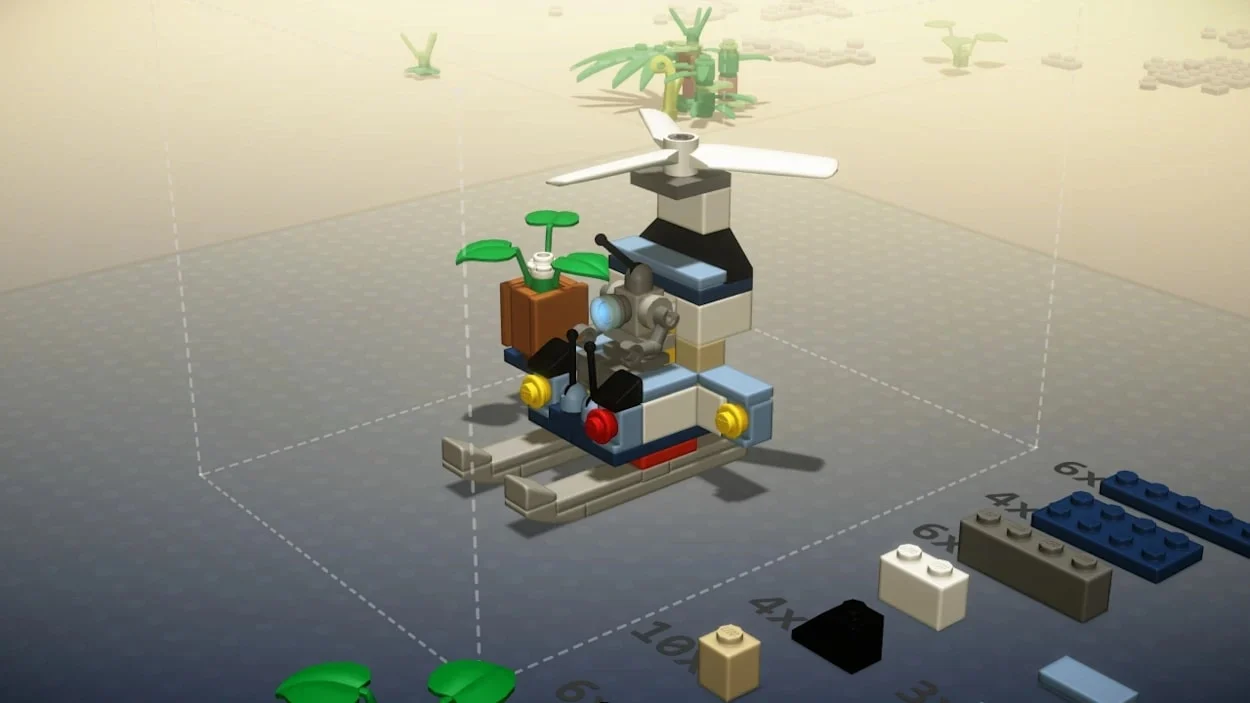
The defining feature of LEGO Bricktales building puzzles is their focus on function. When an obstacle blocks progress, the game moves the player into a dedicated building space. There, a limited selection of virtual bricks is used to assemble a solution for the specific problem in front of them.
This is not simply a matter of placing pieces until a shape resembles the requested object. The game evaluates creations through physics-based building principles. A design needs sufficient support, sensible connections, and a form appropriate to its task. A structure that looks impressive but cannot stay together under pressure will not solve the challenge.
The restricted brick palette gives each task a useful sense of direction. Players are encouraged to inspect the available elements, recognize the requirements of the space, and make decisions about where supports belong. There is creative room in the building interface, but the goal remains clear: create an effective solution from the materials provided.
That balance gives the Adventure Puzzle Simulation blend its character. Exploration creates context for the problem, while building requires careful thinking and testing. Failed designs are part of the process rather than a dead end, because they reveal where a build lacks stability or does not perform its intended job.
From Bridges to Gyrocopters: Functional Creations
The required builds cover a range of useful contraptions. LEGO Bricktales bridges must bear weight, which makes support placement and load distribution important. A long span without enough reinforcement may look complete, yet fail when it is tested. Building a successful bridge means considering not only the crossing itself but also the points where it meets solid ground.
LEGO Bricktales cranes approach the same design thinking from another direction. A crane must lift an object, so its structure has to account for the task’s movement and force. Vehicles and other mechanisms extend the variety further, asking players to build around the immediate demands of each scene rather than relying on one repeated solution.
Gyrocopters are among the clearest examples of form meeting function. They need to fly, reinforcing the idea that the game’s constructions are tested as working objects. These scenarios make the building system more than a cosmetic diversion. Each assignment is connected to the surrounding adventure and has a visible purpose in moving forward.
The variety also supports replay value in a modest but meaningful way. Alternative designs can be tried when a first approach succeeds or fails, and hidden bricks and other collectibles can unlock additional building elements and cosmetic options. New minifigure parts and outfits allow players to personalize the protagonist as the journey continues.
Exploration, Minifigures, and Environmental Problems
Between construction tasks, LEGO Bricktales exploration takes players through brick-built environments filled with routes, characters, and environmental puzzles. The worlds are not just backdrops for isolated building prompts. Their layouts and inhabitants provide the reasons that a bridge, crane, vehicle, or other device is needed in the first place.
The LEGO minifigure characters encountered in each biome have individual needs and quirks. Helping them is tied to progression, since their requests contribute to gathering the joy crystals connected to the amusement park storyline. This gives the game a warm, approachable atmosphere without separating narrative from gameplay. A character’s problem becomes the player’s next opportunity to build.
Environmental puzzles combine observation with construction. Some solutions begin by noticing a blocked path or an object that needs moving; others require understanding how the scene’s components relate to one another. The detailed dioramas reward looking closely, while the building sections turn those observations into practical action.
For players who enjoy LEGO sets, tactile-looking spaces, and puzzles that invite experimentation, the game is a natural fit. It is also suited to players who prefer thoughtful problem-solving over speed-focused action. The need to make stable, functional builds gives each success a clear sense of cause and effect.
5 Building Tips for More Stable LEGO Creations
- Read the scene. Observe the obstacle and its surroundings before placing bricks. The required function—crossing a gap, lifting an item, or traveling through an area—should guide the design.
- Balance the load. Consider weight distribution when building bridges and other structures. Strong connections and well-supported sections are more useful than a design that only reaches the destination.
- Prioritize stability. Test whether the structure can handle its intended role. A successful puzzle solution needs to remain functional when the game applies its physics rules.
- Try another layout. Experiment with alternate designs when a build does not work. The limited brick selection encourages finding a different arrangement rather than forcing one weak approach.
- Use failures as feedback. A collapsed bridge or ineffective machine indicates what needs changing. Revising a design is part of learning the building mechanics in LEGO Bricktales Switch NSP.
Regions and Language Support for LEGO Bricktales
LEGO Bricktales is listed for the Europe, USA, and Japan regions. Its Nintendo Switch language support includes English, French, German, Italian, Japanese, Korean, Portuguese, Russian, Chinese, and Spanish.
That language selection complements a game built around visual spaces, recognizable LEGO forms, and clear practical goals. While dialogue and character interactions help establish the journey, much of the puzzle-solving comes from reading the environment and responding with a stable construction. The result is a game profile centered on curiosity, experimentation, and the satisfaction of seeing a carefully assembled idea perform as intended.