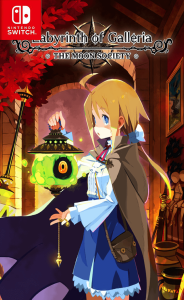
Labyrinth of Galleria: The Moon Society Switch NSP XCI
Report Link Error
Select the broken download file, then submit the report.
Screenshots
About Game
Labyrinth of Galleria: The Moon Society Switch NSP XCI frames its adventure as a descent into a strange and hostile underground world, where a cursed maze hides beneath an ancient mansion. Combining Adventure, Role-Playing, and Strategy elements, the game places careful party building and dungeon survival alongside a dark-fantasy story centered on secrets, ambition, and the unknown.
A Dark-Fantasy Descent Beneath Galleria
The story begins when Witch Dronya and her apprentice, Eureka, arrive in Galleria. Their destination is an enormous labyrinth below an old mansion, a place associated with buried treasure and deeper mysteries. The Galleria labyrinth is not a straightforward ruin to be mapped once and left behind. It is a shifting, dangerous space whose unexplored corridors hold traps, enemies, puzzles, and secrets.
Dronya and Eureka provide the human perspective on this expedition, but they cannot simply walk into the depths themselves. That limitation gives the game’s premise a distinctive shape. The expedition is not only about reaching new floors or collecting artifacts; it is also about discovering why the labyrinth exists, what the Moon Society represents, and what Witch Dronya ultimately seeks below the mansion.
The tone leans into dark fantasy and personal conflict rather than a lighthearted treasure hunt. As the party presses farther underground, the story reveals more about the cursed setting and the people directing the expedition. Its mystery is closely tied to the structure of the dungeon itself: every newly reached area can bring both useful rewards and more questions.
Why the Necrolum Commands Puppet Soldiers
The central obstacle is the curse placed on the labyrinth. Humans cannot enter its depths, so Witch Dronya relies on the Necrolum, a sentient magical book, to act in their place. Players take the role of this Necrolum and guide the forces it creates into territory that Dronya and Eureka cannot safely explore.
Those forces are Youkai puppet soldiers. Rather than controlling ordinary adventurers, the player assembles a roster of crafted puppets with their own statistics, abilities, equipment, and battlefield roles. This setup makes the cursed labyrinth feel less like a conventional party-based journey and more like an organized expedition conducted through magical intermediaries.
The Necrolum’s role also connects the narrative and strategy systems. The same force that enables exploration is responsible for maintaining and directing the party. Powerful artifacts recovered from below can support further progress, while the discoveries made by the Youkai puppet soldiers gradually expose the larger secrets surrounding Galleria and the Moon Society.
Building a Party Through the Convoy System
Labyrinth of Galleria gameplay gives substantial weight to preparation. Puppet customization is not a minor side activity, because each expedition depends on how well the party has been built before entering the maze. Different puppets can be crafted and adjusted with unique stats and abilities, allowing the roster to be shaped around offensive pressure, endurance, specialized skills, or other tactical needs.
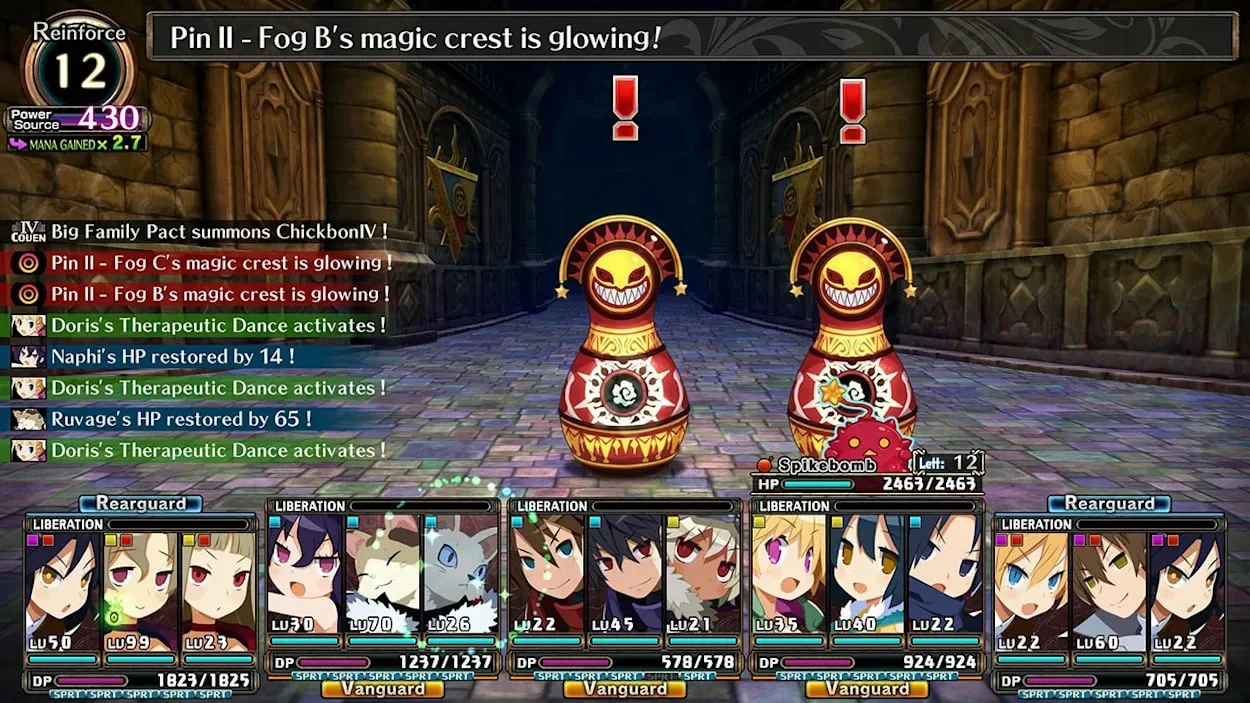
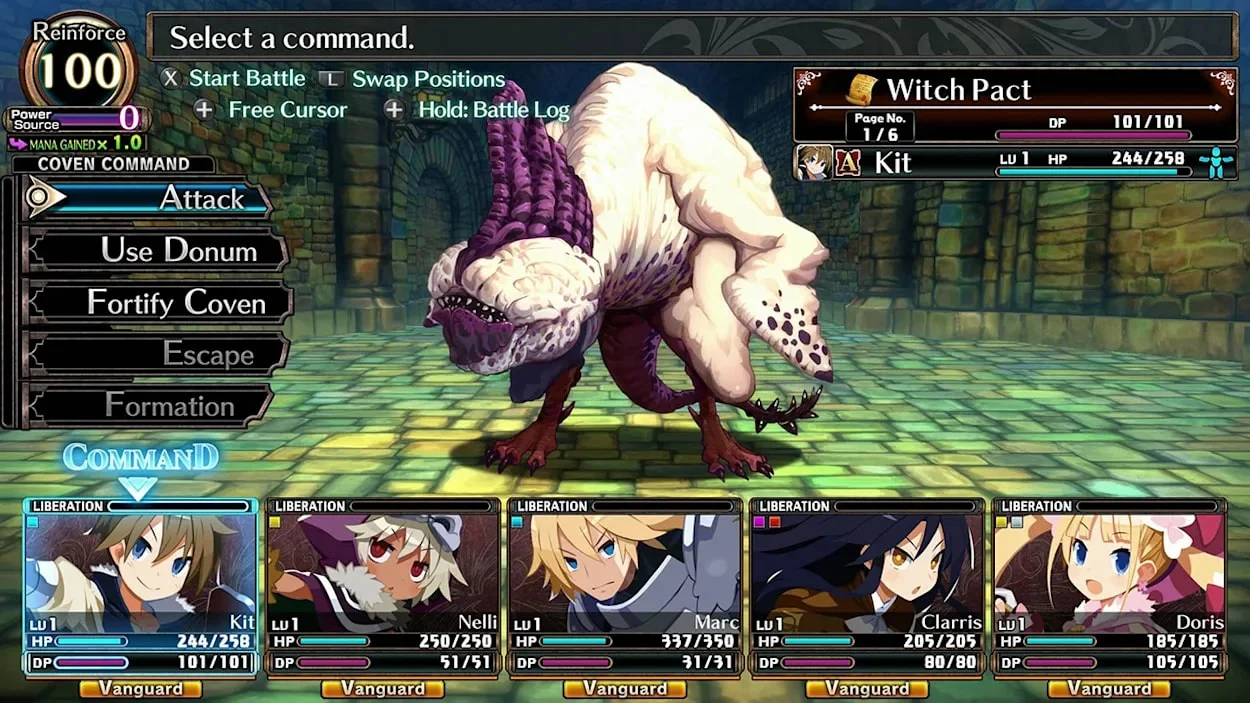
The Convoy system expands that planning. Players can command up to five Convoys, with each Convoy containing multiple puppets. This makes party strategy broader than selecting a small group of individual fighters. A well-organized formation can provide more options when enemies demand particular responses, when a party needs to preserve resources, or when the hazards of a deeper floor call for a more resilient setup.
Combat is turn-based, and success relies on careful ability use, positioning, and attention to enemy weaknesses. Elemental weaknesses and specialized skills give the player reasons to maintain a varied puppet roster rather than depend on a single approach. Equipment and armor can also be discovered and fused to strengthen the puppet army over time, feeding into a progression loop in which each successful run improves the chances of the next.
That long-term development gives the game a measured kind of replay value. Revisiting the labyrinth with stronger puppets, refined Convoys, and improved equipment can open up more effective approaches to difficult areas. The appeal is less about rushing through a single route and more about steadily improving an expedition force capable of surviving the maze’s escalating demands.
First-Person Labyrinth Exploration and Hidden Threats
The game is built around first-person dungeon crawling. Exploration happens from inside the labyrinth’s corridors, making navigation and observation important parts of the experience. These are multi-layered, ever-changing spaces filled with hazards rather than simple passages between story scenes.
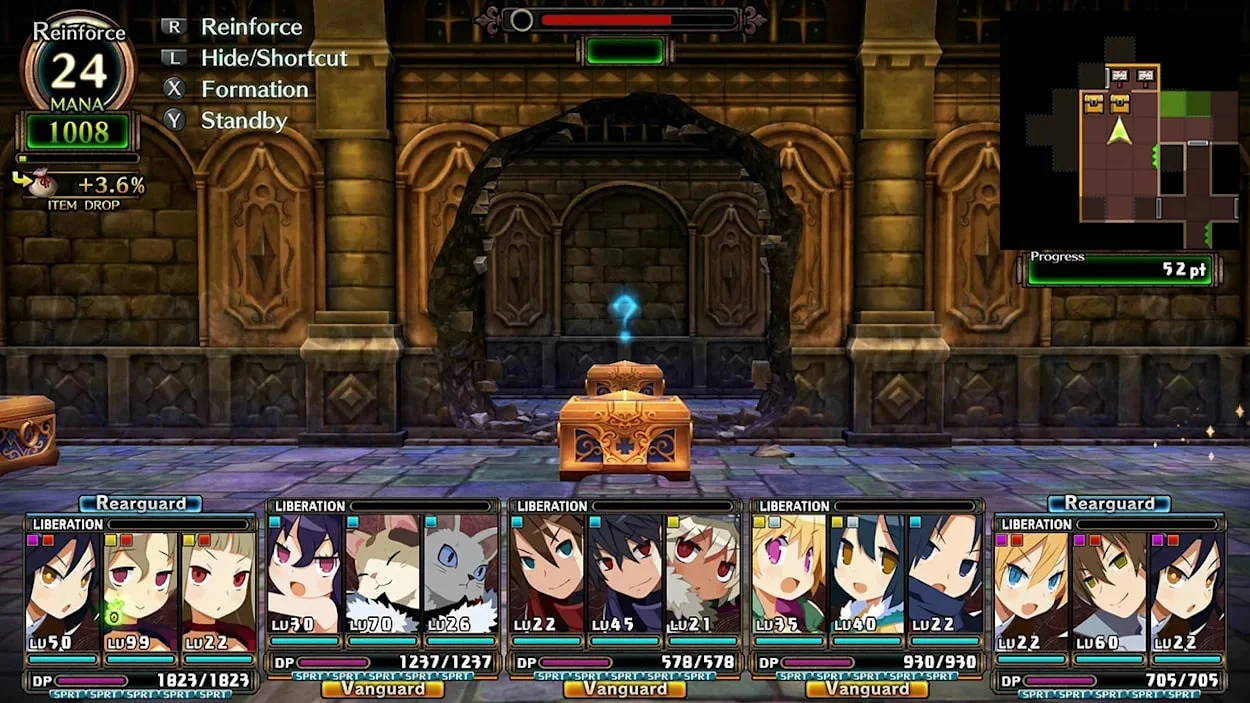
Traps and puzzles can interrupt momentum, while hidden passages and environmental secrets reward careful investigation. Powerful enemies add another source of pressure, particularly when a party has already spent stamina or used valuable resources. The labyrinths are procedurally generated, giving the act of mapping and moving through them an uncertain quality.
Stamina management is especially important during longer expeditions. A party that pushes ahead without considering its condition may find itself less prepared for combat or unexpected threats. Equipment decisions matter for the same reason: the player is managing an ongoing journey through dangerous territory, not merely preparing for isolated battles.
The Miracle system sharpens that risk-and-reward structure. Miracles can produce powerful attacks, but they require the sacrifice of puppet parts. Using one can turn a difficult encounter, yet the cost means it is not a tool to spend casually. That tension suits the game’s atmosphere, where every deeper step into the cursed labyrinth can demand a difficult choice.
5 Early Expedition Priorities for the Galleria Labyrinth
- Shape the roster: Create and customize puppet soldiers with stats and abilities that give the expedition more than one way to handle combat.
- Build balanced Convoys: Use the ability to command up to five Convoys to organize several puppets into flexible groups for different tactical situations.
- Watch stamina: Treat stamina as a core expedition resource, especially when moving through deeper or more dangerous sections of the labyrinth.
- Search for hidden routes: Investigate hidden passages, secrets, and environmental puzzles instead of assuming every corridor presents the only available path.
- Save Miracles for pressure points: The Miracle system can deliver devastating attacks, but sacrificing puppet parts makes it best reserved for critical moments.
Nintendo Switch Release Details for Labyrinth of Galleria
Labyrinth of Galleria: The Moon Society released for Nintendo Switch on February 14, 2023. NIS America served as both publisher and developer. The release is available in the Europe and USA regions and supports English.
Its listed genres—Adventure, Role-Playing, and Strategy—fit the game’s design closely. The adventure comes from the gradual unearthing of Galleria’s mysteries; the role-playing systems appear in puppet growth, equipment, and party development; and the strategy comes through Convoy construction, turn-based combat, stamina management, and costly Miracle decisions.
Labyrinth of Galleria: The Moon Society Switch NSP XCI is best suited to players interested in deliberate first-person dungeon exploration and detailed party planning. Its cursed setting, multi-layered labyrinths, customized puppet army, and demanding resource choices create an experience designed around patience, experimentation, and the steady discovery of what waits beneath Galleria.
Recommended Similar Games
 The Nightmare: Serial Killers Switch NSPView Game
 The Legend of Legacy HD Remastered Switch NSPView Game
 Might & Magic – Clash of Heroes : Definitive Edition Switch NSPView Game
 AVARIS 3 Switch NSPView Game
 Jumanji: Wild Adventures Switch NSPView Game
 Atelier Marie Remake: The Alchemist of Salburg Switch NSP XCIView Game
