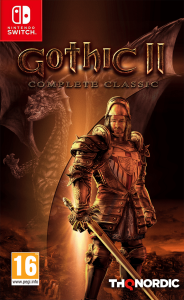
Gothic II Complete Classic Switch NSP
Report Link Error
Select the broken download file, then submit the report.
Screenshots
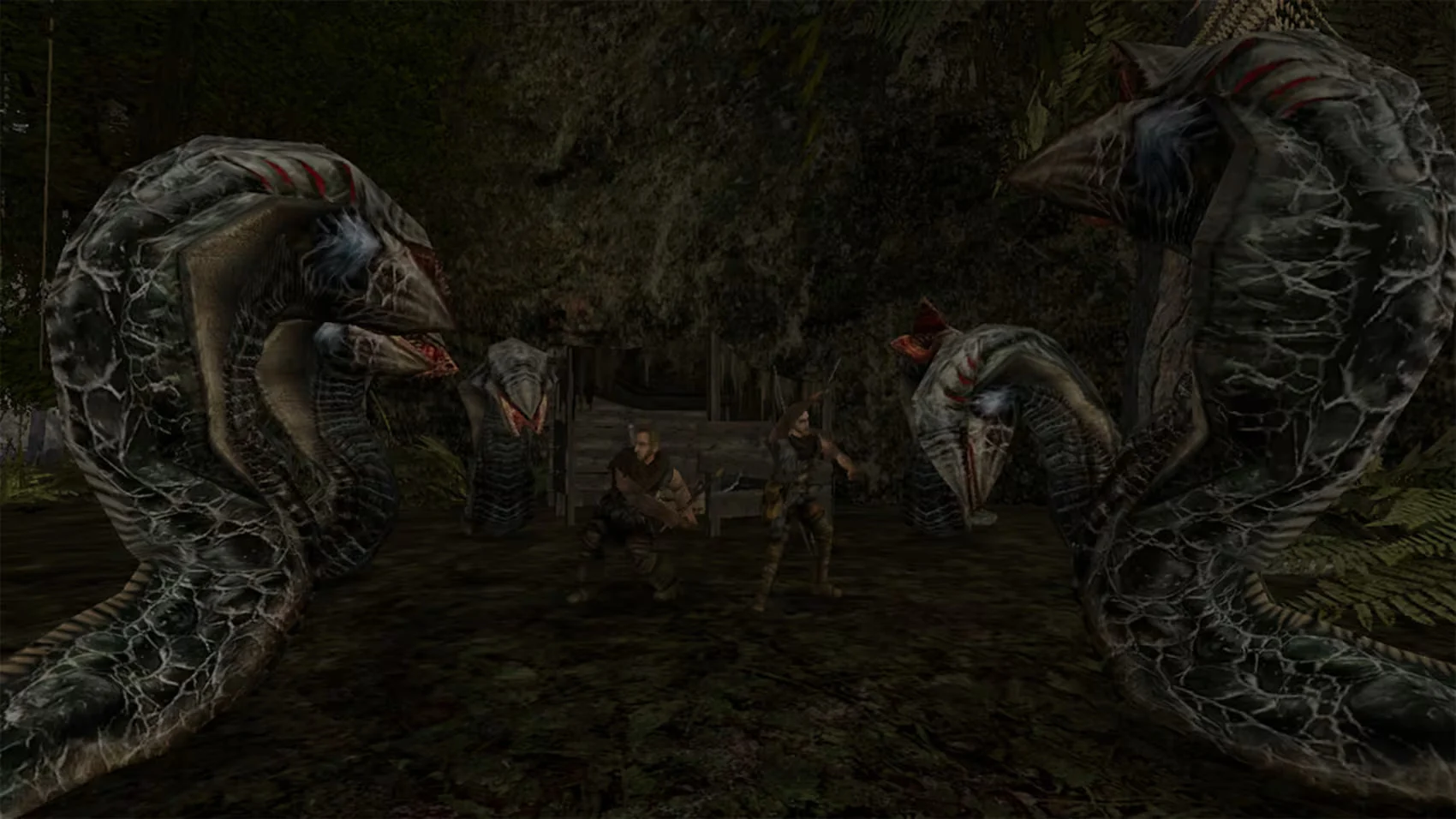
About Game
Gothic II Complete Classic Switch NSP brings a demanding fantasy action RPG to Nintendo Switch, placing the long journey of the Nameless Hero in a format suited to both portable and docked play. Its world is harsh, its combat asks for patience, and its quests encourage players to learn Khorinis through conversation, exploration, and consequence rather than constant direction.
Gothic II Complete Classic on Nintendo Switch: Release and Platform Details
The Gothic II Complete Classic Switch release arrived on November 28, 2023. THQ Nordic serves as both publisher and developer for this Nintendo Switch version, which is available in Europe and the USA. The game supports English, Spanish, French, German, Italian, and Russian.
Classified as an Action RPG, Gothic II Complete Classic is built for a substantial, long-form adventure rather than a brief series of missions. Its Switch release makes the game’s large fantasy setting more flexible to approach: a player can spend time investigating a town, taking on a difficult fight, or following a quest thread in short handheld sessions, then continue the same adventure on a larger display in docked mode.
The game’s identity comes from its willingness to be uncompromising. Khorinis is not presented as a place that exists simply to flatter the player’s progress. It is populated by dangerous creatures, competing groups, and characters with their own routines. The result is an RPG atmosphere shaped by uncertainty: knowledge, preparation, and restraint can matter as much as direct strength.
The Nameless Hero’s Return to Khorinis
The Gothic II Complete Classic story begins shortly after the events of the first game. After sealing the demon known as the Sleeper, the Nameless Hero is left unconscious beneath rubble. He is rescued by Xardas, the powerful mage who reveals that the earlier victory has not brought lasting safety.
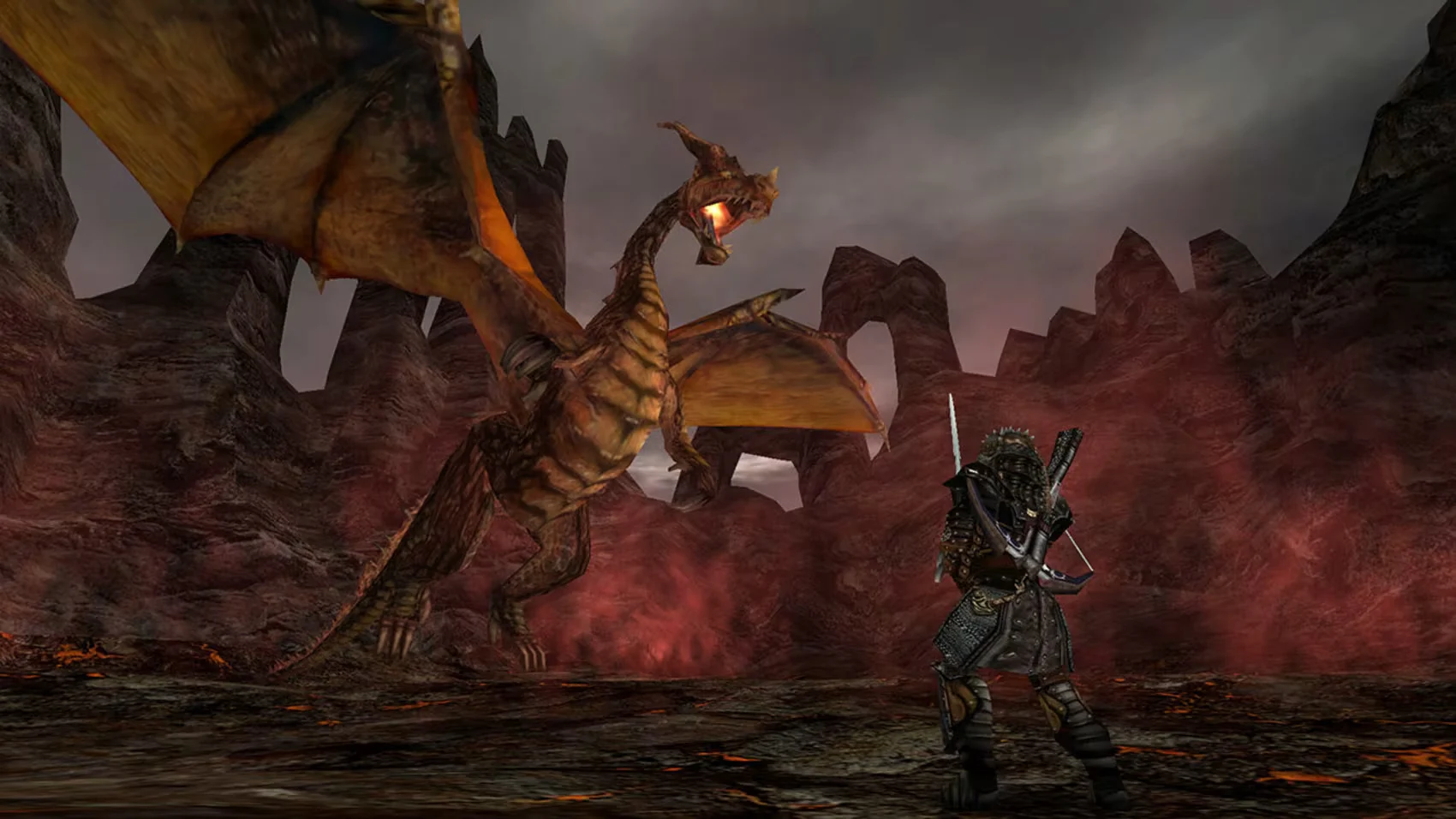
Khorinis faces a new crisis. Creatures of darkness have spread across the island, while dragons have returned as a far greater threat. Paladins from the mainland have arrived in an attempt to restore order, but their presence is not enough to secure the region. The hero must again become involved in a conflict that reaches beyond simple survival.
Political tension and ancient prophecies sit alongside the immediate danger of beasts and hostile territory. Trust is not automatic, and faction decisions carry weight as the hero seeks to understand the dragons’ return. Players can join one of three factions: the Militia, the Mercenaries, or the Fire Mages. That choice helps give the adventure its sense of direction while leaving room to explore Khorinis on personal terms.
A Demanding Action RPG Built Around Exploration
Gothic II action RPG design puts exploration at the center of the experience. The world is open for discovery, but it does not promise that every path is safe or that every challenge is appropriate for an inexperienced character. New areas, hidden details, NPC conversations, and quests reward attention.
This is a game that expects players to observe and adapt. It does not rely on extensive hand-holding, so learning where danger lies, whom to approach, and when to return later becomes part of the rhythm. Early setbacks can be informative rather than merely punishing, especially when they reveal the limits of the hero’s current skills.
The reactive quality of the world also supports the role-playing side of the adventure. Choices can influence quest outcomes, while faction affiliation affects the hero’s place in Khorinis. Exploration is therefore more than filling in a map: it is a way of gathering opportunities, understanding relationships, and deciding how to proceed through a world that does not wait passively for the player.
- Explore carefully: Khorinis contains secrets, threats, and opportunities that are easier to find by taking time with each area.
- Choose battles wisely: Early encounters can be difficult, making patience more useful than rushing into every fight.
- Train with purpose: Combat trainers help turn a vulnerable character into a more capable survivor.
- Talk to people: NPC interactions support quests, world knowledge, and the game’s political atmosphere.
- Save before risks: Frequent saving is valuable before major confrontations or unfamiliar exploration.
Learning to Survive in Gothic II’s Real-Time Combat
Gothic II combat takes place in real time and is deliberately skill-based. The hero does not begin as an unstoppable warrior, and early opponents can be a serious problem. That initial vulnerability gives progression a practical meaning: improvement is felt in the player’s growing confidence as well as in the character’s developing abilities.
Practice matters. Learning the basics, managing encounters carefully, and avoiding fights that are clearly beyond the hero’s current ability can make the opening hours more manageable. The game rewards a measured approach, particularly when resources such as money and experience are hard-earned.
Gothic II combat trainers are important to that process. Trainers found around the world teach skills and abilities that broaden the character’s capabilities. Rather than treating advancement as an automatic reward, the game connects growth to people and places within Khorinis. Finding the right trainer and deciding what to learn becomes part of the larger adventure.
Skills, Crafting, Quests, and a Reactive Daily World
Progression extends beyond fighting. Players can learn skills from trainers and craft weapons, armor, and potions to improve their chances of survival. Gothic II crafting gives preparation a tangible role, allowing the hero to build useful equipment instead of relying only on what is found during exploration.
The quest structure adds another layer of replay value. There are hundreds of quests, including tasks with branching choices and consequences. Combined with three available factions, these decisions can encourage another playthrough for players interested in seeing different paths through the same troubled setting.
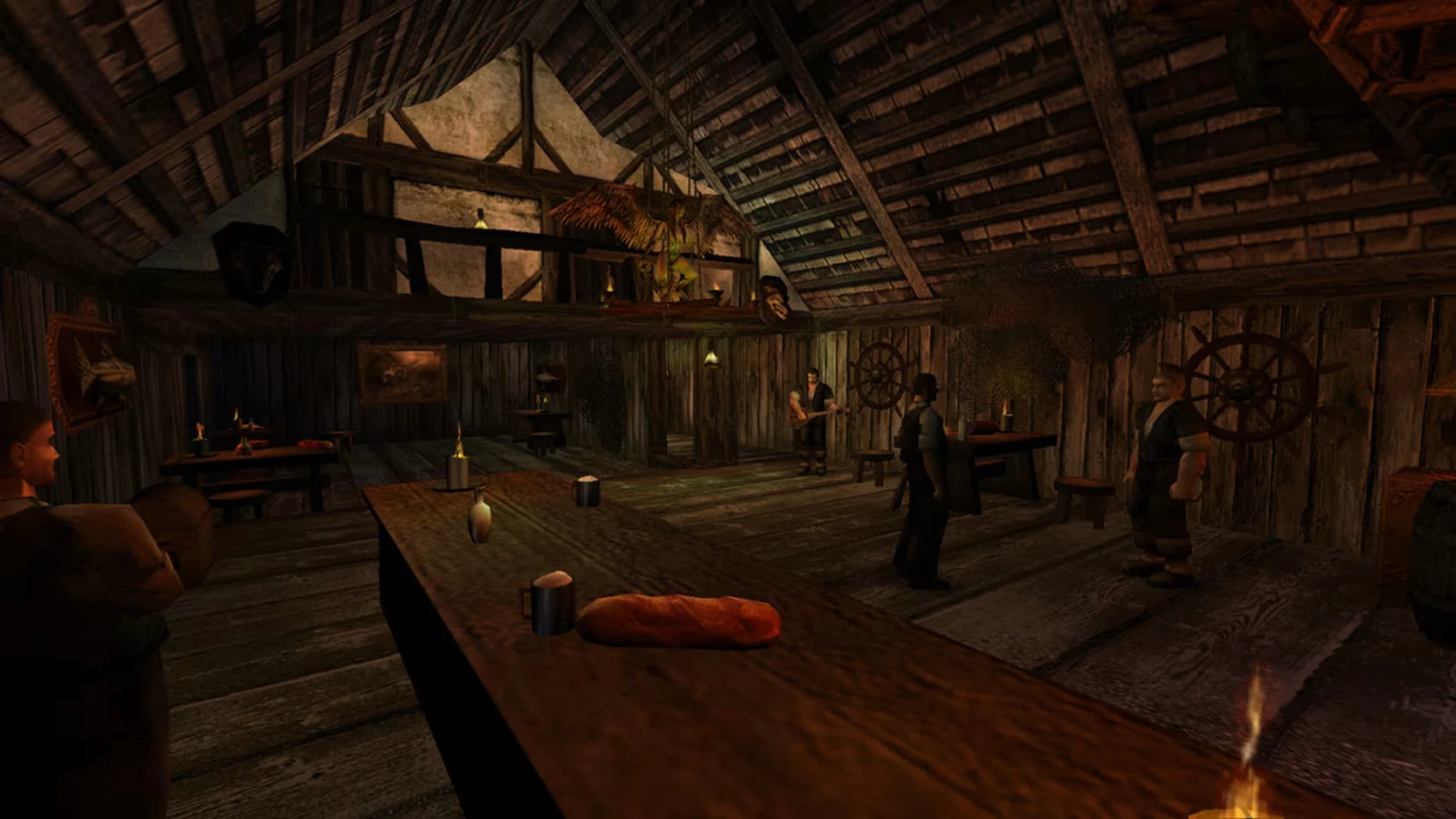
Gothic II NPCs help make the island feel inhabited rather than decorative. Characters have distinct personalities, and their presence is reinforced by a day-night cycle that affects routines and monster spawns. A location can feel different depending on the time of day, while travel after dark may bring new risks. These details support the game’s grounded atmosphere: Khorinis feels like a place with its own habits, not simply a series of combat arenas.
Portable Khorinis: Playing Gothic II Complete Classic in Handheld or Docked Mode
Gothic II Complete Classic Switch NSP is suited to players who want a deep, older-school RPG experience on a console that can move between handheld and docked play. The Switch version supports both approaches, with controls adapted for the console while preserving the focus on exploration, quests, character growth, and real-time combat.
Handheld mode can make it easier to fit smaller pieces of the adventure into a day: checking in with an NPC, searching an overlooked route, gathering resources, or practicing against a difficult enemy. Docked play offers another way to settle into longer sessions when Khorinis opens into a larger quest chain or a dangerous new region.
This is best suited to players comfortable with a demanding beginning and willing to invest time in learning its systems. Those looking for constant guidance or effortless combat may find its early hours unforgiving. For players drawn to reactive worlds, meaningful faction choices, careful progression, and the atmosphere of a dark fantasy island under pressure, Khorinis offers a substantial journey.