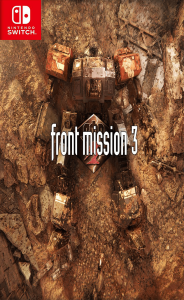
Front Mission 3: Remake Switch NSP
Report Link Error
Select the broken download file, then submit the report.
Screenshots
About Game
Front Mission 3: Remake Switch NSP arrives on Nintendo Switch on জুন 26, 2025, bringing a tactical RPG centered on customizable Wanzers, grid-based combat, and a story shaped by political tension. Published by Forever Entertainment, the USA release supports English, Japanese, Spanish, French, German, Italian, Portuguese, and Chinese, giving a broad Switch audience access to its strategic mech battles.
Front Mission 3: Remake on Nintendo Switch: Release and Core Details
Classified as both Simulation and RPG, Front Mission 3: Remake places methodical decision-making alongside character-driven storytelling. Its near-future setting is defined by geopolitical conflict, conspiracies, and the military presence of Wanzers: powerful walking combat machines that become central to the game’s battles and wider themes.
The remake follows two story paths associated with Kazuki Takemura and Ryogo Kusama. Their perspectives lead to different allies, enemies, and revelations, giving the campaign a branching structure rather than a single fixed route through its events. That design also supports replay value, as another playthrough can reveal different scenarios and story developments.
For Switch players, the game’s structure suits both focused tactical sessions and more deliberate play on the go. Missions ask for attention to positioning and equipment, while the surrounding network system offers a separate layer of investigation between fights. Forever Entertainment presents the remake as a modernized version of the tactical RPG, with enhanced visuals and updated gameplay accompanying its established strategic framework.
Turn-Based Wanzer Battles Built Around Positioning
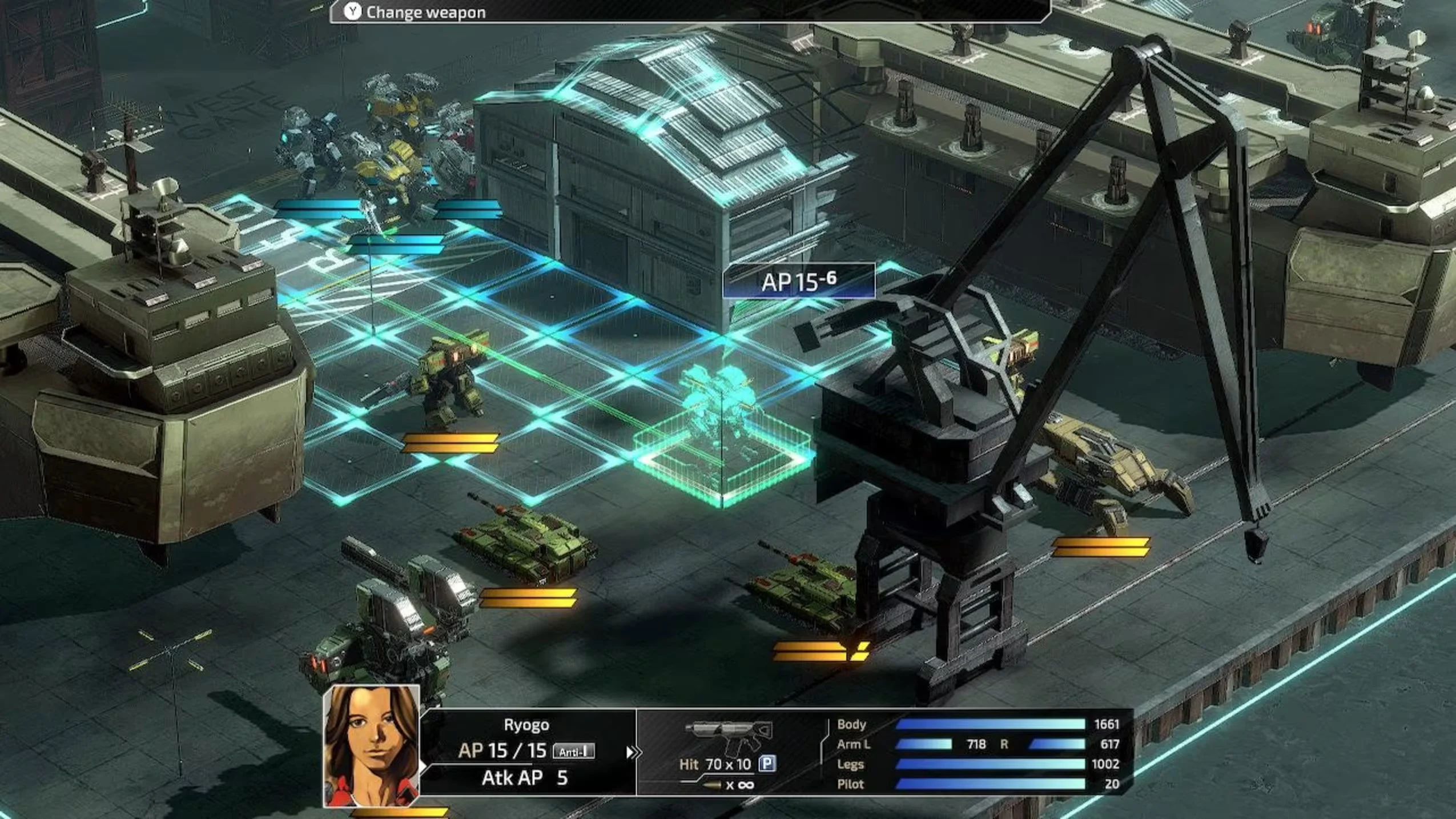
Front Mission 3 Remake combat unfolds through turn-based tactical battles on grid-based maps. Movement is not simply a way to close distance. Each advance affects firing opportunities, exposure to enemy attacks, access to terrain, and the ability of allied units to provide support. A strong move can create a favorable angle for the current turn while also preparing the team for what opponents may do next.
Weapon choice matters alongside placement. Different Wanzer setups can be adjusted for the threats on a map, and enemy weaknesses should inform the order in which targets are engaged. A heavily armed opponent may demand immediate attention, while another unit might be safer to contain until the team is in a stronger position.
Terrain awareness is part of that calculation. Before committing Wanzers forward, players can assess the map, consider likely enemy responses, and avoid treating every encounter as a direct exchange of damage. These turn-based tactical battles reward planning ahead: the unit that moves first is not always the unit that should attack first.
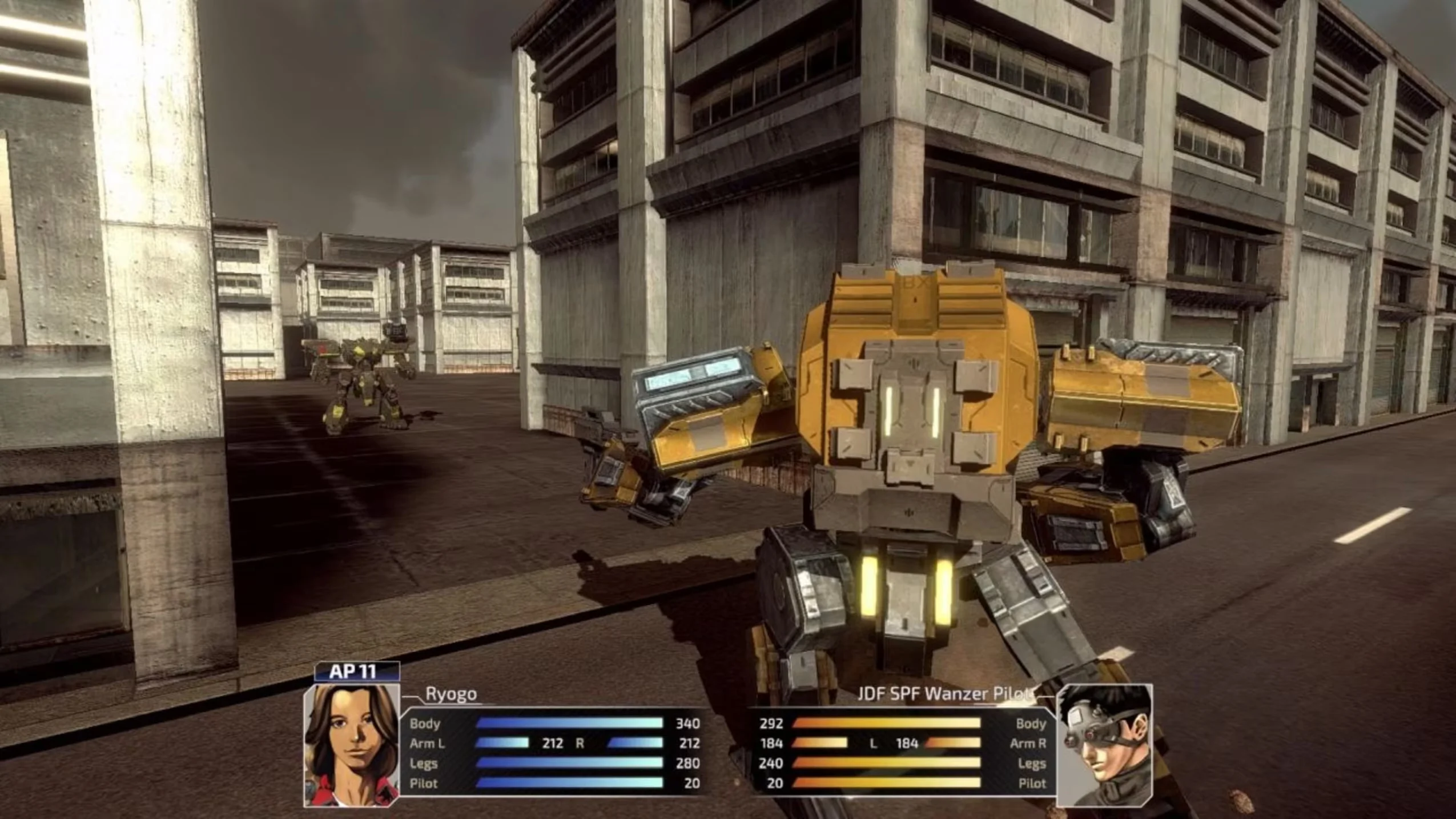
Targeting individual Wanzer body parts adds further tactical pressure. Damaging an enemy weapon arm can remove its ability to attack effectively, changing a dangerous unit into a less immediate problem. That kind of focused targeting gives battles a practical, turn-by-turn sense of control rather than reducing encounters to raw firepower.
Wanzer Customization and Team-Building Options
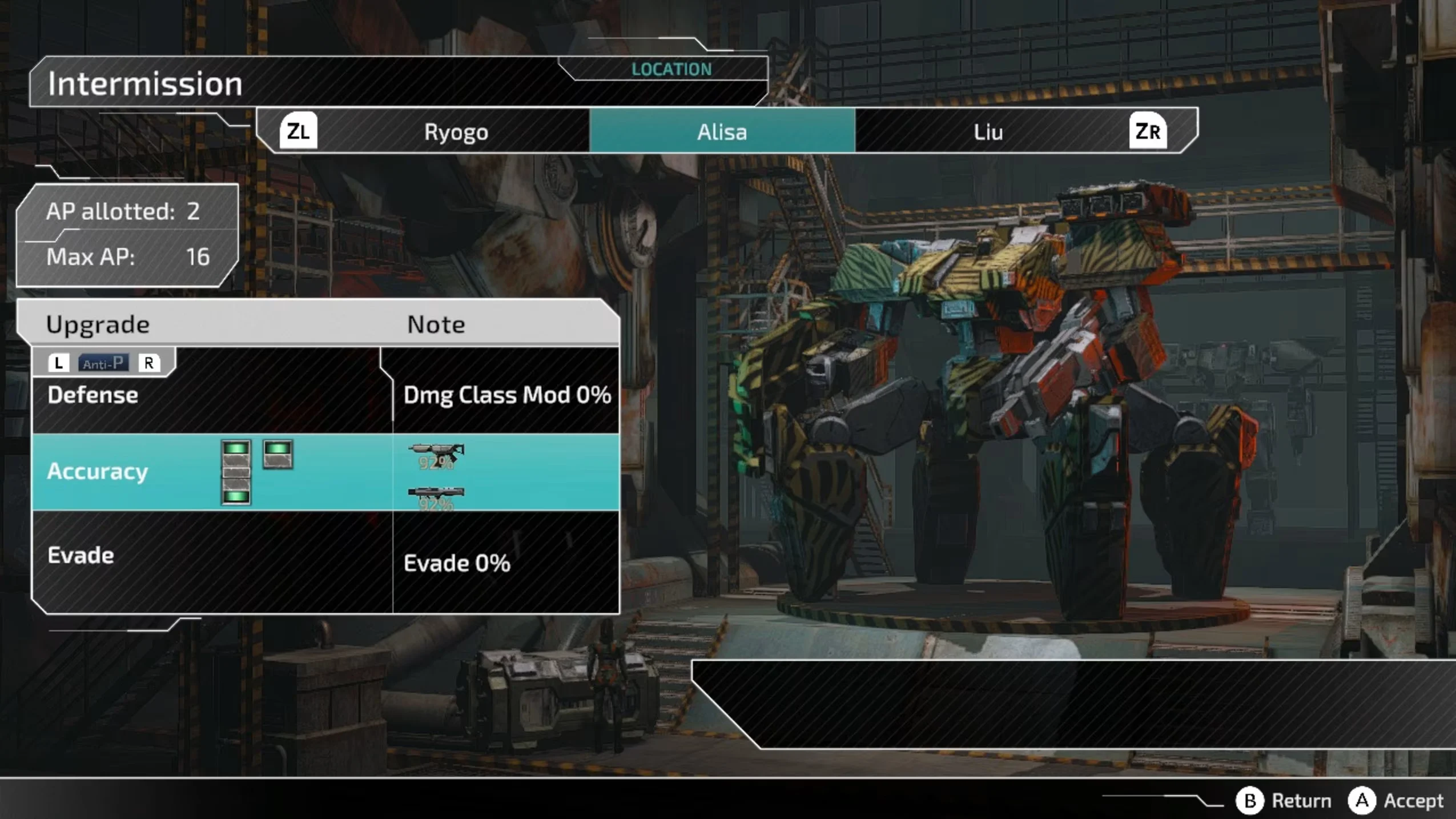
Wanzer customization gives the remake much of its tactical flexibility. Players can work with different parts, weapons, and abilities, then shape their units around the demands of a mission. One build may emphasize direct offense, while another can be better suited to support, repairs, or handling a particular enemy formation.
The available Wanzers carry varied strengths and weaknesses, encouraging a team rather than a collection of identical machines. A formation built for range may need protection when opponents close in. A more aggressive unit can be useful for disrupting enemy plans, but it may also require careful repair support. The important question is not which build is universally best, but which combination works against the lineup in front of the player.
This makes experimentation worthwhile. A difficult encounter can be an invitation to reconsider parts, weapons, or pilot roles instead of repeatedly using the same approach. In that respect, the game works as a mech customization RPG as much as a battlefield tactics game: preparation carries into every engagement.
The Network System as an Intelligence Tool
Combat is only one part of the experience. The Front Mission 3 network system expands the game beyond its maps by giving players ways to gather intelligence and interact with the wider world. It supports the atmosphere of a story built around international tension and hidden agendas, making information feel connected to the conflicts unfolding around the characters.
Through the network, players can gather intel, recruit pilots, and uncover secrets. Those functions make it more than a simple menu between missions. It becomes a space for following leads, learning more about the setting, and finding resources that can affect the team’s options.
The system also complements the branching narrative. With separate paths for Kazuki Takemura and Ryogo Kusama, the process of collecting information and meeting potential allies fits a campaign where perspectives and revelations can differ. The result is a tactical RPG that gives its world-building a role alongside its battles.
7 Tactical Priorities for Early Wanzer Engagements
- Read the map. Assess the battlefield before moving, noting where allies and enemies are positioned and where an advance could create unnecessary exposure.
- Check the terrain. Consider how the environment affects movement, firing positions, and the routes available to both sides before committing a unit.
- Study the enemy lineup. Identify dangerous weapons, vulnerable targets, and combinations of opponents that could pressure a poorly placed Wanzer.
- Disable weapon arms. Target enemy weapon arms when possible to reduce an opponent’s offensive threat and make later turns easier to manage.
- Save repair packs. Use repairs with purpose, especially when preserving a key unit will keep the formation functioning through a difficult exchange.
- Time support units. Keep support Wanzers in positions where they can help without being placed in avoidable danger or falling behind the team.
- Test new builds. If a formation repeatedly struggles, experiment with parts, weapons, and abilities rather than relying on a single familiar setup.
What the Remake Brings to a Modern Switch Audience
Front Mission 3: Remake Switch NSP is positioned as a refreshed presentation of a tactical RPG whose appeal rests on deliberate combat, configurable machines, and branching story paths. Enhanced visuals and updated gameplay support that return without changing the central appeal of careful Wanzer strategy.
Its atmosphere comes from the connection between military conflict and political intrigue. The story follows ordinary people pulled into extraordinary events, while its dual perspectives leave room for different relationships, enemies, and discoveries. That structure gives the game a more layered sense of progression than a sequence of isolated missions.
The remake is best suited to players who enjoy taking time with grid-based encounters, adjusting equipment for specific challenges, and considering battlefield consequences before acting. Fans of strategic planning can find depth in positioning, part targeting, repairs, support timing, and team-building, while the branching narrative offers a reason to revisit the conflict from another point of view.