FINAL FANTASY X/X-2 HD Remaster Switch NSP XCI

Report Link Error
Select the broken download file, then submit the report.
Screenshots

About Game
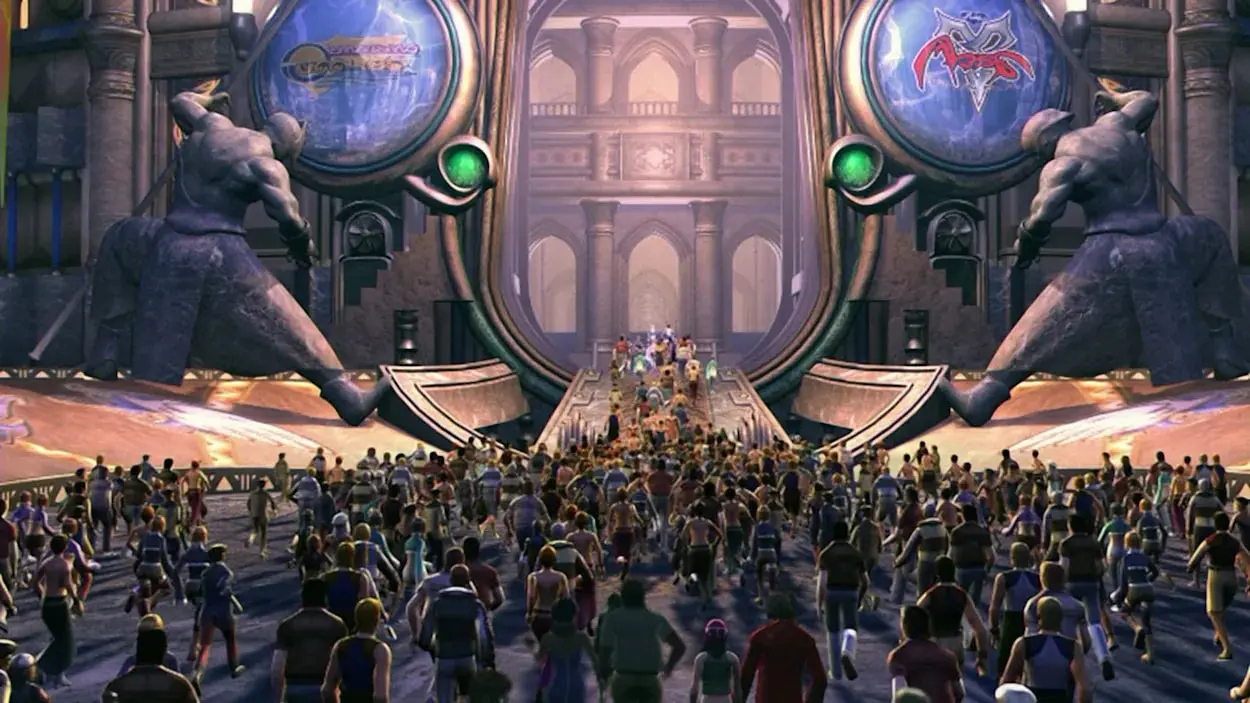
FINAL FANTASY X/X-2 HD Remaster Switch NSP XCI brings two linked role-playing adventures to Nintendo Switch, following Spira through a crisis of faith and sacrifice before returning to a world trying to decide what comes next. Released on April 16, 2019, this Square Enix collection pairs two games with sharply different moods, combat rhythms, and ideas about the future.
A Two-Game Journey Through Spira
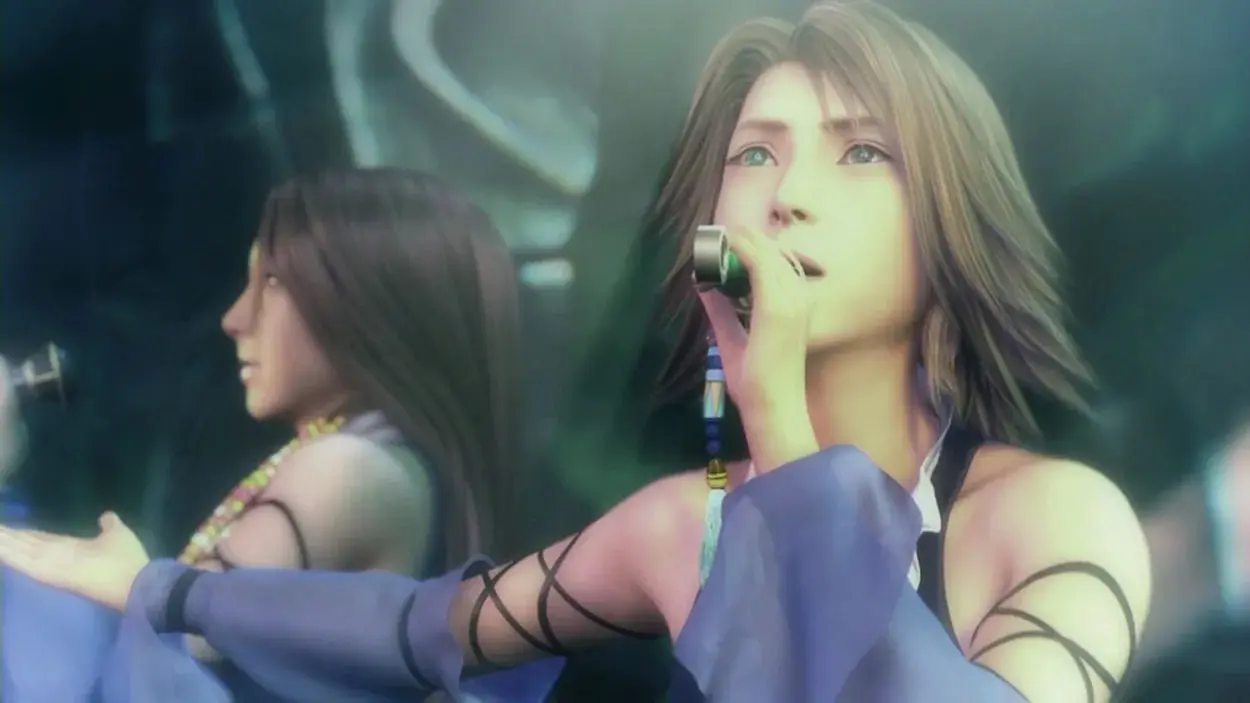
Spira is the shared setting, but the two games approach it from different points in time. FINAL FANTASY X begins with Tidus, a celebrated blitzball player, arriving unexpectedly in a world he does not understand. There, he joins Yuna, a young summoner undertaking a pilgrimage intended to defeat Sin, a colossal force responsible for repeated destruction.
The first journey is solemn and increasingly personal. Tidus and Yuna travel with a group of companions while confronting the beliefs and customs that shape Spira. Their relationship gives the story much of its emotional weight, while the pilgrimage raises larger questions about what people accept in the name of safety, duty, and tradition.
FINAL FANTASY X-2 revisits the same world two years later. The setting has changed, and so has Yuna. Rather than continuing the pilgrimage structure of the first game, the sequel follows her as a sphere hunter searching for answers after discovering a mysterious sphere containing images of someone familiar. Together, the two games create a longer view of Spira: first a world trapped in a destructive cycle, then one working through the consequences of change.
FINAL FANTASY X: Pilgrimage, Sin, and Difficult Questions
The FINAL FANTASY X story works because Tidus is both participant and outsider. His arrival in Spira gives the player a way into its customs, especially the importance placed on summoners and their pilgrimages. Yuna’s goal is clear from the beginning: she must travel in pursuit of a way to defeat Sin. The meaning and cost of that goal become more complicated as the group learns more about the world around them.
Sin is not simply an enemy to overcome. Its presence shapes how communities live, what they fear, and what they are willing to preserve. Tidus in Spira also brings a useful tension to the journey, because he does not automatically share the assumptions that others have inherited. That contrast lets the narrative examine faith, destiny, sacrifice, love, and the difficult act of questioning tradition.
The first game’s deliberate Conditional Turn-Based Battle system suits this atmosphere. Players have time to consider actions rather than reacting under pressure, and party members can be swapped during battle to address different enemy types. That measured design complements a story built around reflection, discovery, and consequences.
FINAL FANTASY X-2 and Spira’s Changing Future
The FINAL FANTASY X-2 story takes a more energetic route through Spira. Yuna is now a sphere hunter, joined by Rikku and Paine. Their search begins with the mysterious sphere, but the adventure also takes them through a world facing social and political recovery after the events of the first game.
This is not the same Spira seen through Tidus’s eyes. The sequel’s lighter, more action-oriented tone reflects a society that is no longer defined only by the immediate threat of Sin. People and groups are trying to find their place in a changing political landscape, and Yuna’s search gradually becomes connected to questions about the world’s future.
Rikku provides continuity with the earlier journey, while Paine joins the group as part of the new three-person team. Their travels give the sequel a different chemistry from the pilgrimage party of FINAL FANTASY X. The change in tone does not erase the earlier game’s concerns; it shows what happens after a world-altering victory, when answers are no longer simple and recovery brings its own conflicts.
Making the Most of the Sphere Grid
The Sphere Grid is central to FFX character progression. Rather than treating growth as a fixed sequence, it gives players room to develop abilities and statistics across the party. That makes character customization an important part of how battles are approached, especially when different enemies call for different strengths.
The system also rewards attention to the whole group. Because party members can be switched during encounters, it is useful to give everyone an opportunity to act. This supports progression while also encouraging players to think about each character’s place in a battle rather than relying on only one preferred lineup.
- Use the full party: Swap characters during battles when a different approach is needed against an enemy.
- Share the action: Let each party member take at least one action so the group can continue progressing.
- Read enemy weaknesses: Elemental weaknesses can make encounters quicker and more efficient.
- Plan each route: The Sphere Grid allows abilities and stats to be developed with different priorities in mind.
- Take time to decide: The turn-based structure allows space for tactical choices before committing to an action.
That flexibility gives the first game a lasting tactical appeal. The story sets a serious pace, but the Sphere Grid lets players shape how the party meets its challenges.
Why FFX-2 Combat Feels Faster and More Flexible
Where the first game gives players unlimited time to plan through its Conditional Turn-Based Battle structure, FINAL FANTASY X-2 combat uses an Active Time Battle approach. The result is a noticeably quicker flow. Decisions must be made while the encounter is moving, which changes the feel of even routine fights.
The ATB system makes role selection and timing more immediate. Instead of pausing to map out every turn, players respond to what is happening in the moment. This faster pace fits the sequel’s more active tone and the focus on Yuna, Rikku, and Paine as a compact adventuring team.
The contrast is one of the collection’s strengths. FINAL FANTASY X favors thoughtful turn-by-turn planning, while its sequel asks for more rapid tactical adjustment. Playing both makes the difference especially clear without separating them from their shared setting and continuing narrative.
Dresspheres and Instant Job Changes in FINAL FANTASY X-2
The Dressphere system is the sequel’s defining combat mechanic. It allows Yuna and her companions to change job classes during battle, opening access to different abilities and battle roles without forcing the party into a single fixed setup. These job changes are a direct answer to the speed of the ATB system: a shifting fight can call for a shifting response.
For players who enjoy experimenting, the system provides a clear reason to revisit combat choices and explore different combinations of roles. It also gives Yuna combat options that reflect the sequel’s more flexible structure. Stronger abilities are not simply a matter of choosing one permanent path; they come from adapting to the situation.
Presented in high definition, FINAL FANTASY X/X-2 HD Remaster Switch NSP XCI is suited to players looking for connected story-driven role-playing games with two distinct combat systems. Its 14GB Switch release supports English, German, Spanish, French, Italian, and Japanese, and is listed for Europe and the USA. The collection is best approached as a complete return to Spira: one game asks what a world owes to its traditions, while the next asks how that world moves forward once those traditions are challenged.