Fate Samurai Remnant Switch NSP XCI
Report Link Error
Select the broken download file, then submit the report.
Screenshots
About Game
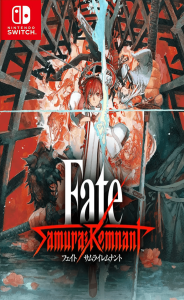
Fate Samurai Remnant Switch NSP XCI brings the Fate universe to Nintendo Switch through an action RPG set against the unsettled atmosphere of Edo-period Japan. Released in the USA on September 29, 2023, the game places swordplay, Master-and-Servant strategy, and the mysterious Waxing Moon Ritual at the center of its journey.
Fate/Samurai Remnant on Nintendo Switch: Key Release Details
Published in the USA by KOEI TECMO EUROPE, Fate/Samurai Remnant arrived on Nintendo Switch on September 29, 2023. It is classified as an Action and RPG title, a fitting description for a game that combines immediate weapon combat with character development and tactical decision-making.
The Switch release supports English, Japanese, Korean, Chinese, and Traditional Chinese language options. Its Title ID is 01003AE01AA76000, and the listed firmware requirement is 16.0.3. The recorded ROM type is NSP, with a file size of 9.80 GB.
More importantly for players deciding what kind of experience to expect, the game is built around a story-led action RPG format. The narrative follows Miyamoto Iori, a masterless samurai whose life changes when he becomes involved in the Waxing Moon Ritual. This conflict brings together seven Masters and seven Servants, all drawn into a struggle over the powerful Waxing Moon.
Iori’s unexpected summoning of Saber gives the story its central partnership. Their connection is not merely a narrative device: it also shapes the structure of combat, where Iori takes the lead while Saber can be commanded as a powerful ally.
Edo-Period Japan as the Game’s Setting
The Edo period provides more than historical decoration for Fate/Samurai Remnant. It establishes a world in transition, where daily life continues beneath the threat of hidden schemes, rival Masters, and supernatural conflict. Iori begins from a comparatively quiet life, but the Waxing Moon Ritual draws him into a dangerous contest where loyalties can change quickly.
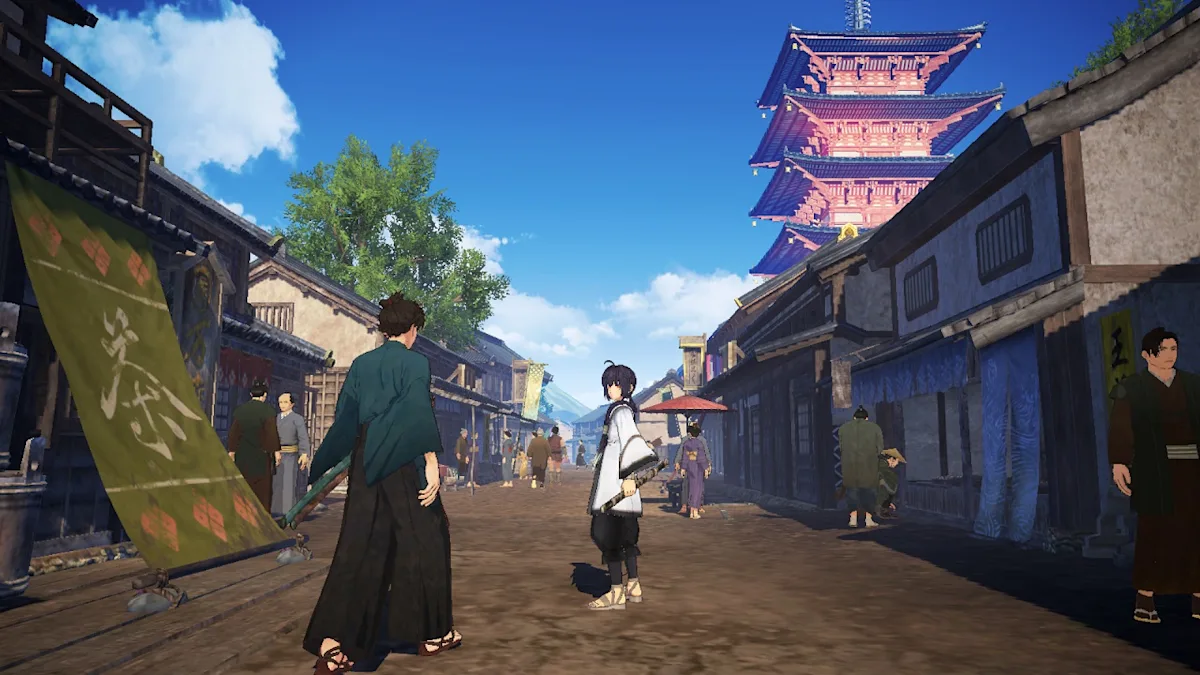
Exploration moves between the livelier side of Edo and calmer surrounding spaces. Bustling streets provide a contrast to quieter landscapes, helping the setting feel broader than a sequence of combat arenas. The game’s presentation uses this contrast to support its tone: ordinary movement through Japan’s towns and paths can sit close to the possibility of betrayal or battle.
The setting also gives the Fate framework a distinct identity. Rather than treating the historical backdrop as a simple stage for familiar series ideas, the game positions Masters and Servants within Edo’s streets, landscapes, and political uncertainty. New adversaries and recognizable figures from the wider Fate multiverse appear as Iori and Saber search for answers about the ritual and its true purpose.
For players interested in a Fate action RPG setting with a strong sense of place, the appeal lies in that collision of period atmosphere and fantasy conflict. Edo is presented as a place worth moving through, not only a location between major encounters.
How Iori and Saber Work Together in Combat
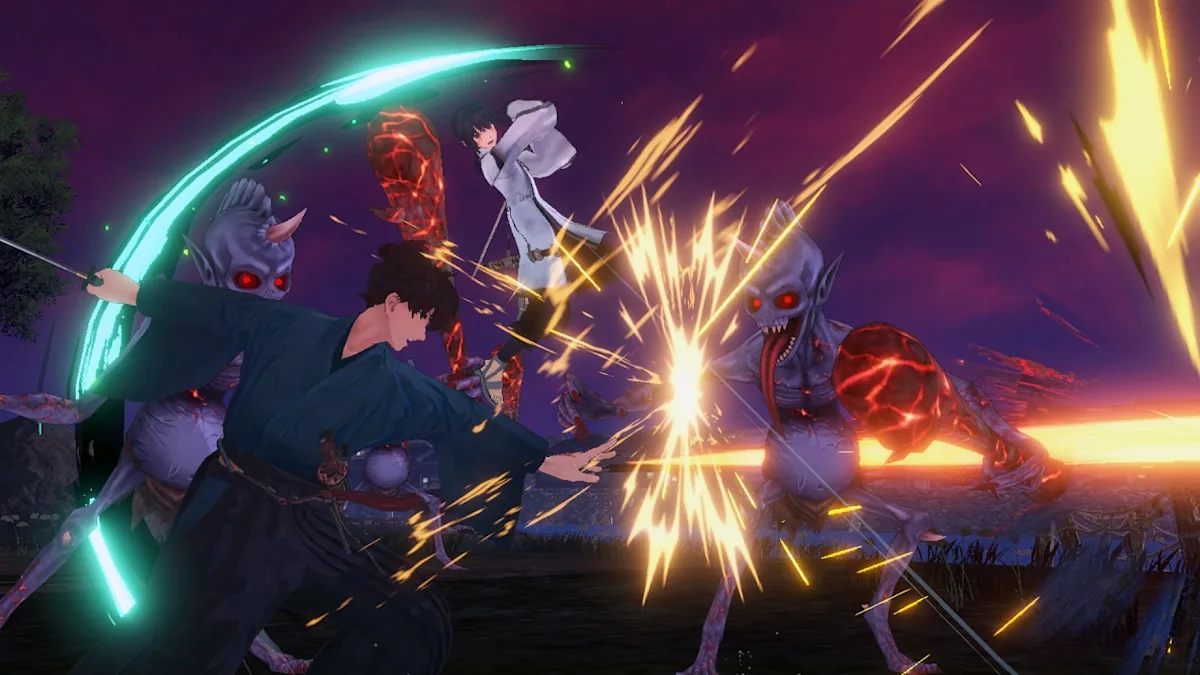
Combat is primarily built around controlling Iori, but Saber’s presence changes the rhythm of each encounter. Iori is the active fighter for much of the action, while Saber can be directed to support him with commands. This creates a relationship in which positioning, timing, and the use of each character’s abilities matter together.
The Master-and-Servant structure gives battles a strategic layer beyond simple attacks. Iori’s direct swordplay must be balanced with decisions about when Saber should assist, pressure enemies, or contribute to a larger offensive sequence. The player is not simply managing two independent fighters; the design emphasizes their partnership.
This arrangement suits the story’s central premise. Iori and Saber are an unlikely pair forced to survive the Waxing Moon Ritual, and their bond is reflected in the way encounters ask the player to make use of both characters. Saber is powerful, but Iori remains essential because he is the character through whom the player regularly engages with enemy attacks, movement, and combat styles.
The result is a combat flow that can shift between close-range action and companion-based tactics. Players who enjoy learning how two connected characters complement one another will find the Iori-and-Saber dynamic especially relevant.
Action RPG Systems: Combat Styles, Skills, and Equipment
Fate/Samurai Remnant combines hack-and-slash energy with RPG progression. Iori can make use of different combat styles, and success depends on understanding how those styles and his available abilities fit particular encounters. Battles reward active engagement rather than passive repetition, especially when enemies demand careful defensive play.
Progression gives Iori room to develop over the course of the adventure. Skills can be upgraded, allowing players to improve the tools they bring into harder fights. Equipment also matters: obtaining new weapons or enhancing existing gear can have a meaningful effect on performance.
These systems help the game maintain momentum between story scenes and combat challenges. Exploration, encounters, skill development, and equipment improvement form a steady loop. Players are encouraged to revisit their approach as the opposition becomes more demanding, rather than relying on the same tactics throughout.
Fate Samurai Remnant Switch NSP XCI therefore suits players looking for action that retains an RPG sense of growth. The immediate appeal is in sword combat and commanding Saber, while the longer-term engagement comes from refining Iori’s capabilities and preparing more deliberately for difficult opponents.
Noble Phantasms and High-Stakes Boss Encounters
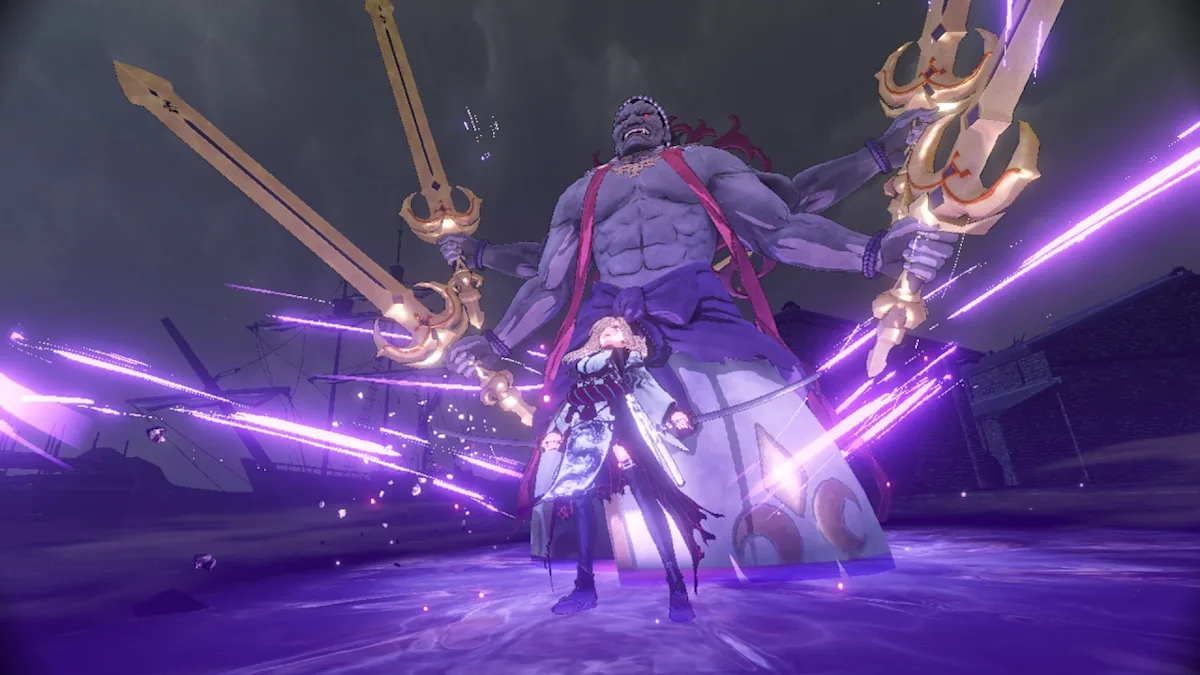
Powerful abilities are central to the game’s larger confrontations. Noble Phantasms provide spectacular, high-impact attacks that can help turn the momentum of a fight. Their role reinforces the Fate series connection while giving combat an added sense of escalation when ordinary exchanges are no longer enough.
Boss encounters are designed to test more than raw aggression. Timing, tactical adjustment, and familiarity with Iori’s tools become increasingly important against formidable enemies. A difficult opponent can expose poor defensive habits, ineffective use of Saber’s support, or neglected progression choices.
That pressure gives major battles their weight. Players need to recognize openings, avoid incoming attacks, and decide when to commit their stronger skills and abilities. Noble Phantasms are potent, but they belong within a broader strategy built on movement, defense, and coordination.
The game is consequently a suitable match for Fate followers who want the series’ Servant powers expressed through active combat, as well as action RPG players who enjoy bosses that demand practice and a more thoughtful approach.
4 Combat Priorities for New Players
- Learn the parry window. Practice parrying early, since well-timed defense can reduce incoming damage and create an advantage against stronger opponents.
- Keep dodging active. Dodging is essential when enemy pressure is too dangerous to meet directly. Movement and timing are often safer than forcing an attack.
- Upgrade Iori regularly. Check Iori’s skills as challenges increase. Improving his abilities helps ensure that his combat options keep pace with tougher encounters.
- Enhance equipment. New weapons and improved existing gear can noticeably affect combat performance, making equipment attention a practical part of preparation.
Those four habits support the game’s wider combat design. Strong results come from a mix of sharp reactions, steady character growth, and effective use of the Iori-and-Saber partnership rather than from attacking without pause.
Recommended Similar Games
 Trine 5: A Clockwork Conspiracy Switch NSP XCIView Game
 STAR WARS Dark Forces Remaster Switch NSPView Game
 Resident Evil 5 Switch NSP XCIView Game
 Is It Wrong to Try to Pick Up Girls in a Dungeon? ~Fullland of Water and Light~ Switch NSPView Game
 Midnight Fight Express Switch NSPView Game
 KILL IT WITH FIRE 2 Switch NSPView Game
