Corpse Party Blood Drive Switch NSP
Report Link Error
Select the broken download file, then submit the report.
Screenshots
About Game
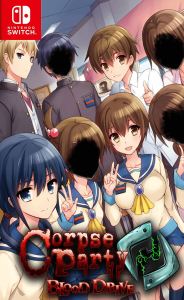
Corpse Party Blood Drive Switch NSP refers to the Nintendo Switch release of a horror-focused adventure game that arrived on October 10, 2019. Published by XSEED Games and developed by 5pb, this English-language release was made available in Europe and the USA, bringing a grim chapter of the series to Switch with a mixture of visual novel storytelling, exploration, puzzles, and survival pressure.
What Corpse Party: Blood Drive Brings to Nintendo Switch
Corpse Party: Blood Drive is an adventure game built around a supernatural horror narrative. Its Switch release places the series’ disturbing setting, Heavenly Host Elementary School, in a format centered on tense movement through dangerous spaces as well as long, dialogue-led story scenes. The game follows the tragic aftermath of earlier events rather than presenting a detached tale, making its emotional weight closely tied to grief, guilt, and the consequences of desperate choices.
For Nintendo Switch players in Europe and the USA, the release offers English text and dialogue-driven scenes that carry much of the story’s momentum. XSEED Games and 5pb frame the experience less as an action game than as a sustained horror adventure: progress depends on noticing details, following leads, collecting useful objects, and enduring the uncertainty of each new corridor or room.
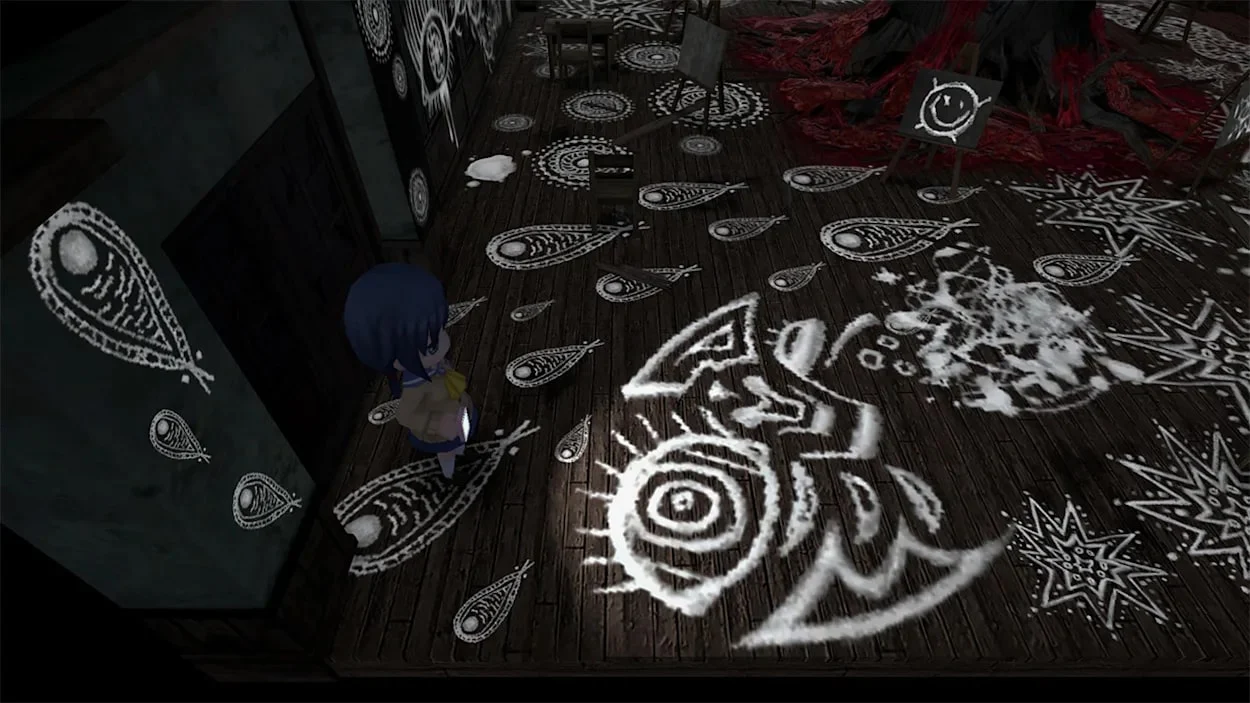
The Switch version’s presentation also reflects a notable change for the series. Instead of relying only on earlier sprite-based exploration, it uses fully rendered environments to give Heavenly Host and other locations a more immediate physical presence. That shift informs both its scares and its navigation.
Ayumi Shinozaki’s Search for the Book of Shadows
The Corpse Party Blood Drive story begins after the events of Corpse Party: Book of Shadows. Ayumi Shinozaki is struggling with the loss of her friends and the aftermath of the demonic Sachiko Everafter. Her grief becomes the force behind a dangerous objective: she seeks the Book of Shadows, an ancient cursed tome she believes may allow her to revive those who died.
That premise gives the horror a personal focus. Ayumi is not simply investigating a haunted school from a safe distance; she is pursuing a chance to undo a loss, even as the source of that hope carries its own threat. Her search leads further into the supernatural world connected with Heavenly Host Elementary School and its hostile spirits.
The Book of Shadows is therefore more than a plot device. It represents the temptation to reverse tragedy, while the surrounding danger repeatedly suggests that cursed artifacts demand a cost. Sacrifice, fragile lives, and difficult choices are all part of the pressure placed on Ayumi and the other characters. Encounters with terrifying entities push the story toward psychological horror as much as immediate supernatural danger.
From Sprite-Based Exploration to 3D Environments
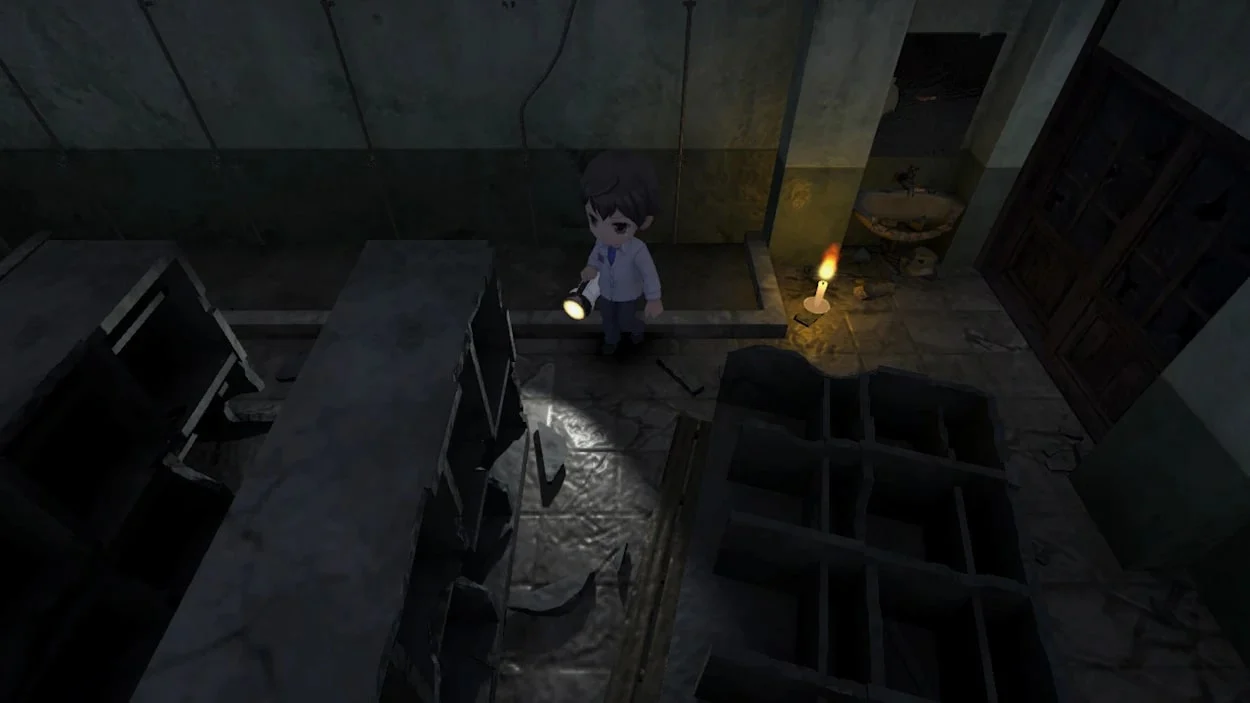
Corpse Party Blood Drive 3D marks a change from the series’ earlier 2D sprite-based exploration. Locations are fully rendered, allowing rooms, hallways, and other spaces to be explored with a different sense of scale. Heavenly Host Elementary School remains central to the experience, but its familiar menace is expressed through 3D horror environments rather than sprite-led movement.
Fixed camera angles are an important part of that approach. They do not simply show the environment; they limit what can be clearly seen and help turn ordinary navigation into an uneasy process. A corridor may feel narrower when the viewpoint holds back information, while an unseen edge of the screen can make the next step feel uncertain. This use of framing supports the game’s claustrophobic atmosphere and sense of impending danger.
The change in perspective does not remove the story-driven identity of the series. Instead, it gives exploration a more tangible visual role. Players move through spaces that feel designed to conceal threats, clues, and routes forward, with the camera helping each location retain a disorienting, enclosed character.
Visual Novel Storytelling Meets Adventure-Game Exploration
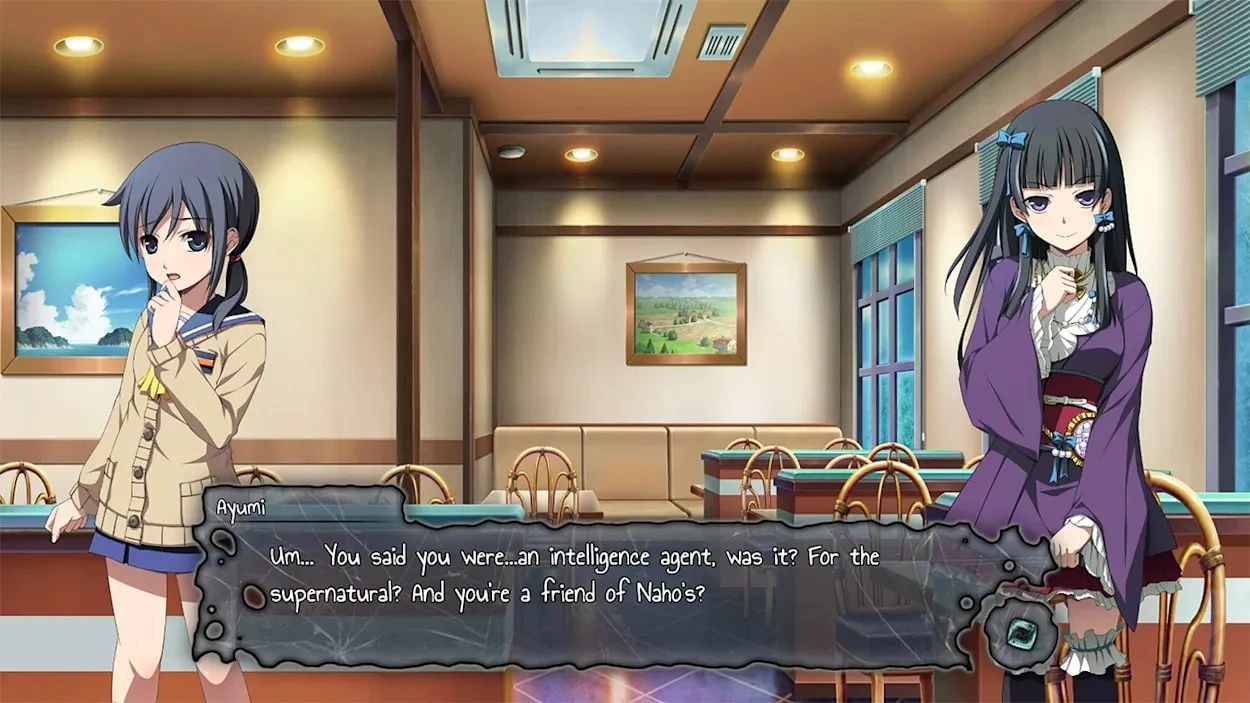
The game blends detailed visual novel sequences with environmental investigation. Dialogue scenes advance the emotional narrative and reveal the stakes surrounding Ayumi’s search, while exploration sections ask players to examine their surroundings carefully. The result is a structure that alternates between absorbing story information and acting on it in dangerous locations.
Progression depends on several connected tasks. Important items must be gathered, hidden objects can reveal paths or information, and puzzles block access to new areas. These are not separate distractions from the horror; they encourage close attention to rooms that are already unsettling. A useful object may be easy to overlook, and a puzzle can extend the time spent in a place where hostile spirits or traps remain a concern.
- Observe closely: Environmental details can point toward items, hidden objects, and possible solutions.
- Collect essentials: Crucial items are needed to open new paths and continue the investigation.
- Read the situation: Visual novel scenes provide the story context behind the characters’ increasingly difficult circumstances.
- Work through obstacles: Horror puzzles turn progression into a deliberate process rather than a straight route forward.
- Live with choices: Actions and decisions can lead to multiple endings, giving later playthroughs a reason to revisit key moments.
Multiple endings add replay value without changing the game’s central mood. Since choices and actions affect where the story leads, players who reach one outcome can return to see how different decisions alter the result. That structure suits a narrative concerned with consequences, particularly when characters are already caught in a cycle of loss and supernatural danger.
Health, Sanity, and the Pressure to Survive
Exploration is supported by survival systems that track character health and sanity. Both matter to staying alive in the world of Corpse Party Blood Drive Switch NSP, where danger does not come only from story revelations. Threatening spirits and hazardous traps make movement through the environment a practical concern as well as an atmospheric one.
This creates a particular kind of survival horror tension. Players are asked to keep investigating even when the setting signals that caution is necessary. Health and sanity management reinforce the vulnerability of the cast, while traps and supernatural enemies require stealth and quick thinking to avoid disaster. The game’s fear is not limited to a sudden shock; it is also found in the sustained awareness that a mistake can have consequences.
That pressure fits the narrative’s bleak emotional direction. As Ayumi pursues the Book of Shadows, the game repeatedly connects personal desperation with an environment that offers little safety. Survival becomes part of the dramatic stakes, not merely a mechanical requirement.
Why Flashlight Exploration Makes Every Dark Corridor Tense
The flashlight mechanic gives dark exploration a direct role in the game’s horror. In poorly lit areas, it helps players navigate, but the need for light also emphasizes how much of the environment remains concealed. A flashlight can reveal a route, an object, or a disturbing detail, yet it cannot make a dangerous location feel secure.
Combined with fixed camera angles and fully rendered spaces, this limited visibility heightens suspense. Dark corridors become places to scan slowly rather than rush through, especially when spirits, traps, and hidden discoveries may be nearby. The mechanic supports the atmosphere without separating it from progression: seeing clearly is part of finding the next clue and surviving long enough to use it.
For players drawn to English-language Nintendo Switch horror that favors story, investigation, and oppressive mood over straightforward action, Corpse Party: Blood Drive is best suited to an audience comfortable with supernatural dread, disturbing subject matter, puzzle-solving, and a narrative shaped by painful choices.