Batman: The Enemy Within Switch NSP

Report Link Error
Select the broken download file, then submit the report.
Screenshots

About Game
Batman: The Enemy Within Switch NSP brings Telltale’s choice-led approach to Gotham City, placing players in the divided lives of Bruce Wayne and Batman. Released for Nintendo Switch on October 2, 2018, this Adventure and Role-Playing title frames its conflict through conversations, investigations, moral pressure, and action scenes where decisions can reshape relationships and outcomes.
Batman: The Enemy Within on Nintendo Switch: A Choice-Driven Gotham Story
Developed and published by Telltale, Batman: The Enemy Within is built as an interactive drama rather than a traditional combat-focused superhero game. Its story moves forward through dialogue selections, detective work, environmental examination, and quick-time events. The result is a Telltale adventure in which the player’s interpretation of Bruce Wayne matters as much as Batman’s public actions.
Gotham is not presented as a problem with a single clean solution. Bruce must contend with personal alliances, political pressures, criminal threats, and the expectations placed on Batman. A response that protects one relationship may complicate another, while a choice made in Bruce Wayne’s civilian role can affect how Batman is regarded in the city.
The game’s version 1.0.3 is listed with English, French, German, Portuguese, Russian, Simplified Chinese, Spanish, and Traditional Chinese language options. Its 11GB file size and Nintendo Switch firmware requirement of 9.2.0 are part of the supplied release metadata. More importantly for the experience itself, its progression rests on following a branching crime story and living with the uncertainty behind each major decision.
The Pact and Gotham’s Expanding Web of Crime
The central threat emerges through The Pact, a new criminal organization whose arrival pushes Gotham into a deeper atmosphere of intrigue and disorder. Their presence draws Batman into a web where corruption, loyalty, and deceit overlap. Investigations do not simply reveal isolated crimes; they expose further layers of the city’s instability.
The Batman The Enemy Within story repeatedly returns to the question of trust. Bruce must decide who deserves access to his confidence and when cooperation may become compromise. The conflict has consequences beyond an individual case, because the people around Batman also carry their own interests, suspicions, and agendas.
This sense of pressure gives Gotham City a tense dramatic role. The city’s needs are immediate, but the right path is often unclear. Decisions can demand sacrifice, and the narrative places moral limits around the idea of justice rather than treating every problem as something Batman can solve through force.
Bruce Wayne and Batman: Decisions Across Two Identities
The dual identity gameplay is one of the game’s most important ideas. Players spend time acting as both Bruce Wayne and Batman, with each role providing a different way to approach danger. Batman can investigate crime scenes and confront threats directly, while Bruce navigates relationships that may be shaped by reputation, vulnerability, and personal history.
Batman choices are therefore not confined to the mask. A decision made in civilian clothes can change how other characters view Bruce, Batman, or both. That split creates a steady tension: Gotham needs its protector, yet Bruce’s personal life and connections can also influence the wider conflict.
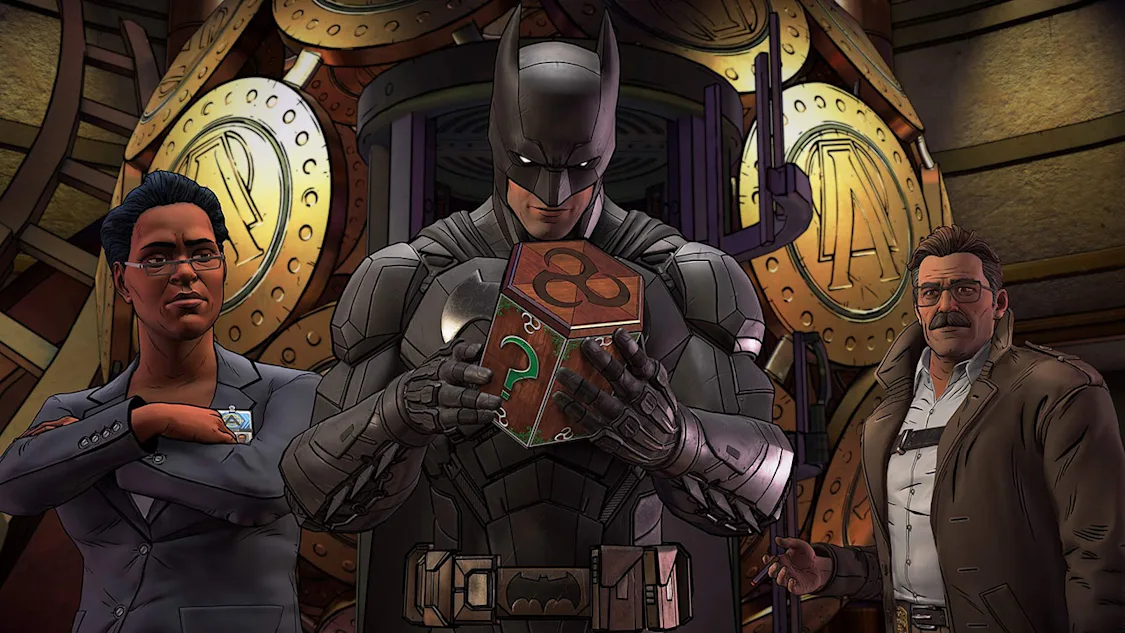
Relationships with Commissioner Gordon and Amanda Waller are part of this pressure. The story also explores the sacrifices Bruce makes for Gotham, asking players to weigh personal loyalties against a larger responsibility. There may not be a universally correct answer; the game’s drama comes from committing to an answer and seeing how people respond.
Riddler, Harley Quinn, and Gotham’s Dangerous New Adversaries
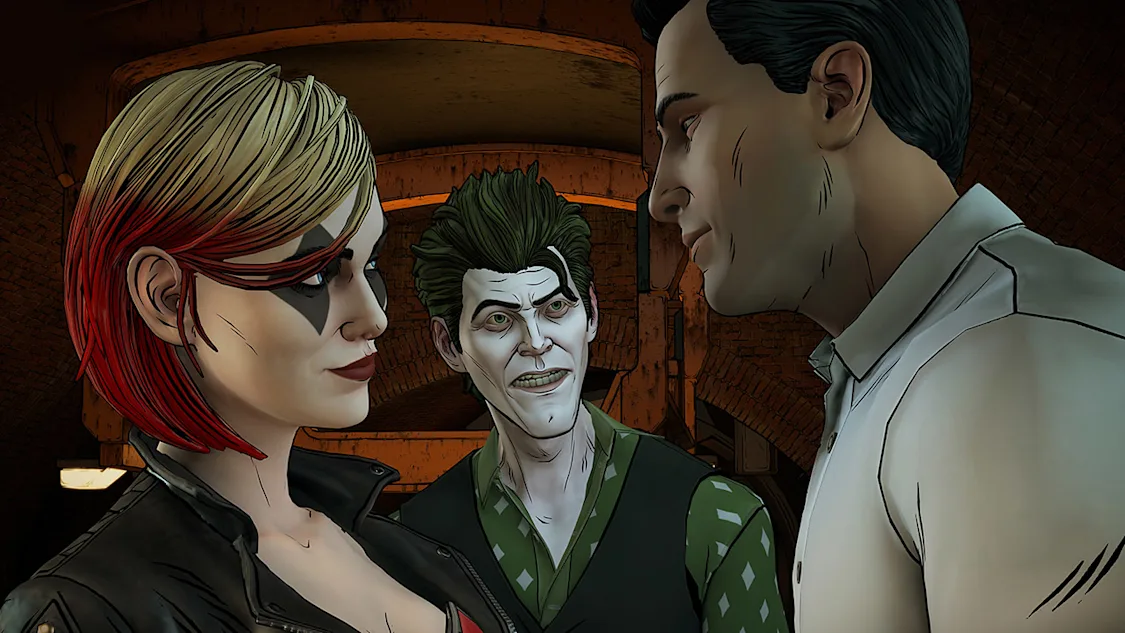
Riddler and Harley Quinn add further complications to the criminal conflict. Their agendas deepen the sense that Gotham’s threats are interconnected rather than neatly separated. Each new adversary contributes to the game’s dangerous mood of uncertainty, making investigation and judgment increasingly important.
John Doe also occupies a significant place in the story. Introduced as a patient from Arkham Asylum, he is familiar but unsettling, and the player’s interactions with him influence his transformation toward the Joker. That relationship reinforces the game’s focus on consequence: conversation and trust can carry weight long after an immediate scene has ended.
These Batman villains are not merely obstacles between action sequences. They complicate Bruce’s choices, challenge his assumptions, and make it harder to judge who is manipulating whom. The game’s criminal conflicts gain force from that uncertainty, especially when apparent alliances begin to feel fragile.
Quick-Time Events and Interactive Drama in Batman: The Enemy Within
Telltale Games structures the experience around interactive drama. Dialogue decisions shape conversations and character perceptions, while investigation scenes ask players to inspect environments, locate clues, and connect evidence before reaching deductions. These detective segments slow the pace in useful ways, giving the player room to consider what the scene is actually revealing.
Quick-time events provide the action-oriented counterpart. During these sequences, precise button prompts are used to navigate dynamic confrontations. They keep Batman physically involved in the story while preserving the game’s broader emphasis on narrative participation.
The combination of investigation, dialogue, and quick-time events supports a progression style driven by scenes and consequences. Players move from one pressure point to another: a difficult conversation, a crime scene, an ethical dilemma, or an action sequence. For players interested in a story-first Batman experience, that structure is likely more relevant than mastery of a large combat system.
5 Thoughtful Ways to Approach Key Choices and Investigations
- Pause before speaking. Dialogue selections can affect relationships and the wider plot, so consider the likely cost of a response before committing to it.
- Read the room. Watch character reactions and listen for changes in tone. These cues can suggest how a decision has landed or hint at future complications.
- Inspect every clue. During detective scenes, take time to examine the available evidence before linking clues or settling on a conclusion.
- Resist rushed deductions. The most obvious answer is not necessarily the only useful one. Let the details of a crime scene guide the reasoning process.
- Replay with purpose. Replaying chapters can reveal alternate paths and different outcomes, making replay chapters valuable for players curious about choice consequences.
For an audience drawn to character-driven superhero stories, branching dialogue, and investigative tension, Batman: The Enemy Within Switch NSP offers a Gotham narrative where decisions are part of the drama rather than a brief interruption between scenes. Its strongest pull lies in the ongoing effort to decide what Bruce Wayne and Batman should be willing to risk for the city.