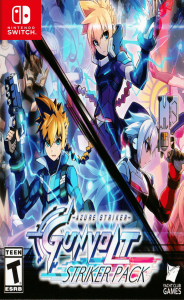
Azure Striker GUNVOLT: STRIKER PACK Switch NSP
Report Link Error
Select the broken download file, then submit the report.
Screenshots
About Game
Azure Striker GUNVOLT: STRIKER PACK Switch NSP brings together two connected 2D action games built around speed, precision, and electrical combat. Developed and published by Inti Creates, this Nintendo Switch collection pairs Azure Striker GUNVOLT with Azure Striker GUNVOLT 2, giving Gunvolt’s story room to develop across two demanding adventures. Released on August 31, 2017, it is an action game collection that moves quickly but still places weight on its characters’ opposing beliefs and the dangers facing adepts.
What Azure Striker GUNVOLT: STRIKER PACK Includes
The collection contains Azure Striker GUNVOLT and Azure Striker GUNVOLT 2, making it a useful way to experience the connected story in sequence. The first game introduces Gunvolt, an adept capable of manipulating electricity, during his work with the anti-Sumeragi organization QUILL. His assignment is tied to protecting adepts from the Sumeragi Group, but events surrounding a girl named Joule reveal a larger conspiracy and force him to reconsider where his loyalties belong.
The second game continues from the consequences of that conflict rather than treating the first adventure as a closed chapter. That continuity gives the package more than a simple two-game format: Gunvolt’s situation, the threats around him, and the clash of viewpoints all carry forward. The two titles also share a fast-moving platforming foundation, so the collection offers a consistent action-game identity while allowing the sequel to add another playable perspective.
For players drawn to challenging stage runs, boss encounters, and replayable combat systems, the appeal is in seeing how familiar ideas are pushed further in the follow-up. Gunvolt’s electric abilities remain central, while the sequel’s additional character changes how movement and enemy encounters can be approached.
How Azure Striker GUNVOLT 2 Expands the Narrative
The Azure Striker GUNVOLT 2 story raises the stakes with the arrival of Eden, an organization seeking to eradicate adepts. That threat directly affects Gunvolt, whose own abilities and past conflicts place him in the middle of a struggle over the future of people like him. The dystopian setting remains important here: power, technology, and distrust are not just background details, but pressures that shape the characters’ choices.
This Gunvolt sequel also gains momentum from the fact that its conflict is not viewed through Gunvolt alone. Copen enters the story with his own reasons for fighting, and those motivations frequently oppose Gunvolt’s ideals. Their encounters give the narrative a more conflicted shape, with both characters tied to the same wider crisis but approaching it from very different positions.
That makes the collection’s order meaningful. Beginning with Gunvolt’s mission against Sumeragi and continuing into Eden’s campaign against adepts provides a clearer sense of the consequences surrounding him. The story is carried by confrontations, revelations, and the tension between characters who do not share the same answer to the world’s problems.
Copen’s Playable Style and Conflicting Perspective
Copen is more than a narrative counterweight in Azure Striker GUNVOLT 2. As a playable human scientist, he introduces a distinct combat style that expands the game’s variety. Gunvolt relies on electrical assaults and the Flashfield system, while Copen is defined by aerial mobility and weapon-copying options gained from enemies. That difference matters in motion: his abilities encourage players to look at encounters and routes through stages in another way.
Copen’s copied abilities can also transform into new attacks, creating room to experiment during combat. His style supports replay value because the sequel is not simply asking players to repeat Gunvolt’s methods with a different character model. It asks for adjustment. Mobility, copied powers, and his own motivations all make Copen feel connected to the same conflict without mirroring Gunvolt exactly.
The result is a useful contrast between two approaches. Gunvolt’s powers are tied to his identity as an adept, while Copen brings a human scientist’s perspective and a direct ideological conflict with him. Players interested in action games with alternate playable styles will find that the sequel’s second viewpoint affects both its story and its moment-to-moment play.
The Flashfield System and Electrifying Combat
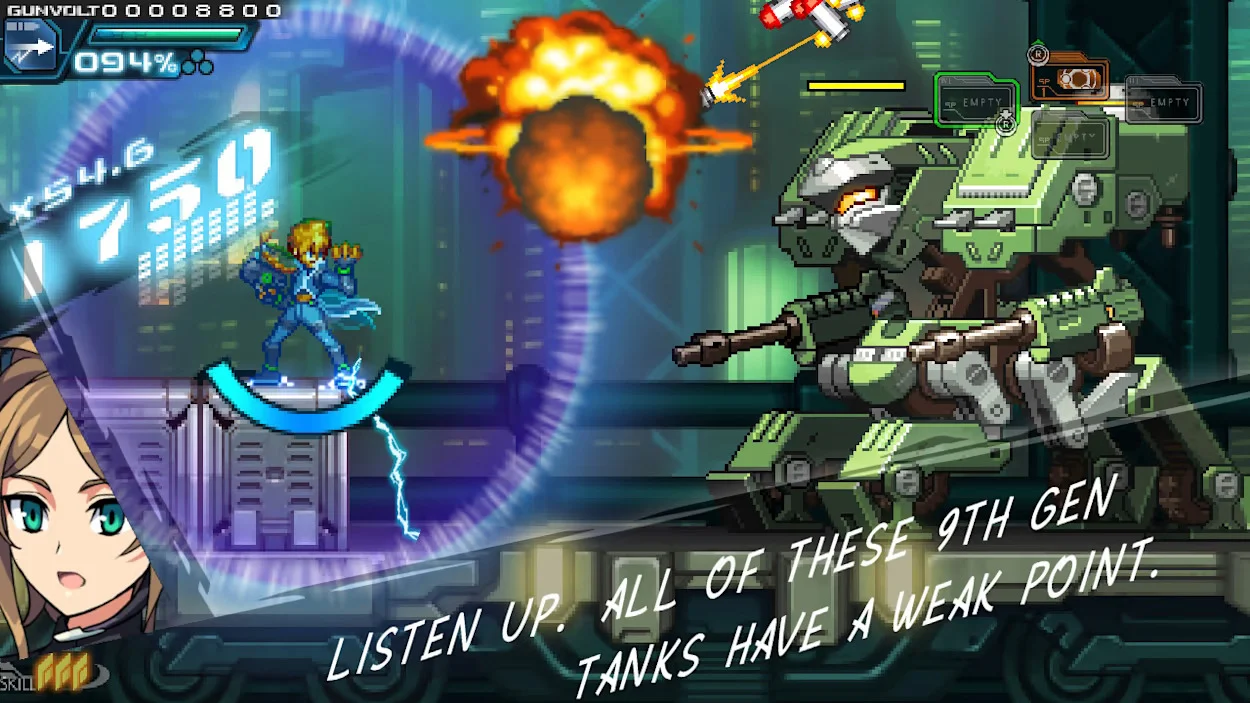
Gunvolt’s Flashfield is the key combat mechanic across his stages. It lets him target multiple enemies, setting up electrical follow-up attacks that can clear threats efficiently. The system is not only about dealing damage; it rewards players who can maintain a rhythm between movement, targeting, and attacks rather than stopping for every opponent individually.
This focus gives the 2D action combat a sharp, energetic pace. A successful sequence can involve identifying several targets, applying the Flashfield, and turning that setup into a chain of electric attacks. The emphasis is on keeping momentum through an encounter, especially when stages combine enemies with hazards and demanding traversal.
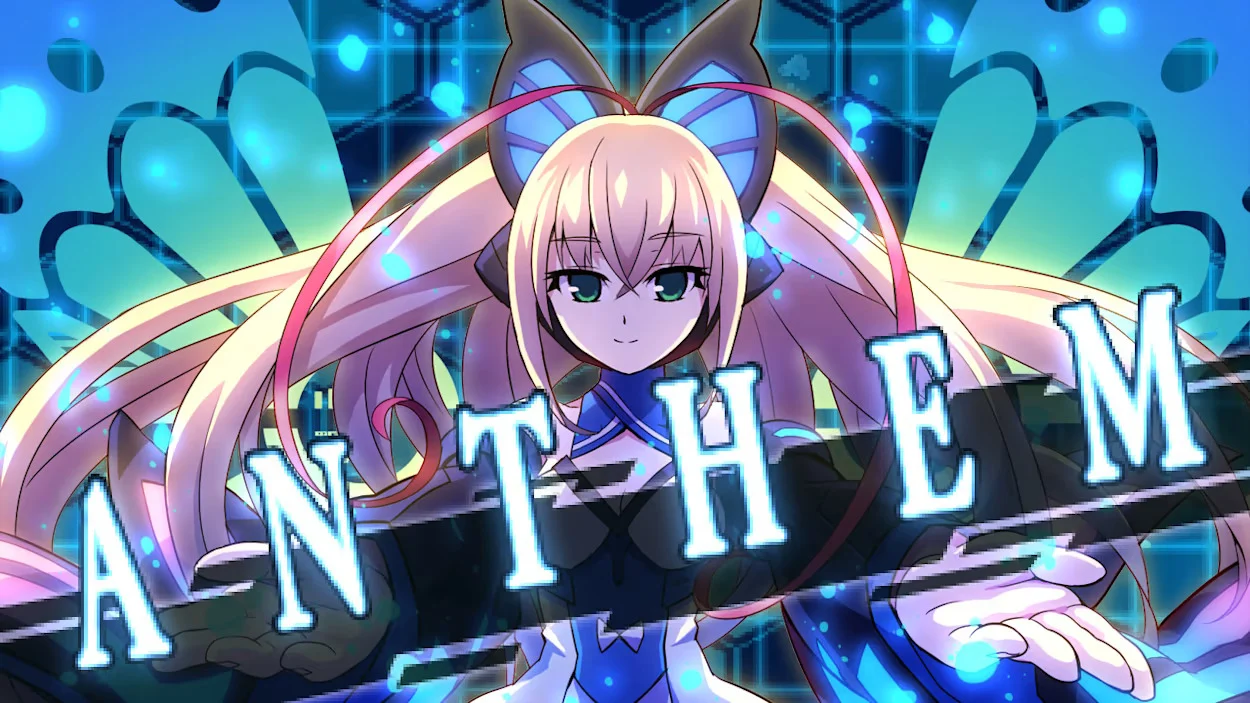
Stylish defeats can earn kudos, which may unlock powerful anthem skills. That adds another reason to pursue clean, efficient combat rather than simply advancing as safely as possible. The system suits players who enjoy refining a route, improving execution, and learning how to move through danger with greater confidence.
High-Speed Platforming Across Hazardous Stages
Movement is just as important as combat in Azure Striker GUNVOLT: STRIKER PACK Switch NSP. Gunvolt dashes, jumps, and shoots through 2D stages that combine enemy pressure with environmental hazards. The controls are built around responsive, fluid movement, making each dash and jump part of both survival and attack flow.
The stages range from futuristic cities to hazardous industrial areas, giving the action a technological, threatened atmosphere that fits the series’ dystopian setting. These locations are not passive scenery. Their hazards require attention while players continue to target enemies and keep a chain going. The best runs depend on reacting quickly without losing track of the stage itself.
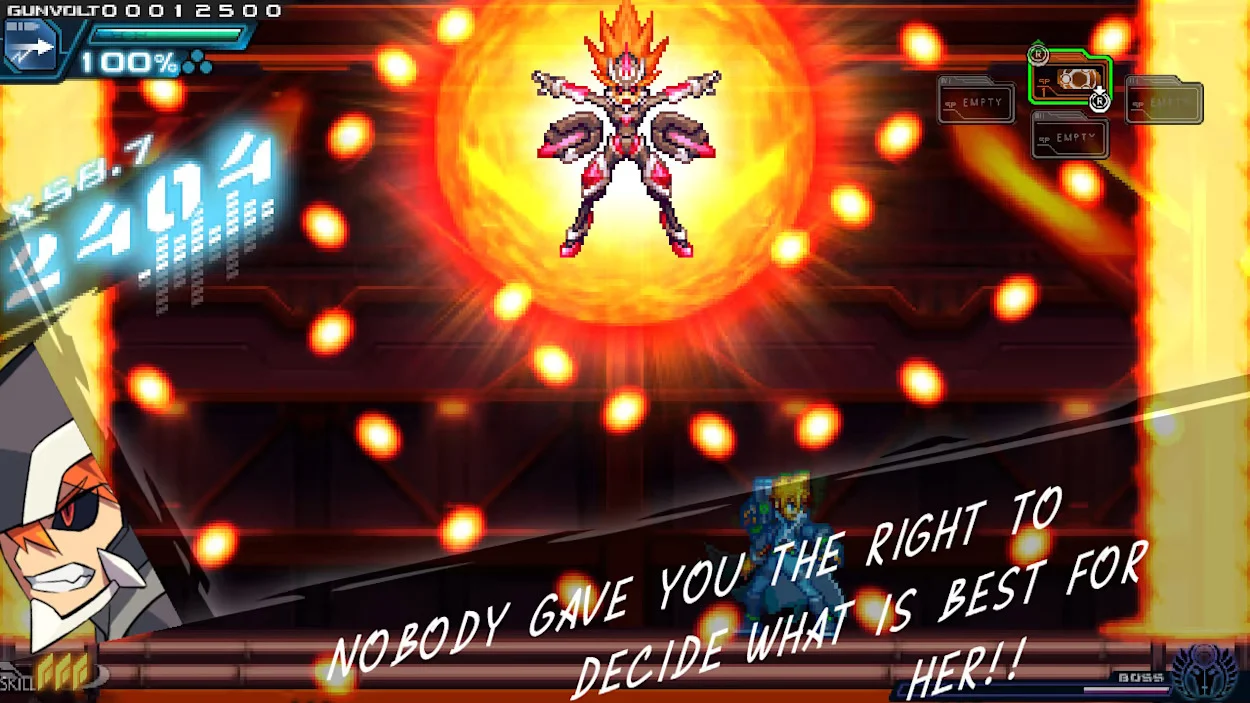
Boss battles add another layer. Each requires its own strategy, encouraging players to study patterns and adapt instead of relying on one approach throughout the collection. The combination of agile platforming, electrical attacks, and varied threats makes the games well suited to players who enjoy high-speed action with systems worth practicing.
5 Gameplay Priorities for Stronger Stage Runs
- Mark several targets. Use Flashfield targeting to prepare electric attacks against multiple enemies instead of treating every encounter as a separate exchange.
- Keep attacks connected. Chaining attacks supports the fast rhythm of Gunvolt’s combat and rewards efficient movement through crowded sections.
- Protect your momentum. Dashing, jumping, shooting, and avoiding environmental hazards all work together; steady movement helps maintain combat efficiency.
- Read each boss. Boss battles call for individual strategies, so adjust your timing and approach when a familiar attack pattern is not enough.
- Test Copen’s options. In the sequel, experiment with Copen’s aerial mobility and copied enemy abilities to discover attacks that fit the situation.
With support for English, Japanese, Taiwan, and Chinese, the collection presents two linked action games for players who value fast 2D platforming, tactical combat flow, and a story shaped by competing perspectives.