ARMS Switch NSP XCI
Report Link Error
Select the broken download file, then submit the report.
Screenshots
About Game
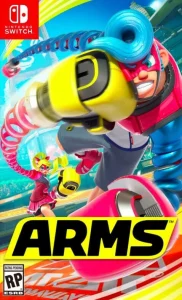
ARMS Switch NSP XCI refers to Nintendo’s colorful fighting game, released on June 16, 2017. Developed and published by Nintendo, ARMS takes a deliberately unusual route through the genre: its competitors do not rely solely on close-range strikes, but on spring-loaded arms that can stretch across the arena. That single idea gives each encounter a lively sense of distance, movement, prediction, and counterplay.
ARMS on Nintendo Switch: A Distinctive Take on Fighting Games
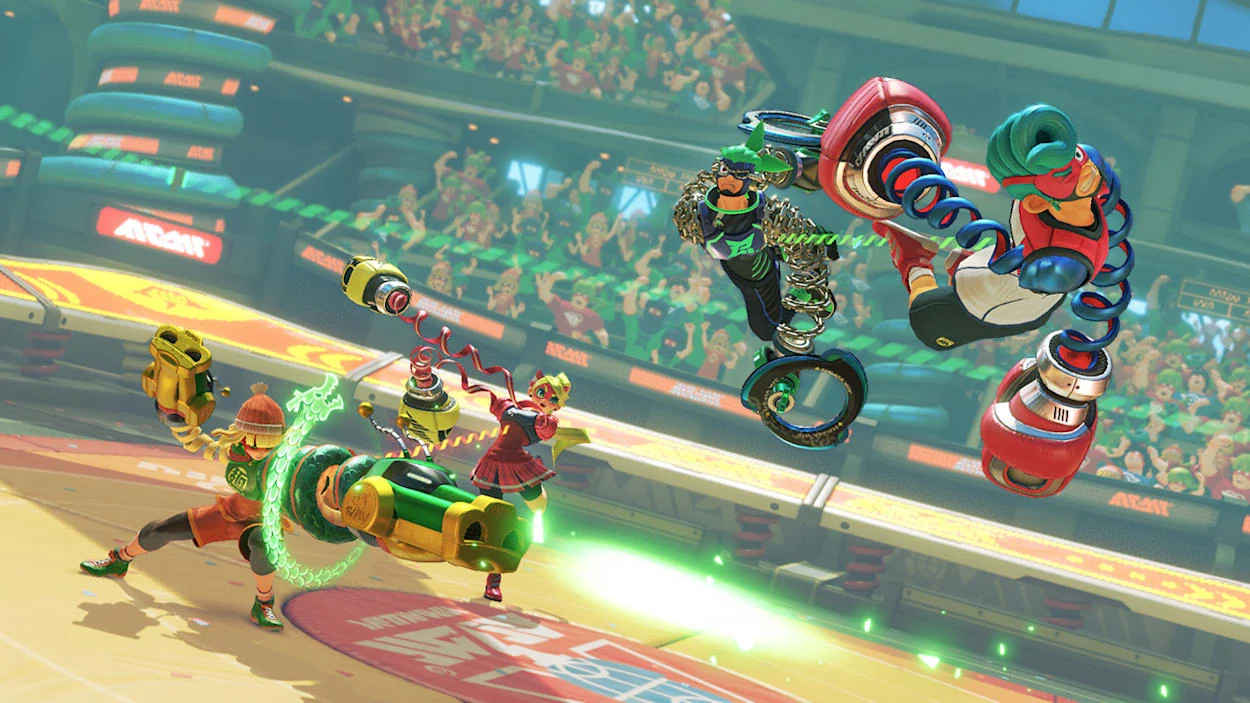
ARMS is a fighting game built around a simple but flexible concept. Fighters can punch, block, dash, jump, dodge, and grab, yet their attacks travel outward on extendable arms rather than ending at ordinary punching range. The result is a contest that asks players to read space differently. A fighter can pressure from afar, curve an attack toward a moving target, or reposition before committing to another strike.
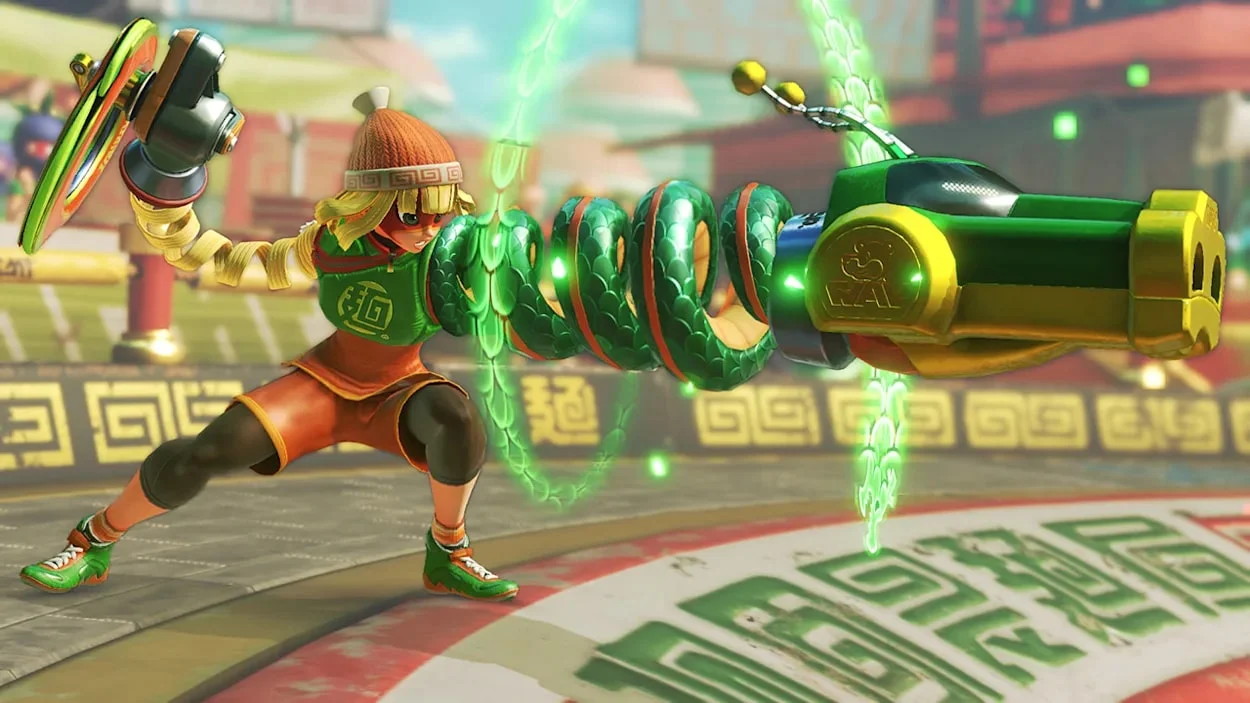
The action has an energetic, bouncy character, but it is not just about throwing punches first. Different fighters have their own attributes and signature ARMS, while players can equip a different ARM on each hand. Those pairings create room for experimentation: one hand may suit one range or situation, while the other can support a different approach. The game supports both Joy-Con motion controls and traditional button controls, allowing players to choose the control style that feels most comfortable.
Its colorful cast and dynamic arenas give the competition a playful atmosphere, while the combat rewards deliberate decisions. ARMS may look immediately approachable, but its matches develop around range control, timing, and the ability to recognize what an opponent is trying to do.
The ARMS Grand Prix and Its Competition-First Premise
The ARMS storyline is framed by the ARMS Grand Prix, a fighting tournament in which competitors with extraordinary extendable arms pursue the championship. It is not presented as a deeply cinematic narrative. Instead, the tournament provides a light backdrop for the roster and its varied motivations.
Some fighters enter in search of fame or fortune. Others have more personal reasons, including questions connected to the ARMS phenomenon itself. That premise keeps the focus on competition while giving the characters a little context beyond their fighting styles. Matches become a way to encounter the game’s personalities and consider which competitor and collection of ARMS best fits a preferred approach.
The tournament structure also suits the game’s tone. ARMS is interested in the thrill of the contest: the next matchup, the next tactical adjustment, and the effort to become Grand Prix champion. Its setting is vivid without pulling attention away from the mechanics that define every fight.
How Extendable Punches Change Every Exchange
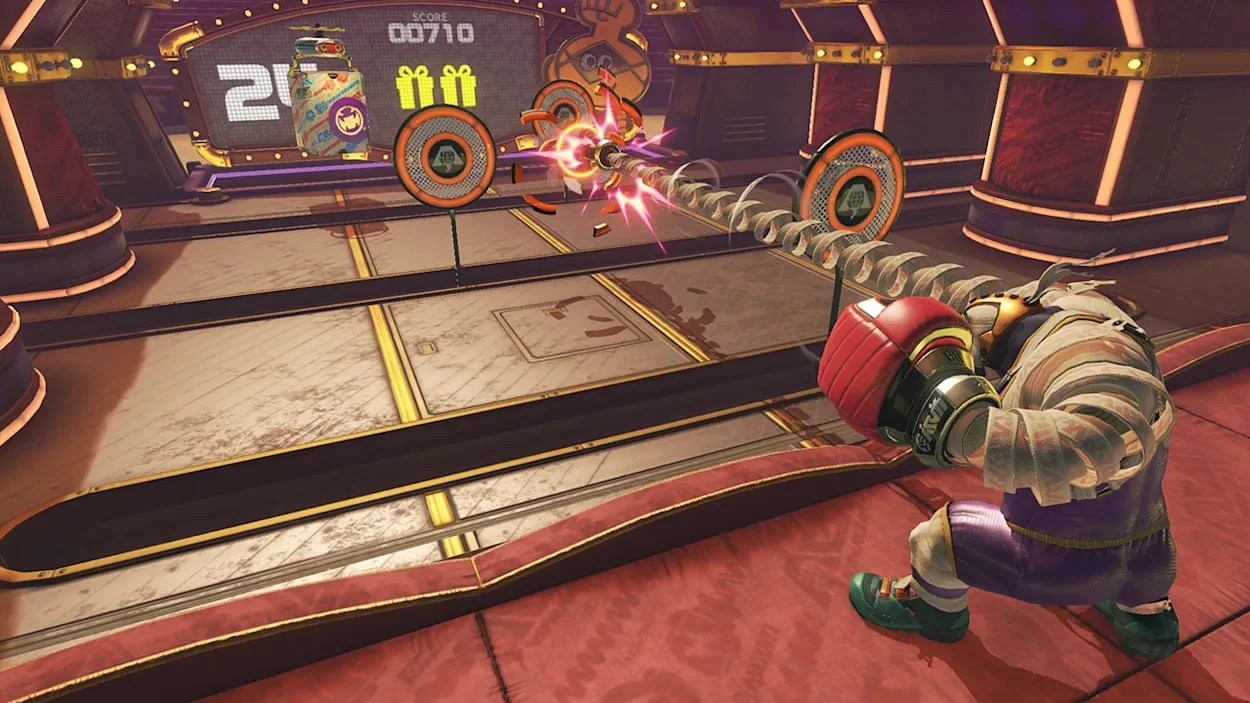
Extendable punches are the foundation of ARMS combat. Instead of simply stepping into an opponent’s space, players send attacks across the arena and must account for where the opponent is now and where they may move next. A punch that travels straight may miss a sidestepping rival; a curved trajectory can help catch that movement, but it must be used with the right timing.
This makes positioning especially important. Staying at a useful distance can create opportunities to attack, while dashing, jumping, and dodging can help avoid an incoming punch. Because attacks extend outward, a missed commitment can leave room for an opponent to respond. The best exchanges are therefore less about random aggression than about managing the space between two fighters.
Grabs add another layer to this range game. They are part of a match plan rather than an afterthought, giving players another tool alongside punches, blocks, and movement. Effective play comes from mixing these options instead of relying on one predictable pattern.
Elemental Effects, Charged Attacks, and Rush Pressure
Each fighter can be customized with two ARMS, and those ARMS can carry elemental properties. This makes the selection on each hand meaningful: players are not merely choosing a visual variation, but building a combination that can support their preferred tactics or respond to an opponent’s habits.
Charged punches increase the importance of preparation and timing. Charging an attack can produce a stronger blow or activate its elemental effect, making a well-chosen strike more threatening than an ordinary punch. The key is finding a safe moment to use that added power rather than treating every opportunity as identical.
ARMS also includes the Rush meter. When full, it allows a Rush attack, a flurry of blows that can rapidly raise the pressure in a match. Because it is a powerful option, its value lies in using it when an opponent is vulnerable or when the moment calls for a decisive burst. Charged attacks, elemental ARMS, and Rush pressure give the game more to consider than simple punching exchanges.
Grand Prix, Versus, and Online Multiplayer Options
ARMS offers several ways to engage with its battles. Grand Prix provides a solo route built around the tournament premise and the pursuit of the championship. It is the natural place to spend time with fighters, learn their feel, and face a sequence of competitive encounters.
ARMS Versus supports direct local competition, making the game’s immediate movement and attack systems easy to put in front of another player. The selectable ARM combinations encourage repeat sessions, since a different pairing can alter how a fighter approaches range and pressure.
Online multiplayer extends that competitive focus beyond local play. Together, these modes give ARMS replay value through practice, matchups, experimentation, and the continuing search for better timing. The game is particularly suited to players who enjoy fighting games with unusual movement rules, tactical customization, and a bright competition-driven mood.
7 Practical Steps to Improve at ARMS
- Watch movement. Pay attention to where an opponent dashes, jumps, and dodges before choosing a punch trajectory.
- Stop random punching. Avoid sending attacks out without a purpose; missed punches can create openings.
- Practice timing. Work on when to punch, charge, block, or move rather than relying on speed alone.
- Test ARM pairings. Equip different ARMS on each hand and learn how their properties fit together.
- Respect range. Some ARMS are better suited to close exchanges, while others help maintain distance.
- Move defensively. Use dashes, jumps, dodges, and blocks to avoid becoming an easy target.
- Plan your grabs. Work grabs into your ARMS strategy so opponents cannot focus only on avoiding punches.
For players approaching ARMS Switch NSP XCI, the most useful mindset is to treat every match as a contest of reads. Learn how a chosen fighter moves, experiment with the two-hand ARM setup, and let positioning guide each decision. The game’s accessible premise becomes more rewarding as its timing, range, and tactical possibilities come into focus.