AI: The Somnium Files Switch NSP

Report Link Error
Select the broken download file, then submit the report.
Screenshots

About Game
AI: The Somnium Files Switch NSP presents a dark detective mystery in which ordinary questioning is only part of the job. Released on September 17, 2019, this Adventure, Puzzle, and Visual Novel from Spike Chunsoft follows an investigation shaped by crime scenes, testimony, concealed memories, and strange dreamscapes. Its tension comes from the gap between what people say while awake and what their minds may reveal under pressure.
A Dark Detective Story Built Around the New World Serial Killings
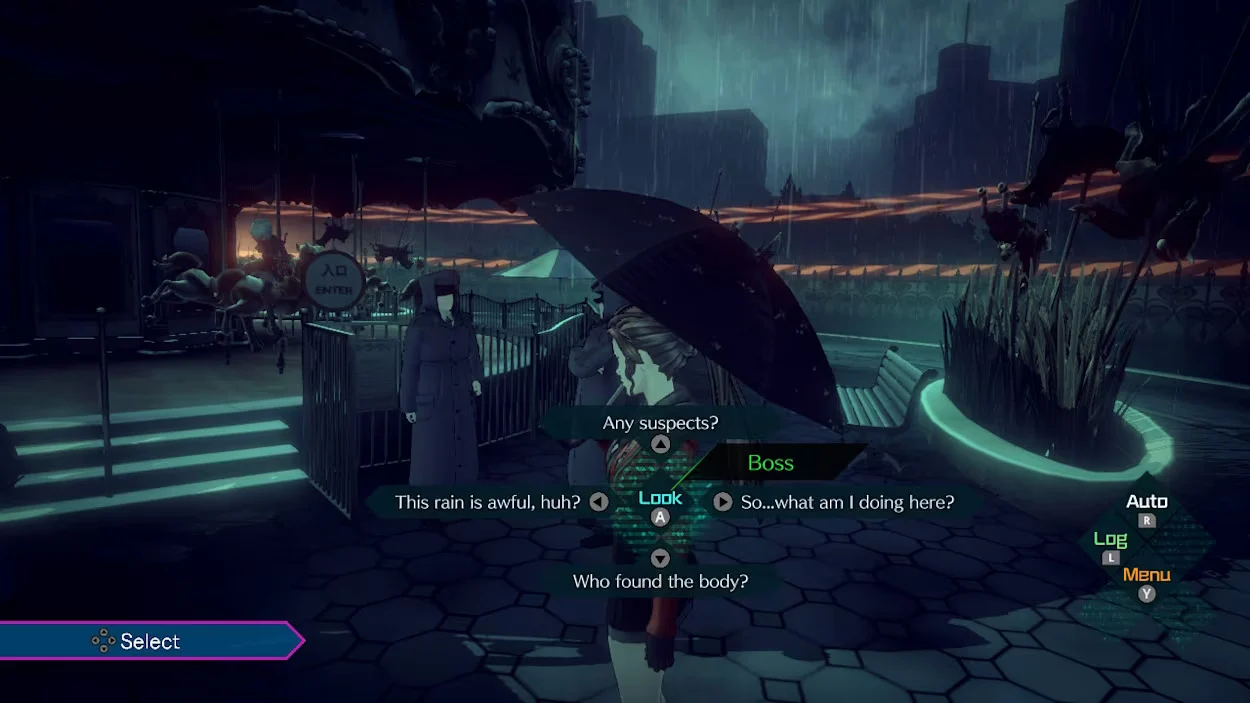
The story is set in November 2019 and follows special agent Kaname Date as he investigates the disturbing New World serial killings. The case begins with the discovery of Shoko Nadami’s body at a decrepit amusement park, an opening that immediately gives the mystery an unsettling tone. The location is not merely a backdrop: it establishes the game’s interest in damaged spaces, fractured memories, and clues that do not arrive in a neat order.
Date’s work expands from that initial discovery into a wider web of suspects, witnesses, testimonies, and hidden connections. The investigation asks players to gather information from people around the case while considering that each account may be incomplete or misleading. That structure supports a story built around revelations rather than simple evidence collection. Details uncovered in one part of the investigation can reshape the meaning of earlier scenes.
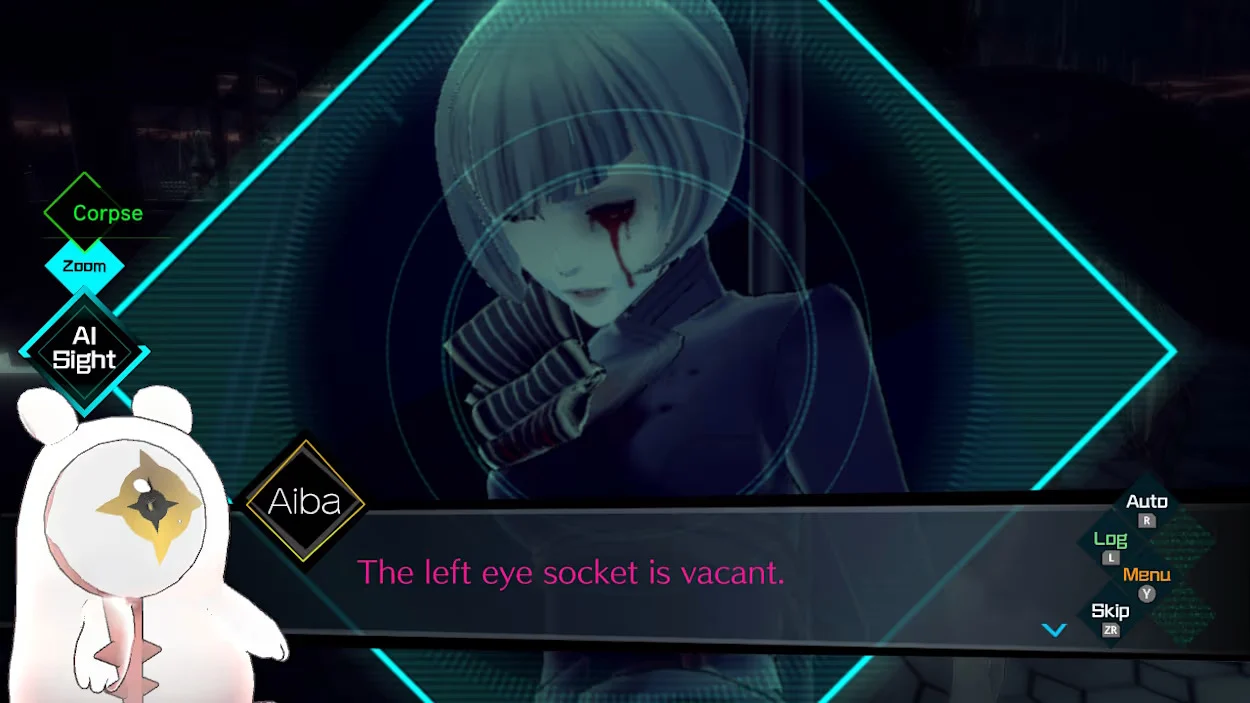
Aiba, Date’s partner housed in his left eye, assists with observations and deductions as the case moves forward. Their partnership gives the detective work a useful contrast: Date pursues leads in the field, while Aiba helps identify points worth examining. The result is a psychological mystery that remains rooted in a serial-killer investigation, even when its methods become increasingly surreal.
How Psyncing Opens the Door to Hidden Memories
Psyncing is the central idea that separates this investigation from a conventional detective story. Date can enter the subconscious minds of suspects and key witnesses through the Psync Machine, searching for memories they may have repressed, concealed, or been unable to explain in ordinary conversation. It is an invasive and unusual form of questioning, but it gives the investigation access to leads unavailable at a crime scene or during an interview.
These subconscious memories are not presented as straightforward recordings of the past. They are filtered through the person being examined, shaped by emotions, fears, associations, and gaps in understanding. A useful clue may appear in an abstract form, while an apparently meaningless object may point toward an important memory. This makes AI: The Somnium Files Switch NSP less about simply finding a highlighted answer and more about interpreting how a mind represents its own experiences.
The Psync system also connects the game’s two major modes. Investigation scenes provide the practical foundation: players inspect locations, talk to characters, and collect information. Psync sessions push beyond those observable facts, allowing Date to follow threads that conventional detective work cannot resolve. The story’s progression depends on both approaches working together.
Somnium Phases and Their Surreal Puzzle Worlds
The dream-world sections are known as Somnium phases. In these sequences, Date enters a witness’s or suspect’s subconscious and explores an environment built from that person’s memories. The spaces are abstract rather than realistic, giving the game room to present clues through strange imagery and unexpected interactions.
Somnium phases turn memory into a puzzle space. Players examine objects, choose interactions, and work through environmental challenges in search of the route that unlocks the next piece of information. The logic can be deliberately unusual because the setting is a dream world. A response that would make little sense in an interview room may become meaningful when it reflects the emotional or symbolic structure of a person’s subconscious.
This surreal investigation format gives the visual novel material a more active rhythm. Dialogue and scene examination establish the case, while the dream-world puzzles require experimentation and attention. The shift in presentation helps preserve the mystery’s atmosphere: players are not only told that a witness has hidden memories, but are asked to navigate the distorted form those memories take.
Why Time Management Matters Inside a Somnium
A Somnium is not an open-ended space. Each action consumes precious seconds, creating a limited-time structure that affects puzzle strategy. Interacting with the wrong object, repeating an unhelpful action, or pursuing a weak lead can leave less time for the choices that matter.
This constraint makes observation important before commitment. Players should look over the available environment, consider Aiba’s guidance, and decide which points of interest are most likely to advance the sequence. The goal is not merely to interact with everything. It is to identify useful actions while preserving enough time to test alternatives if the first approach fails.
The time limit also reinforces the pressure of the broader case. Date is entering another person’s mind to extract information, and the Somnium’s countdown keeps those sequences from feeling detached from the stakes of the investigation. Even bizarre puzzle solutions carry urgency because every decision has a measurable cost.
7 Practical Tips for Solving AI: The Somnium Files Puzzles
- Inspect the scene. During investigation sections, examine crime scenes and locations carefully before moving on. Important clues may come from the environment as well as dialogue.
- Question everyone. Speak with suspects and witnesses to gather testimonies, context, and details that may matter later in the case.
- Follow Aiba’s leads. Pay attention when Aiba identifies points of interest or offers deductions, particularly when a scene presents several possible interactions.
- Test the environment. Somnium puzzles rely on environmental interactions, so try objects that appear connected to the dream’s imagery or the person’s memories.
- Read the dream’s logic. A Somnium is a subconscious space, not a normal location. Consider emotional or symbolic connections when a direct solution is unclear.
- Protect your seconds. Every Somnium action uses time. Avoid spending too many seconds on low-value experiments when stronger leads are available.
- Consider alternate paths. Choices can affect story routes and endings, making careful decisions valuable for players who want to explore more of the narrative.
The Blend of Visual Novel Storytelling, Adventure, and Puzzles
The game combines visual novel storytelling with detective-style exploration and puzzle-solving. Its investigation phases focus on dialogue, evidence, locations, and character interaction, while Somnium phases convert psychological clues into active challenges. That division gives the narrative a clear rhythm: gather facts in the waking world, then pursue the information hidden beneath it.
Its branching storylines and different endings add replay value because choices can lead the investigation along different paths. This design suits players interested in complex mysteries that reward attention to dialogue and clues, as well as players who enjoy puzzle sections with a time-management element. The atmosphere remains focused on psychological tension, unexpected revelations, and the unsettling question of what people may be hiding from others—or from themselves.