Cities: Skylines Switch NSP

Report Link Error
Select the broken download file, then submit the report.
Screenshots
About Game
Cities: Skylines Switch NSP brings a detailed city-building simulation to Nintendo Switch, asking players to turn undeveloped land into a working metropolis. Published by Paradox Interactive and developed by Tantalus, it combines strategy, planning, and management in a format built around long-term decisions. Roads, zoning, public services, budgets, and traffic all become parts of the same urban puzzle as a small settlement grows into a busy city.
Cities: Skylines on Nintendo Switch: The Core City-Building Premise
Cities: Skylines is a simulation and strategy game about taking responsibility for a city from its earliest layout to its larger infrastructure needs. The player is not simply placing buildings for appearance; they are acting as planner, administrator, and problem-solver for an expanding population. A road can open space for development, but it can also create congestion later. A new district may help meet demand, while also increasing pressure on utilities and public services.
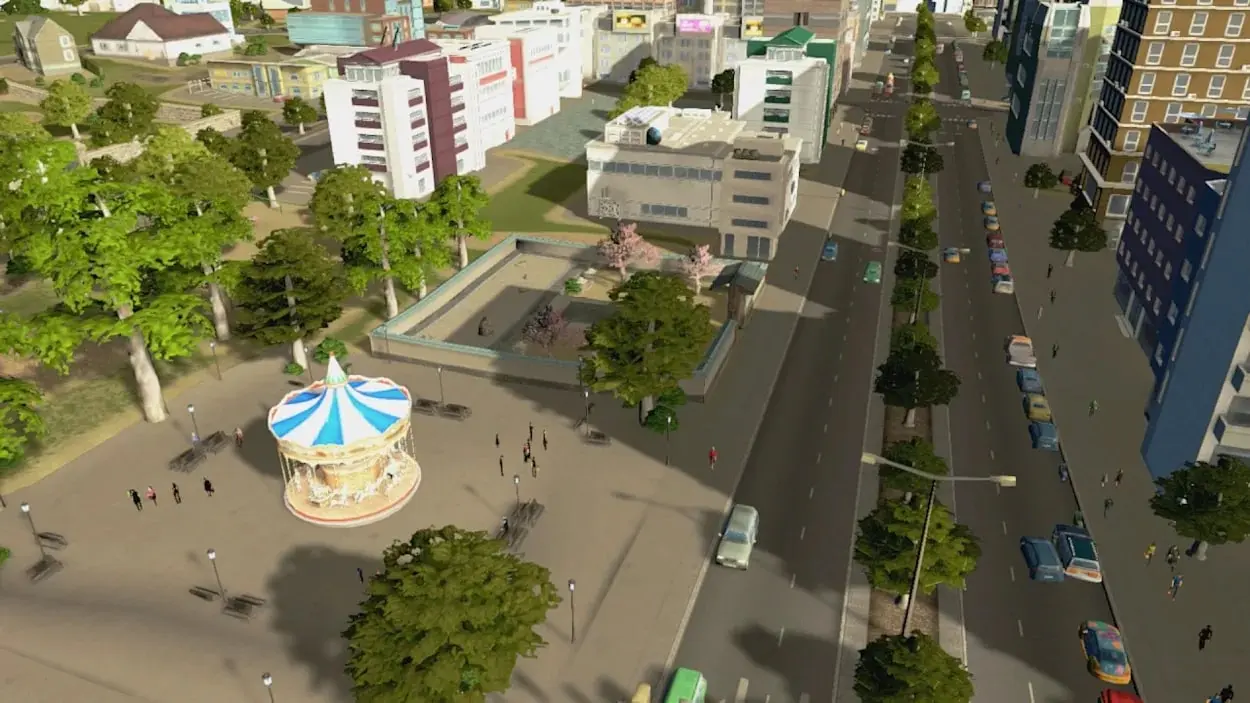
The Nintendo Switch version focuses on the satisfying contrast between open land and a developed skyline. Early choices feel modest: a basic road connection, an initial residential area, and the first services needed to support people moving in. Over time, those decisions can lead to busier commercial zones, industrial activity, denser neighborhoods, and a city with its own network of routes and districts.
Its atmosphere comes from that steady sense of growth. A successful city is not presented as a single finished object, but as a place that changes with every new resident, building, service, and transport connection. The strategy lies in keeping those moving parts functional while still leaving room for the city to develop.
A Player-Driven City Story Instead of a Fixed Campaign
There is no traditional pre-written campaign directing the player through a fixed storyline. In Cities: Skylines Switch NSP, the narrative emerges from the city itself. A carefully planned expansion, a sudden traffic problem, a tight budget, or an environmental concern can all become part of the story of a particular save.
This player-driven narrative gives each city its own identity. One may develop around orderly districts and cautious spending; another may grow quickly, only to face transport bottlenecks and higher service demands. Successes and setbacks are connected to planning decisions rather than to scripted plot events. Residents arrive, businesses operate, industry needs connections, and a city’s changing requirements create the next challenge.
That sandbox structure also supports replay value. Starting a fresh city means reconsidering road layouts, zoning patterns, district policies, and the pace of expansion. The appeal is less about reaching a final story beat than about seeing how a different plan changes the shape and fortunes of a metropolis.
From Empty Plot to Growing Metropolis
The basic Cities: Skylines Switch gameplay loop begins with a plot of land and a set of planning tools. From there, the player lays out roads, assigns zones, and creates the conditions needed for residents and businesses to settle. Growth brings new opportunities, but every increase in population also raises expectations for reliable infrastructure and public support.
Essential services include electricity, water, sewage, healthcare, education, and police coverage. Waste management also needs attention. These systems are not separate chores; they influence the practical health and comfort of the growing city. Balancing their costs against available income is a central management task, alongside setting taxes and monitoring expenses.
Progression is therefore shaped by practical expansion rather than a fixed sequence of missions. A city can move from its first homes and workplaces toward a more complex urban environment, but it must remain solvent and responsive as it grows. Pollution, noise, traffic, and unexpected disasters such as fires, floods, or meteor strikes can complicate that process. The result is a game where creative design and careful administration continually overlap.
Zoning Residential, Commercial, and Industrial Areas
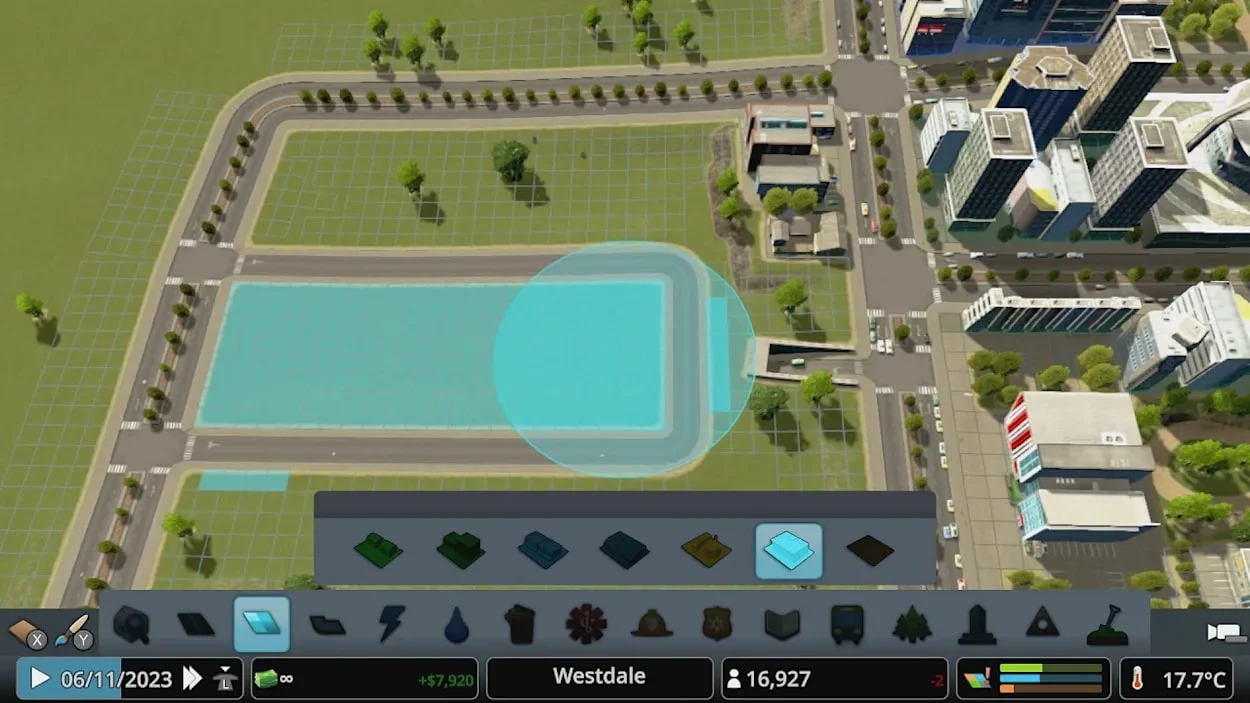
Zoning provides one of the clearest ways to organize a functioning city. Residential areas give people places to live, commercial zones support business activity, and industrial areas add another important part of the local economy. Their placement matters because a city is more than a collection of separate blocks: homes, jobs, services, and transport must work together.
Thoughtful zoning can help a city feel coherent while also answering practical needs. A residential district needs appropriate access to roads and services. Commercial and industrial areas need connections that allow traffic and activity to move through the city. Poor placement can contribute to longer journeys, congestion, noise, or other quality-of-life pressures.
Districts add another layer of control. Players can establish distinct areas and apply special policies that shape their character. This allows the city to develop local differences rather than becoming a single undifferentiated grid. A district can be part of an efficient plan, but it can also become a visual and managerial expression of the player’s wider vision.
Planning Roads and Transport Connections
Road planning is one of the most important strategic considerations in Cities: Skylines. Roads create the foundation for development, link zones to services, and determine how people and goods move around the city. A layout that works for a new settlement may become strained once population and activity increase.
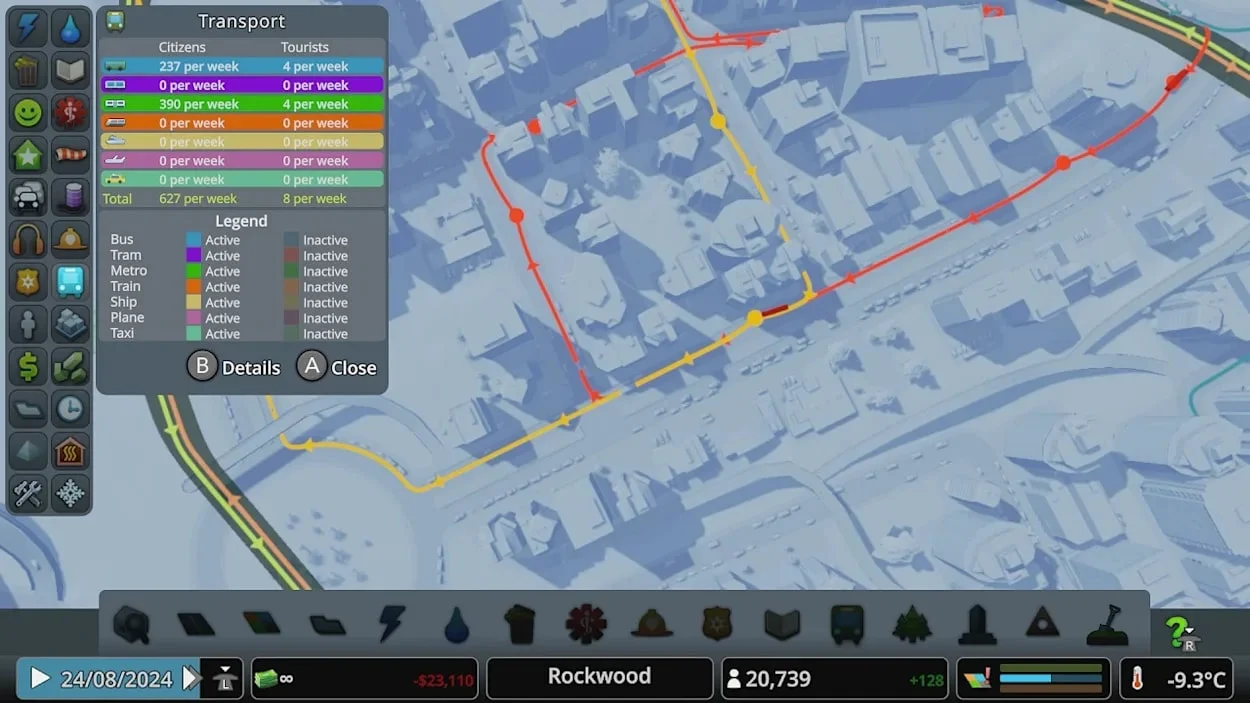
The game also includes railways, ports, and airports as infrastructure options for connecting the city. These systems broaden the planning challenge beyond local streets, encouraging players to think about access, movement, and the flow of traffic across a larger area. Connections should serve current needs while leaving space for future development.
Traffic is especially useful as a measure of how well a city plan is holding up. Congestion can reveal that an important route is carrying too much activity, that districts are poorly connected, or that expansion happened faster than the road network could support. Solving such problems is part of the simulation’s long-term rhythm: identify the pressure, revise the plan, and watch how the city responds.
7 Early Planning Priorities for a Stable New City
- Start small. Build a manageable first area instead of spreading the city too widely before its basic needs are understood.
- Cover the essentials. Establish roads and necessary services such as electricity, water, sewage, and waste management before expecting sustained growth.
- Leave room ahead. Plan roads with future expansion in mind, since an early layout can affect later traffic and access.
- Watch the budget. Public services and infrastructure cost money, so expenses and taxes need steady attention as the city develops.
- Support residents. Healthcare, education, police, and other services contribute to a healthier and more content population.
- Monitor traffic. Keep an eye on busy routes and connections, especially as residential, commercial, and industrial zones expand.
- Expand gradually. Add new districts and infrastructure in stages, giving the city time to support each new phase of development.
These priorities suit players who enjoy methodical strategy, creative layouts, and the satisfaction of repairing a plan when it meets new demands. Cities: Skylines on Nintendo Switch rewards patience and experimentation: each city can become a different response to the same central challenge of building a place where growth, services, finances, and infrastructure remain in balance.