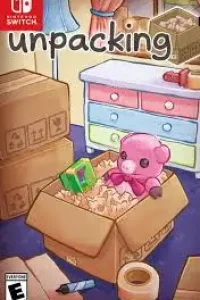
Unpacking Switch NSP
Report Link Error
Select the broken download file, then submit the report.
Screenshots

About Game
Unpacking Switch NSP presents a quiet, tactile puzzle experience built around a familiar task: opening moving boxes and finding a home for everything inside. On Nintendo Switch, the game frames organization as both a relaxing activity and a lifestyle simulation, letting rooms gradually take shape through the ordinary belongings of one person’s life.
What Makes Unpacking a Distinctive Puzzle Experience on Switch
Unpacking approaches puzzle design through domestic spaces rather than abstract boards or combat challenges. Each session begins with boxes and an unfinished room. The work is simple to understand: remove objects, consider what they are used for, and arrange them where they belong. Yet the process leaves room for observation, personal attention, and the small satisfaction of seeing a cluttered space become recognizably lived in.
That makes it a particularly gentle kind of relaxing puzzle game. There are no time limits or scores pressing the player onward. Instead, progress comes from patiently working through possessions and noticing how the needs of one room differ from another. A bedroom, bathroom, kitchen, dormitory room, or shared living space each asks for a different kind of practical thinking.
The lifestyle-simulation element is equally important. Objects do not feel like anonymous puzzle pieces alone; they suggest routines, hobbies, relationships, and changing circumstances. A shelf, drawer, desk, or bathroom counter becomes part of the puzzle because it also helps define how a person uses a space.
A Life Story Told Through Personal Possessions
The Unpacking story is not delivered through conventional dialogue-driven scenes. Its narrative emerges from possessions that recur, disappear, change, or are replaced as the player moves through different homes. Old toys, newer gadgets, personal belongings, and shared items become quiet clues to the protagonist’s changing life.
This environmental storytelling gives the game much of its emotional texture. A familiar object can carry a sense of continuity when it appears in a later room, while a new possession may hint at a new interest, a change in routine, or a different stage of adulthood. The game asks players to read spaces closely, not by solving written clues, but by recognizing what belongings imply when placed together.
That restraint is central to the experience. Rather than explaining every development directly, Unpacking lets the rooms communicate through their contents. The result is a story about personal growth, relationships, career paths, joys, and heartbreaks that is assembled piece by piece as boxes are emptied.
From Childhood Bedroom to Family Home
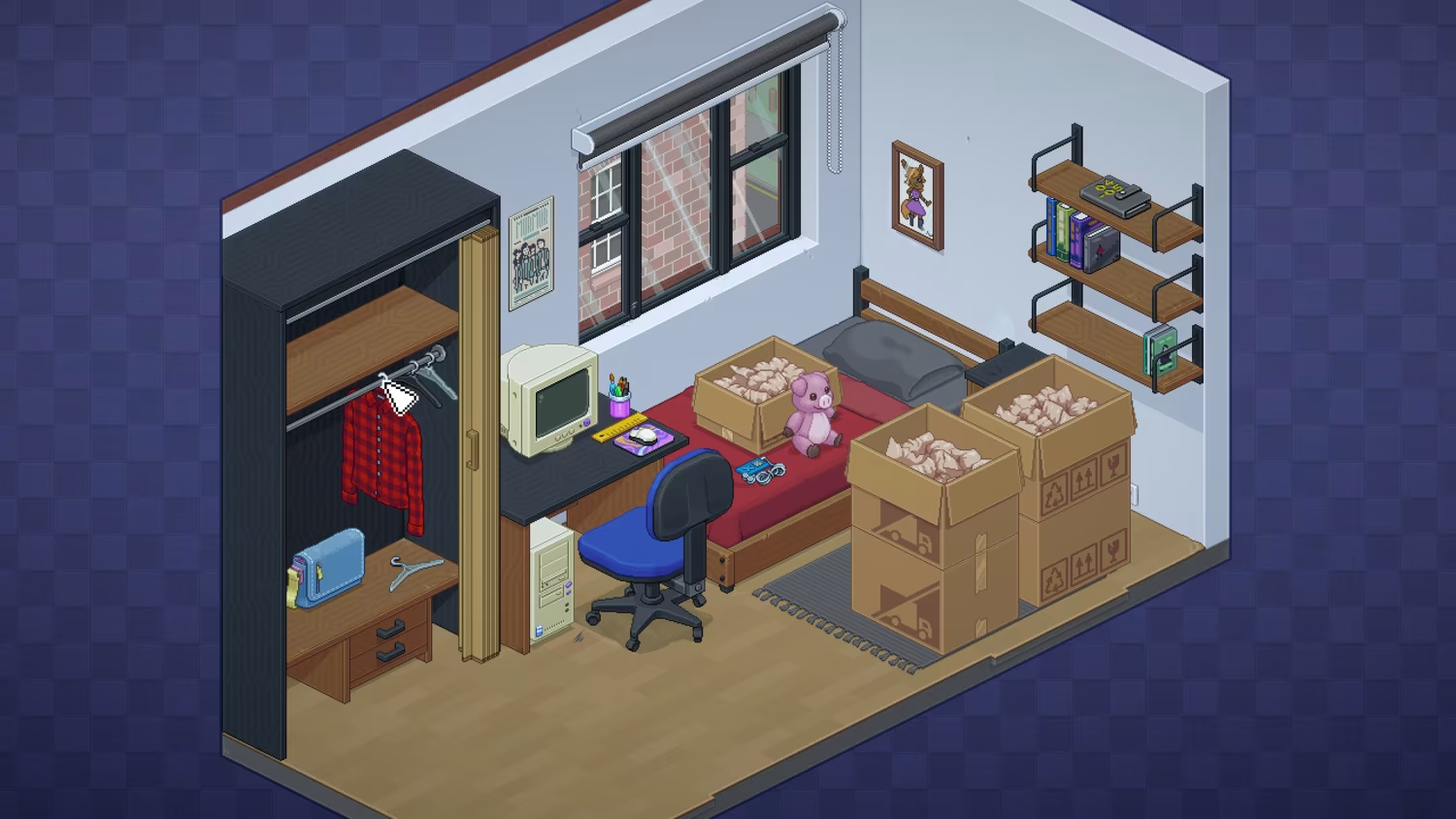
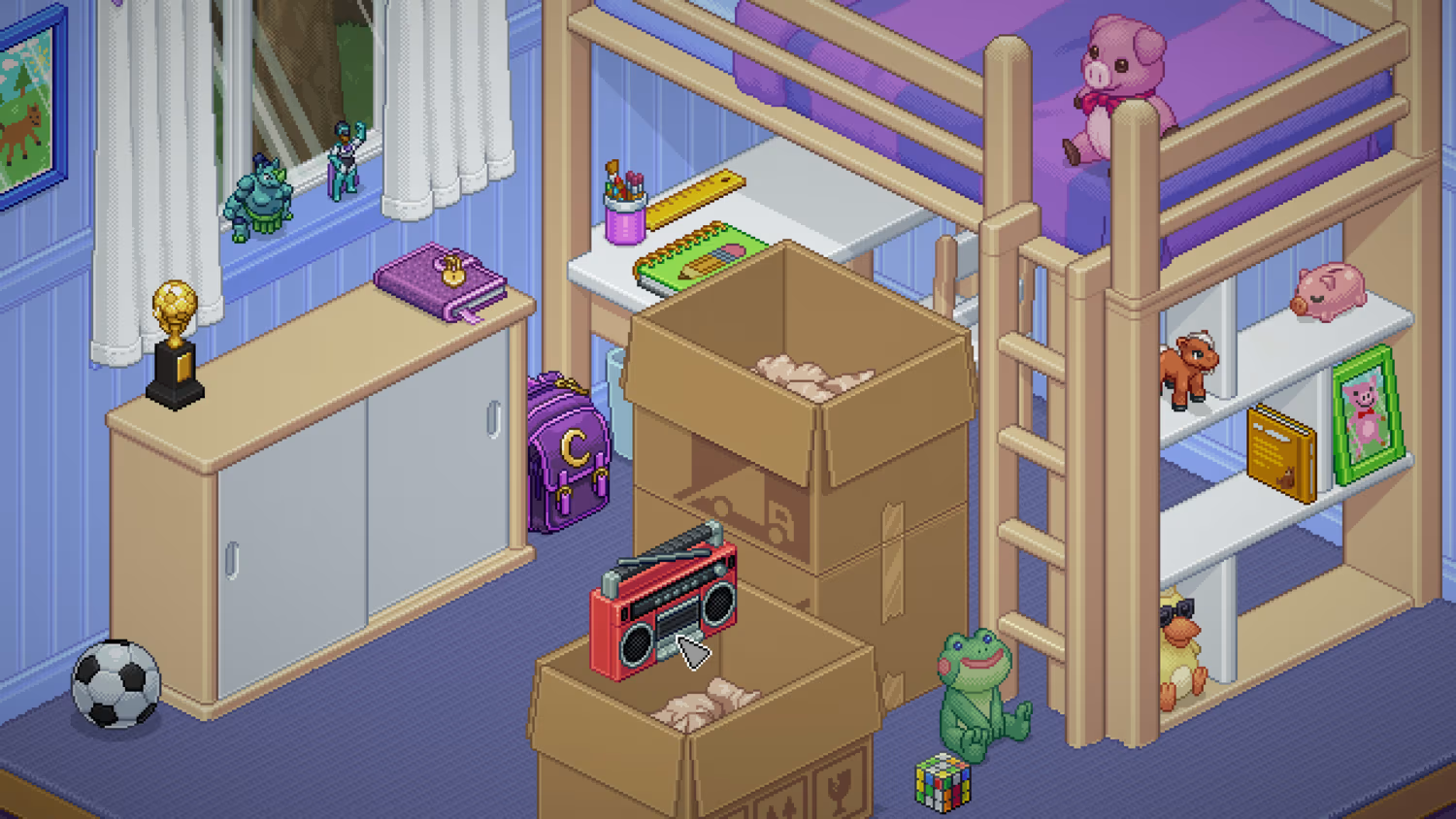
The progression through Unpacking levels follows major life stages. It begins in a small childhood bedroom, then moves through college dorms and shared apartments before reaching a family home. Every new setting changes the available space, the kinds of belongings being unpacked, and the practical questions involved in arranging them.
A childhood room can be shaped by toys and early personal possessions. College accommodation introduces a more limited, transitional environment. Shared apartments bring the presence of belongings that are not solely the protagonist’s, while a family home reflects another shift in domestic life. These locations do more than provide fresh rooms to organize; they establish a sense of time passing.
The sequence also gives the game a natural rhythm. Players are not simply repeating one room with different decorations. They are encountering changing homes and changing needs, which keeps the familiar act of unpacking connected to a broader life journey.
- Open the box: Reveal the household and personal items packed inside.
- Examine each object: Consider its function and what room context suggests.
- Choose a location: Place belongings on shelves, in drawers, or on surfaces such as desks.
- Watch for cues: Some possessions have particularly specific acceptable locations.
- Complete the room: Turn a box-filled space into an organized home before moving to the next life stage.
How the Core Unpacking Gameplay Works
The central Unpacking gameplay loop is direct and approachable. Players select boxes to reveal their contents, then use drag-and-drop controls to place each item in a suitable part of the room. The apparent simplicity is intentional: the interest comes from the details of the objects and the logic of where they belong.
A toothbrush, for example, belongs in the bathroom rather than in a kitchen or bedroom. Other objects require a closer look at the surrounding furniture and storage. A book may suit a shelf, a desk item may need a desk, and certain possessions may need to be placed in one particular area before the room is considered complete.
This is an organization puzzle with a calm pace. It rewards attention without requiring a rush, and it can suit players who enjoy sorting, arranging, and making sense of a space. The completion of a room is satisfying because every placed item contributes to a coherent environment rather than simply filling a quota.
Finding the Right Place for Every Item
Object function is the main guide to placement, but room context matters just as much. A player is encouraged to consider where an object would logically be used and what furniture is available to hold it. Shelves, drawers, desks, and other surfaces are not interchangeable decoration; they help indicate how the room should function.
Subtle visual cues also matter when an object does not settle into a chosen position. In those moments, the game is asking for another look at the item’s purpose or at the space around it. Some belongings allow a degree of natural arrangement, while others are tied to a more precise location.
This balance gives the organization puzzle its character. The game does not treat tidiness as a single fixed visual style. Instead, it asks for suitable placement within the logic of each home. Taking time to inspect unfamiliar objects and reconsider a room’s layout is part of the intended rhythm, not a setback.
Unpacking Switch Release and Technical Metadata
For Nintendo Switch, Unpacking was released in the USA on November 02, 2021. It is listed across the Lifestyle, Puzzle, and Simulation genres, a combination that reflects its focus on arranging possessions while following changes in a person’s domestic life.
Witch Beam developed the game, and Humble Games published it. The Nintendo Switch release supports English, German, Spanish, French, Japanese, Korean, Portuguese, Russian, and Chinese. Its Title ID is 0100701015846000, and the listed file size is 895MB.
The recorded firmware information lists v12.1.0 for the base release and v17.0.0 for the update. For players seeking a measured, object-focused puzzle about homes and life stages, Unpacking Switch NSP describes an experience driven by observation, arrangement, and storytelling through the things people keep.
Recommended Similar Games
 Lou’s Lagoon Switch NSPView Game
 Ghost Master: Resurrection Switch NSPView Game
 Race Boat Simulator – 3D Stunt Racing Driving Ship in Ocean Switch NSPView Game
 Tales from Candleforth Switch NSPView Game
 ROMANCE OF THE THREE KINGDOMS XIV: Diplomacy and Strategy Expansion Pack Bundle Switch NSP XCIView Game
 Prison Simulator Switch NSPView Game
