Teenage Mutant Ninja Turtles: Splintered Fate Switch NSP

Report Link Error
Select the broken download file, then submit the report.
Screenshots

About Game
Teenage Mutant Ninja Turtles: Splintered Fate Switch NSP brings the four brothers into a fast-moving roguelike brawler built around repeat runs, shifting combat conditions, and a search for their missing sensei. Released for Nintendo Switch on July 17, 2024, this action, adventure, and fighting game from Super Evil Mega Corp puts Leonardo, Donatello, Michelangelo, and Raphael against a crisis spreading through New York and beyond.
What Is Teenage Mutant Ninja Turtles: Splintered Fate on Nintendo Switch?
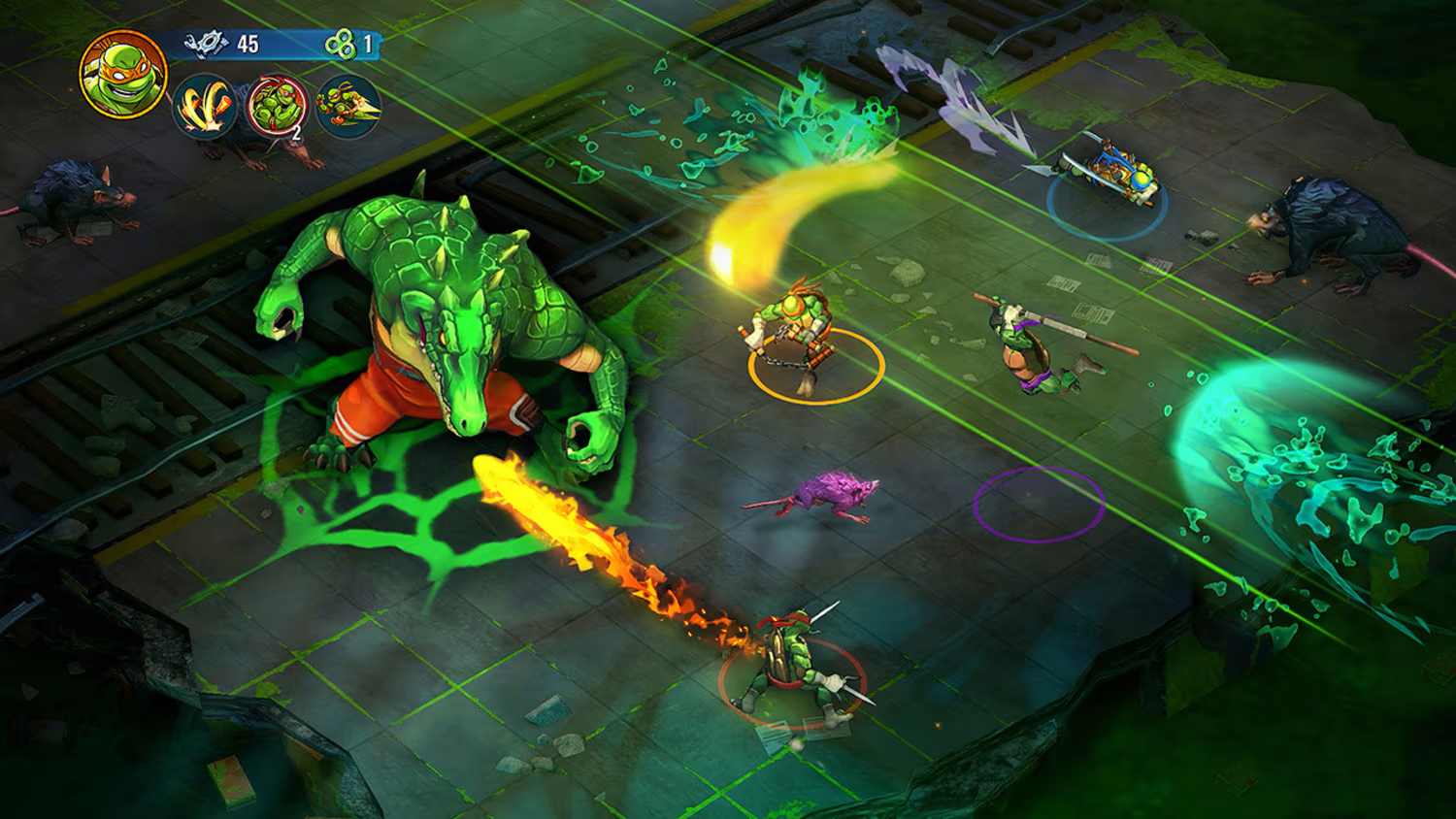
Teenage Mutant Ninja Turtles: Splintered Fate approaches the familiar TMNT world through a run-based action structure. Rather than presenting a fixed sequence of encounters alone, it sends players through changing stages where combat, hazards, upgrades, and enemy pressure can develop differently from one attempt to the next.
The Nintendo Switch release combines brawling with roguelike progression. The Turtles face Foot Clan ninjas, major villains, bosses, and environmental threats while building toward stronger combat options. Its tone draws from the stakes of a city in danger and a family trying to reunite, but its immediate focus is on active fights: moving through arenas, reading enemy behavior, dodging attacks, and making each run count.
Super Evil Mega Corp serves as both publisher and developer. The game supports solo play as well as cooperative sessions, making the core premise suitable for players who want to test an individual Turtle build or share the action with a group.
The Quest to Find Master Splinter
The TMNT Splintered Fate story begins with Shredder’s escalating threat and Master Splinter’s unexplained disappearance. Without their father figure and teacher at their side, the four Turtles must follow the clues behind the crisis while confronting the forces working against them.
The search carries Leonardo, Donatello, Michelangelo, and Raphael through distorted dimensions as well as New York locations. Familiar allies and new enemies appear along the way, while the brothers contend with dangers that extend beyond a straightforward rescue. The stakes are personal: finding Splinter is inseparable from protecting their family and pushing back against a threat that could destabilize the city and more.
This setup gives the combat a clear dramatic frame. Every dangerous route and boss encounter sits within a wider effort to track down Splinter, confront Shredder’s plans, and keep the brothers together under pressure. The distorted settings also support the game’s unstable, unpredictable feel, fitting a format where the path through each run can change.
A Roguelike Brawler Built Around Changing Runs
The defining feature of the TMNT Splintered Fate roguelike structure is variation. Stages are procedurally generated, so layouts can shift between attempts instead of remaining identical. That changing structure affects the rhythm of exploration and combat, asking players to react to the route, the threats in front of them, and the options they collect as they progress.
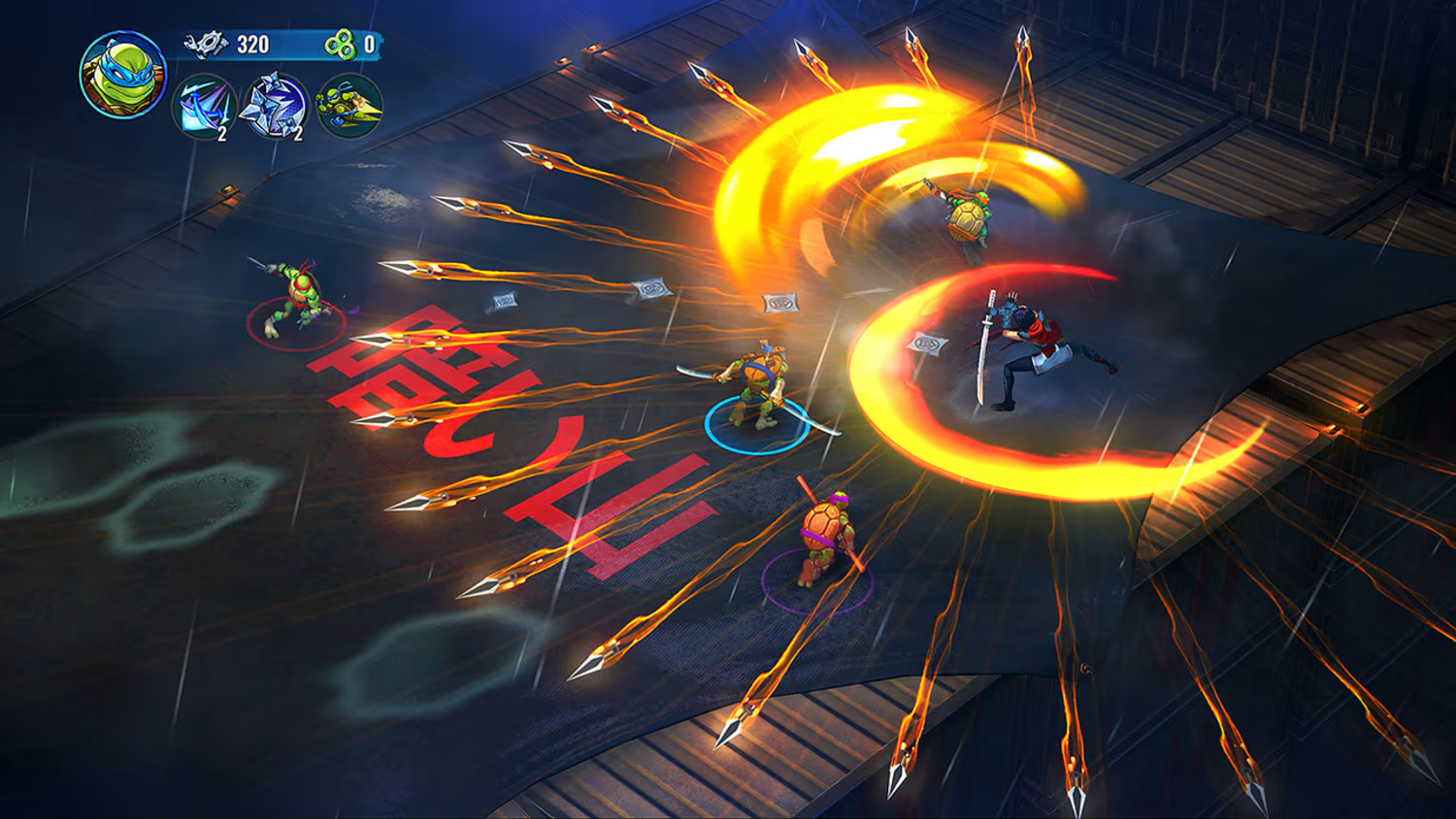
Fights are designed around quick decision-making. Dodge rolls and parries offer defensive answers when opponents close in, while special abilities and signature moves provide more forceful ways to clear space or damage enemies. Hazards and increasingly difficult bosses raise the pressure as a run develops, encouraging players to learn enemy patterns rather than simply charge into every encounter.
- Changing routes: Procedurally generated stages alter layouts from run to run, keeping the journey through each attempt from becoming too fixed.
- Build decisions: Power-ups and mutations can change a Turtle’s combat approach through temporary or permanent buffs.
- Defensive timing: Dodge rolls and parries reward careful reactions when enemies and hazards crowd the screen.
- Rising danger: Tougher encounters, environmental obstacles, and boss battles demand stronger choices as progress continues.
- Reasons to return: Hidden areas, secret upgrades, different character paths, and shifting levels give repeat runs a practical purpose.
That replay value comes from experimentation as much as endurance. A useful upgrade in one run may lead to a different combat style in another, while a changed level layout can alter how safely players reach the next challenge. The result is a brawler where progress depends on both mechanical execution and the ability to adapt.
Choosing Leonardo, Donatello, Michelangelo, or Raphael
Players can choose any of the four Turtles: Leonardo, Donatello, Michelangelo, or Raphael. Each has distinct weapons, special abilities, signature moves, and upgrade paths, giving the roster a direct effect on how a run feels. The difference is not only cosmetic; character choice helps determine which tools are available in combat and which upgrades may best suit a player’s approach.
The game’s progression systems invite players to experiment with power-ups and mutations as they appear. These additions can reshape a build over the course of a run, allowing the selected Turtle’s existing strengths to combine with new combat effects. A player may favor a familiar brother, or switch characters to explore another set of abilities and possible upgrades.
For TMNT fans, the four-character setup keeps the brothers central to both story and play. For action players, it provides a practical reason to revisit encounters with another weapon set, another special move, and another route through the available upgrades. TMNT character abilities are therefore tied closely to the game’s replay-focused design.
How 2–4 Player Co-op Changes the Fight
TMNT Splintered Fate co-op supports two to four players through local and online cooperative multiplayer. Adding more players changes the feel of combat immediately: encounters become busier, more abilities can be active at once, and the group has more opportunities to combine different Turtles and their respective tools.
Cooperative play also gives character synergy greater importance. Since each brother has unique weapons, special abilities, signature moves, and upgrade paths, a team can bring several different approaches into the same run. The added activity can make battles more chaotic, but it also creates room for coordination when confronting large groups, hazards, and bosses.
The co-op option suits groups looking for a shared action game with run-to-run variation. It also preserves the central appeal of the Turtles as a team: the story places their bond under strain, while the multiplayer systems let players actively fight alongside one another.
Switch Release Details: Regions, Languages, and Firmware
The Nintendo Switch version of Teenage Mutant Ninja Turtles: Splintered Fate Switch NSP is identified by Title ID 01005CF01E784000. Its listed release date is July 17, 2024, and it is available across Europe, USA, Asia, and Japan regions.
| Title ID | 01005CF01E784000 |
|---|---|
| Release date | July 17, 2024 |
| Genre | Action, Adventure, Fighting |
| Publisher / Developer | Super Evil Mega Corp |
| Regions | Europe, USA, Asia, Japan |
| Languages | English, Dutch, French, German, Italian, Japanese, Korean, Portuguese, Russian, Simplified Chinese, Spanish, Traditional Chinese |
| Base firmware | v18.1.0 |
With its changing runs, four playable brothers, and support for local or online cooperative play, the Switch edition is aimed at players seeking a TMNT action game where combat knowledge, build experimentation, and teamwork can all shape the next attempt.