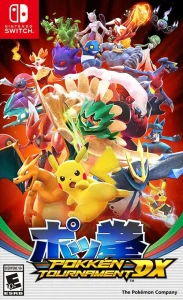
Pokken Tournament DX Switch NSP XCI
Report Link Error
Select the broken download file, then submit the report.
Screenshots

About Game
Pokken Tournament DX Switch NSP XCI refers to a Nintendo Switch action fighting game published by Nintendo and developed by Bandai Namco. Released on September 22, 2017, it places Pokémon in direct, real-time battles rather than the familiar turn-based structure associated with much of the series. Its setting, the Ferrum Region, gives the competition a sense of place as Trainers and Pokémon form bonds through Synergy Stones while pursuing success in the Ferrum League.
Pokkén Tournament DX on Nintendo Switch: A Pokémon Fighting Game Overview
Pokkén Tournament DX approaches Pokémon combat through the language of fighting games: movement, spacing, attacks, defensive decisions, and changing momentum. A match is not about selecting moves from a menu. It is about reading an opponent in the moment, finding an opening, and making a response count.
The game’s Ferrum Region backdrop supports that competitive focus. Players work toward becoming Ferrum League champion, while the setting also provides context for the role of Synergy Stones and the origins of Shadow Mewtwo. The narrative is present as a frame for the battles, but combat remains the central attraction.
As a Nintendo Switch Pokémon fighting game, it leans into spectacle without losing sight of decision-making. Pokémon use recognizable moves in arenas built for movement and confrontation, while HD visuals and fluid animation give attacks a clear sense of impact. The result is a game designed for players who want Pokémon characters presented through a more immediate, competitive format.
How Field Phase and Duel Phase Shape Every Battle
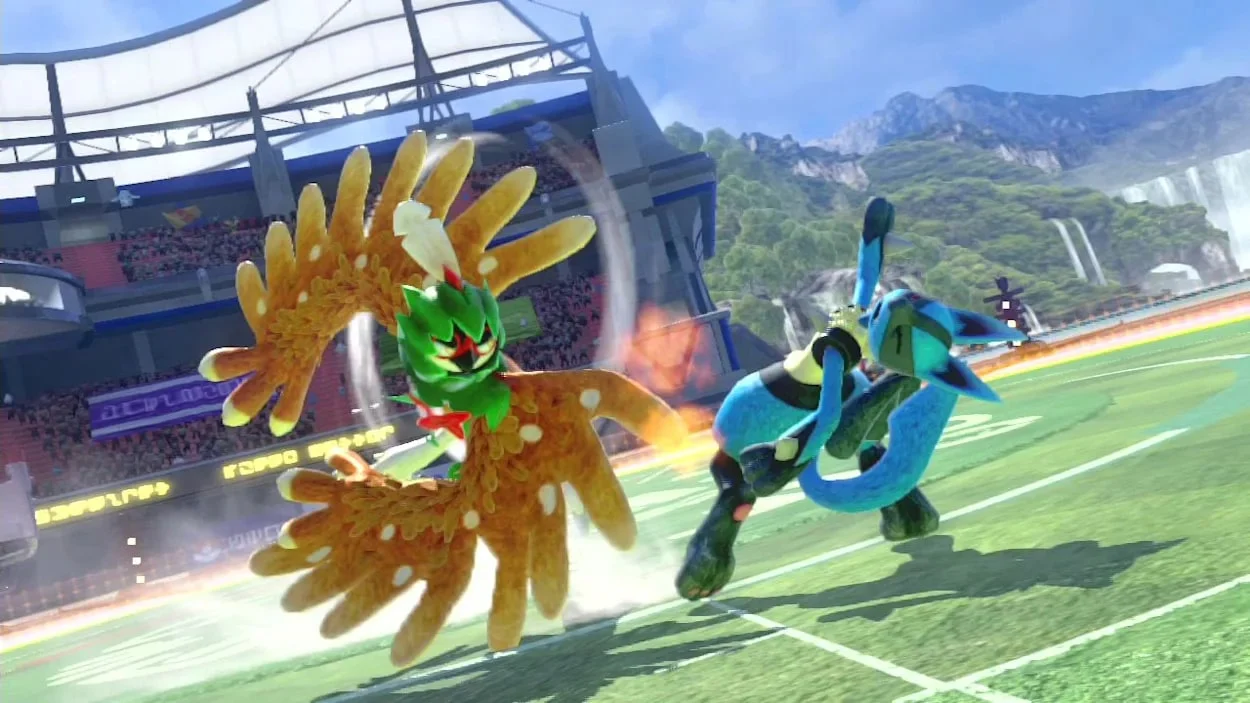
The defining feature of Pokkén Tournament DX combat is its movement between two perspectives. In Field Phase, fighters have room to move freely around a 3D arena. This creates opportunities to reposition, launch projectiles, close distance, and look for an opponent’s habits before committing to a closer exchange.
Duel Phase narrows that interaction into a more traditional 2D fighting-game view. Here, the rhythm becomes more focused on direct pressure: combos, grabs, blocks, and counterattacks all become especially important. The shift between phases keeps matches from settling into one fixed pattern. A player comfortable at range still has to be prepared for close combat, while a player who prefers immediate pressure must account for movement and projectiles during Field Phase.
That transition is more than a visual change. It asks players to adapt their timing and positioning as the battle develops. Knowing which phase favors a particular situation can be as important as knowing a character’s individual attacks.
Finding a Fighting Style Across the Pokémon Roster
The Pokkén Tournament DX roster includes more than 20 Pokémon, and its variety supports several approaches to competition. Some fighters are built around powerful strikes, while others emphasize speed, mobility, or tools that help create specific match situations. The value of the roster is not simply recognition; each Pokémon brings a distinct moveset to the arena.
Pikachu, Charizard, and Decidueye illustrate the appeal of that range as recognizable Pokémon with different fighting identities. Players can experiment with fighters that feel direct and forceful, agile and reactive, or better suited to a more matchup-aware approach. The game encourages that process of discovery rather than treating every Pokémon as a variation on the same combat plan.
Support Pokémon pairs add another layer of choice. Pairs such as Espeon & Umbreon and Croagunk & Sylveon can provide tactical help during a match, including healing or offensive support. Selecting a support pair that complements a chosen fighter can matter just as much as choosing the fighter itself, especially when a player wants help covering a weakness or reinforcing a preferred style.
Synergy Burst and Burst Attacks as Momentum Tools
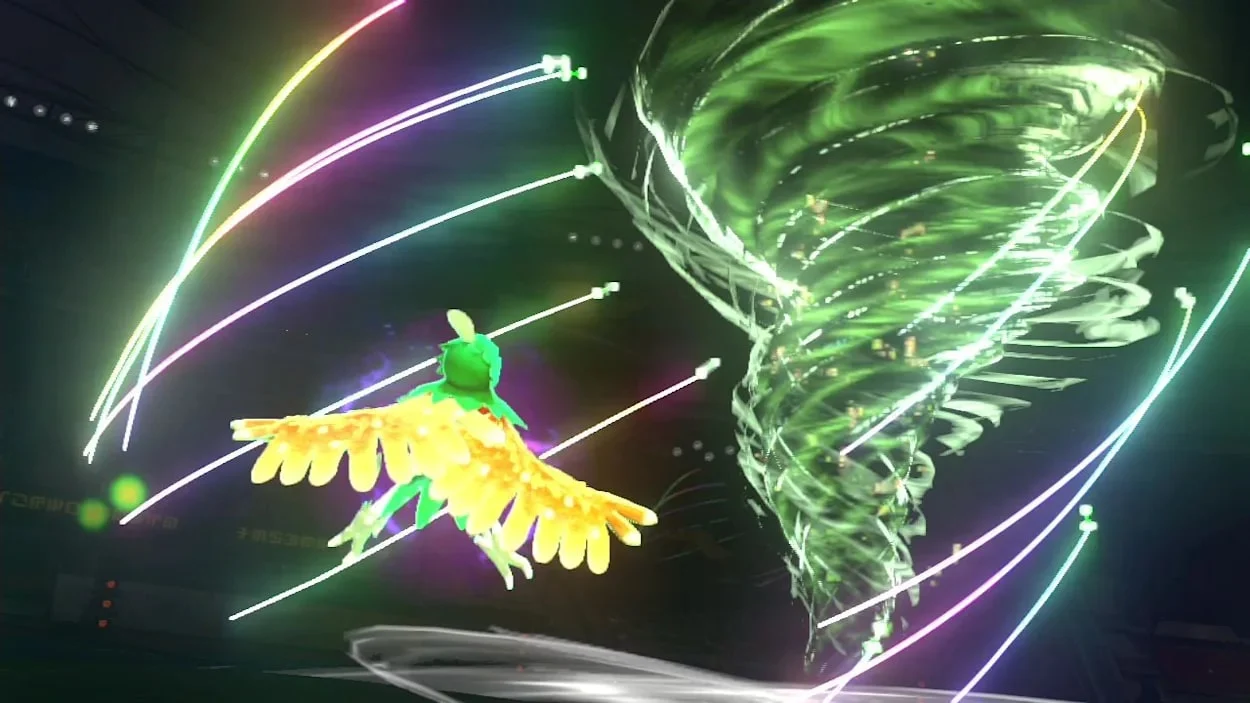
Synergy Burst gives a match a clear momentum mechanic. Activating it temporarily boosts a fighter and opens access to a powerful Burst Attack. Because the effect is temporary, the decision is not just about having more power; it is about choosing the right moment to use it.
A well-timed Burst can change the direction of a close battle, particularly when it is used after an opening has been created or when an opponent is under pressure. Used without care, it may not deliver the same value. This makes Synergy Burst an important part of Pokkén Tournament DX strategy: players need to recognize when their opponent is vulnerable and when a match is asking for a more patient response.
The mechanic also suits the game’s presentation. Burst Attacks give signature moves a dramatic focal point, helping battles feel appropriately large-scale while still being tied to an in-match decision.
Ferrum League, Local Battles, Online Play, and Team Battles
The single-player Ferrum League provides a route through the game’s competitive setting and a place to spend time learning its systems. It gives players a structured environment for becoming more familiar with combat phases, roster choices, and the rhythm of a full match.
For direct competition, Pokkén Tournament DX local multiplayer allows players to face one another in the same setting, while Pokkén Tournament DX online multiplayer extends those battles beyond the local arena. Team battles provide another option, bringing multiple Pokémon into the competitive mix and giving the game an additional format beyond one-on-one encounters.
These modes support replay value because the game’s match flow changes with character choices, Support Pokémon selections, and player tendencies. A new fighter can alter the feel of both Field Phase and Duel Phase, and a familiar opponent can still demand a different response when their timing or support choice changes.
5 Practical Ways to Improve in Pokkén Tournament DX
- Read the phase. Pay attention to whether a match is in Field Phase or Duel Phase and adjust expectations accordingly. Open movement and projectile exchanges call for different decisions than close-range combos, grabs, and counters.
- Choose support with purpose. Support Pokémon should complement the fighter being used. Consider whether healing or offensive assistance better fits the situations that arise during a match.
- Respect defensive timing. A carefully timed block or counter can interrupt an opponent’s momentum. Avoid treating defense as passive; it can create the opening for a response.
- Protect your position. Spacing matters in both phases. In Field Phase, movement can help avoid pressure or create room for projectiles. In Duel Phase, positioning can affect when to challenge, block, or attempt a grab.
- Practice matchups. Spend time with different Pokémon and learn how their movesets feel. Consistent practice makes it easier to recognize opposing styles and build a more reliable response.
For players interested in Pokémon outside the turn-based format, Pokkén Tournament DX offers a focused alternative built around active combat and adaptation. Its shifting battle phases, broad roster, Support Pokémon choices, and Synergy Burst system give each match several moving parts without losing the immediate appeal of watching Pokémon clash in the arena. Pokken Tournament DX Switch NSP XCI is therefore best suited to players looking for Pokémon battles shaped by timing, movement, and direct competitive play.