Fueled Up Switch NSP

Report Link Error
Select the broken download file, then submit the report.
Screenshots
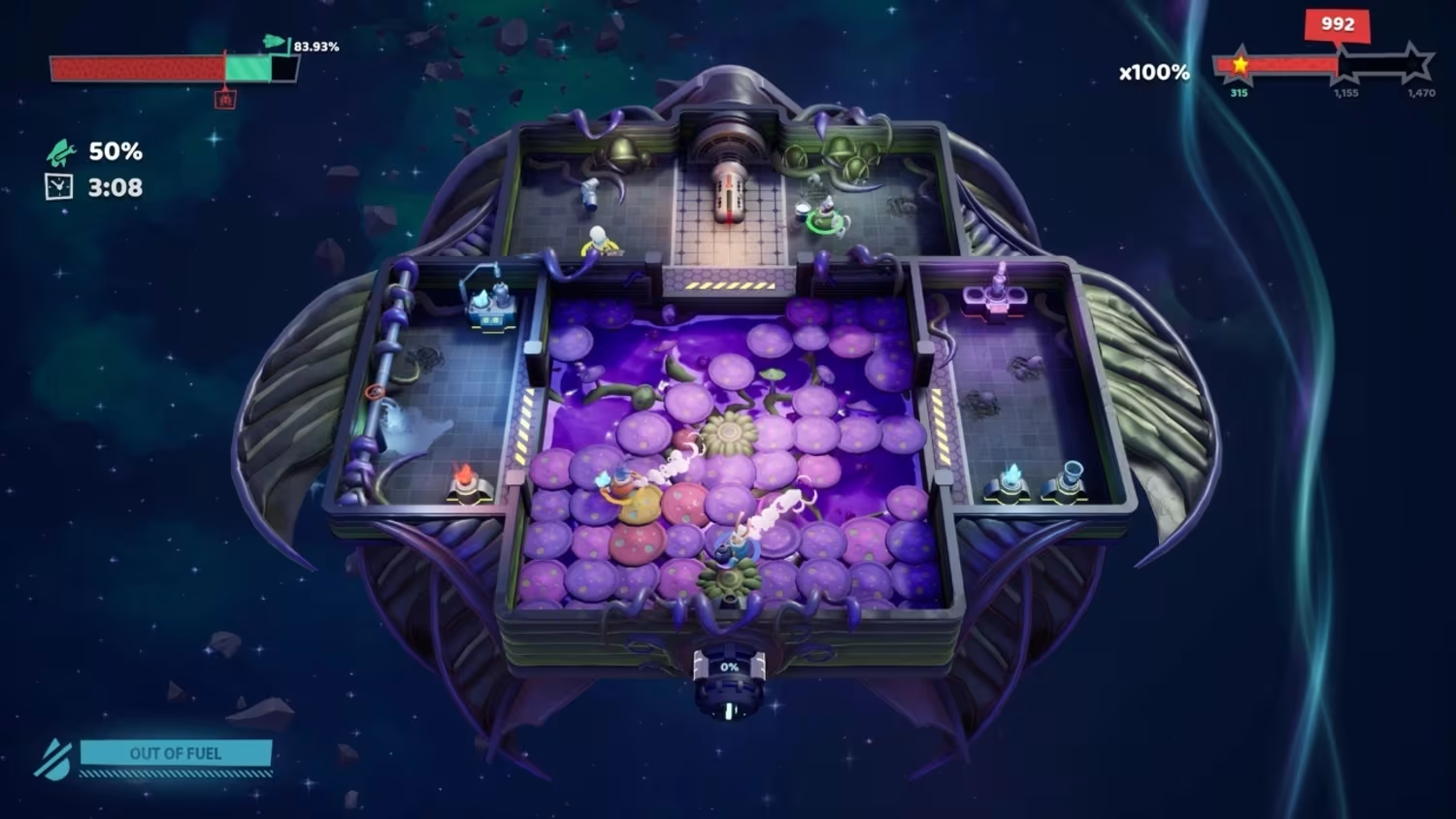
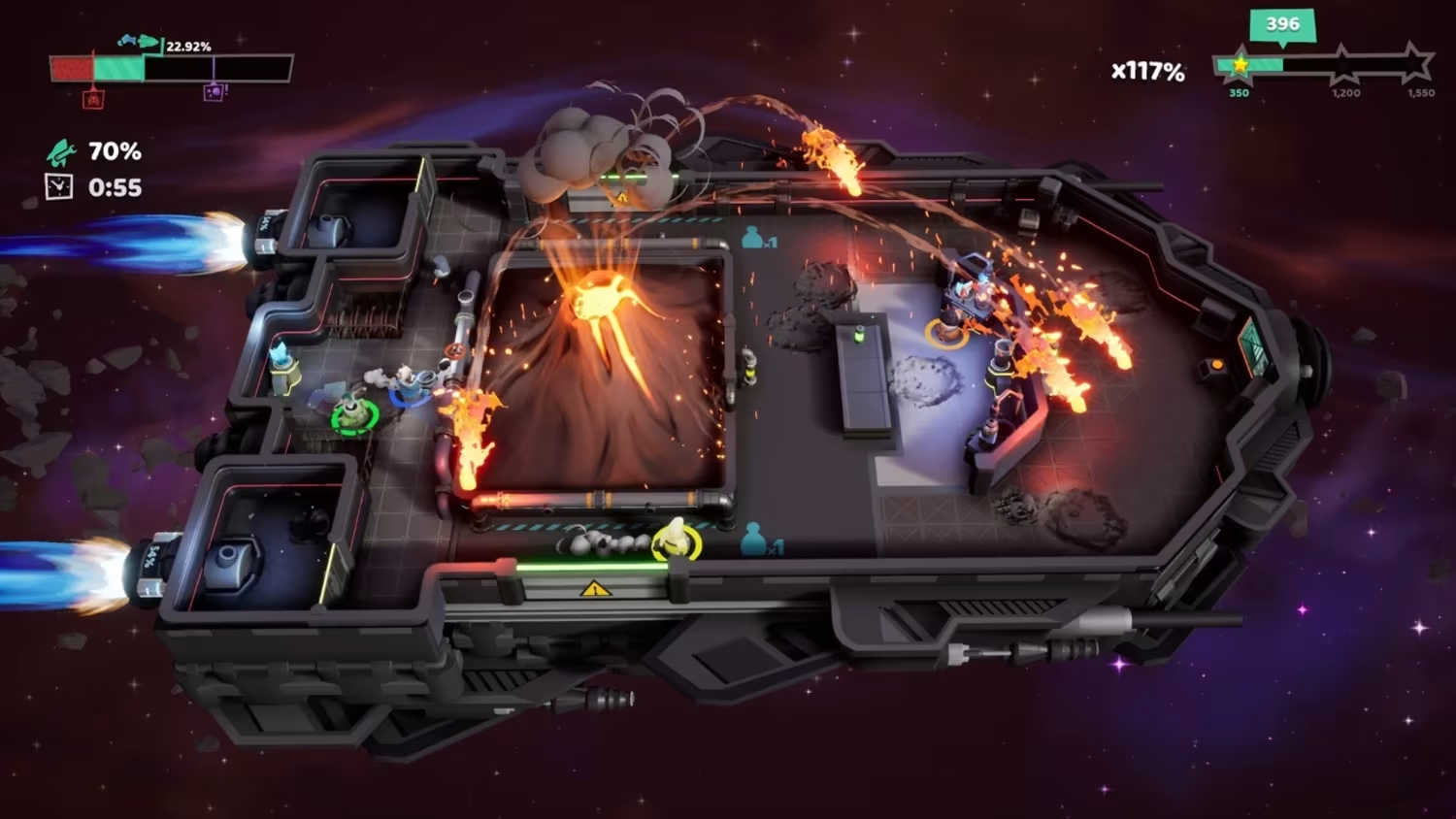
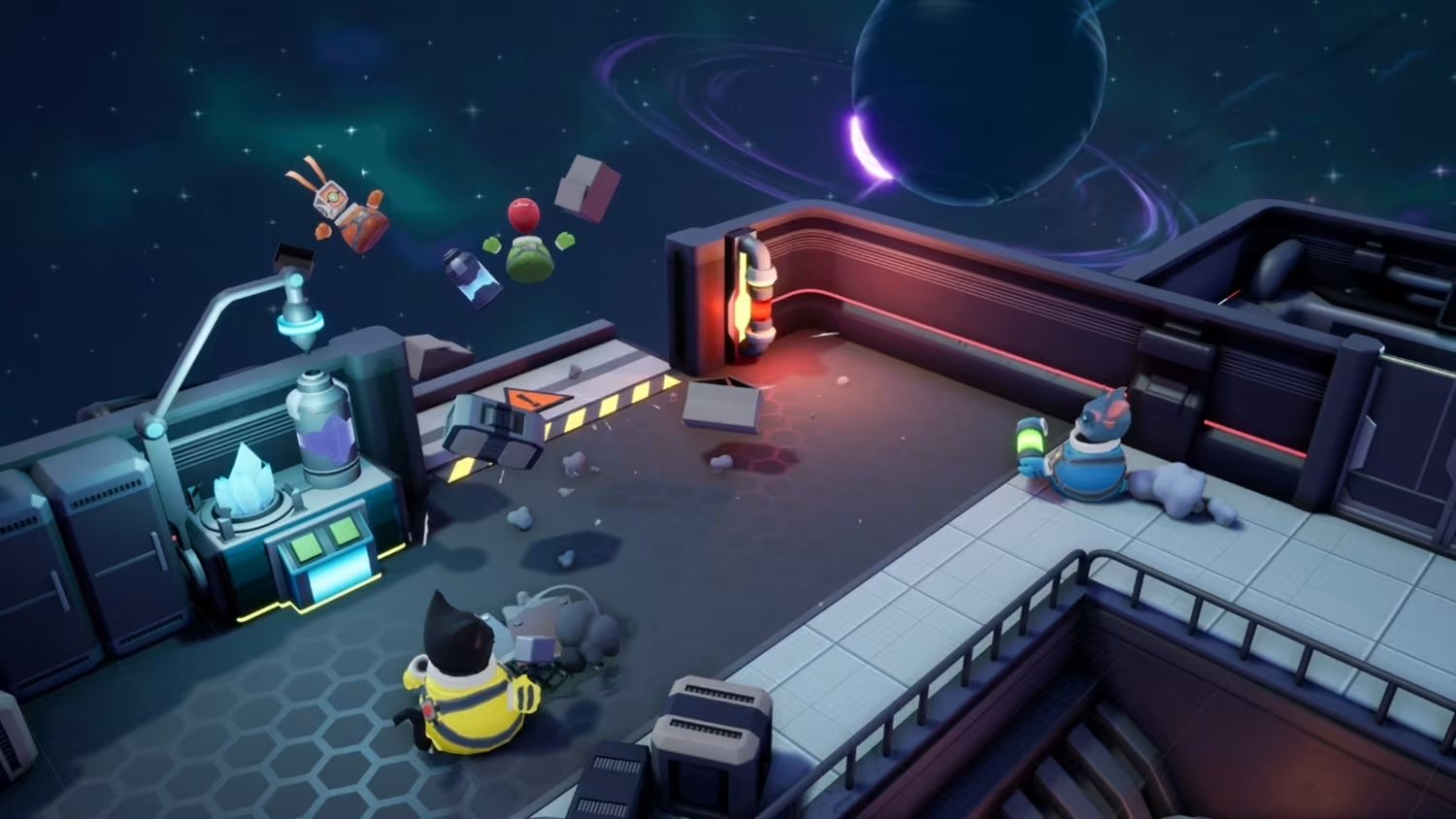
About Game
Fueled Up Switch NSP places players in the middle of a space-rescue operation where a damaged ship can become a disaster zone in seconds. Reactors may be failing, fires can spread, meteors can threaten the hull, and essential systems need attention before the situation becomes unrecoverable. Its premise is direct: assemble a rescue crew, board endangered vessels, and keep them functioning under mounting pressure.
Fueled Up: A Space-Rescue Game Built Around Escalating Emergencies
The central role in Fueled Up is that of a space rescue squad responding to ships in immediate danger. Missions are structured around crises rather than a heavily detailed narrative. A reactor can be overheating while a fire breaks out elsewhere, or an incoming cosmic threat can force the team to act quickly before damage spreads through the vessel.
That focus gives the game a brisk, high-pressure atmosphere. The crew is not simply moving from objective to objective; it is responding to overlapping spaceship emergencies where a few delayed seconds can create new problems. Players need to assess what is happening, locate the affected area, bring the right equipment, and make repairs while the ship remains unstable.
Fueled Up frames these rescue efforts across a range of cosmic scenarios. Exploding reactors, asteroids, black holes, fires, hull damage, and unexpected system failures are all part of the mission pressure described for the game. The result is an action-focused rescue format in which the changing state of the ship matters as much as the task directly in front of the player.
Cooperative Play for One to Four Rescuers
Fueled Up co-op supports 1-4 players through local and online multiplayer. The format is built around shared responsibility: several failures may need attention at the same time, so a team that communicates clearly has a better chance of keeping its ship intact.
One player may be carrying fuel to a system that needs refilling while another handles a fire extinguisher, and another heads for a damaged section of hull. These roles do not have to remain fixed, but assigning work quickly can prevent teammates from duplicating efforts or leaving a major emergency unattended.
The cooperative structure also supports solo play, though the demands of each rescue naturally make coordination a major part of the experience when more rescuers are involved. In a full group, communication can help players call out a reactor problem, request a tool, report that a task is complete, or warn others about an environmental danger. The game’s tension comes from making those decisions amid active hazards rather than during quiet planning periods.
Because tasks and threats can arrive together, local and online multiplayer sessions benefit from concise directions and a willingness to adjust. A crew may begin with a simple division of duties, then change course when a new fire, breach, or oxygen concern appears.
The Essential Rescue Tasks: Repair, Refuel, Extinguish, and Patch
Fueled Up gameplay asks players to manage several practical rescue duties. Repairing engines is one of the key responsibilities, especially when critical ship systems are under strain. Fuel tanks also need attention, requiring the crew to move and use fuel resources where they are needed.
Fires demand their own response, with fire extinguishers among the available equipment. Hull breaches must be patched before they become a larger threat, while oxygen levels also require monitoring. These responsibilities create a chain of priorities: a team may need to stop an immediate hazard first, then restore a system that will keep the ship operational over the longer term.
Wrenches, fuel hoses, extinguishers, and other tools support the rescue work. Their presence means that effective movement is not only about reaching the correct room. Players must also bring the appropriate equipment, avoid wasting time, and understand when another problem has become more urgent.
The mission design encourages rapid judgment rather than simple repetition. Refilling fuel tanks can be important, but it may have to wait if the team is dealing with an imminent reactor failure. Patching hull breaches matters, yet a spreading fire could require an immediate response. Successful crews read the current state of the ship and act on the most serious issue first.
5 Priorities for a More Organized Rescue Crew
- Call out threats early. Tell teammates when a reactor is failing, a fire has started, or a hull breach needs attention so the crew can respond before the problem grows.
- Handle immediate danger first. Prioritize failures that put the ship at the greatest risk, including critical system trouble and active fires, before moving on to less urgent work.
- Divide the workload. Let different players take responsibility for repairs, fuel tanks, fires, oxygen concerns, or equipment runs when multiple tasks appear at once.
- Learn the ship layout. Knowing where systems, routes, and likely trouble spots are located helps reduce unnecessary movement during a time-sensitive rescue.
- Track available resources. Keep an eye on the tools and supplies needed for repairs, refueling, extinguishing fires, and sealing damage.
Ship Layouts, Cosmic Scenarios, and Increasing Challenge
Fueled Up levels place rescue teams in different spaceship layouts and dangerous cosmic conditions. Layout changes matter because they affect how quickly players can move between systems, carry equipment, and assist a teammate on the other side of the ship. A crew that understands one vessel cannot assume the same routes or task flow will apply to the next.
The cosmic scenarios add another layer of uncertainty. Incoming asteroids, black holes, failing reactors, and system breakdowns can alter the priorities of a mission without warning. Players are asked to combine fast movement with planning: decide who should take the nearest urgent task, who should prepare for the next issue, and which resource is worth carrying before the situation changes again.
Progression includes unlockable ships, customization options, and harder difficulties. That structure gives returning crews new material to work toward while keeping the core rescue loop familiar. Replay value comes from adapting to layouts, hazards, difficulty, and the changing decisions made by a one-to-four-player crew. It is particularly suited to players who enjoy cooperative action built on communication, quick reactions, and managing several jobs under pressure.
Fueled Up Nintendo Switch Release Details
Fueled Up Nintendo Switch was released on July 18, 2024. It is listed in the Action, Adventure, and Party genres, with No Gravity Games serving as both publisher and developer. The release is available for the Europe and USA regions.
Supported languages are English, French, German, Japanese, Simplified Chinese, and Spanish. The listed base firmware requirement is v18.1.0, and the file size is 501MB. For players looking up Fueled Up Switch NSP, these details identify the Nintendo Switch release alongside its cooperative rescue-game focus.
Recommended Similar Games
 Lucky Tower Ultimate Switch NSPView Game
 Race Boat Simulator – 3D Stunt Racing Driving Ship in Ocean Switch NSPView Game
 Avilion forever Switch NSPView Game
 Star Wars Knights of the Old Republic II: The Sith Lords Switch NSPView Game
 Running Fable Switch NSPView Game
 Cupid Parasite: Sweet and Spicy Darling Switch NSPView Game
