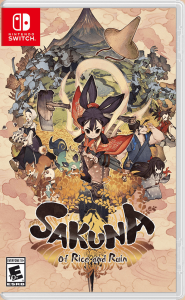
Sakuna: Of Rice and Ruin Switch NSP
Report Link Error
Select the broken download file, then submit the report.
Screenshots
About Game
Sakuna: Of Rice and Ruin Switch NSP builds its adventure around an unusual but closely connected pair of pursuits: fighting demons across a hostile island and raising the rice that makes its heroine stronger. This 2020 action-platformer from Edelweiss places a harvest goddess in a demanding new role, where every field tended and every dungeon explored contributes to her effort to reclaim a lost land.
Sakuna’s Exile to the Demon-Infested Isle of Hinoe
The Sakuna story begins after Sakuna, a spoiled harvest goddess, and a group of human exiles cause trouble in the Celestial Capital. Their punishment is exile to the Isle of Hinoe, a dangerous place overrun by demons. Sakuna is charged with reclaiming the island, a task that calls for more than divine weaponry.
Her duty is tied to the people sent with her. While the exiles must make a life in an unfamiliar and threatening place, Sakuna must defend them, confront the island’s creatures, and learn the practical work behind the harvests associated with her divine role. The setup gives the adventure a clear sense of purpose: liberation of the Isle of Hinoe is not simply a combat objective, but an ongoing process of survival, cultivation, and cooperation.
The premise also gives Sakuna room to change. She begins as an immature deity, yet the demands of the island encourage responsibility and compassion. That personal movement runs alongside the physical restoration of the land, making the journey about more than defeating stronger enemies.
How Rice Harvests Shape Sakuna’s Growth
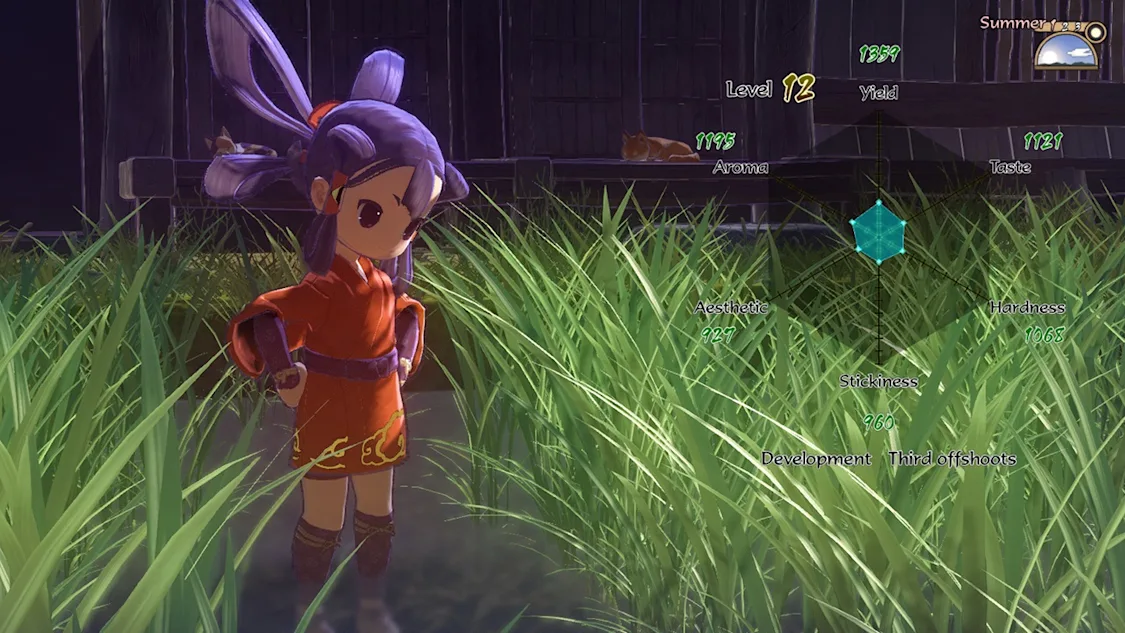
Rice farming progression is the game’s defining system. Sakuna’s power is directly connected to the quality of the rice she cultivates, so farming is not a detached side activity between action stages. Better harvest quality improves Sakuna stats and prepares her for tougher encounters across Hinoe.
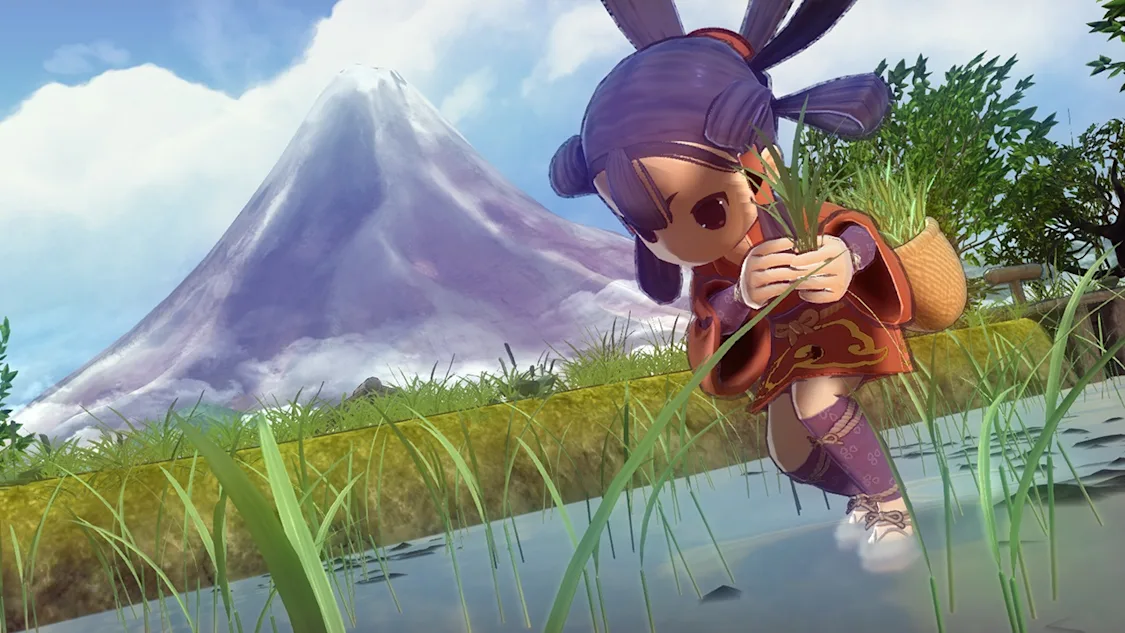
The process involves detailed attention to the crop from the beginning of the cycle. Players till the soil, plant seedlings, manage water, remove weeds, fertilize the fields, and eventually harvest the rice. Soil quality and water levels matter, creating a system that asks players to engage with the work rather than treating the field as a simple resource generator.
This loop gives the game a distinct pace. Time spent cultivating rice has a visible payoff in Sakuna’s growing abilities, while combat and exploration provide the resources and momentum needed to continue progressing. The day-night and seasonal cycle further frames farming as a repeated practice with its own rhythm. Growth is earned through care, observation, and persistence, not only through victories in battle.
Side-Scrolling Combat and the Divine Raiment
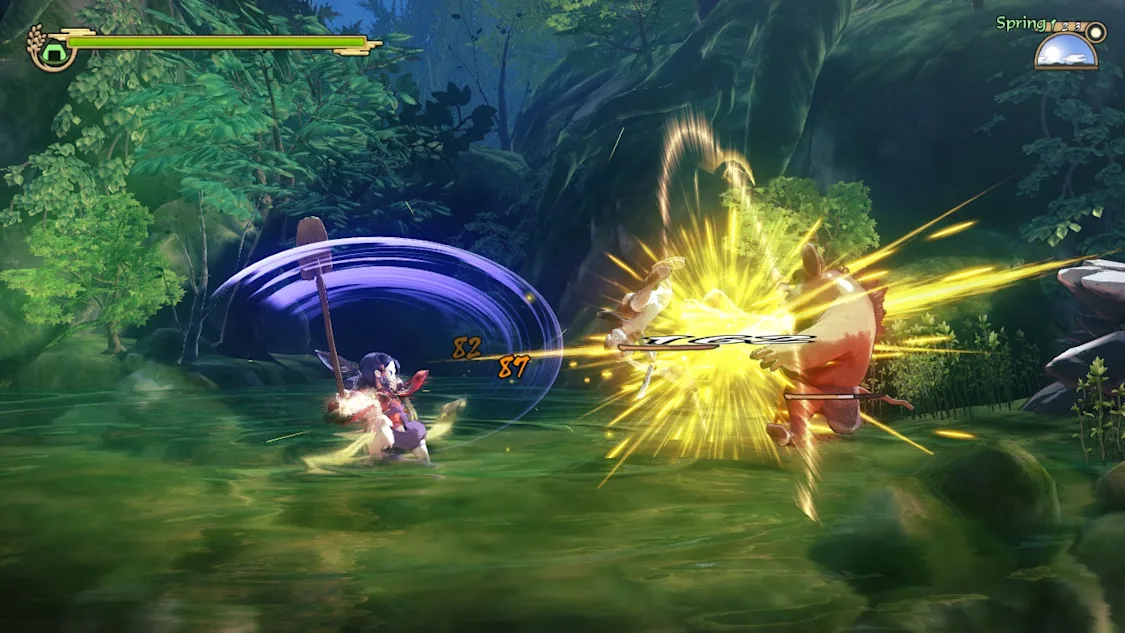
Alongside cultivation, Sakuna: Of Rice and Ruin Switch NSP delivers side-scrolling action built around mobility and a flexible set of attacks. Sakuna can use light and heavy attacks, special skills, and farming tools adapted for combat. The result is an action system where the implements of agricultural work also become part of her defense against demons.
Her divine raiment is especially important. It can be used for grappling and evasion, helping Sakuna move through dangerous spaces and respond to enemy pressure. That mobility supports the game’s platforming focus while giving encounters a more active, quick-moving feel.
Dungeons across the Isle of Hinoe bring together exploration, hidden discoveries, and different demon types. As Sakuna’s harvests improve, the stronger version of the goddess is able to take on greater challenges. The connection between the farm and the battlefield remains central: a successful growing season has immediate meaning when the next expedition begins.
5 Core Activities That Define Sakuna: Of Rice and Ruin
- Fight with purpose: Use light and heavy attacks, special skills, farming-tool attacks, and the divine raiment against demons in side-scrolling encounters.
- Raise better rice: Till, plant, water, weed, fertilize, and harvest crops while paying attention to conditions that affect harvest quality and Sakuna’s strength.
- Explore Hinoe’s dungeons: Travel through varied environments, seek hidden discoveries, and face the threats that occupy the demon-infested island.
- Craft and cook: Gather resources to forge weapons and armor, then prepare meals that grant Sakuna temporary buffs.
- Develop through action: Build character progression through productive harvests and defeated foes, unlocking abilities as Sakuna becomes more capable.
These activities are designed to feed into each other rather than compete for attention. Dungeon exploration and combat broaden the adventure beyond the rice field, while crafting and cooking add further uses for collected materials. Meals offer temporary benefits, equipment supports the challenges ahead, and rice cultivation provides the deeper long-term path for Sakuna’s advancement.
That structure can also support continued play for people who enjoy refining a process. Improving harvest quality is not merely a single requirement to clear; it is an incentive to keep learning how the farming systems affect Sakuna’s development. Players drawn to both action-platforming and methodical resource management have a practical reason to engage with each side.
Japanese Mythological Atmosphere and Character Growth
The game’s Japanese mythology aesthetic shapes both its setting and its central character. Sakuna is a harvest goddess, her divine raiment is integral to movement and combat, and the story begins in the Celestial Capital before moving to the isolated Isle of Hinoe. These elements support an atmosphere where farming, divinity, demons, and duty belong to the same world.
The emotional direction is grounded in a redemption story. Sakuna’s exile forces her to face consequences, learn responsibility, and care for the humans sharing her hardship. The bonds formed under pressure give the adventure a human focus even as its heroine battles monsters and performs divine work.
This balance makes the game suitable for players looking for an action game with a substantial farming system and a character-driven mythological setting. Its appeal lies in the contrast between demanding fieldwork and energetic combat, with each side reinforcing the other instead of existing as a separate mode.
Nintendo Switch Release Details for Sakuna: Of Rice and Ruin
The USA Nintendo Switch release date for Sakuna: Of Rice and Ruin Switch NSP was November 10, 2020. It is listed as a Platformer and Action Game, developed by Edelweiss and published by Marvelous (XSEED). The supported language options are English, German, Spanish, French, Italian, and Russian.
With its 6GB file size listed in the provided metadata, the release brings together the game’s demon-fighting action, detailed rice cultivation, crafting, cooking, dungeon exploration, and character progression in one Nintendo Switch experience. Its lasting identity comes from that interdependence: Sakuna does not simply farm between adventures; she farms because the harvest is how she becomes ready for the next one.