Under Night In-Birth Exe: Late[cl-r] Switch NSP
Report Link Error
Select the broken download file, then submit the report.
Screenshots
About Game
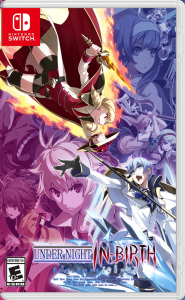
Under Night In-Birth Exe: Late[cl-r] Switch NSP is a Japanese-region Nintendo Switch release dated February 20, 2020. Published by Aksys Games, it belongs to the Action and Fighting genres and presents a supernatural conflict through one-on-one combat, character-specific powers, and a match system built around controlling momentum.
Under Night In-Birth Exe: Late[cl-r] on Nintendo Switch: A 2020 Fighting Game Overview
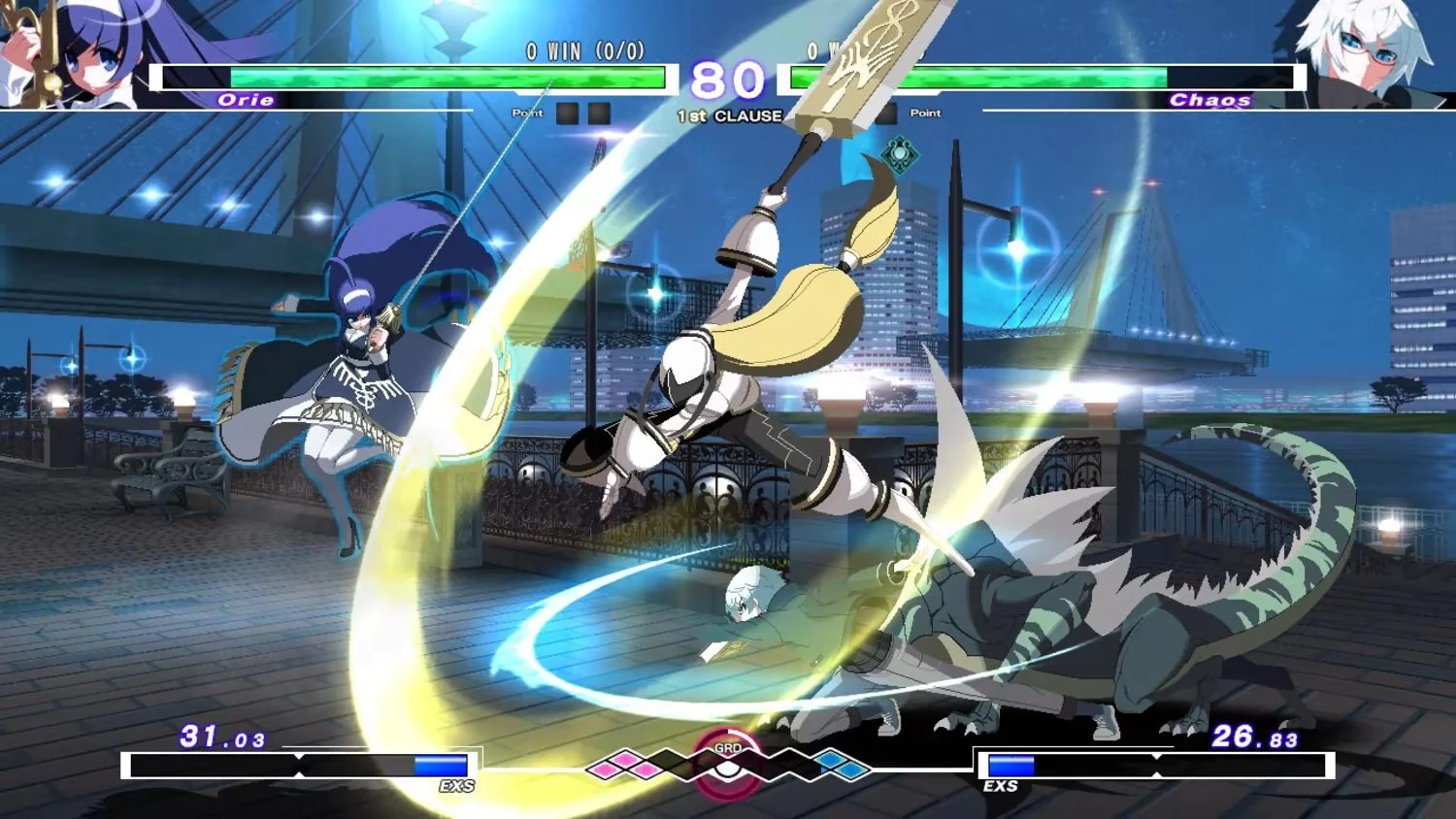
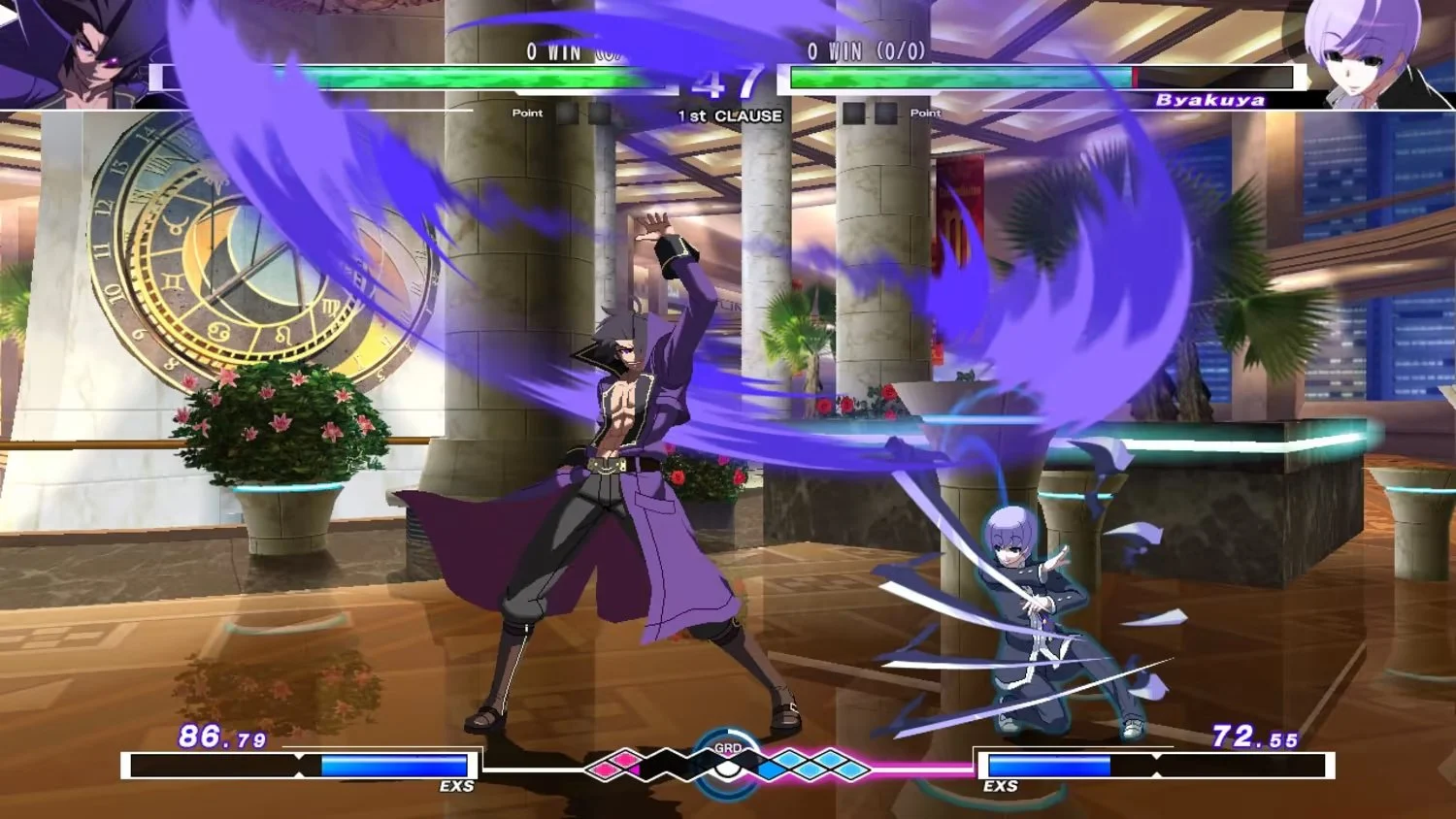
Released in 2020 for Nintendo Switch, Under Night In-Birth Exe: Late[cl-r] brings its dark fantasy setting and 2D fighting action to a portable platform. The game’s action is framed by a large cast of distinct combatants, each with individual fighting styles, special moves, and manifestations of supernatural power.
The presentation combines vibrant character visuals with an ominous world shaped by strange phenomena and personal rivalries. This is not simply a series of disconnected bouts: its combatants are tied to a larger cycle surrounding the Hollow Night, and the story gives their confrontations a broader context. That tension between expressive fighting-game spectacle and unsettling supernatural lore defines much of its identity.
For players approaching it as a Nintendo Switch fighting game, the central appeal is its mixture of familiar 2D fundamentals and a system that constantly asks both players to think about positioning, timing, pressure, and resources. Attacking matters, but so does knowing when an advance is worth the risk.
The Hollow Night and the Origins of In-Births
The world of Under Night In-Birth Exe: Late[cl-r] is organized around the Hollow Night, a supernatural occurrence that brings danger with it. During this event, creatures called Voids emerge and prey on people. The setting’s dread comes from the uncertainty of that encounter: survival alone is not the only issue.
Those who survive a Void encounter without losing their sanity become In-Births. These survivors gain EXS powers, extraordinary abilities that take different forms from person to person. That premise gives the cast a clear connection to the world’s mysteries while allowing each fighter’s abilities to feel individual rather than interchangeable.
The Hollow Night is therefore more than background atmosphere. It supplies the threat behind the story, explains the existence of the In-Births, and creates the conditions for repeated conflicts among characters with competing aims. The resulting tone is dark but energetic, pairing supernatural danger with the direct clarity of fighting-game confrontations.
Hyde Kido’s Entry Into a Supernatural Conflict
Hyde Kido begins as an apparently ordinary high school student before becoming an In-Birth himself. His change draws him into a struggle involving powerful organizations and enigmatic figures, moving him from everyday life into a world governed by the Hollow Night and its consequences.
Hyde’s role gives the Under Night story a useful point of entry. As he confronts formidable opponents, he is also trying to understand the truth of the Hollow Night and the nature of his own abilities. The narrative gives its battles a personal dimension: characters do not fight only to demonstrate their moves, but because they have motives connected to this dangerous supernatural cycle.
That character focus suits a supernatural fighting game especially well. Powers are not treated as abstract effects alone; they are part of the identity of the people using them. Hyde’s path into the conflict mirrors the player’s first encounter with the setting, beginning with uncertainty and moving toward a clearer sense of the forces involved.
GRD Explained: The Resource Tug-of-War at the Center of Each Match
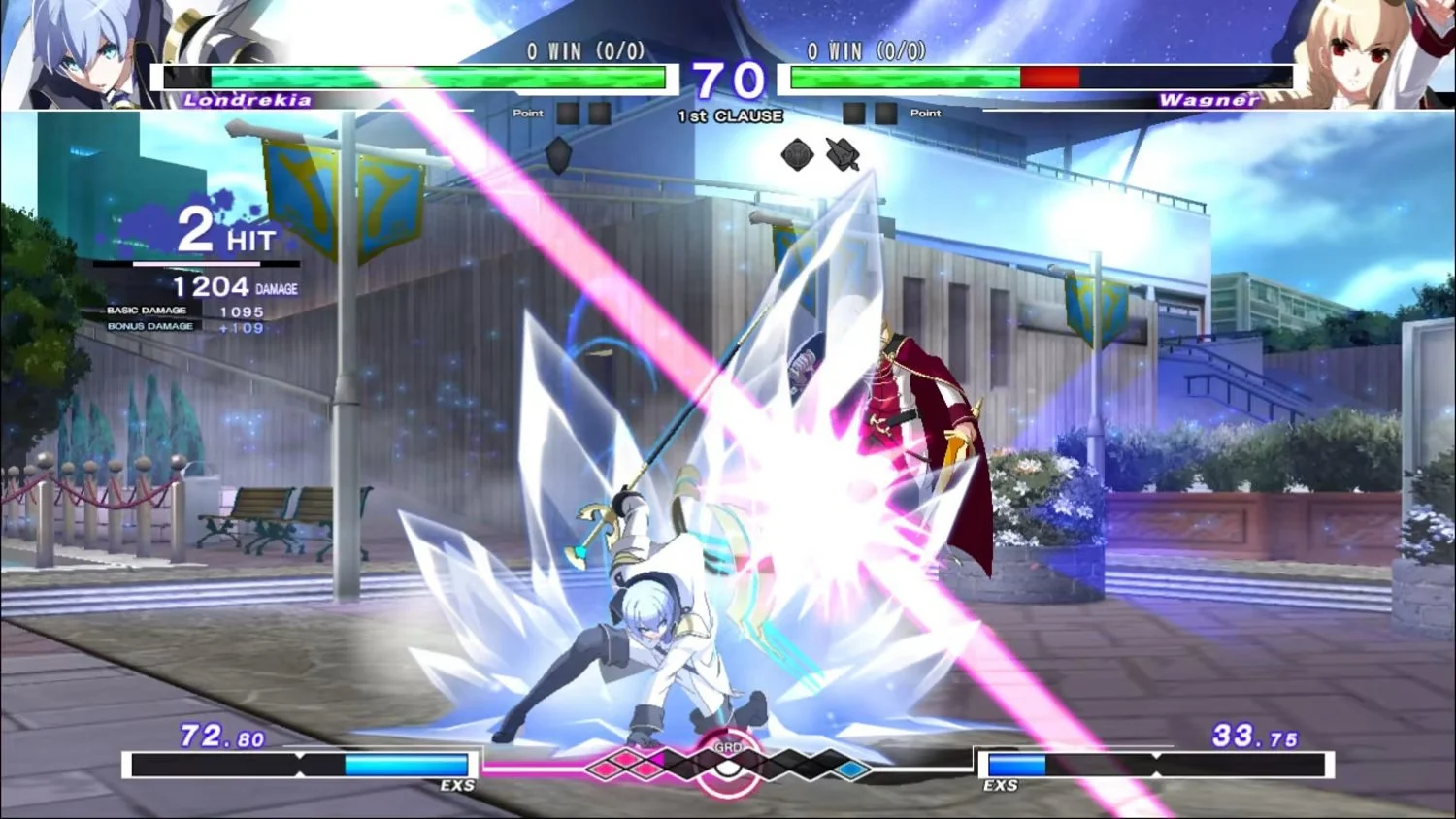
The Grind Grid System, or GRD, is one of the game’s defining mechanics. Rather than functioning as a passive meter in the background, it creates an active contest between opponents. Players build GRD through proactive actions such as moving forward and attacking, turning initiative into a visible resource advantage.
This makes the flow of a round more layered than a simple exchange of damage. Movement can carry strategic weight, and pressure is valuable not only for opening an opponent up but also for strengthening a player’s position in the GRD battle. The system encourages aggression, yet it does not remove the need for judgment. Reckless offense can still create openings, while measured advances can help establish control.
- Advance with purpose: Moving forward helps build GRD, making space and positioning part of the resource contest.
- Attack for more than damage: Offensive actions contribute to GRD, so pressure can improve a player’s wider match position.
- Watch the balance: GRD is a tug-of-war, meaning one player’s growing advantage is tied to the other player falling behind.
- Plan around momentum: The resource race asks players to consider when to press forward and when to avoid surrendering control.
- Turn advantage into options: Winning the GRD contest leads directly to Vorpal State and access to an important tactical tool.
For competitive fighting games, that kind of resource management can make individual exchanges feel consequential even before a major combo begins. It also gives players a reason to remain engaged in the neutral game, where movement, attacks, and timing determine who will claim the next major advantage.
Vorpal State and the Reward for Winning the GRD Battle
The player holding more GRD enters Vorpal State. This reward grants a power boost and access to Chain Shift, making the outcome of the GRD contest immediately meaningful. It is a system designed to reward deliberate aggression rather than aggression without direction.
Chain Shift expands what a player can do while in Vorpal State. It can cancel an action into an instant Vorpal activation or help extend combos, giving successful players additional offensive pressure and more room for creative sequences. Used at the right moment, it can change the pace of an exchange and create opportunities that would not otherwise be available.
The relationship between GRD, Vorpal State, and Chain Shift gives matches a recurring rhythm. Players first compete for the resource, then seek to make the most of the GRD advantage once it is secured. This supports replay value through decision-making as much as execution: different characters, different moments, and different levels of pressure can call for different uses of the same tools.
Under Night In-Birth Exe: Late[cl-r] Switch NSP is therefore best suited to players interested in a fighting game where stylish attacks coexist with a constant struggle for momentum. Newer players can engage with the direct logic of advancing and attacking to build GRD, while experienced players can explore the timing and combo possibilities opened by Vorpal State and Chain Shift.
A Multilingual Switch Release for Regional Players
This Japanese-region Switch edition supports English, Japanese, Chinese, and Korean. That language range makes the release relevant to players who want to engage with its story, menus, and fighting-game systems across several supported languages.
The verified release information places it on Nintendo Switch with a February 20, 2020 date, an Action/Fighting classification, and Aksys Games as publisher. Its combination of supernatural atmosphere, character-driven conflict, and competitive resource mechanics gives the game a clear focus: every match is both a battle of fighters and a contest for control of the Grind Grid.