Xenoblade Chronicles 3 Switch NSP XCI
Report Link Error
Select the broken download file, then submit the report.
Screenshots
About Game
Xenoblade Chronicles 3 Switch NSP XCI centers on a journey through Aionios, a land defined by conflict, uncertainty, and the hope that its cycle of war can be broken. Released for Nintendo Switch on July 29, 2022, this role-playing game from Nintendo places Noah and Mio at the heart of a story that crosses the divide between the nations of Keves and Agnus.
Aionios: The War-Torn Setting of Xenoblade Chronicles 3
Aionios is both the backdrop and the central pressure behind Xenoblade Chronicles 3. It is a striking world, but it is not a peaceful one. Keves and Agnus remain locked in an ongoing conflict, and the people caught within it live under a system where lives are measured in ten-year terms known as lifespans.
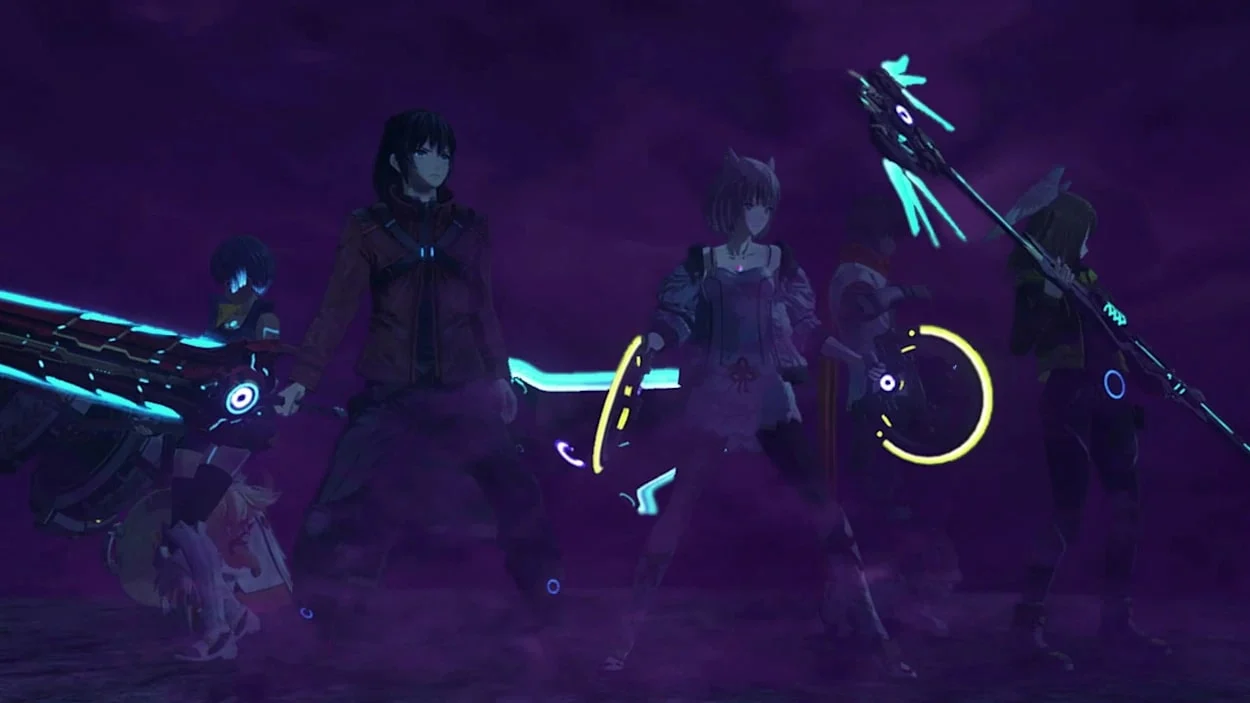
Noah and Mio begin on opposing sides of this struggle. Alongside their companions, they are drawn into a search for the truth behind the war and the forces sustaining it. The presence of Moebius adds another layer of mystery to the journey, suggesting that the conflict is not simply the result of two rival nations. The stakes are personal as well as world-changing: the party is seeking a future beyond a system built around endless fighting.
That tension shapes the atmosphere of Aionios. Its wide landscapes invite travel and discovery, yet every region exists under the shadow of danger. The game’s story and exploration work together, making the journey through the world feel connected to the party’s larger attempt to understand it.
Real-Time Combat and Seven-Character Party Management
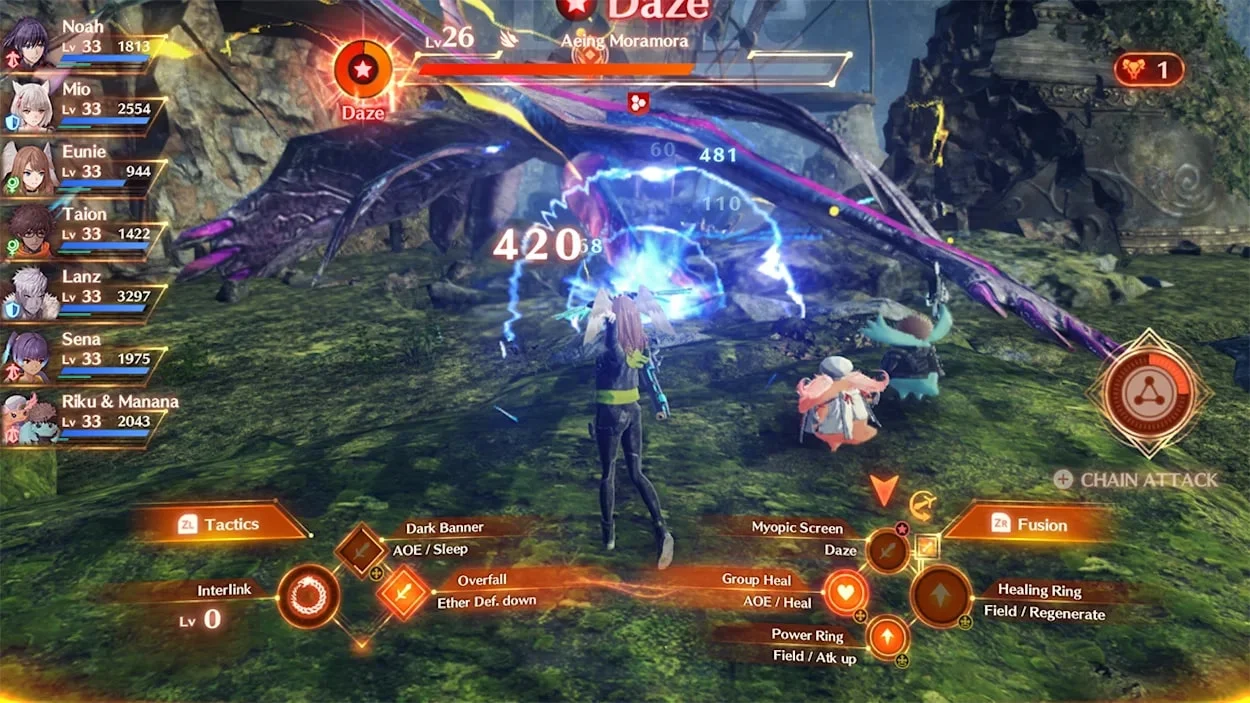
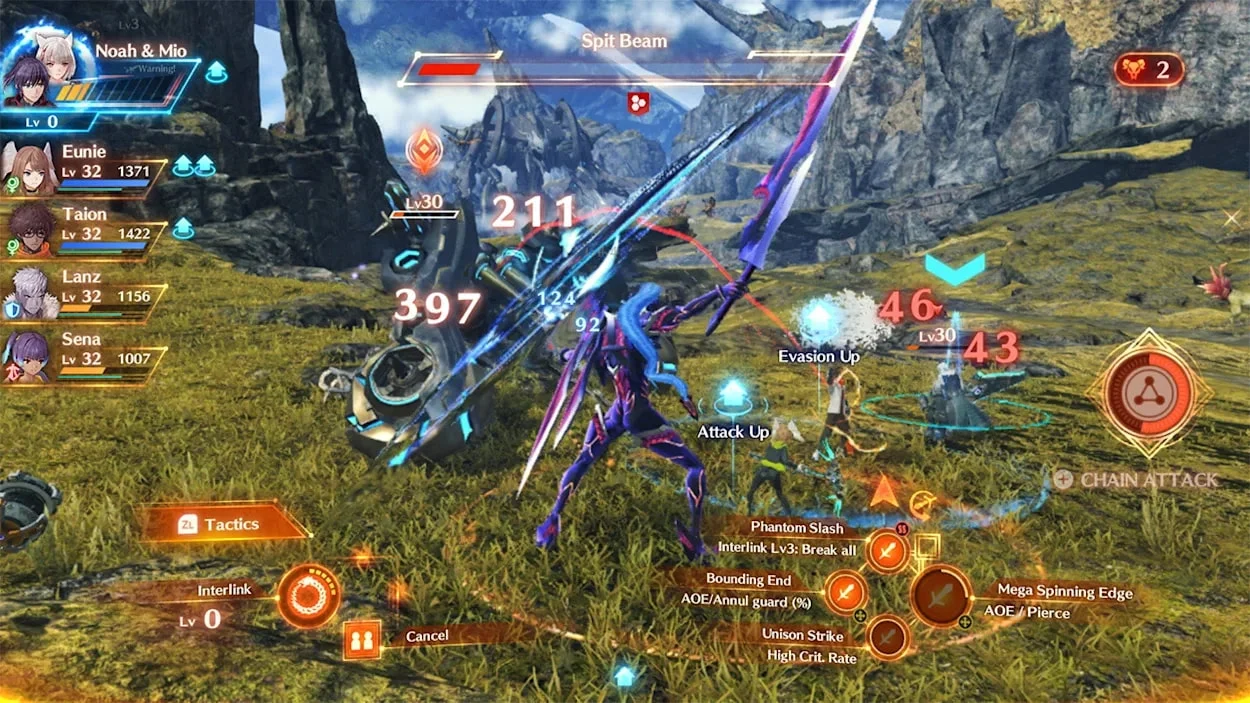
Xenoblade Chronicles 3 combat unfolds in real time, with movement from exploration into battle keeping the action flowing. Rather than controlling a single hero in isolation, players manage a group of up to seven characters simultaneously. This gives encounters a busy, tactical quality, especially when several roles must work together at once.
The party is organized around familiar RPG roles: attackers deal damage, defenders draw attention and protect allies, and healers support the group when pressure builds. Success depends on more than simply choosing strong attacks. A defender needs to keep enemies occupied, attackers need room to act, and healers need to remain in position to sustain the party.
The scale of the seven-character party encourages active management. Different battle situations may call for different role arrangements, and understanding where each character fits is an important part of progressing through difficult fights. The system rewards players who pay attention to party balance instead of relying on one approach for every encounter.
Ouroboros Forms, Arts, and Party Synergy
Combat becomes more strategic through the use of Arts, character abilities that can be combined with the wider structure of the party. Arts give individual characters distinct tools in battle, while party coordination creates opportunities for stronger sequences and more effective responses to enemies.
Ouroboros forms are a key part of this combat identity. Combined with character abilities, they can produce powerful attacks and reinforce the sense that the party’s strength comes from cooperation. The important consideration is not only when to use an ability, but how that choice fits with the actions and roles of the rest of the group.
This makes Xenoblade Chronicles 3 strategy flexible rather than fixed. An encounter that challenges one party setup may become more manageable after changing classes, reconsidering Arts, or adjusting the group’s role balance. The combat system has enough moving parts to support experimentation while still grounding its decisions in clear attacker, defender, and healer responsibilities.
Exploring the Interconnected Regions of Aionios
Aionios is built around large, interconnected areas that encourage players to look beyond the immediate path. Its regions feature diverse biomes, notable landmarks, hidden discoveries, and creatures that can present a serious challenge. Exploration is not separated from the RPG progression loop; it helps feed it through experience, rewards, and new opportunities.
Some of the appeal comes from the contrast between the world’s natural beauty and its dangerous conditions. A distant landmark can become a reason to travel farther, while an unexpected enemy can turn a routine route into a test of preparation. The result is a Nintendo Switch exploration experience that asks players to remain curious without suggesting that every discovery will be risk-free.
Colony relations also give the world a community-focused dimension. Helping communities can unlock side quests and rewards, making time spent away from the main journey meaningful. These optional activities can also reveal more character-focused material, adding to the value of revisiting areas and following leads that are not strictly required for forward progress.
Classes, Accessories, and Character Progression
Character progression in Xenoblade Chronicles 3 Switch NSP XCI is tied closely to party customization. Classes provide ways to adapt characters to different combat scenarios, while Arts and accessories allow further adjustment. Instead of treating the party as a fixed collection of roles, players can shape its approach around the threats they expect to face.
Accessories are particularly useful for refining a build after identifying what the group lacks. A party that struggles to stay alive may need stronger support and defense, while another that handles damage well may benefit from adjustments that improve its ability to control a battle. Regular Arts upgrades also matter, ensuring that the party’s core abilities continue to develop alongside its changing classes.
This progression supports replay value in a practical sense: class combinations and party arrangements offer reasons to revisit combat setups and test different strategies. It is well suited to players who enjoy role-playing games with substantial party management, broad exploration, side activities, and a combat system that rewards preparation.
7 Practical Xenoblade Chronicles 3 Combat and Exploration Tips
- Try new class combinations. Experimenting early can reveal party setups that better suit different enemy types and battle situations.
- Read the party balance. Assess the strengths and weaknesses of attackers, defenders, and healers before committing to a difficult encounter.
- Explore beyond the route. Large regions of Aionios contain landmarks, hidden discoveries, creatures, and opportunities that may not appear on the most direct path.
- Prioritize side quests. Optional tasks can provide rewards, experience, new features, and character stories, while colony relations can open further quests.
- Upgrade Arts regularly. Keeping abilities developed helps the party maintain its effectiveness as encounters become more demanding.
- Equip useful accessories. Review accessories often and use them to address gaps in a character’s role or the party’s wider plan.
- Prepare for major fights. Before facing formidable creatures or difficult battles, reconsider classes, Arts, accessories, and the party’s overall role distribution.
With its July 2022 release, 14GB file size, and support for English, French, German, Italian, Japanese, Korean, Chinese, and Spanish, Xenoblade Chronicles 3 remains a substantial Nintendo role-playing adventure focused on Aionios, coordinated combat, and the freedom to shape a seven-character party.
Recommended Similar Games
 South Park The Fractured but Whole Switch NSP XCIView Game
 Cosmic Star Heroine Switch NSPView Game
 Cassette Beasts Switch NSPView Game
 Pillars of Eternity: Complete Edition Switch NSPView Game
 AKIBA’S TRIP: Undead & Undressed Director’s Cut Switch NSP XCIView Game
 FANTASY LIFE i: The Girl Who Steals Time Switch NSPView Game
