Rune Factory Guardians of Azuma Switch NSP

Report Link Error
Select the broken download file, then submit the report.
Screenshots
About Game
Rune Factory Guardians of Azuma Switch NSP places its adventure in a land where farming, exploration, combat, and community life are tied to a larger effort to heal a fading world. Released on June 5, 2025, this role-playing action game follows an amnesiac newcomer whose connection to Azuma may be the key to restoring its lost vitality.
Azuma’s Ecological Crisis and the Guardian’s Role
Azuma is not presented as a peaceful countryside in need of a few chores. Its ecological crisis reaches into every part of the setting: crops are withering, magic is weakening, and ancient spirits that were once benevolent have become restless. Their unrest is draining the land’s vitality, giving the central conflict a clear sense of urgency without separating it from the game’s daily activities.
The protagonist awakens after washing ashore with no memories, then learns of a distinctive bond with the land. The path ahead is to become a Guardian and help return Azuma to balance. That mission connects cultivation with dungeon travel and encounters with guardian creatures. The premise gives farming a meaningful place in the adventure rather than treating it as a detached side activity.
There is a pleasing contrast in this setup. Azuma is a magical place populated by spirits and monsters, but its recovery depends on patient work as much as heroic action. A field tended over time, a creature brought into the fold, and a dangerous expedition can all feel like parts of the same restoration effort.
Farming Through the Seasons in Azuma
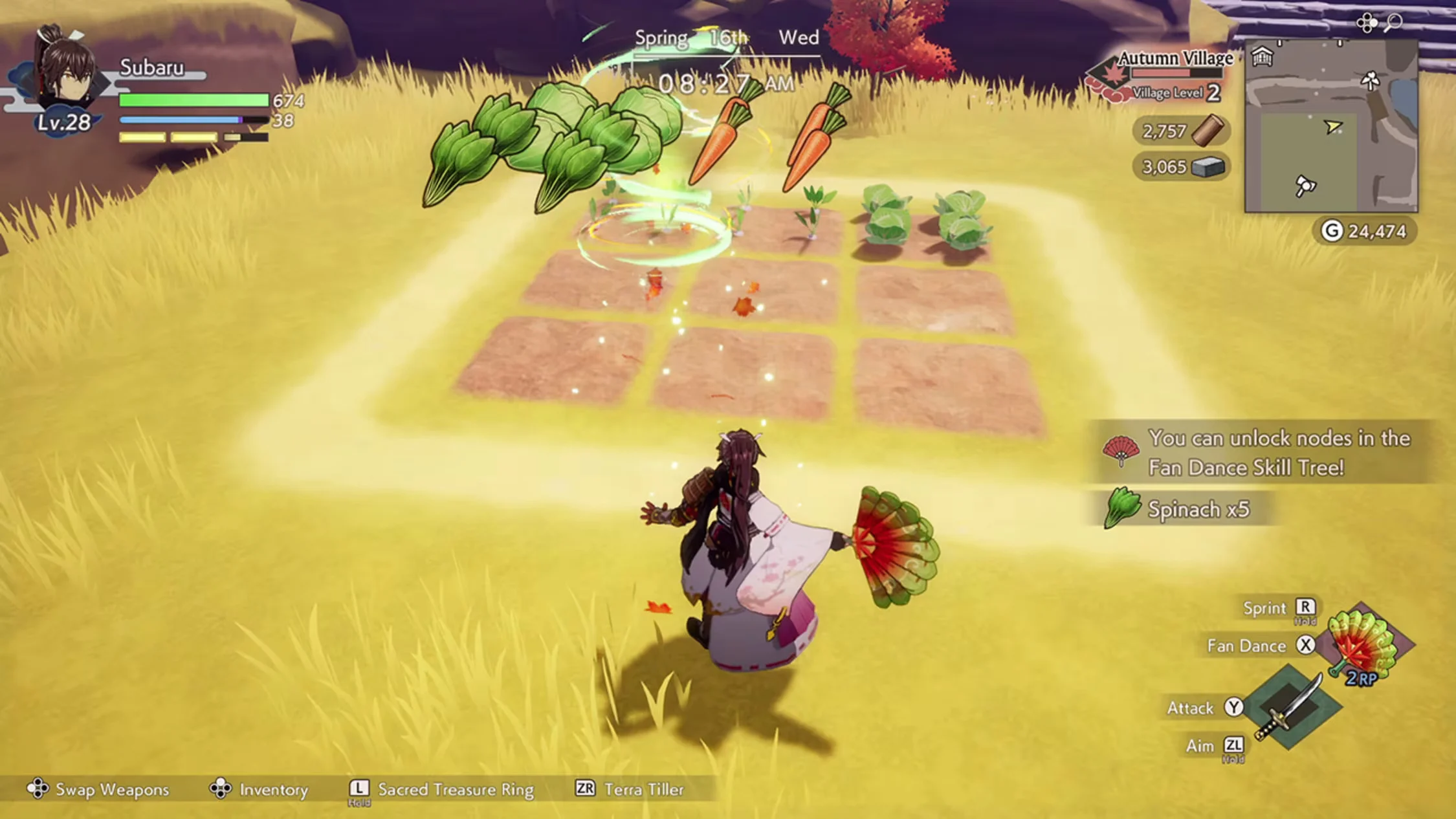
Farming supplies a steady rhythm between more hazardous outings. Players cultivate crops, work around seasonal crop cycles, and raise livestock, with each season bringing its own opportunities and challenges. The changing calendar encourages attention to timing rather than a single routine that remains unchanged throughout the adventure.
Farm work also supports progression. Crops and livestock can provide resources and income, while a well-managed plot helps fund the wider journey. Early tool upgrades are especially useful because they can improve efficiency and crop yields, making regular maintenance more productive. This practical link between farm work and advancement gives the quieter portions of Azuma a clear purpose.
The game’s broader crafting, cooking, and forging systems build on that foundation. Resources gathered through cultivation and exploration can contribute to tools, meals, and equipment. The result is a loop in which preparation matters: tending the farm helps support expeditions, while expedition rewards can expand what is possible back at home.
- Build a routine: Keep crop cultivation active so the farm continues to provide income and useful resources.
- Respect the seasons: Seasonal crops create changing priorities and reward planning around the calendar.
- Improve tools early: Better farming tools can help increase efficiency and make daily work more manageable.
- Make dungeon trips count: Even shorter visits can provide experience, recipes, loot, and crafting materials.
- Prepare for major fights: Saving before a new boss encounter is a sensible safeguard before taking on a tougher challenge.
Real-Time Combat, Weapons, and Magic
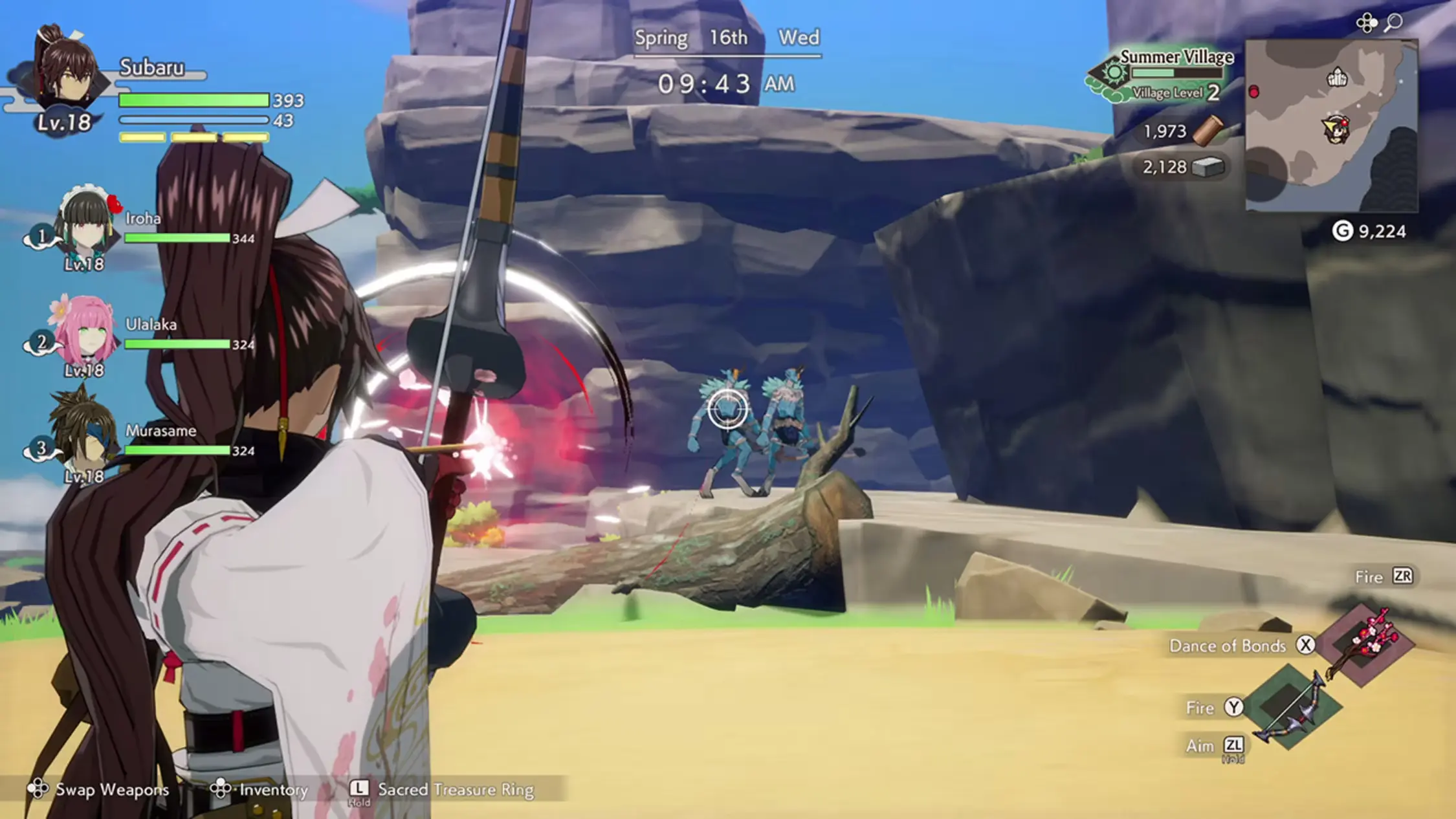
Beyond the farm, the action side of the game is built around real-time combat. Azuma’s dungeons contain enemies that call for direct engagement, and players can use different weapons and powerful spells while shaping a preferred combat style. This makes fighting more immediate than a menu-driven exchange, with preparation and choice playing an important role.
Weapons and magic offer room to approach encounters in different ways. Equipment can be strengthened through forging, while meals and crafted items add another layer to preparation. That combination matters when moving toward bosses, which are described as formidable encounters requiring strategy rather than simple persistence.
Combat also feeds naturally into character growth. Dungeon runs deliver experience alongside practical materials, so progress is not limited to winning a single battle. Players can return stronger, better equipped, and more familiar with the threats ahead. The action focus should appeal to those who want their role-playing progression paired with active battles rather than farming alone.
Exploring Spirit-Filled Dungeons
The dungeons are where Azuma’s magical unrest becomes most tangible. These spirit-filled spaces are populated by monsters and contain hidden treasures, valuable loot, recipes, and crafting materials. They are also central to the Guardian’s larger task, since the journey to restore balance requires venturing beyond the safety of town and field.
Exploration has several rewards operating at once. Experience helps strengthen the protagonist, loot can support equipment and supplies, and materials feed crafting, cooking, and forging. This gives repeated dungeon visits a practical reason even when a player is not advancing directly toward the next major confrontation.
Procedurally generated dungeons add variety to those expeditions. Combined with enemy encounters and hidden rewards, that structure supports replay value through repeated runs for resources, recipes, and growth. The atmosphere is more perilous than the farm, yet it remains tied to the same central economy of work, preparation, and recovery.
Monster Taming for Farm and Battle Support
Monster taming extends the game’s blend of domestic life and adventure. Monsters can be recruited and tamed, then assigned roles as combat companions or farm helpers. That dual purpose is important: creatures are not only enemies found in dungeons, but potential allies who can contribute to life in Azuma.
A monster companion can make dangerous exploration feel less solitary, while farm helpers can support the day-to-day workload. The system also reinforces the setting’s relationship with its creatures. Since the protagonist is working to restore balance in a land disturbed by ancient spirits, befriending powerful guardian creatures and recruiting monsters fits the wider theme of rebuilding harmony.
This flexibility gives players another way to shape their priorities. Some may focus on help for combat encounters, while others may value assistance with the farm. Both uses contribute to the same progression cycle, making monster recruitment more than a collection activity.
Friendships, Romance, and Town Life
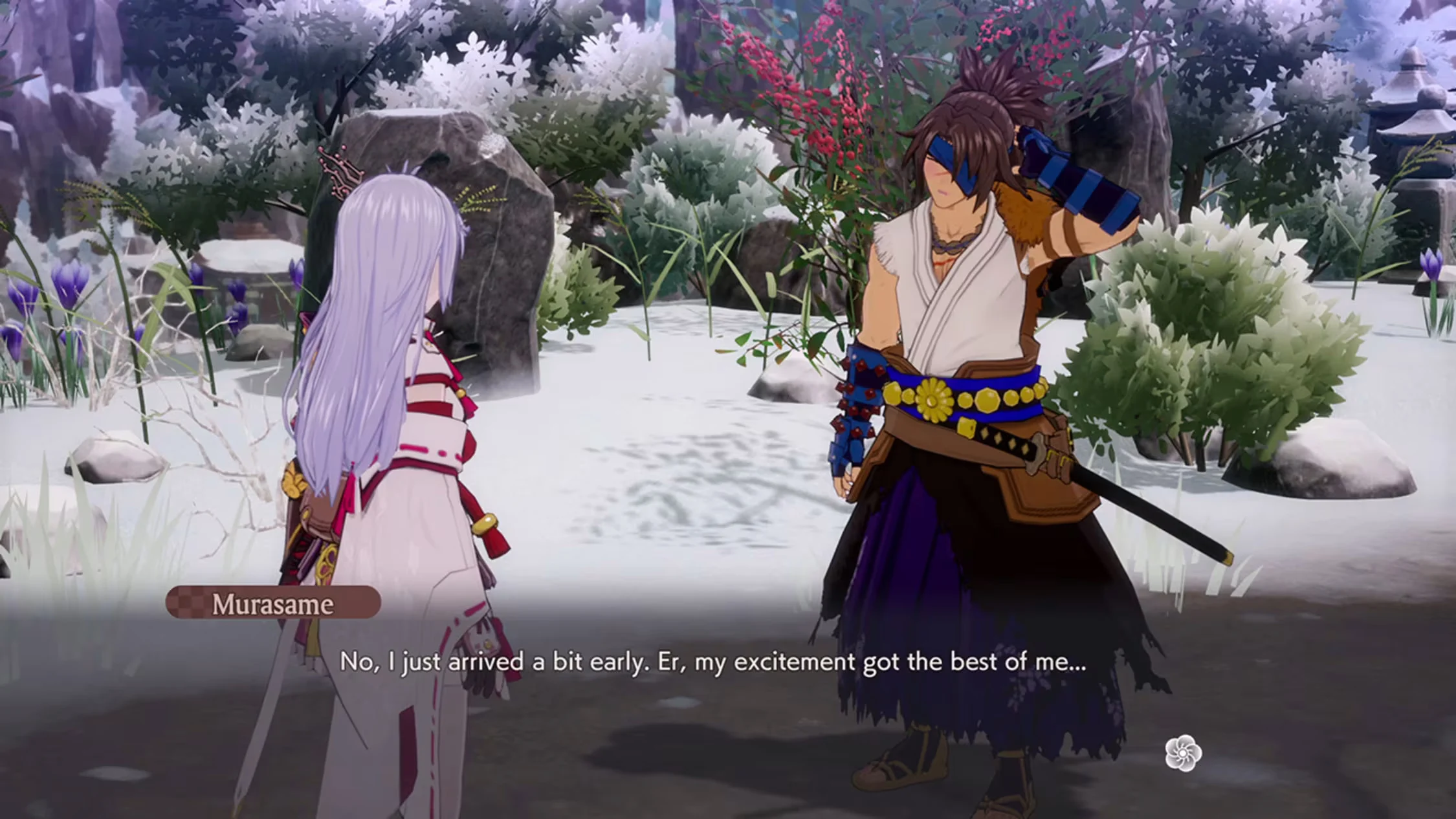
Azuma’s townsfolk bring a social dimension to the Guardian’s work. Daily conversations and gifts can deepen relationships, while festivals provide community events with mini-games and rewards. These activities give the town a lived-in quality between farming sessions and dungeon expeditions.
Relationships also have practical and narrative value. Stronger bonds can unlock new stories, quests, useful items, support, and important story insights. The social systems are therefore connected to progression, not simply an optional pause from the main adventure.
Romance is available with eligible bachelors and bachelorettes, leading to marriage and family. Players interested in a longer-term life-simulation thread can pursue those connections alongside the central mystery. For those drawn more to action, the relationship system still offers quests and rewards worth pursuing.
With English, French, German, Japanese, Chinese, Spanish, and Taiwanese language options listed for the USA region, Rune Factory Guardians of Azuma Switch NSP is positioned around a broad mix of farm management, active combat, dungeon exploration, creature companionship, and relationship-building. Its most fitting audience is players who enjoy seeing those systems support one shared journey through a magical land in recovery.
Recommended Similar Games
 NieR:Automata The End of YoRHa Edition Switch NSPView Game
 Borderlands: The Pre-Sequel Ultimate Edition Switch NSP XCIView Game
 Ys Memoire: Revelations in Celceta Switch NSPView Game
 Super Crazy Rhythm Castle Switch NSPView Game
 Pokémon Legends: Arceus Switch NSP XCIView Game
 NEO: The World Ends with You Switch NSPView Game
