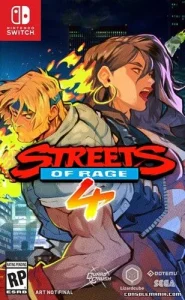
Streets of Rage 4 Switch NSP XCI
Report Link Error
Select the broken download file, then submit the report.
Screenshots
About Game
Streets of Rage 4 Switch NSP XCI returns to Wood Oak City with a deliberately familiar kind of arcade intensity: crowded streets, dangerous gangs, quick decisions, and a fight that can turn on the timing of a single move. The game carries the series forward by preserving the direct appeal of a side-scrolling brawler while giving its action a more fluid, responsive presentation.
Wood Oak City Ten Years After Streets of Rage 3
The Streets of Rage 4 story begins ten years after the events of Streets of Rage 3. Wood Oak City is again under threat, this time from a new criminal syndicate led by the Y twins, the children of Mr. X. It is a straightforward setup, but one that suits the game’s purpose: the city needs defending, and its returning heroes have a reason to take the fight from one hostile encounter to the next.
Axel Stone and Blaze Fielding return to the streets alongside Adam Hunter. They are joined by Cherry Hunter and Floyd Iraia, giving the conflict a mix of familiar faces and newer fighters. The narrative does not distract from the action; instead, it provides the tension behind each stage and reinforces the sense that Wood Oak City has fallen under organised criminal pressure.
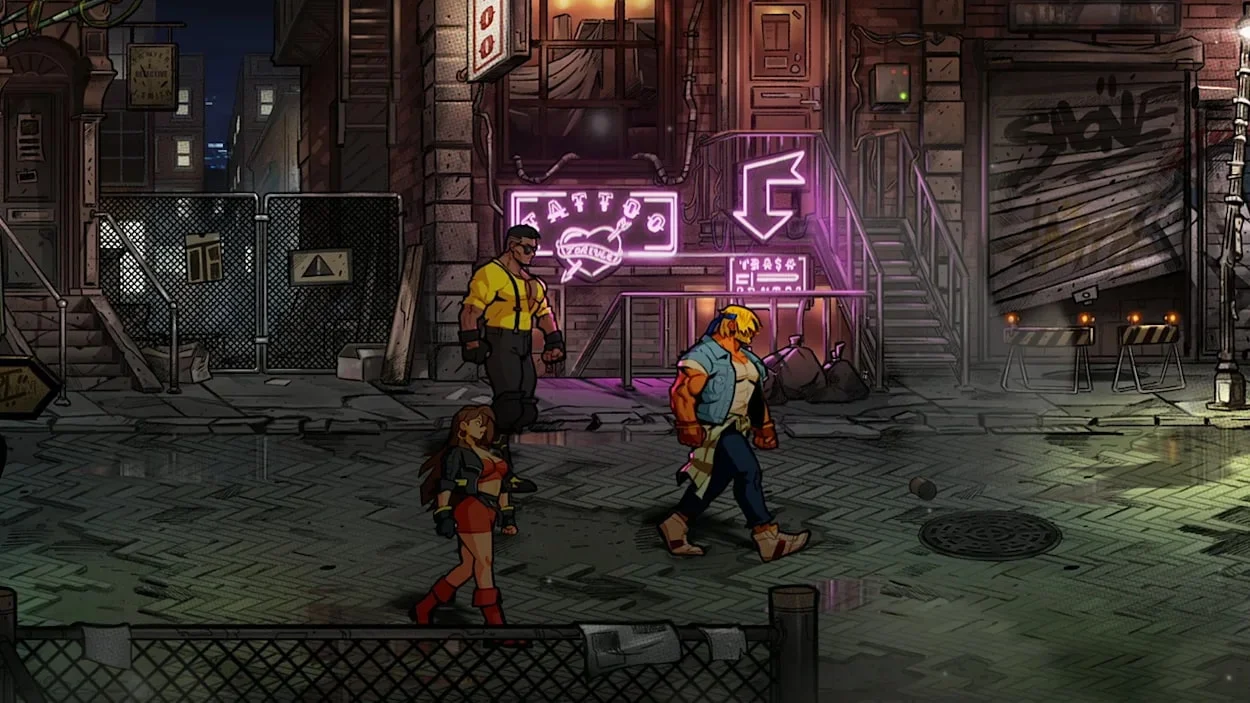
That setting helps create the game’s atmosphere. The streets are not merely backgrounds for enemies to cross. They frame a campaign about reclaiming a city block by block, with each confrontation contributing to the larger effort to stop the Y twins’ syndicate. The premise is classic good-versus-evil brawling, presented with enough continuity to connect the game to the earlier series.
How Streets of Rage 4 Modernizes the Side-Scrolling Beat ’Em Up
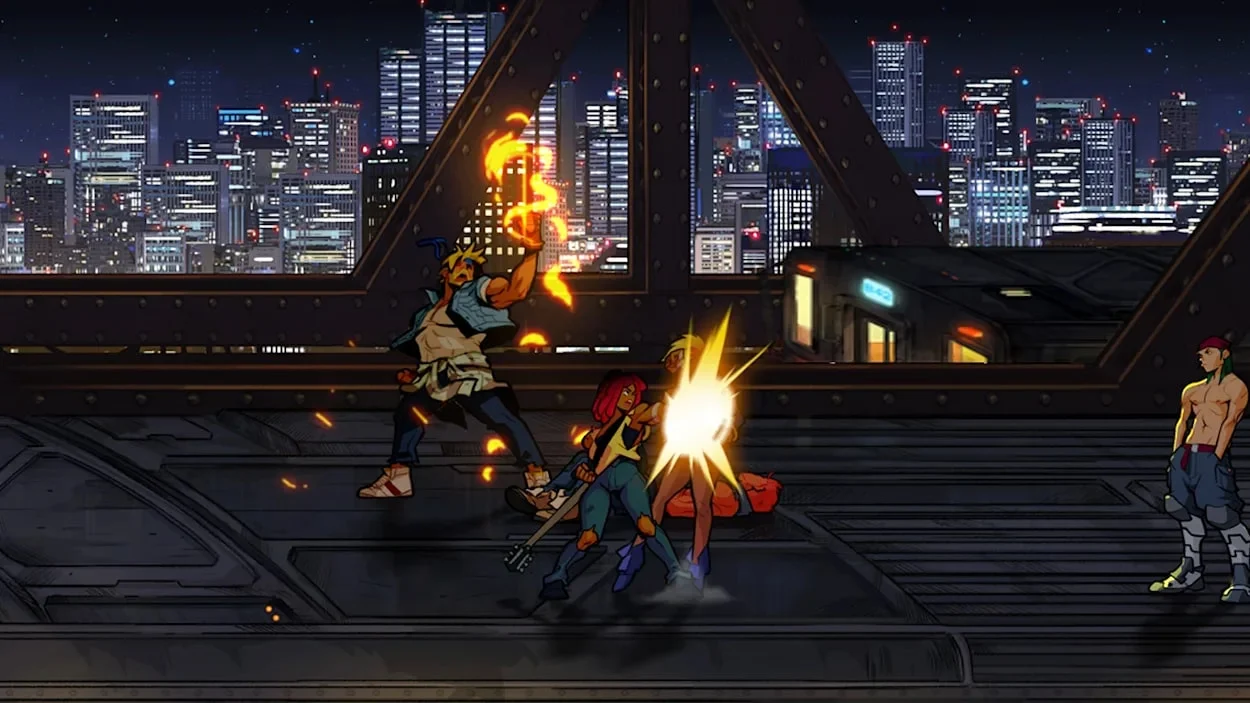
Streets of Rage 4 is built around the classic side-scrolling beat ’em up structure: move through stages, face waves of enemies, and use positioning as carefully as attacks. Its modern touches are most apparent in the feel of combat. Responsive controls, smooth animation, and clear visual feedback make it easier to read the result of an attack, a throw, or a special move in the middle of a busy fight.
For a Nintendo Switch fighting game, it favors immediate action without abandoning the need for awareness. Enemies can surround a player, weapons can change the shape of an encounter, and environmental hazards can become tactical tools. The screen can grow chaotic, yet the combat is designed to reward deliberate movement and well-timed choices rather than unfocused input.
The presentation supports that clarity. Hits register with satisfying impact, characters move fluidly, and the action makes room for players to identify incoming danger. This is important in a genre where control of space matters. A player who can see the opening, step into the right lane, and interrupt an enemy’s approach has more options than one simply trying to overpower every crowd.
Combat Systems Built Around Combos and Character Styles
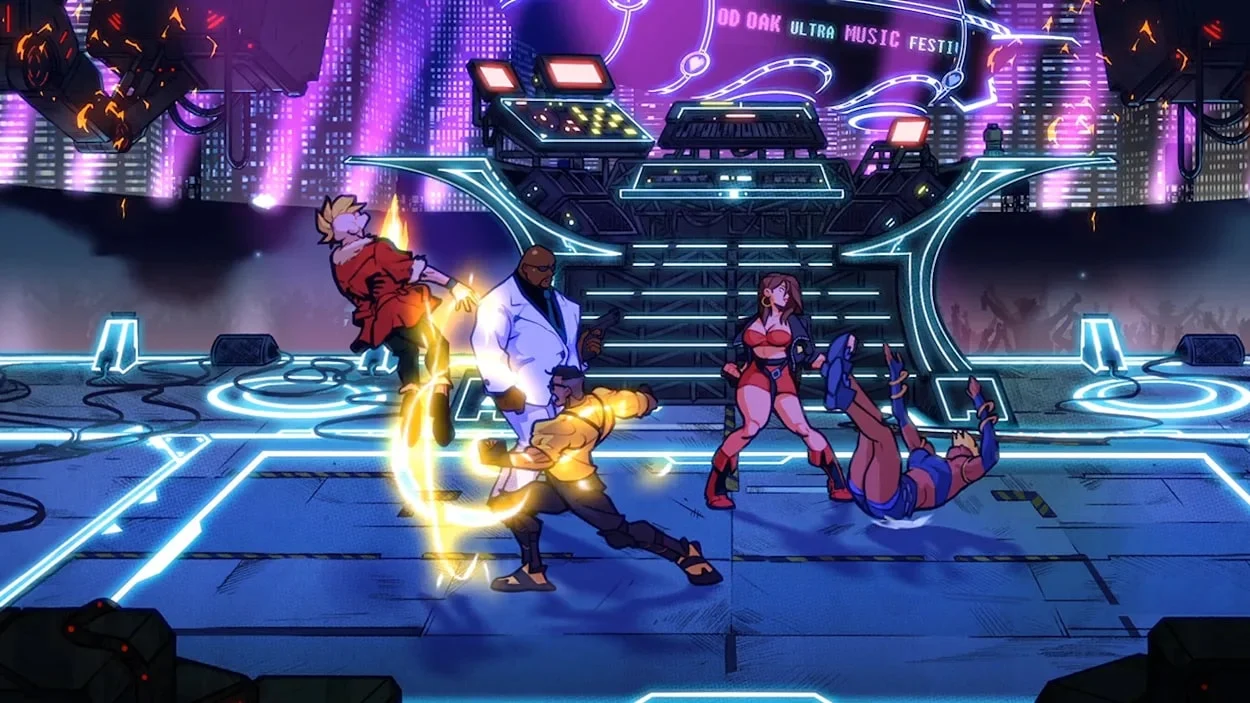
The heart of Streets of Rage 4 gameplay is its combination of distinct character fighting styles and a combat system that encourages attack chains. Each fighter has unique strengths and special moves, so the same group of enemies can call for different responses depending on who is selected. Some situations invite quick pressure; others call for stronger attacks, throws, or a move that creates space.
Combos are more than a visual flourish. Chaining attacks, throws, and special moves can keep a sequence active while improving scores. Keeping enemies airborne is another useful way to maintain control and extend pressure before an opponent can respond. The result is beat ’em up combat with an emphasis on rhythm: establish an opening, continue the chain, and avoid letting the enemy group reset around you.
Special attacks add a risk-and-reward element because they deplete some health. That health can be recovered by landing further attacks quickly, encouraging players to treat specials as active tools rather than panic buttons. Super Specials, activated with collected stars, offer another powerful option when an encounter demands a larger response.
Weapons, throws, blocks, and counters add further layers. A weapon found in a stage can alter a player’s immediate reach, while a throw can reposition an enemy or disrupt a crowd. Defensive decisions matter too: blocking and countering can help deal with enemy pressure when a direct rush would be unsafe. These systems give the game replay value because a stronger run is not only about finishing a stage, but about improving control, score, and efficiency.
Five Combat Habits to Improve Your Streets of Rage 4 Runs
- Know your fighter. Spend time with different characters and learn their strengths, special moves, and preferred range. A fighter who feels effective in one crowd may not be the best answer to another.
- Resist button mashing. The combat rewards rhythm and awareness. Watch how enemies approach, choose attacks with purpose, and leave room to react when the screen becomes crowded.
- Protect the combo. Link attacks, throws, and special moves when possible. Sustained combos improve scores and help keep opponents under pressure rather than allowing them to regroup.
- Spend specials thoughtfully. Special moves can deal major damage, but they also cost health. Use them when they solve a real problem, then continue landing attacks to recover that lost health.
- Adapt to pressure. When enemies close in, reposition instead of forcing the same attack pattern. Use throws, weapons, blocks, counters, or environmental hazards to regain control.
Solo Brawling and Playing With Friends
The game works as a focused solo action experience because its combat systems give one player plenty to manage. Character choice, combo maintenance, weapon use, and health management create a steady series of decisions. A solo run can become a practical exercise in learning enemy pressure and refining the timing of attacks.
Playing with friends changes the feel without changing the underlying appeal. The same street fights become shared moments of coordination, improvised rescue, and overlapping attacks. Its cooperative appeal comes from the accessibility of the basic action and the added satisfaction of working through difficult encounters together. Streets of Rage 4 Switch NSP XCI is therefore suited to players who want a direct arcade-style brawler as well as groups looking for energetic Switch co-op action.
Nintendo Switch Release Details and Language Support
Streets of Rage 4 released for Nintendo Switch on April 30, 2020. It was published by Dotemu and developed by Lizardcube and Guard Crush Games. The title is classified as a Fighting Game and is listed for Europe, USA, and Japan.
Language support includes English, French, German, Italian, Spanish, Russian, Portuguese, and Japanese. The verified Title ID is 0100EC9010258000. The listed firmware information is Base – v10.1.0 and Update – v15.0.1. These details accompany a game defined by its blend of series history, modernized brawling, and a combat system that rewards practice without losing the immediate pleasure of a well-placed punch or perfectly continued combo.