Doki Doki Literature Club Plus! Switch NSP XCI

Report Link Error
Select the broken download file, then submit the report.
Screenshots
About Game
Doki Doki Literature Club Plus! Switch NSP XCI arrives on Nintendo Switch as a narrative-driven experience built around a deliberately disarming premise. It first resembles a bright school literature-club dating simulation, inviting players into conversations, poems, and growing friendships. That approachable surface is central to the game’s effect: Team Salvato uses familiar visual-novel rhythms to lead the player toward a far more unsettling psychological horror story.
What Doki Doki Literature Club Plus! Brings to Nintendo Switch
Doki Doki Literature Club Plus! Switch presents an enhanced edition of a story known for shifting its tone and challenging assumptions. The setting initially feels modest and welcoming: a school clubroom, a small group of students, and an emphasis on writing poetry together. Yet the experience is not content to remain a conventional romance-focused school story.
Its horror works through contrast. Cheerful character art, friendly exchanges, and the club’s everyday routines establish an inviting atmosphere before the narrative begins to complicate that comfort. The result is a game whose presentation asks players to pay attention not only to what characters say, but also to the expectations created by the format itself.
The Plus! edition also includes six new side stories. These stories explore the characters’ pasts, the formation of the Literature Club, and relationships that developed before the central narrative’s more disturbing events. They provide additional context for players who want to spend more time with the club beyond the main storyline.
A Deceptively Cheerful Literature Club Story
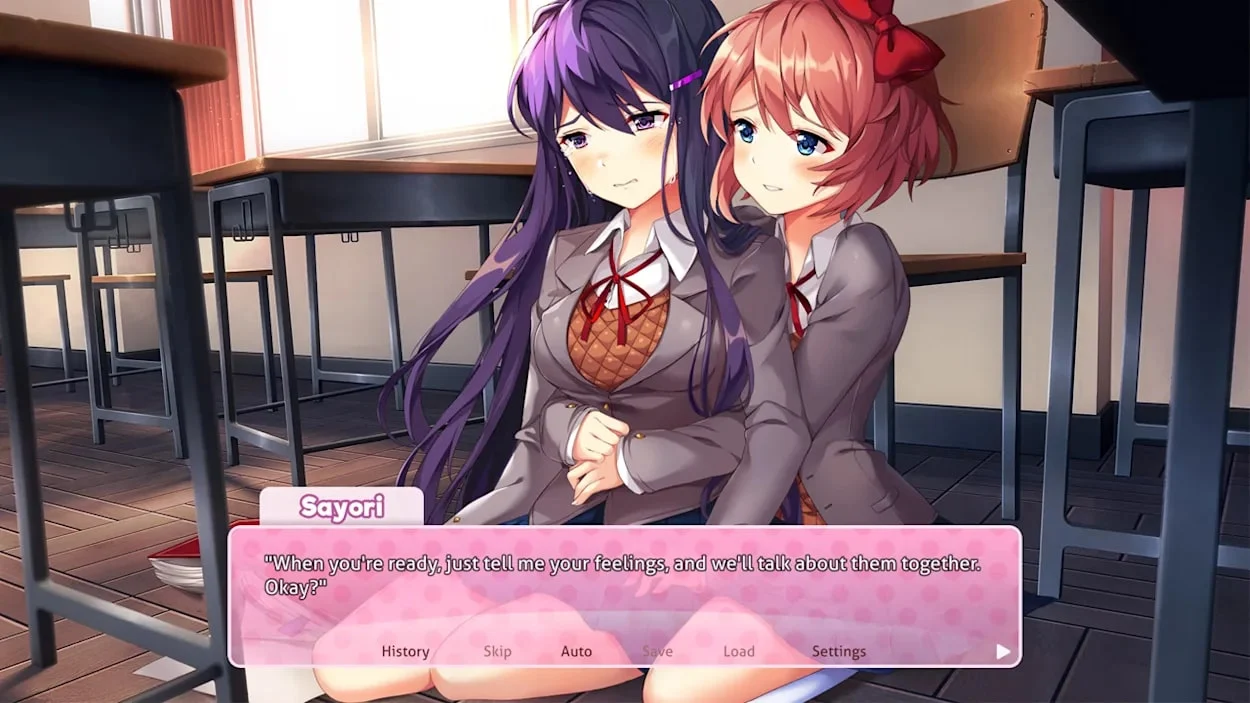
The Doki Doki Literature Club Plus! story begins with a male student accepting encouragement from his childhood friend, Sayori, to join the school’s Literature Club. There he meets the club president Monika, along with Yuri and Natsuki. Each member contributes to the early impression of a lively, personable group brought together by an interest in literature and poetry.
Sayori’s invitation gives the opening a familiar coming-of-age setup. Club meetings revolve around conversation, creative writing, and getting to know the other members. Monika is presented as the club’s assertive president, Yuri as shy, and Natsuki as energetic. These initial interactions make the Literature Club characters feel like the focus of a relationship-building visual novel.
That first impression is carefully sustained. The clubroom is a space for poetry-sharing and pleasant exchanges, and the player is encouraged to consider which characters they would like to understand better. The game draws on the language and structure of dating simulations, making its warmth feel intentional rather than incidental.
How Psychological Horror Changes the Narrative
The reassuring setup does not last. Doki Doki Literature Club Plus! psychological horror gradually reshapes the story, introducing disturbing developments that alter the meaning of the player’s earlier interactions. Rather than relying on a simple change in scenery, the narrative turns its attention toward the fragile assumptions behind its own genre conventions.
Mental health, self-awareness, and manipulation are among the themes woven into the story’s darker direction. The game also takes meta-fictional turns, challenging the boundary between the story being told and the player’s role in experiencing it. These shifts can make previously straightforward decisions and relationships feel less secure.
The strength of the Doki Doki Literature Club Plus! narrative lies in this tension between expectation and revelation. Its early friendliness is not separate from the horror; it is part of how the horror gains weight. Players are asked to reconsider what they have been shown, what they believe they can control, and what interactive storytelling can do when it deliberately unsettles familiar patterns.
That makes the game best suited to players interested in psychological horror and narrative experimentation. Its subject matter and unsettling turns give it a far more serious tone than its cheerful school-club presentation initially suggests.
Visual Novel Gameplay and Player Choices
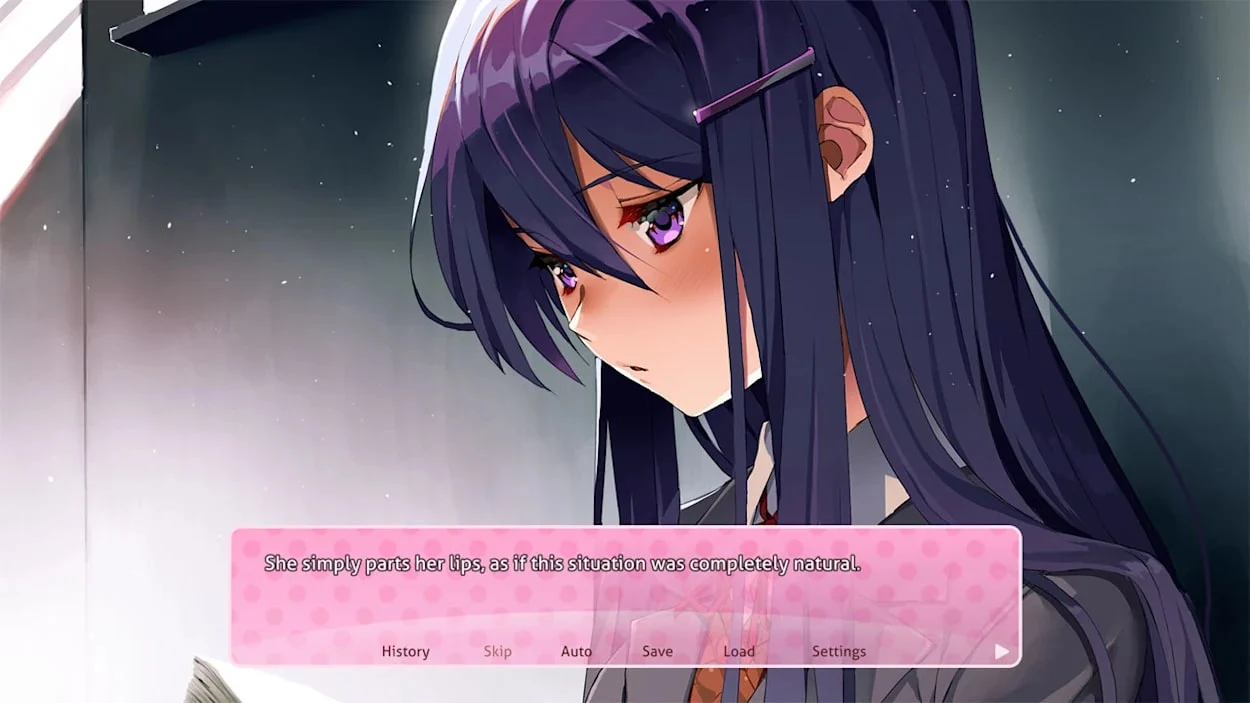
Doki Doki Literature Club Plus! gameplay follows the structure of a visual novel. Much of the experience involves reading dialogue, observing character interactions and expressions, and following the story as scenes unfold. The emphasis is on pacing, character dynamics, and the meaning that develops through repeated conversations rather than action-oriented challenges.
Choices periodically give the player a role in directing relationships and story paths. These decisions influence which club members the protagonist becomes closer to and can lead toward different outcomes. The branching structure encourages attention to small moments, since a choice can carry implications for the route that follows.
- Read closely: Dialogue and narrative text form the foundation of the experience.
- Meet the club: Character interactions establish different personalities and relationship paths.
- Make decisions: Player choices guide the direction of relationships and story developments.
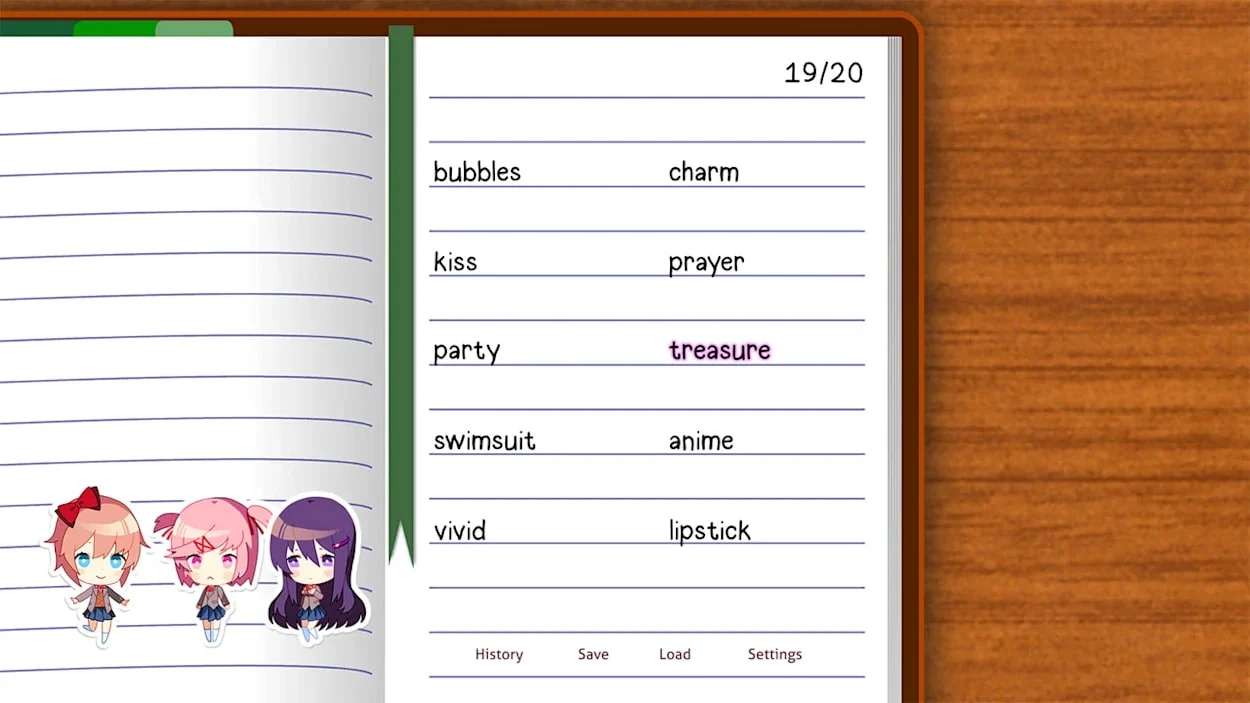
- Write poems: A word-selection mini-game lets players choose words that appeal more strongly to particular club members.
- Revisit paths: Branching storylines and different outcomes give the game replay value for those who want to explore more than one route.
The poetry mechanic is especially important because it turns character preference into a simple creative choice. Selecting words affects which character is more likely to respond positively, linking the act of writing directly to the game’s relationship progression. As the narrative changes, these systems take on a different emotional context, reinforcing the game’s interest in altered player expectations.
The exact keyword Doki Doki Literature Club Plus! Switch NSP XCI is associated with an experience that uses familiar visual-novel interaction as part of its larger psychological design. Reading, choosing, and revisiting routes are not merely supporting features; they help create the player’s sense of involvement before the story begins to challenge it.
Nintendo Switch Release Details and Supported Languages
The Doki Doki Literature Club Plus! release date on Nintendo Switch is June 30, 2021. The release is designated Free region, allowing the edition to be identified without a region-specific label.
Doki Doki Literature Club Plus! languages include English, French, Japanese, German, Italian, Spanish, Russian, and Portuguese. This language support gives a broad range of players access to a game whose impact depends heavily on dialogue, written poetry, character exchanges, and narrative detail.
The listed firmware requirement is 12.0.2 for both the base release and update. Its listed file size is 3.7GB.
Who Developed and Published Doki Doki Literature Club Plus!?
Doki Doki Literature Club Plus! Team Salvato identifies Team Salvato as the developer behind the game. Serenity Forge is listed as publisher, reflected in the Doki Doki Literature Club Plus! Serenity Forge credit.
The supplied genre classification is Role-Playing Game, though its moment-to-moment structure is centered on visual-novel reading, relationship decisions, and poetry selections. Its defining quality is the way those accessible systems support a story that moves from an inviting Literature Club routine into an unsettling examination of choice, character, and perception.