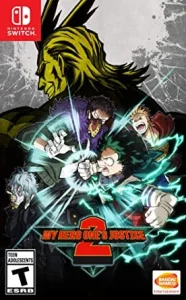
My Hero One’s Justice 2 Switch NSP
Report Link Error
Select the broken download file, then submit the report.
Screenshots
About Game
My Hero One’s Justice 2 Switch NSP refers to a 2020 fighting game that brings the hero-and-villain conflicts of My Hero Academia into fast-moving 3D battles. Developed by Byking and published by Bandai Namco, it focuses on dramatic arena clashes, character-specific powers, and a story that moves forward from the events covered in the first game.
My Hero One’s Justice 2 on Nintendo Switch: Game Overview
My Hero One’s Justice 2 is a fighting game built around wide 3D arenas rather than a fixed side-on plane. Players choose from heroes and villains, move through stages, and use attacks that reflect each combatant’s individual Quirk. The result is a combat style with room for direct close-range pressure, attacks from a distance, support calls, and large signature techniques.
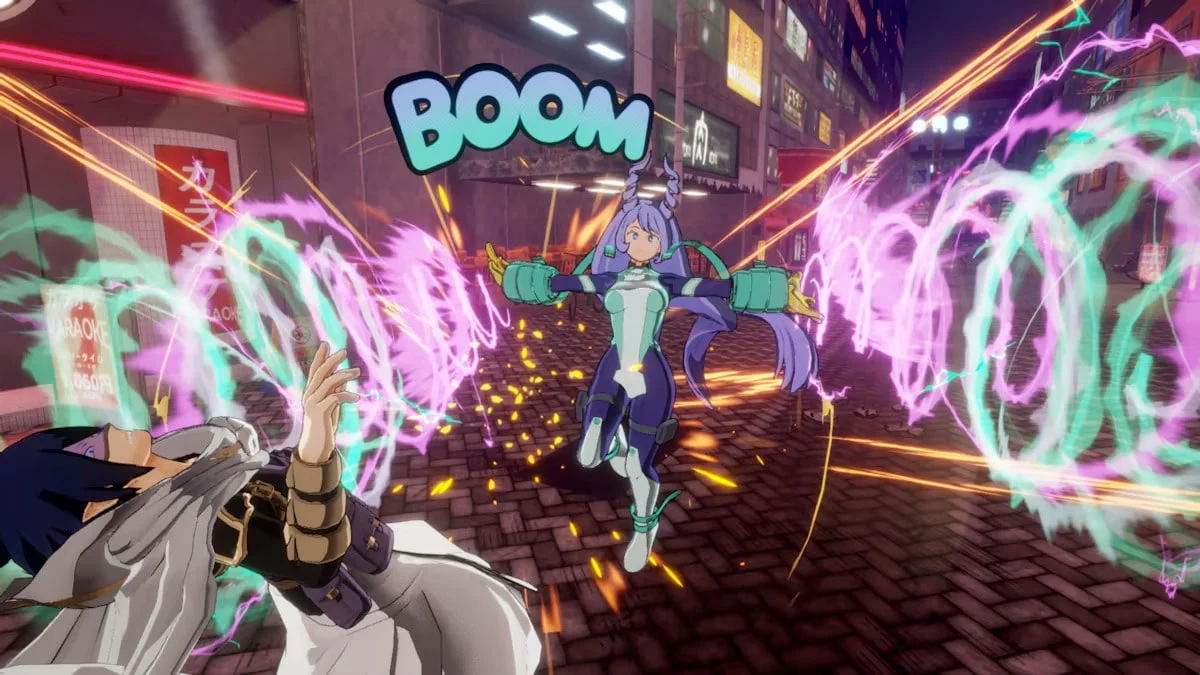
Byking’s fighting game approach places as much emphasis on the spectacle of a match as on its immediate strategy. Stages can be damaged during combat, giving encounters a suitably forceful feel as powerful attacks change the space around the fighters. Battles are designed to reflect the heightened action associated with the series: rapid movement, emphatic special moves, and confrontations between characters with sharply different abilities.
The Nintendo Switch version supports the same core arena format in portable play or on a television. Its presentation is closely tied to character identity, with familiar heroes and villains bringing their own attacks, movement options, and visual impact to the fight. That variety helps keep repeated matches from settling into one routine.
Story Mode and the Shie Hassaikai Arc
My Hero One’s Justice 2 story mode continues after the narrative material covered by the first game. It begins with the Shie Hassaikai arc, placing players in the conflict with Overhaul and the Eight Precepts of Death. The arc supplies the game with its central tension: dangerous enemies, developing alliances, and battles that carry consequences for both heroes and villains.
The story follows major events from this period of the anime and lets players experience the unfolding conflict from more than one perspective. Izuku Midoriya’s development, Mirio Togata’s efforts, and the League of Villains’ shifting plans all contribute to the broader picture. This structure gives the campaign more than a simple sequence of isolated fights; it frames battles as moments within an escalating confrontation.
For players invested in the series’ characters and rivalries, the appeal lies in seeing important encounters adapted into playable arena battles. The tone moves between determined heroism, villainous ambition, and the emotional pressure surrounding the Shie Hassaikai conflict. It is a story mode shaped by a specific stretch of the source narrative rather than a detached fighting-game premise.
How the 3D Arena Fighting System Works
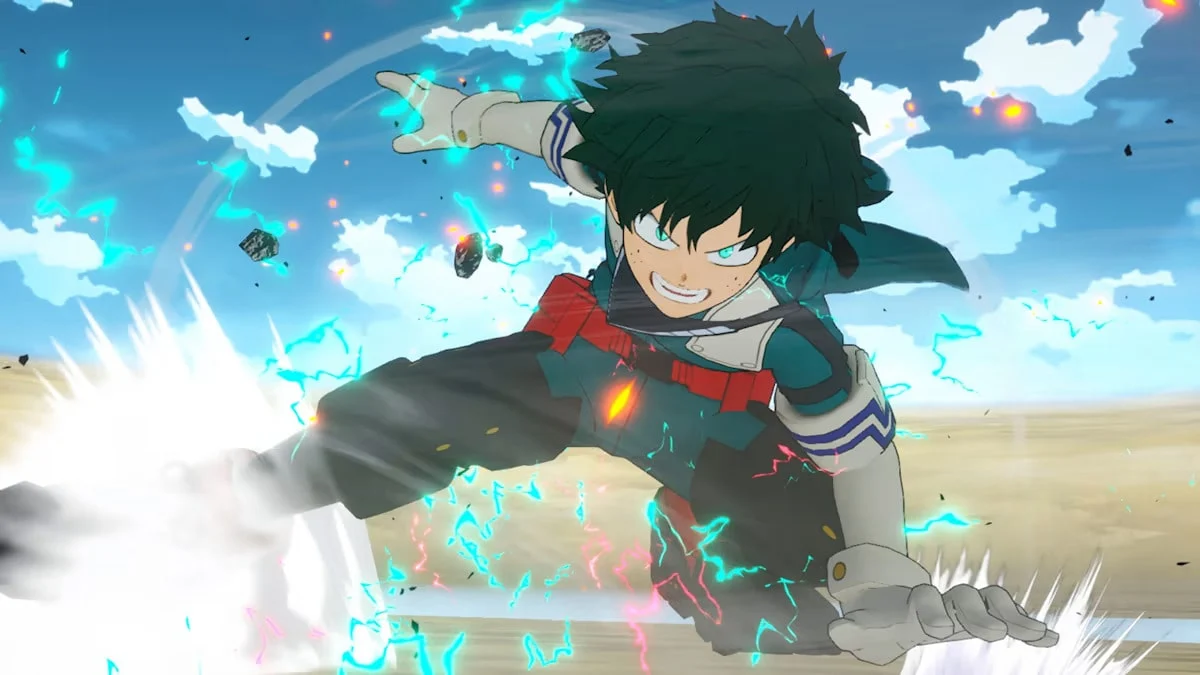
My Hero One’s Justice 2 gameplay is fast-paced and flexible. Fights combine close-range strikes, ranged attacks, Quirk-based abilities, special moves, and combos. A player is not locked into one distance or one pattern: approaching an opponent with direct attacks may work in one moment, while creating space for a ranged option may be more useful in the next.
The 3D arena fighting format gives positioning real importance. Movement around the stage affects how attacks connect, how pressure is applied, and when a fighter can safely change tactics. Destructible environmental elements add to the sense of impact, while the arenas provide room for a match to develop beyond simple face-to-face exchanges.
Each team consists of a main fighter supported by two sidekicks. Those assists are part of the tactical layer rather than a cosmetic extra. Calling a sidekick at the right time can help extend an attack sequence, add pressure, or provide support when a player needs to regain control. The strongest moments often come from coordinating the main character’s tools with a well-timed assist.
Quirks, Signature Moves, and Character Fighting Styles
The roster is central to the game’s replay value because every fighter brings a distinct Quirk and fighting style. Some characters are better suited to direct engagement, while others offer tools that can influence the battle from range. Signature moves reinforce those differences, encouraging players to learn what each character can do rather than treating every selection as interchangeable.
My Hero One’s Justice 2 Quirks create the foundation for strategy. A player who understands a chosen character’s strengths and limitations can make better decisions about distance, pressure, and support timing. Trying multiple fighters is useful not only for finding a favorite, but also for learning how opponents may approach a match.
Character customization adds another personal layer outside the battle itself. Accessories and outfits allow players to alter the look of their chosen heroes and villains. It does not replace the importance of learning combat fundamentals, but it gives regular players another reason to spend time with characters they already enjoy using.
5 Practical Combat Tips for New Players
- Try several fighters. Spend time with different heroes and villains before committing to one main character. The roster’s varied Quirks and fighting styles can reveal an approach that feels more natural.
- Learn the Quirk first. Identify what your character does best, including useful attack ranges and the situations where their special tools are most effective.
- Change your distance. Mix close-range offense with ranged options instead of relying on a single attack pattern. Arena positioning can create openings or prevent an opponent from controlling the pace.
- Use sidekicks with purpose. Assist calls are most valuable when timed alongside your main fighter’s attacks, when extending a combo, or when the battle begins to turn against you.
- Adjust to the opponent. Watch how the other player uses their Quirk and avoid repeating predictable approaches. A different range, assist timing, or character choice can change the flow of a rematch.
Modes, Customization, and Switch Game Details
The game includes Story, Arcade, Online, and Mission modes, offering several ways to engage with its characters and combat system. Story mode provides the narrative context of the Shie Hassaikai arc, while Arcade and Mission modes give players additional structured battles. Online matches extend the competitive side of the arena system, particularly for players who want to test character knowledge and team coordination against others.
Its combination of modes, unlockable-looking customization options such as accessories and outfits, and a roster with varied combat identities gives the game a clear audience. It is suited to players who enjoy My Hero Academia’s hero-versus-villain drama and to fighting-game players interested in accessible 3D arena combat with Quirks, assists, and destructive stages.
For reference, My Hero One’s Justice 2 Switch NSP has Title ID 0100628004BCE000. It was released on March 13, 2020, is listed as Region Free, and has a file size of 6.9GB. Available languages are English, German, Spanish, French, Italian, and Russian.