Super Mario Maker 2 Switch NSP XCI
Report Link Error
Select the broken download file, then submit the report.
Screenshots
About Game
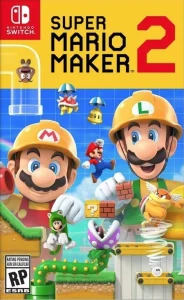
Super Mario Maker 2 Switch NSP XCI refers to Nintendo’s platformer for Nintendo Switch, released on June 28, 2019. Developed and published by Nintendo, the game combines familiar Mario action with a flexible course-building toolkit, giving players both prepared challenges and a large space for their own ideas. It is available across Europe, USA, Asia, and Japan, with language support including English, German, Spanish, French, Italian, Japanese, Korean, Dutch, Russian, and Chinese.
Super Mario Maker 2: Release Details and Platform Overview
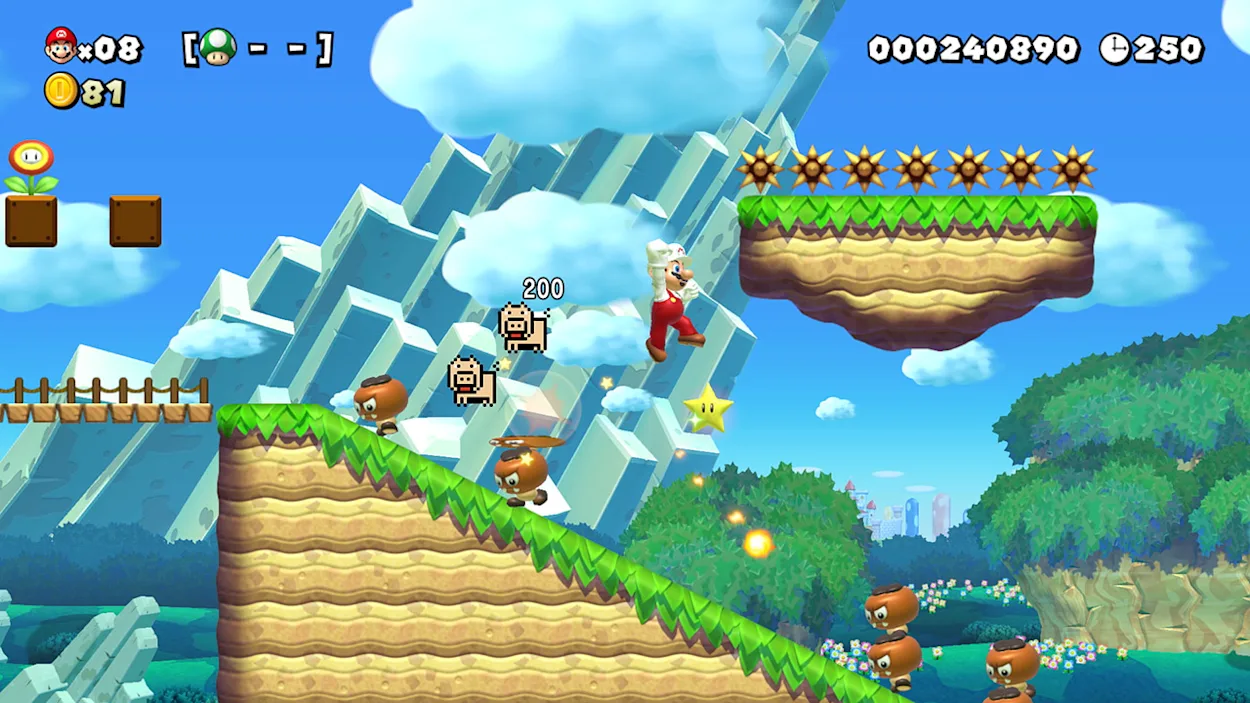
Super Mario Maker 2 is built around two connected pleasures: playing Mario courses and making them. Its platforming foundation is immediately recognizable, with running, jumping, enemies, hazards, and power-ups driving each level. The creative side broadens that formula by letting players arrange those elements into their own courses.
The Nintendo Switch format suits the game’s mix of quick play sessions and longer construction projects. A player can tackle a prepared challenge, experiment with a short platforming idea, or spend more time arranging a complex sequence of obstacles. The result is a platformer with a lively, playful atmosphere, but one that also invites careful planning.
Its presentation changes with the selected Mario game style. Courses can draw from the appearance and mechanics of classic Mario games through to Super Mario 3D World, allowing creators to match a level’s visual identity to its intended play experience. That range helps simple courses feel distinct from one another even when they use familiar building blocks.
Rebuilding Peach’s Castle in Story Mode
Super Mario Maker 2 Story Mode gives the creation-focused game a clear progression path. Princess Peach’s castle has disappeared, leaving behind only a flagpole. Mario joins Toad and the other Toads to rebuild the castle piece by piece, turning course completion into a practical part of the story.
Mario earns coins by clearing courses created by Undodog. Those coins are used to pay for new sections of the Princess Peach castle, so each successful run visibly supports the reconstruction effort. It is a light premise, but it gives the campaign a sense of purpose beyond simply moving through a list of levels.
The castle gradually becoming whole provides a pleasant visual reward for progress. Rather than relying on a dramatic narrative, Story Mode uses its rebuilding task to link its Mario courses together. The tone stays cheerful and direct, fitting a game where a disappearing castle can become the reason for a long series of inventive platforming assignments.
Why Story Mode Is More Than a Campaign
Story Mode includes more than 100 Nintendo-made courses. These levels offer pre-made challenges with the clarity and pacing of courses designed to be played rather than built. They give players a substantial set of platforming situations before they turn their attention toward creating their own work.
Just as importantly, the campaign introduces level-design ideas and items through play. A course can demonstrate how a particular obstacle, enemy, switch, or power-up changes the rhythm of a level. The player is not simply told what a tool does; they encounter it in a designed context and see how it can shape a challenge.
That makes Story Mode useful for different audiences. Players who mainly want Nintendo-made courses can enjoy a structured campaign with a clear goal. New creators can treat the levels as practical examples of layout, timing, escalation, and surprise. Experienced builders can also find inspiration in the way a single mechanic can be developed into a complete course idea.
The campaign’s value comes from this overlap between play and observation. It is a collection of platforming challenges, but it also functions as a guided look at the possibilities available in the editor.
Building Courses Across Five Mario Game Styles
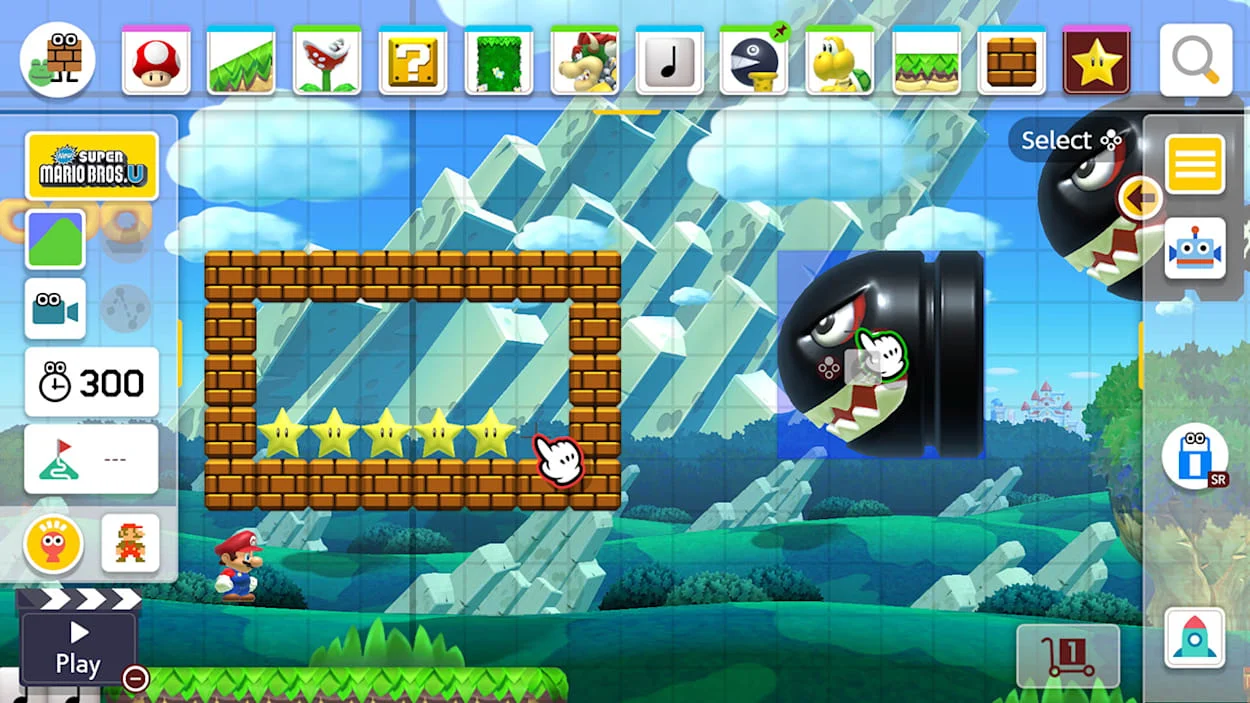
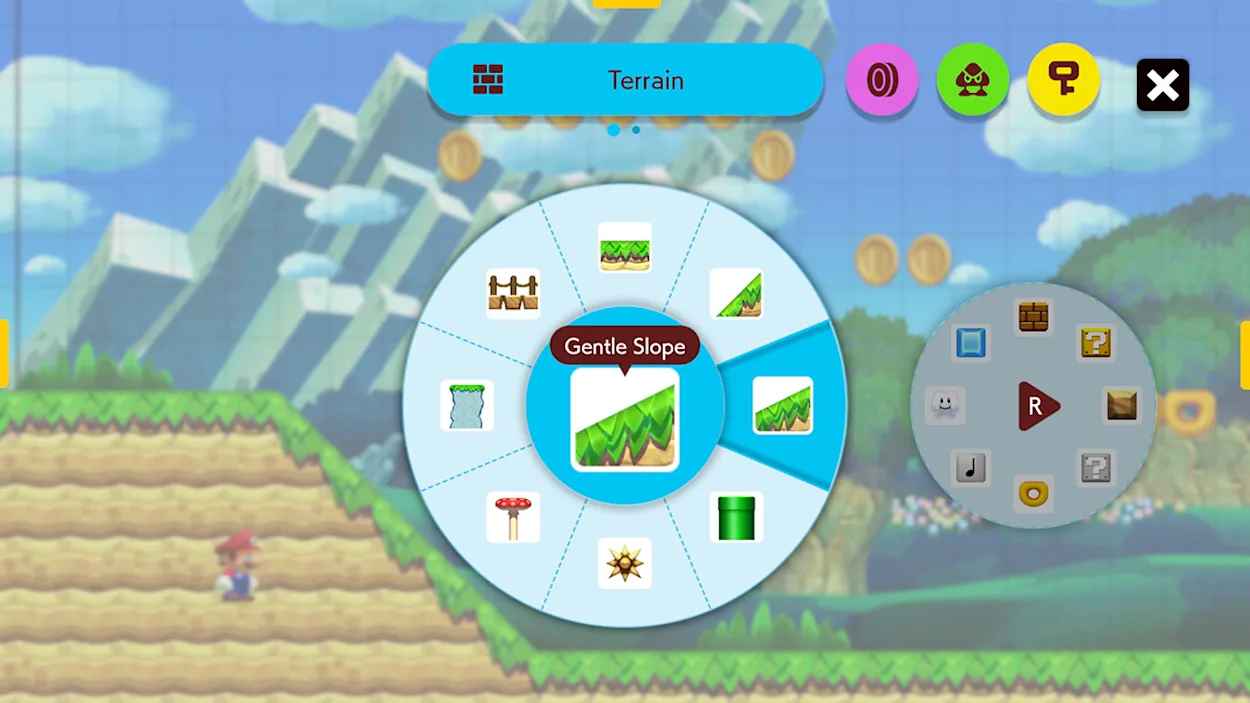
Super Mario Maker 2 course creation centers on a broad library of tools. Players can draw platforms, place enemies, add power-ups, and arrange hazards to create courses ranging from straightforward runs to more elaborate obstacle sequences. Touch and button controls support the building process, keeping the act of placement approachable while leaving room for detailed designs.
The game includes five distinct Mario game styles. Moving between them changes both the look and the mechanical character of a course, from the classic Super Mario Bros. style to Super Mario 3D World. The choice is more than decorative: a style can influence how a level feels to move through and what kind of setup best suits it.
New items and gimmicks expand the options further. The Superball Flower, Koopa Troopa Car, and ON/OFF Switches can each become the central idea of a course or serve as part of a larger chain of challenges. A creator might use a switch to alter a route, a power-up to change a player’s options, or an enemy placement to establish the timing of a jump.
Players can also use World Maker to connect multiple courses through their own overworld maps. This adds a larger layer of structure, allowing separate levels to become part of a connected Mario world. For creators, it offers a way to think not only about an individual course but also about progression between courses.
Multiplayer Course Play: Co-op and Versus Challenges
Super Mario Maker 2 multiplayer supports up to four players in local or online co-op and versus play. Cooperative sessions change the character of a course, as players can work through obstacles together. A level that feels demanding alone may become a shared problem-solving exercise when several players are moving through it at once.
Versus sessions place competition at the center. The focus shifts toward reaching the goal ahead of the other players, making speed, route choices, and quick recovery especially important. The same course-building tools that support careful solo platforming can therefore produce levels with a more chaotic competitive energy.
Course World extends replay value through user-created courses. Players can explore courses uploaded by others and browse using filters such as popularity, newness, or specific tags. The available tags include puzzle, speedrun, and music, helping players look for a type of experience that matches their mood.
This makes the game suitable for solo players looking for fresh platforming challenges, creators interested in experimenting with course ideas, and groups that want cooperative or competitive sessions. The range comes from the courses themselves: a focused puzzle can sit alongside a fast run, a musical creation, or a multiplayer race.
5 Course-Creation Principles for Better Super Mario Maker 2 Levels
- Think like the player. Consider what the player sees first, where they are likely to move, and what information they need before attempting a jump or obstacle. A course is easier to understand when its intended path is readable.
- Build clear platforming setups. Use platforms and hazards to establish a challenge before increasing its difficulty. A sequence feels more deliberate when players can recognize the basic movement required before facing a more demanding variation.
- Choose enemies and power-ups with purpose. Enemies, power-ups, and items such as the Superball Flower or ON/OFF Switch can define a course’s identity. Selecting a small group of tools around one idea can create a stronger experience than adding every option at once.
- Use Course World tags accurately. Tags such as puzzle, speedrun, and music help players find courses that suit their interests. Clear labeling also sets expectations before a player begins.
- Test the course flow. Play through the level after building it and pay attention to pacing, transitions, and the placement of obstacles. Testing can reveal where a route is unclear or where an idea needs a simpler introduction.
For players exploring Nintendo-made challenges, building a first course, or searching Course World for a particular style of level, Super Mario Maker 2 Switch NSP XCI is defined by that constant exchange between creation and play. Every course can be a platforming challenge, a design experiment, or the beginning of a larger world.