Children of Morta Switch NSP XCI
Report Link Error
Select the broken download file, then submit the report.
Screenshots
About Game
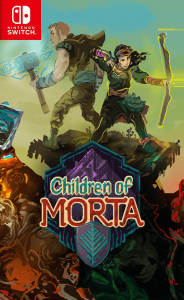
Children of Morta Switch NSP XCI refers to the Nintendo Switch release of Dead Mage’s action role-playing game, published by Merge Games on November 20, 2019. Available across Europe, the USA, and Asia, it follows the Bergson family as they confront a spreading force known as the Corruption. The Switch version frames that conflict through demanding dungeon runs, character-driven progression, and a family story shaped by hardship, resolve, and repeated battles.
Children of Morta on Nintendo Switch: Key Game Details
Children of Morta Switch combines Action and Role-Playing elements in a campaign centered on the guardians of Mount Morta. Dead Mage builds the experience around the Bergsons, a family whose members each bring their own abilities and motivations to the fight. Merge Games published the Nintendo Switch release, which arrived on November 20, 2019.
The game supports English, Russian, French, German, Spanish, Chinese, and Portuguese language options. Its stated regions are Europe, USA, and Asia. More importantly for the game itself, Children of Morta Nintendo Switch is structured around a clear contrast: the safety and familiarity of the family home on one side, and dangerous, shifting dungeons filled with corrupted creatures on the other.
That structure gives the adventure a personal angle. The threat is not treated as an abstract backdrop; the Corruption affects the world around the Bergsons and drives the family to act together. Their relationships, struggles, and sacrifices form part of the narrative as the campaign moves from one difficult encounter to the next.
Action RPG Combat with Roguelite Dungeon Runs
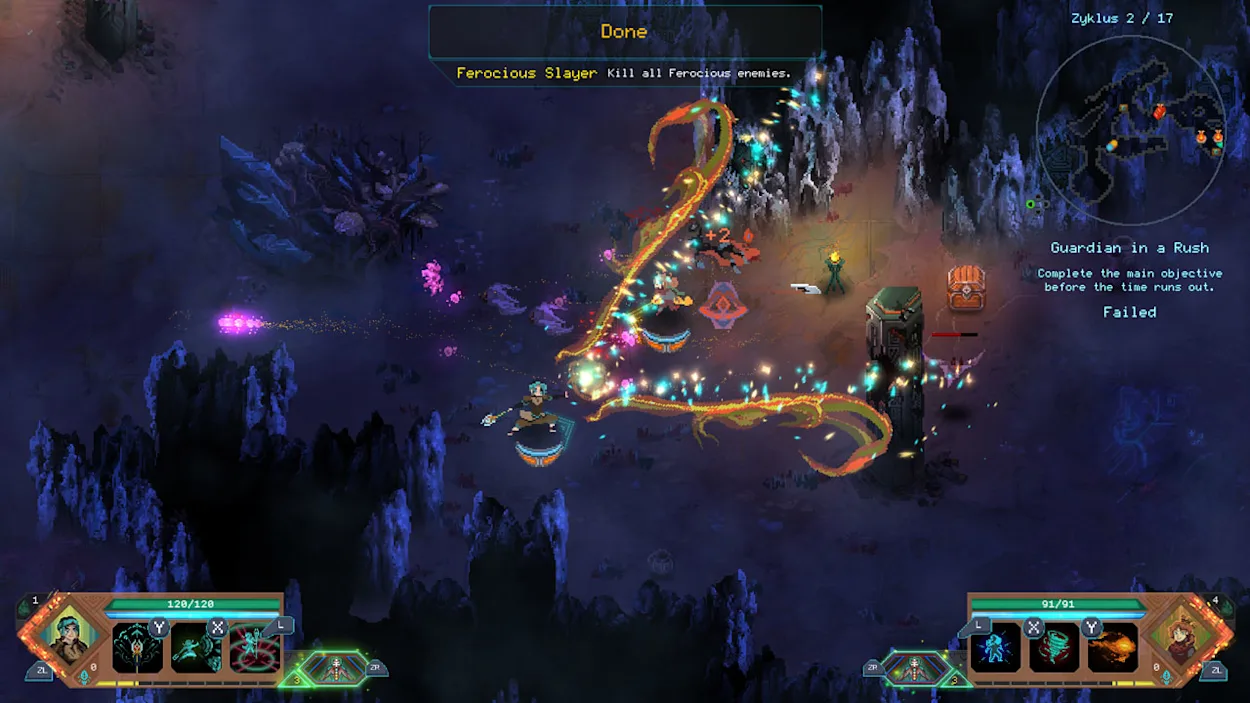
Children of Morta gameplay blends fast hack-and-slash combat with roguelite dungeon exploration. Runs place the player in dangerous areas where corrupted enemies, environmental hazards, and boss encounters demand attention. Success is not only about dealing damage. Dodging at the right moment and responding to changing threats are central parts of surviving a run.
The action RPG format gives battles an immediate feel, while the roguelite structure keeps dungeon delves from becoming routine. Dungeon layouts and enemy placements change, so a familiar area may ask for a different approach on a later attempt. A route that felt manageable before can become more complicated when enemies appear in new positions or hazards restrict movement.
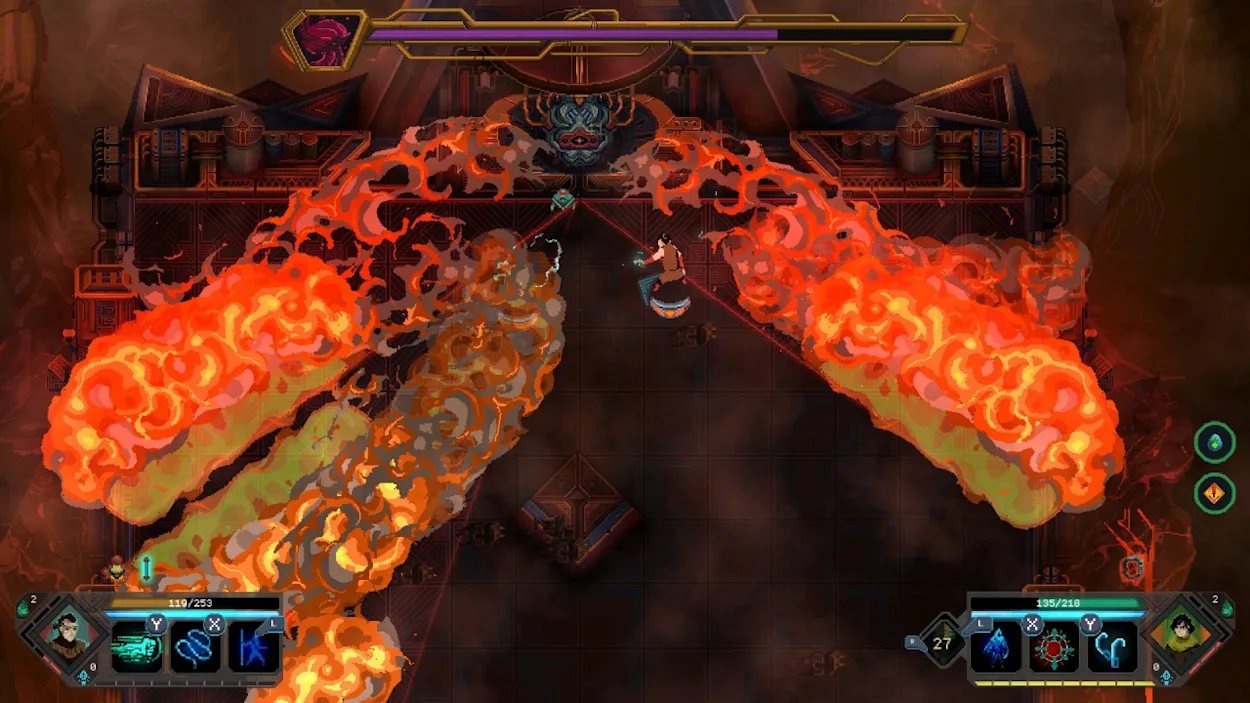
This creates a useful rhythm between aggression and caution. Groups of corrupted creatures reward effective attacks, but reckless movement can leave a character exposed. Boss encounters push that tension further, asking players to recognize danger, keep moving, and make the most of a chosen character’s combat tools.
- Move with purpose: Strategic dodging helps create space when enemies crowd an area or hazards limit safe ground.
- Read the run: Changing layouts and enemy placements make each dungeon attempt a fresh tactical problem.
- Change fighters: Different Bergson family members offer distinct answers to enemy types and difficult spaces.
- Build over time: Persistent upgrades at the family home make later attempts more manageable.
- Face bosses prepared: Powerful encounters reward patience, adaptation, and a willingness to try a different approach.
Choosing Bergson Family Members for Different Fighting Styles
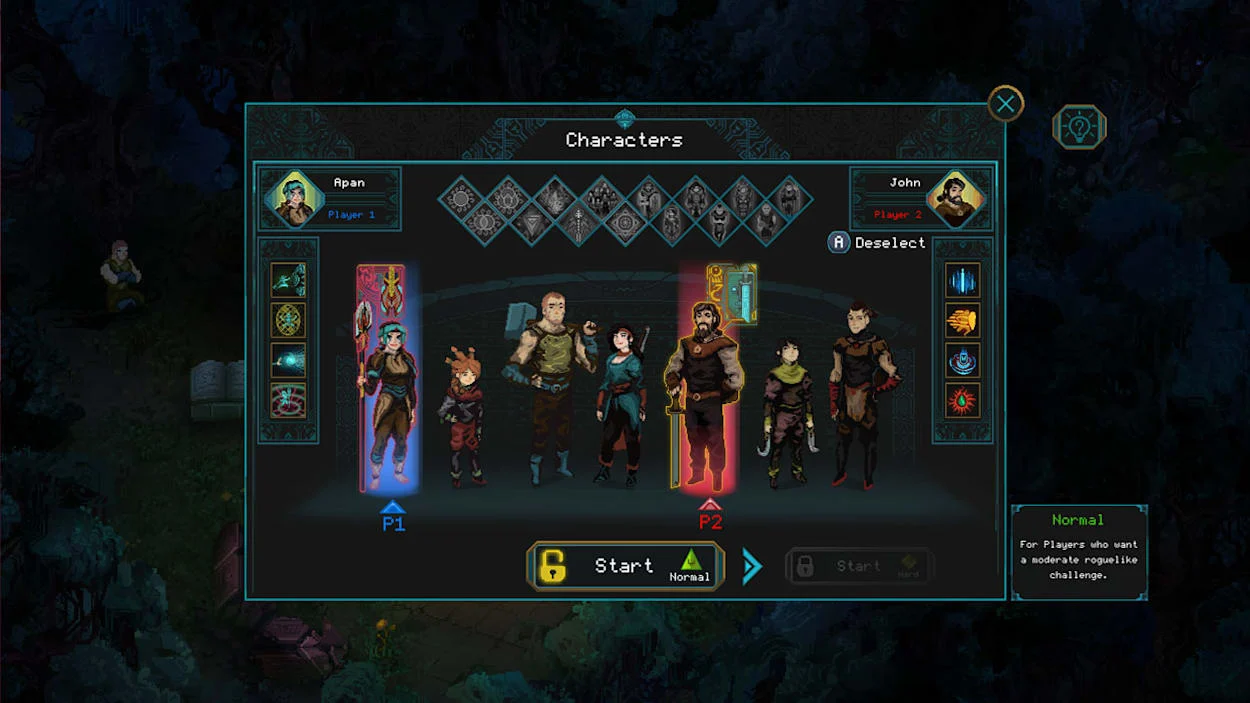
The playable Children of Morta characters are the heart of its combat variety. Each Bergson family member has distinct abilities, combat mechanics, fighting approaches, and skill trees. That means character selection is more than a cosmetic preference. A fighter who feels effective against one kind of enemy or arena may not be the best response to another.
Switching family members encourages adaptation. Some dungeon situations may call for one set of abilities, while a different combination of enemies or hazards may favor another. The game’s skill trees add another layer, allowing character development to shape how individual family members perform over time.
The family theme also gives these choices narrative weight. The Bergsons are not interchangeable adventurers assembled around a shared objective. They are relatives facing the same crisis from different personal positions, and their individual strengths contribute to the wider effort against the Corruption. For players who enjoy learning several combat styles rather than relying on a single approach, that structure supports experimentation without losing the game’s central focus.
Persistent Progression at the Bergson Family Home
The Bergson home acts as a hub between dungeon attempts. It is a place for persistent progression, character development, and family-wide improvement. Progress earned through the campaign is not limited to a single run; lasting upgrades help the family become better equipped for later challenges.
This system gives failed attempts a practical purpose. A difficult dungeon or boss may still reveal where more development is needed, and returning to the family home can provide a path toward stronger future runs. The source of progression extends beyond one character, with family-wide benefits designed to help the entire group.
That balance matters in a roguelite action RPG. The dungeons remain threatening, but repeated effort can gradually make the journey more manageable. Rather than presenting every setback as a complete reset, the game ties improvement to the Bergsons’ continuing development. Their home becomes both a narrative refuge and a functional part of the progression loop.
Procedural Dungeons, Enemy Variety, and Environmental Storytelling
Children of Morta procedural dungeons provide much of the game’s replay value. Dynamic layouts and changing enemy placements mean repeated runs do not unfold in precisely the same way. The player is asked to react to the dungeon as it appears, not simply repeat a memorized route.
Enemy variety supports that changing pace. Corrupted creatures fill the areas explored by the Bergsons, while stronger foes and bosses create sharper points of resistance. Since character abilities and combat styles differ, a new enemy arrangement can influence which family member feels most suitable for the task.
The dungeons also carry story through their environmental details and lore. The world is being tainted by the Corruption, and exploration adds context to that larger threat. This form of environmental storytelling helps the action retain a sense of place: the Bergsons are not fighting in disconnected arenas, but moving through a world affected by the same danger that has drawn their family into conflict.
Local Co-op and Shared Battles Against the Corruption
Children of Morta local co-op allows two people to face the Corruption together. The feature fits naturally with the game’s action-heavy encounters, where dodging, enemy pressure, and varied character abilities can make cooperation valuable. Instead of taking on dungeon dangers alone, players can share the responsibility of handling corrupted creatures and difficult battles.
Co-op also suits the game’s family-centered premise. The Bergsons’ strength comes from acting together, and shared play reflects that idea directly during combat. Players who enjoy local cooperative action RPGs, flexible character choices, and dungeon runs that change from attempt to attempt will find a game built around persistence as much as immediate skill.
Later in the campaign, Children of Morta Switch NSP XCI remains defined by that same loop: choose a family member, enter an uncertain dungeon, fight through the Corruption, return home, and prepare for another attempt with more experience and stronger long-term support.