Eastern Exorcist Switch NSP
Report Link Error
Select the broken download file, then submit the report.
Screenshots
About Game
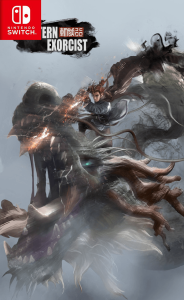
Eastern Exorcist Switch NSP is a hand-drawn action role-playing adventure built around difficult 2D combat, a demon-haunted landscape, and a protagonist seeking redemption. Released for Nintendo Switch on June 8, 2023, it places traditional Chinese folklore at the center of a somber fantasy journey where careful observation can matter as much as aggression.
Eastern Exorcist on Nintendo Switch: Release and Edition Details
The Nintendo Switch release of Eastern Exorcist arrived on June 8, 2023. BILIBILI HK is listed as both publisher and developer, with availability across Europe, the USA, Asia, and Japan. Its genre classification spans Action, Adventure, Platformer, and Role-Playing, which suits a game that combines side-scrolling exploration with demanding encounters and character development.
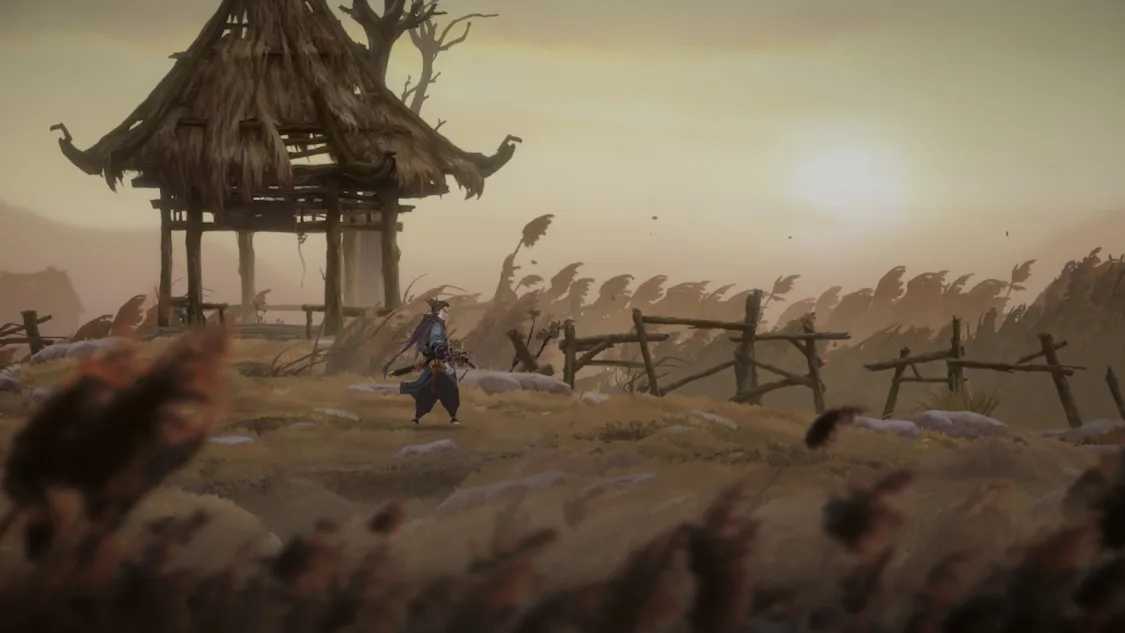
The game’s presentation is closely tied to its hand-drawn visual direction. Rather than using a bright or playful fantasy tone, it frames its journey through a world burdened by spirits, monstrous creatures, and old mysteries. That approach gives the action a sense of place: battles are not simply isolated tests of reflexes, but confrontations within a realm already scarred by supernatural danger.
For players looking at the technical details, the listed base firmware is v15.0.1, and the recorded file size is 2.8GB. More importantly from a play perspective, the Switch edition brings together the game’s illustrated environments, animated combat, story-led progression, and skill-based challenges in one portable format.
A Demon-Plagued World Rooted in Chinese Folklore
Eastern Exorcist draws on traditional Chinese folklore to shape its setting. The result is a world where evil spirits are a persistent threat and ancient forces sit beneath the surface of the journey. Its atmosphere is described as both beautiful and somber, allowing the hand-drawn art to carry a sense of melancholy alongside the danger.
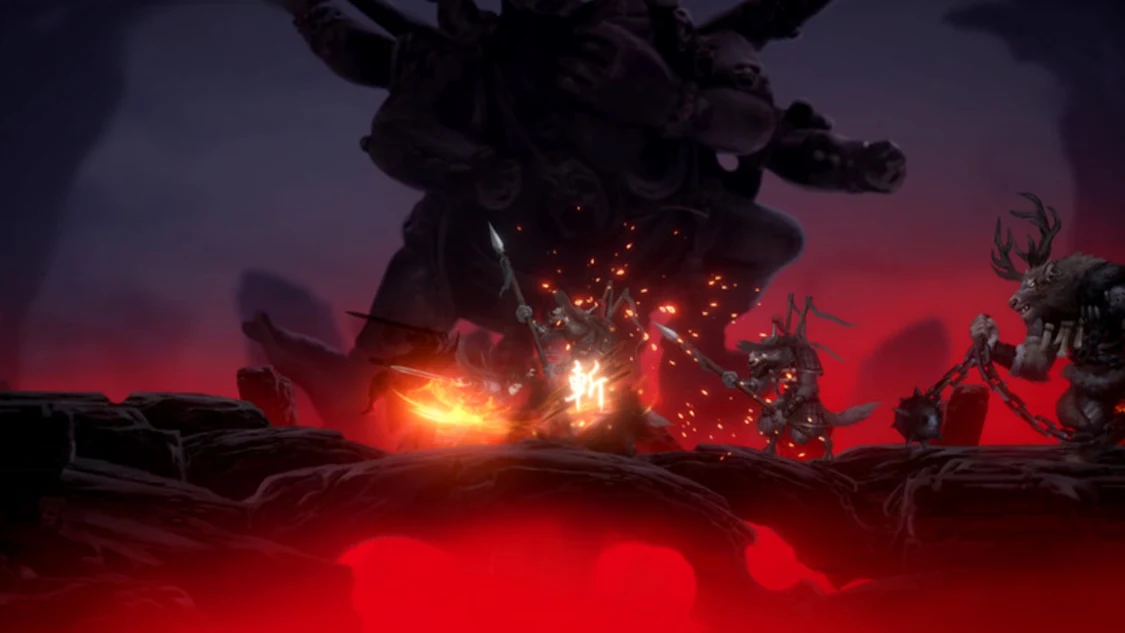
This is not a setting that treats monsters as disposable obstacles. Demonic enemies and elaborate boss creatures reinforce the idea that the land itself has become perilous. The world’s secrets, hidden lore, and side quests add another layer to that mood, suggesting a history that players can uncover while moving through dangerous regions.
The hand-drawn action RPG approach also affects the game’s identity. Carefully illustrated environments give exploration a stronger visual pull, while the hostile inhabitants make each new area feel like a place to read, learn, and survive. The contrast between graceful artwork and brutal supernatural conflict is central to the game’s tone.
Lu Yunchuan’s Quest for Redemption
Players take the role of Lu Yunchuan, a powerful exorcist troubled by a failure from his past. His path takes him through a land beset by malevolent spirits, where his immediate task is to purge supernatural threats. The larger story reaches beyond individual battles, however, as Lu investigates ancient conspiracies connected to the darkness spreading through the realm.
That premise gives Eastern Exorcist an emotional direction that goes beyond demon hunting. Lu’s journey is framed by redemption, sacrifice, and an enduring struggle against evil. His past weighs on the present, making the exorcist’s work feel personal rather than merely professional.
The story develops through encounters and revelations, while optional lore and side activities can provide further context for the world. For players drawn to action games with a melancholy narrative thread, Lu Yunchuan’s conflict offers a useful anchor: the combat may be fast and exacting, but the journey is also about confronting what he could not overcome before.
Why Timing Defines Eastern Exorcist Combat
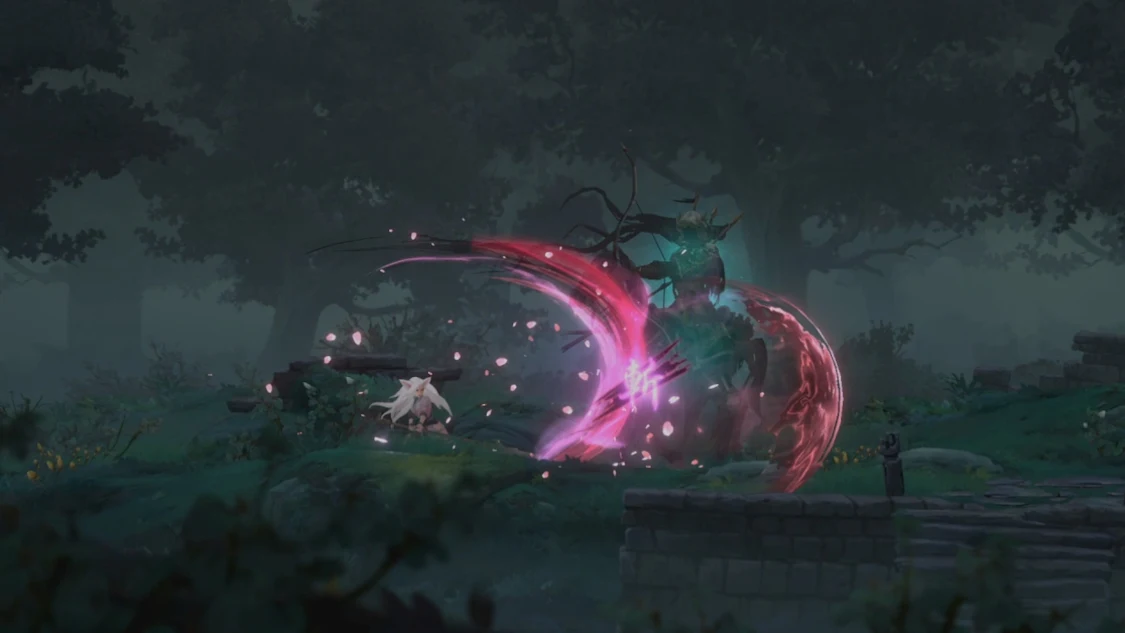
Combat in Eastern Exorcist Switch NSP is presented as challenging 2D action with a strong focus on timing. Responsive movement and fluid animation support the core demand: players need to study enemies rather than simply rush through them. Each opponent’s behavior can offer clues about when to defend, evade, or counterattack.
Dodges provide a way to avoid damage and reposition, especially when enemies press the attack. Parries have an even more decisive role. Learning the timing to deflect an incoming strike can protect Lu Yunchuan while also creating an opening against an opponent. This makes the parry more than a defensive option; it is a tool for shifting momentum.
Boss fights push that idea further. These encounters are designed around learning attack patterns, anticipating danger, and identifying weaknesses. Success is likely to come from patience and adaptation, not from treating every fight as a test of raw offense. The satisfaction of overcoming a formidable enemy is therefore tied to understanding its design.
- Watch first: Enemy tells can reveal when an attack, dodge, or parry opportunity is coming.
- Use space: Dodging is useful not only for avoiding harm, but for moving into a better position.
- Time the parry: A well-judged deflection can stop pressure and leave an enemy vulnerable.
- Learn patterns: Bosses reward repeated observation of their attacks and openings.
- Spend carefully: Health and magic should be conserved when resources become scarce in tougher areas.
Weapons, Exorcism Skills, and Character Growth
The game supports a range of weapons and unlockable exorcism abilities, giving players room to develop an approach that suits their preferred combat rhythm. Different weapon combinations and supernatural skills can be tested against the game’s enemies, while upgrades improve a chosen setup over time.
Resources collected during the adventure feed into character growth and ability enhancement. A skill tree system adds another layer of choice, allowing players to customize their playstyle rather than relying on a single fixed combat path. That progression is particularly relevant in a game where difficult encounters ask for both mechanical precision and preparation.
Exploration can support that growth. Hidden items, secrets, and restorative locations may help sustain Lu Yunchuan across more dangerous territory, while lore discoveries and side quests add reasons to revisit corners of the world. Replay value is most relevant for players interested in experimenting with weapons, skills, and different tactical combinations, as well as searching for material they may have missed.
Eastern Exorcist Switch Language and Region Support
Eastern Exorcist supports Europe, the USA, Asia, and Japan. Its available languages are English, Japanese, Russian, Simplified Chinese, and Traditional Chinese. That selection reflects the game’s broad regional release while giving players several text-language options for following Lu Yunchuan’s story and the world’s folklore-inflected details.
The combination of action, platforming, role-playing progression, and dark illustrated fantasy makes it best suited to players comfortable with deliberate, challenging combat. Those who enjoy learning enemy patterns, practicing defensive timing, and exploring a supernatural world shaped by Chinese folklore will find the game’s priorities clear from its first demon-filled encounters.