Tales of Symphonia Remastered Switch NSP XCI
Report Link Error
Select the broken download file, then submit the report.
Screenshots
About Game
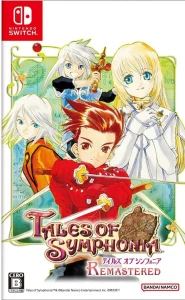
Tales of Symphonia Remastered Switch NSP XCI revisits a role-playing adventure built around a long journey, a closely bonded party, and the difficult choices that emerge when a world begins to fail. Released on February 17, 2023, this Nintendo Switch edition gives returning players a chance to revisit a familiar Bandai Namco RPG while providing newcomers with a clear route into a classic-style JRPG.
Tales of Symphonia Remastered on Switch: A 2023 Return to a Classic JRPG
Published and developed by BANDAI NAMCO Entertainment, Tales of Symphonia Remastered arrived on Switch in 2023 with the foundations of its original adventure intact. Its appeal comes less from radically changing that formula than from bringing the full journey to a current platform with improved visuals and smoother performance.
The game places story and party dynamics near the foreground. It is an adventure about magic, friendship, sacrifice, and the consequences attached to saving one place at the expense of another. That makes it suitable for players looking for a substantial role-playing game with a strong narrative thread, rather than a game focused only on battles or character growth systems.
English, French, German, Italian, Russian, and Spanish language options broaden the range of players who can follow the journey. The experience also supports a patient style of play: exploration, conversations, preparation, and optional discoveries all sit alongside the central quest.
Sylvarant and Tethe’alla: The Two Worlds at the Center of the Story
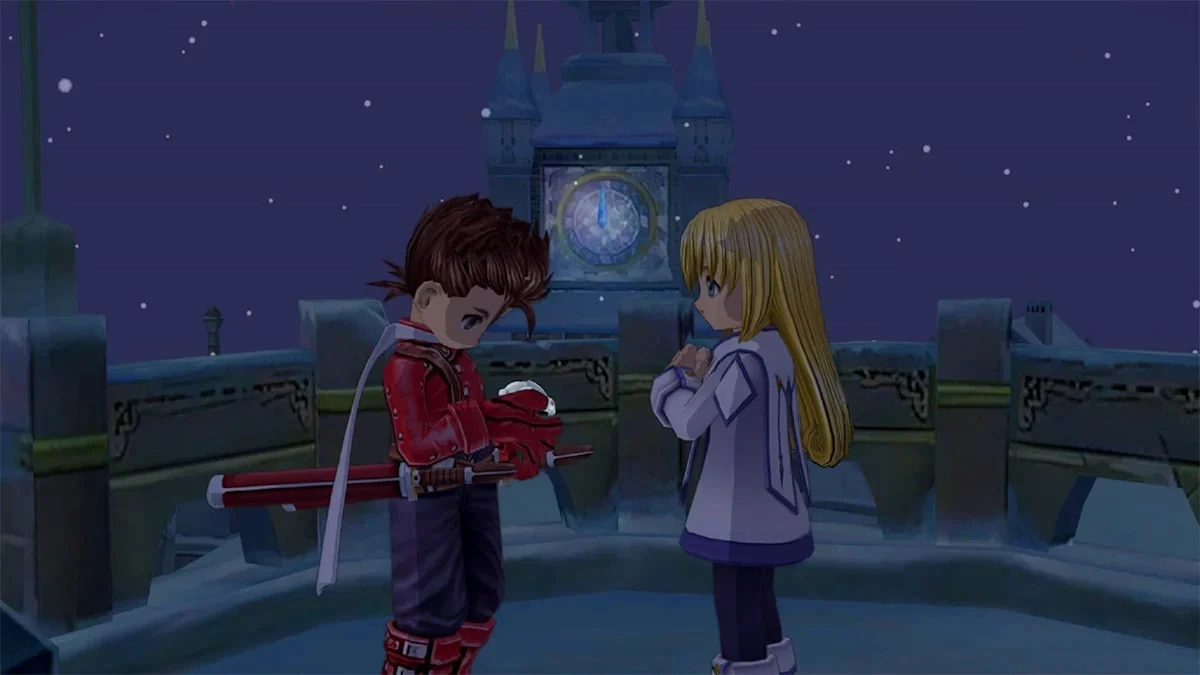
The Tales of Symphonia story begins in Sylvarant, a world facing a worsening shortage of mana. Lloyd Irving travels with his childhood friend Colette Brunel, who has been named the Chosen of Mana. Her pilgrimage is meant to regenerate Sylvarant, but the task carries danger and demands sacrifice from those involved.
What initially appears to be a mission to rescue a dying world expands as the party learns more about Sylvarant and Tethe’alla, two interconnected worlds. The connection between them changes the scale of the journey and pushes the group toward discoveries that challenge their assumptions about destiny and the people around them.
The narrative draws its tension from difficult moral territory. Discrimination, sacrifice, and uncertain definitions of good and evil are part of the adventure’s larger concerns. Lloyd and his companions do not simply move from one objective to the next; they confront revelations that reshape their understanding of what Sylvarant needs and what their choices may cost.
How the Linear Motion Battle System Shapes Combat
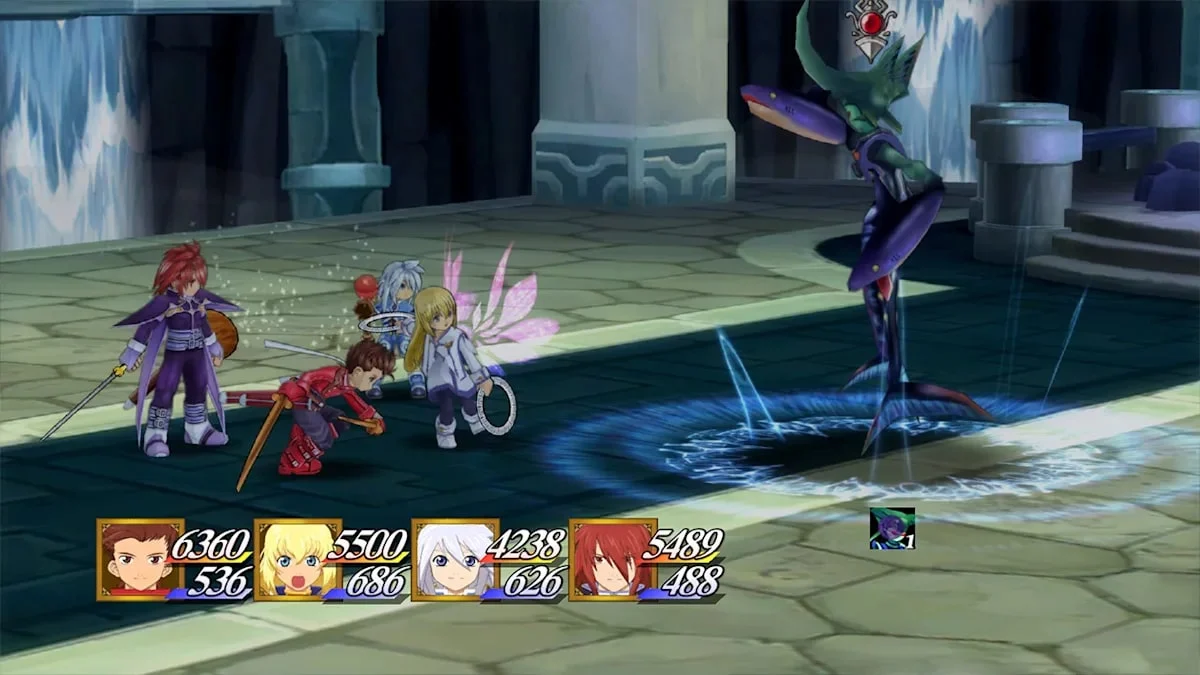
Combat uses the series’ signature Linear Motion Battle System, a real-time structure that combines direct action with party planning. The player controls one character during a battle while the remaining allies are managed by AI. This keeps encounters active without asking the player to operate every member at once.
Party behavior settings matter because allies can be directed through strategic choices rather than left entirely to chance. The system rewards attention to timing, particularly when using character abilities. Artes and stronger mystic techniques are central tools, and knowing when to use them can make battles more manageable.
This approach gives Tales of Symphonia combat a different rhythm from menu-driven role-playing battles. Quick responses are useful, but so is preparation: choosing a group that suits the encounter, understanding what each fighter contributes, and making effective use of abilities. The remaster retains those classic mechanics while presenting them with smoother performance on Switch.
Exploration Beyond Battles: Towns, Dungeons, Skits, and Cooking
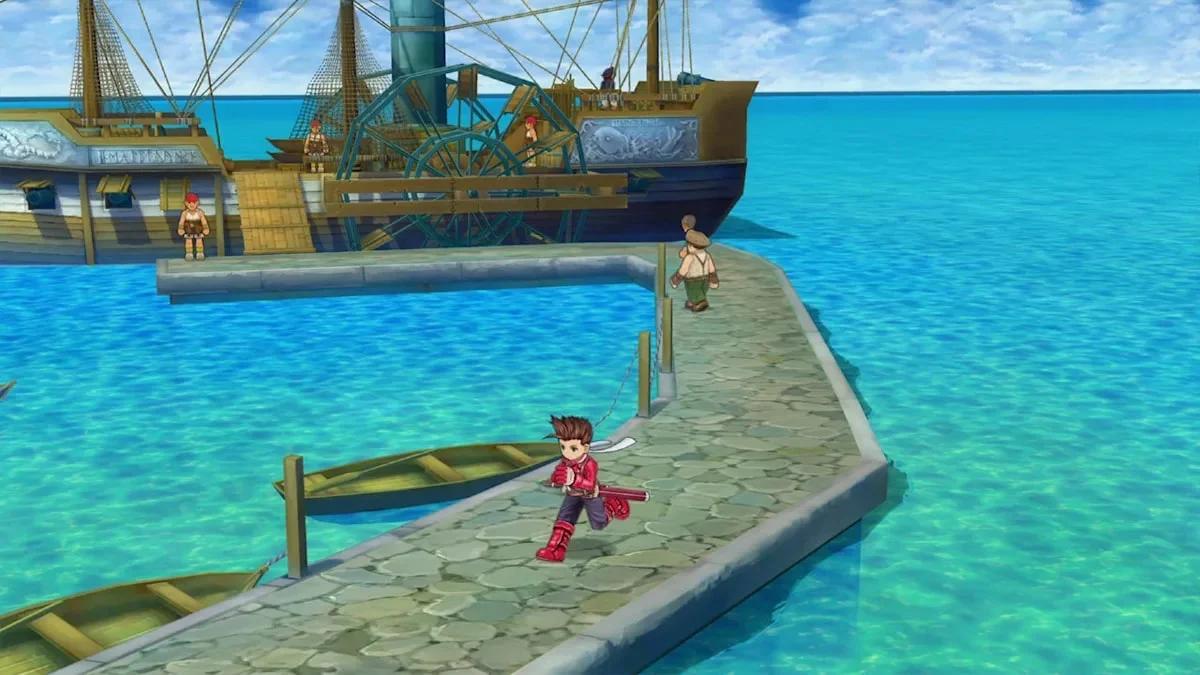
The adventure is not confined to combat arenas. Players travel across overworld maps, visit towns and villages, and enter dungeons that ask for more than simple forward movement. Environmental puzzles and hidden areas encourage careful exploration, giving the journey a sense of place between major story scenes.
Character skits provide another reason to slow down. These conversations add personality and lore, offering extra perspective on the party beyond the main plot. They help maintain the game’s atmosphere as a group adventure, where the changing relationships between companions matter alongside the larger fate of Sylvarant and Tethe’alla.
Gathering ingredients also feeds into progression. Those ingredients can be used to cook meals that benefit the party, making exploration useful in practical terms as well as for discovery. Town visits, dungeon puzzles, skits, and cooking give the adventure a varied structure: a difficult battle may be followed by a quieter conversation, a puzzle, or a chance to prepare for what comes next.
5 Practical Tips for Starting Tales of Symphonia Remastered
- Save often. Make frequent saves, particularly before entering an area that appears dangerous or before facing a powerful boss. A recent save can prevent a difficult encounter from costing too much progress.
- Prepare before bosses. Major encounters are a good reason to review the party’s condition and consider which abilities and approaches may be most useful before the battle begins.
- Grind with purpose. If a fight is proving too demanding, a modest amount of extra battling can improve the party’s survivability. It is a practical response when progress has stalled.
- Test party combinations. Since one character is directly controlled and allies follow AI behavior settings, different party compositions can change the feel and flow of combat.
- Learn each role. Take time to understand character strengths, weaknesses, and Artes. Precise timing and effective combinations are important parts of success in the Linear Motion Battle System.
What the Switch Remaster Brings to the Adventure
Tales of Symphonia Remastered Switch NSP XCI is defined by a balance between familiar design and updated presentation. The release offers improved visuals and smoother performance while preserving the original experience’s core gameplay systems: real-time battles, party strategy, broad exploration, dungeon puzzles, skits, and cooking.
That balance gives the remaster a particular audience. Longtime players can return to its world, characters, and combat style without losing the classic foundations they remember. Newcomers, meanwhile, can approach it as a story-driven role-playing game with an established adventure structure and a party-focused sense of progression.
Its replay value is tied to those systems rather than to a single path alone. Different party arrangements, combat approaches, skits, hidden areas, and the desire to revisit the story’s revelations can all give players reasons to spend more time in its two-world setting. For players drawn to real-time JRPG combat and an emotionally charged quest, the Switch remaster offers a complete return to Sylvarant and Tethe’alla.
Recommended Similar Games
 2weistein – The Curse of the Red Dragon 3 – Ronger Pirates – V2 Switch NSPView Game
 There Is No Light Switch NSPView Game
 Graveyard Keeper Switch NSPView Game
 Mercenaries Rebirth: Call of the Wild Lynx Switch NSPView Game
 Borderlands 3 Ultimate Edition Switch NSP XCIView Game
 The Legend of Heroes: Trails from Zero Switch NSP XCIView Game
