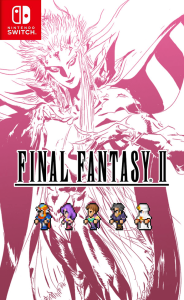
Final Fantasy II Switch NSP
Report Link Error
Select the broken download file, then submit the report.
Screenshots
About Game
Final Fantasy II Switch NSP brings Square Enix’s classic role-playing adventure to Nintendo Switch with a story of war, resistance, loss, and persistence. Its appeal lies not only in the struggle against an empire, but in a progression model that asks players to develop characters through the actions they choose in battle.
Final Fantasy II on Nintendo Switch: Release and Edition Details
Final Fantasy II released on Nintendo Switch on April 19, 2023. Square Enix serves as both publisher and developer, placing the game firmly within the company’s long-running role-playing tradition. The release is listed for Europe, the USA, Asia, and Japan, with language support for English, French, German, Italian, Japanese, Korean, Portuguese, Russian, Chinese, and Spanish.
The listed base firmware requirement is version 15.0.1, while the update is listed for version 16.0.1. The game’s 595MB file size is modest for a Switch RPG, but the adventure itself reaches across towns, dungeons, and a broad world map filled with hostile forces and hidden discoveries. Its presentation preserves the identity of a classic fantasy journey while offering enhanced visuals and controls for the Switch format.
As a Square Enix Switch RPG, Final Fantasy II is particularly notable for refusing to follow the familiar experience-point structure associated with many role-playing games. That difference shapes nearly every encounter, making combat decisions part of character building rather than simply a route toward the next level.
Princess Hilda and the Fight for Freedom
The conflict begins under the shadow of the Palamecian Empire. Led by the Emperor, the Empire expands through the land and unleashes demons in support of its conquest. Firion, Maria, Guy, and Leon are orphans drawn directly into that violence, having lost their families to the Empire’s attack.
Princess Hilda provides the crucial connection between the survivors and the wider resistance. She rescues the heroes and brings them into contact with the Wild Rose Rebellion, the group opposing Imperial rule. Her role gives the party a cause larger than personal survival: their journey becomes part of a fight to reclaim freedom from a powerful occupying force.
That premise gives Final Fantasy II a more pressured atmosphere than a simple adventure of exploration. The party seeks allies and powerful magic while confronting formidable enemies, ancient secrets, personal loss, and betrayal. Firion, Maria, and Guy remain core members of the group, while a fourth party position changes as the story advances. This rotating companion structure keeps the rebellion’s struggle connected to different characters and circumstances.
How Final Fantasy II Replaces Traditional Experience Points
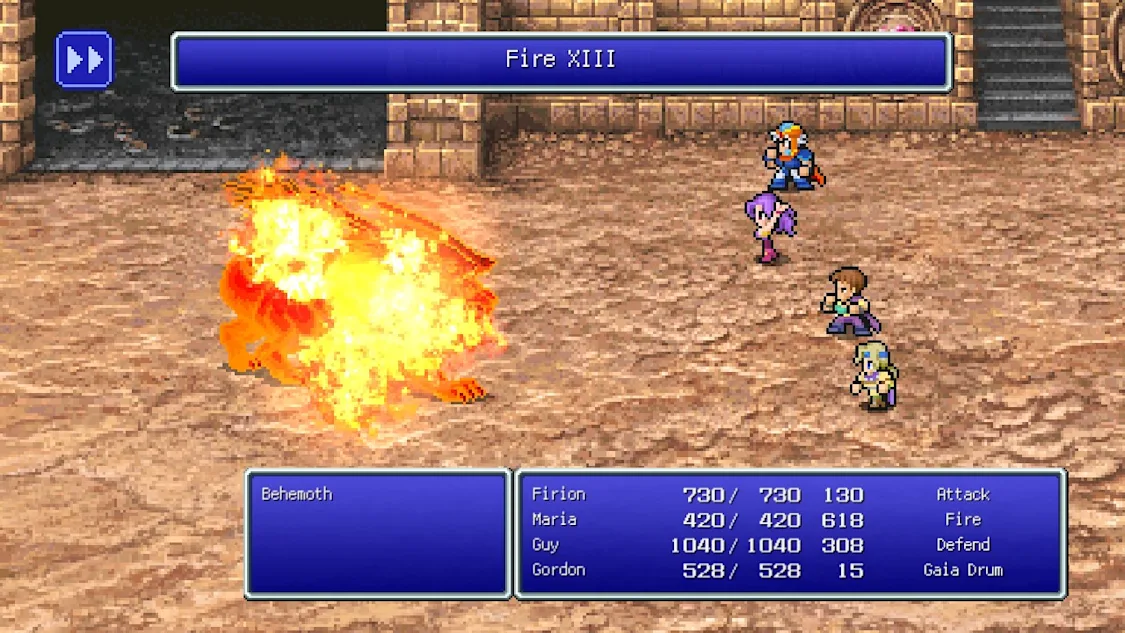
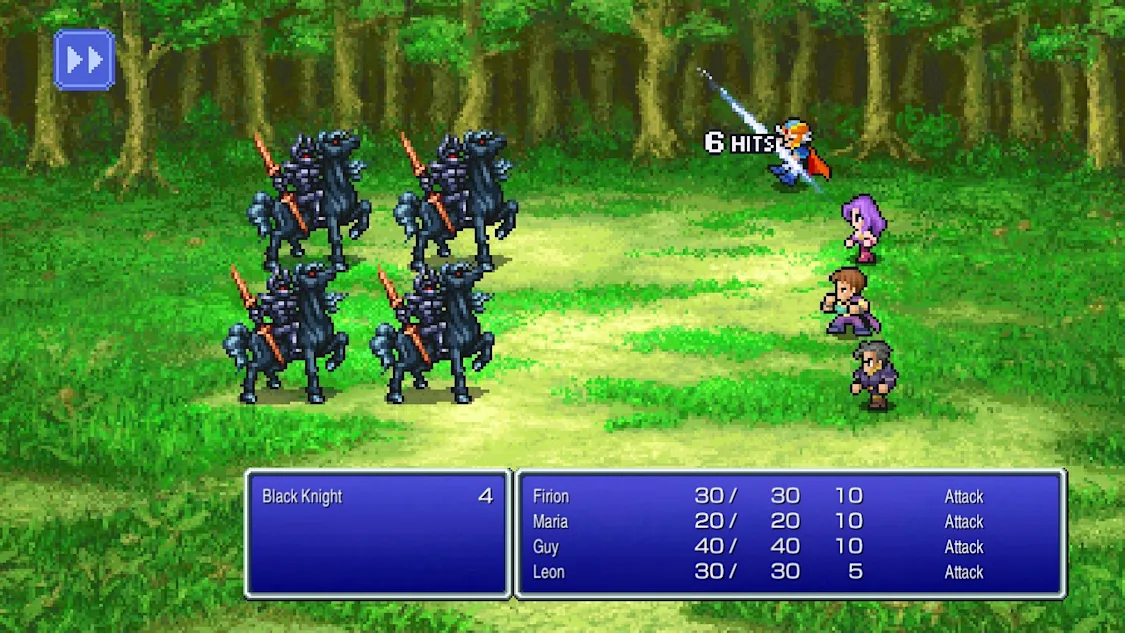
The Final Fantasy II leveling system does not rely on standard experience points or conventional character levels. Instead, growth is linked to battle actions. Individual attributes, including HP, strength, and magic, can improve according to what characters do and endure during combat.
A character who takes damage may see HP increase. Repeated physical attacks can support strength growth, while frequent spellcasting can help build magical capability. The result is a skill-based progression structure in which the party develops in the direction suggested by the player’s habits. A character used primarily with weapons can become a more dependable physical combatant; one who regularly casts spells can be shaped toward magic.
This system gives battles a different texture. Success is not only about winning the current fight, but also about considering what that fight contributes to the party’s future. It can feel demanding, especially against potent enemies, yet it also offers a clear reason to engage with the mechanics rather than treating combat as an interruption between story scenes.
Building Weapon and Magic Proficiency Through Use
Attributes are only one side of development. Weapon and magic proficiencies also grow through repeated use. The principle is direct: characters become better with the tools they actually employ. A party member who keeps attacking with the same weapon type builds familiarity with it, while a consistent spellcaster develops magical proficiency through casting.
This makes combat roles less rigid than they might first appear. Rather than assigning a fixed identity to every character from the beginning, players can gradually emphasize the actions they prefer. The system encourages commitment, but it also leaves room to experiment. A player can test a weapon, work on a spell, or adjust a character’s direction when the party’s needs change.
Equipment management matters alongside proficiency. Choosing gear that supports an intended role helps make those repeated actions more effective, while party formation can affect how safely the group handles enemy pressure. Final Fantasy II combat rewards attention to these connected decisions: what a character uses, how often they use it, where they are positioned, and what opposition they are facing.
The Word Memory System and Story Progression
Exploration is not limited to moving between locations. Final Fantasy II also uses a word memory system that turns dialogue into a practical part of progression. Certain terms learned during conversations can be remembered, then brought up when speaking with other characters.
These keywords can reveal new information and open the way to further routes. The system makes conversations feel more purposeful because the player is not merely receiving plot details; they are collecting terms that may matter later. In a story built around a rebellion, secretive allies, and an advancing Empire, that structure suits the atmosphere. Information is another resource, and asking the right question can help move the journey forward.
For players who enjoy exploration with a conversational layer, the word memory system gives Final Fantasy II a distinctive rhythm. It asks for attention to what people say and encourages revisiting discussions when a newly learned term might change the response.
5 Practical Ways to Adapt to Final Fantasy II’s Combat System
- Use intended tools consistently. If a character is meant to focus on a particular weapon or spell, keep using it. Repetition is central to building weapon and magic proficiency.
- Read enemy pressure carefully. Potent attacks can make battles difficult, so plan around the strength of the opponents rather than assuming every encounter can be handled in the same way.
- Manage equipment with purpose. Gear should support the combat role a character is developing. Physical attackers and frequent spellcasters benefit from deliberate rather than random equipment choices.
- Consider party formation. Formation is an important part of surviving enemy attacks. Review the party’s arrangement when encounters begin to expose a weakness.
- Experiment with development. Final Fantasy II rewards curiosity. Try different weapons, spells, and roles to learn how action-based growth shapes the party over time.
Final Fantasy II Switch NSP suits players interested in a classic RPG whose story and systems both demand attention. Its rebellion narrative provides the emotional drive, while its action-led progression gives battles lasting consequences. For those willing to learn its unusual rules, the game offers a flexible party-building experience shaped by use, planning, and persistence.